



Kostel svatého Josefa (Veliš) Church
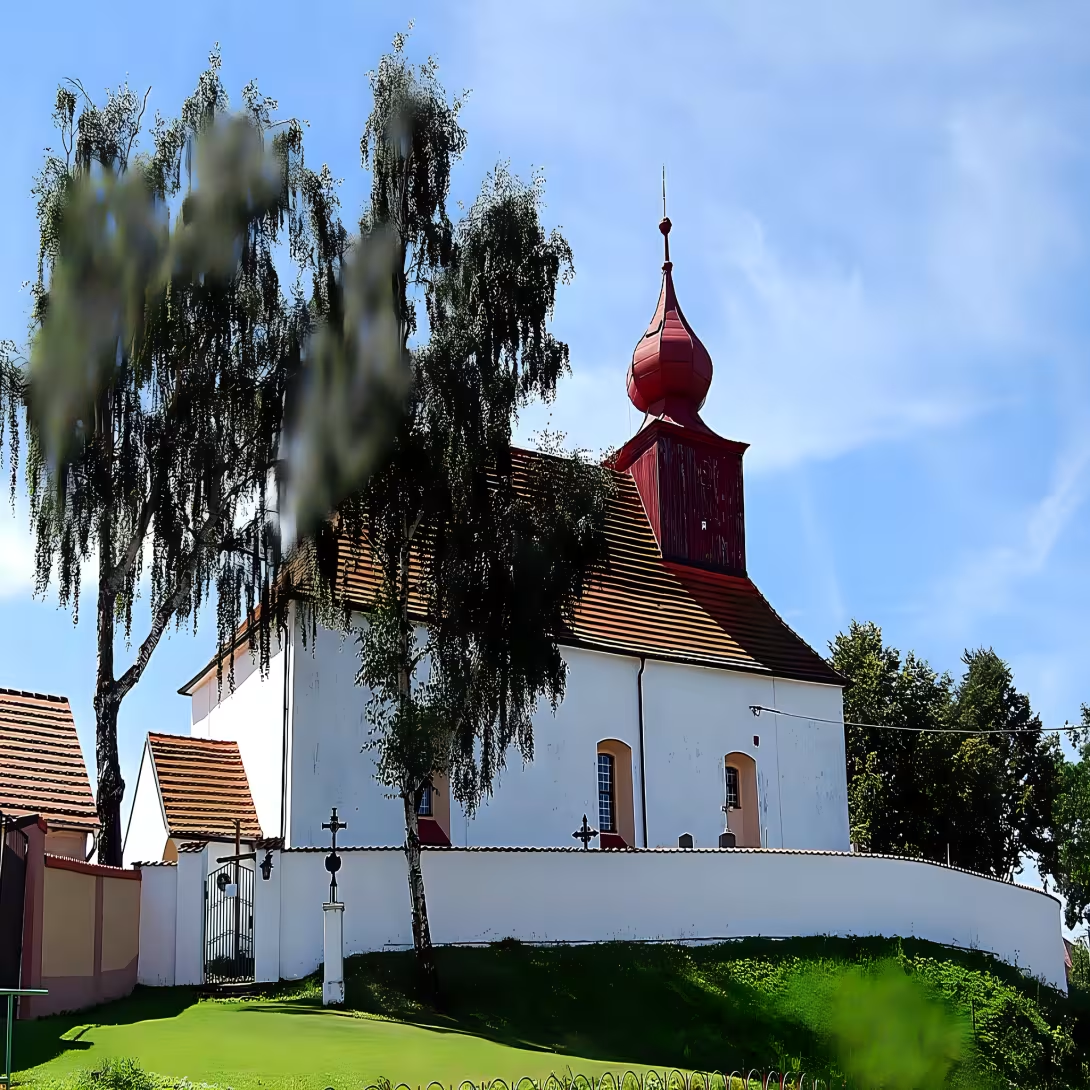
The Church of Saint Joseph in Veliš is a notable historical monument located south of the village center within an enclosed cemetery. This single-nave sacred building features a Gothic core that was transformed into Baroque style in 1722. The church serves as the parish church for the local community and, along with its enclosing wall, is protected as a cultural monument due to its architectural significance.
The Church's origins trace back to at least 1350 when it was first mentioned as a parish church. During this period, the structure primarily retained its Gothic characteristics. However, by the early 17th century, the local parish faced challenges during the Hussite Wars, leading to its temporary dissolution and subsequent administration by dukes from Vlašim starting in 1624. The church was later affiliated with Kondraci until a significant transformation occurred in 1722 when it underwent Baroque reconstruction. This renovation was initiated by Marie Josefa z Auerspergu rozená z Trautsonu, marking a pivotal moment in the church's history.
Architecturally, the Church of Saint Joseph showcases a blend of Gothic and Baroque elements. The original Gothic structure is evident in parts of its southern wall, which were uncovered during restoration efforts in 1971. The main nave features a barrel vault with lunette segments, while the presbytery boasts a placková (segmental) ceiling. Notably, the church's interior includes a Rococo altar from 1888, adorned with an image of Saint Joseph by Tomáš B. Žížala. Additional artistic elements include sculptures of Saint Wenceslas and John of Nepomuk, as well as a statue of Saint Francis Seraphicus added in 1895.
Throughout its history, the church has experienced various administrative changes and renovations that have shaped its current form. After becoming part of a local locality center in 1787 with its own lokalist, it regained parish status in 1854. The interior underwent modifications in 1908 to enhance its aesthetic appeal. These transformations reflect broader cultural shifts during the Baroque period in Bohemia, influenced by the Counter-Reformation.
Today, the Church of Saint Joseph stands as a testament to the region's rich architectural and religious history. Visitors can explore its simple yet elegant design, characterized by unadorned walls and rectangular windows with stlačený segment (compressed arch) tops. The church remains an active place of worship and is accessible for those interested in experiencing its historical ambiance. Its status as a cultural monument underscores its importance to the local community and makes it a worthwhile destination for anyone intrigued by Bohemian heritage.
The Church of Saint Joseph offers a unique glimpse into the architectural evolution from Gothic to Baroque styles, reflecting broader historical currents in Bohemia. It invites visitors to appreciate its serene beauty and rich history, making it an essential stop for those exploring the cultural landmarks of Středočeský kraj.
Then and now
Drag the slider to compare how the landmark may have looked when it was built with the view today.
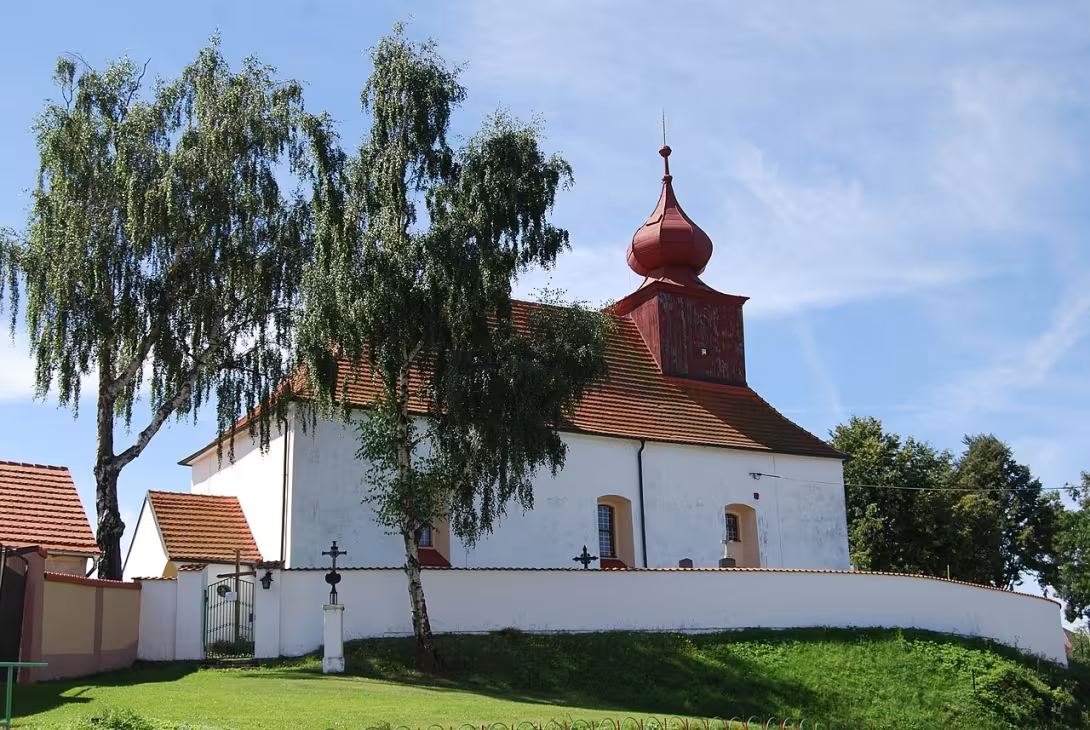
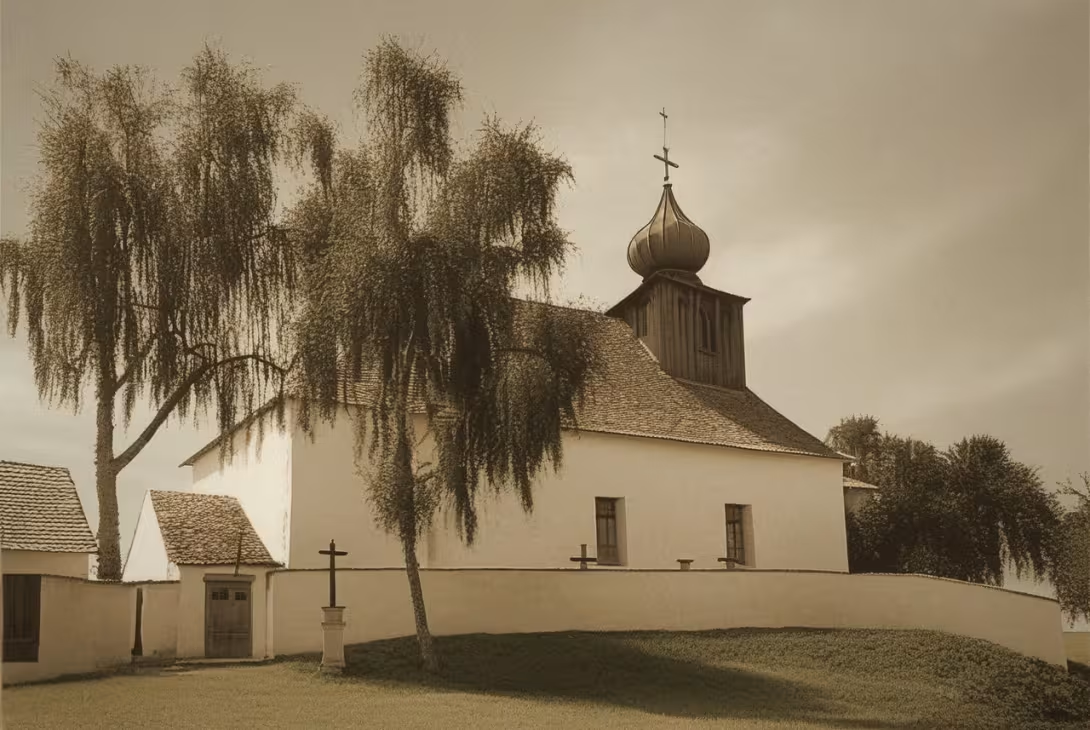
The historical appearance on the left is an AI-generated visualisation and serves as inspiration only.
Historical milestones
- 1350
- The church is first mentioned as a parish church.
- 1722
- Baroque reconstruction initiated by Marie Josefa z Auerspergu rozená z Trautsonu.
Architectural development
The Church of Saint Joseph has undergone significant architectural transformations. Originally a Gothic structure, it was rebuilt in Baroque style in 1722. The church's interior features include a vaulted main nave with lunette segments and a barrel-vaulted choir. Notable elements are the Rococo altar from 1888 and various sculptures.
Historical events
- 1350
- The church is first mentioned as a parish church.
- 1722
- Baroque reconstruction initiated by Marie Josefa z Auerspergu rozená z Trautsonu.
Points of interest
- The Church of Saint Joseph's Gothic origins date back to at least 1350, but its transformation into Baroque style in 1722 was initiated by Marie Josefa z Auerspergu rozená z Trautsonu, a notable figure whose influence marked a significant shift in the church’s architectural and cultural narrative.
- During the Hussite Wars in the early 17th century, the local parish faced dissolution, leading to its administration by dukes from Vlašim starting in 1624. This period of ecclesiastical upheaval reflects broader regional conflicts that shaped religious affiliations during tumultuous times.
- In 1971, restoration efforts uncovered parts of the church's original Gothic structure within its southern wall, revealing historical layers and providing insights into medieval construction techniques that had been concealed by later renovations.
- The interior includes a Rococo altar from 1888 featuring an image of Saint Joseph painted by Tomáš B. Žížala, highlighting the integration of local artistic talent in enhancing the church’s spiritual ambiance during its Baroque transformation.
- A statue of Saint Francis Seraphicus was added to the church in 1895, reflecting ongoing religious devotion and the influence of Franciscan spirituality that continued to shape the community's cultural identity well into the late 19th century.
Guide
This guide is narrated by a synthetic voice generated by artificial intelligence.
Show guide text
This text was created by artificial intelligence and has not been editorially reviewed. It may contain inaccuracies.
The Church of Saint Joseph in Veliš lies south of the center of the village, in the middle of a cemetery surrounded by a boundary wall. It is a single-nave building with a Gothic core, rebuilt in the Baroque style in 1722. It serves the Veliš parish and together with the cemetery wall is a cultural monument.
The church is mentioned as a parish church as early as 1350, and from 1360 to 1410 we know the names of local priests. From the Gothic building, the perimeter walls remained, which became visible during restoration in 1971 when the plaster was removed. Inside, no vault supports were found, so it is assumed that the original church had a flat ceiling. During the Hussite wars, the parish ceased to exist. From 1624, the church was administered by deans from Vlašim, and in 1684 it was assigned to Kondraty. According to the Kondraty parish record book, the Baroque renovation was initiated by Countess Marie Josefa von Auersperg, née von Trautson. In 1787, the church became the center of a local vicarage, and from 1854 it has been a parish church again.
The building is simple. A rectangular nave transitions into a square presbytery of the same width, and two younger annexes were added to the church. Above the western façade, a wooden bell tower with a belfry rises from a hipped roof, topped with a copper-plated onion dome. On the eastern side there is a sanctus bell on the roof. In the Gothic southern wall, the stairs to the gallery are partially preserved.
The nave is covered with a barrel vault with lunettes, and the presbytery has a flat vault. Both parts are separated by a semicircular triumphal arch. The main altar has a richly carved Rococo superstructure with a painting of Saint Joseph by Tomáš Žížala from 1888, moved from Šlapánov. Until 1853, there was a painting of Saint Thekla here. On either side stand statues of Saint Wenceslas and Saint John of Nepomuk. Near the arch is an Empire-style pulpit from around 1800 and a side altar with a painting of the Holy Family. The opposite altar had until 1894 a Baroque superstructure with a painting of Saint Wenceslas. Due to its poor condition, it was replaced with a shrine containing a statue of Our Lady of Lourdes. The ceiling painting with scenes from the life of Saint Joseph dates from 1950.
In the bell tower, two bells were listed. The older one was cast in 1523 by Prague master Bartoloměj, the younger one dates from 1891 by the Královéhradecké firm Červený and sons. In the gallery are an organ by an unknown organist with seven stops, which Václav Michael Mölzer repaired in 1888.
Tips for visitors
The best time to visit the Church of Saint Joseph in Veliš is during late spring or early autumn when the weather is pleasant, allowing for a comfortable exploration of both the church and its surrounding cemetery. These seasons offer beautiful natural lighting that enhances the architectural details of the Gothic core and Baroque transformations. Additionally, visiting outside peak tourist season can provide a more serene experience, ideal for appreciating the tranquility of this historic site.
The church itself is a short walk south of the village center, making it easily accessible on foot once you arrive.
When visiting the Church of Saint Joseph, consider bringing comfortable walking shoes as there may be uneven paths within the cemetery area. A camera or smartphone for photography would also enhance your experience, capturing the unique blend of Gothic and Baroque architecture. Additionally, carrying a light jacket is recommended in case of cooler temperatures, especially during early mornings or late afternoons.
For photography enthusiasts, the best spots to capture the Church of Saint Joseph are from the entrance of the cemetery where you can get a full view of its southern facade, or from within the cemetery grounds for more intimate shots. The soft light of early morning or late afternoon is ideal for highlighting the intricate details of the church’s architecture. Be mindful of any photography restrictions that may be in place.
Nearby, within a 30-minute drive, are several attractions worth exploring. The historic town of Kladno offers cultural insights with its museums and architectural landmarks. For nature lovers, the surrounding countryside provides scenic hiking trails and picturesque landscapes. These nearby sites offer additional activities for visitors looking to extend their day trip beyond Veliš.
Families with children will find the Church of Saint Joseph a peaceful spot to explore together. The enclosed cemetery offers space for kids to run around safely while parents take in the historical aspects of the site. Bringing along a small picnic can turn a visit into a delightful family outing, allowing you to enjoy the serene surroundings at your own pace.
Frequently asked questions
Can the monument be visited?
Religious buildings are usually open mainly during services; at other times a visit is normally arranged with the parish or the operator. We have not verified specific times.
Where is the monument?
Location: Veliš, Středočeský kraj. The map on this page shows the exact spot.
Why is the monument protected?
It is listed in the Central List of Cultural Monuments of the Czech Republic as a cultural monument (register no. 31648/2-2878).
Businesses nearby
Do you run a restaurant, accommodation, shop, museum, rental, wellness or other visitor service near this monument? Show yourself directly to the people heading to it — this is how they will see you in the app and on the web:
Accommodation nearby
Themed route
Tematická výletní trasa: Kostel svatého Josefa (Veliš)
1. Kostel svatého Josefa, Veliš
- Typ: Církevní stavba
- Proč stojí za návštěvu: Tento barokní kostel je centrem duchovního života v obci Veliš. Jeho bohaté historické a architektonické prvky, jako jsou fresky a sochy, přitahují návštěvníky zájemce o církevní umění a dějiny.
2. Nádvoří kostela svatého Josefa
- Typ: Církevní areál
- Proč stojí za návštěvu: Nádvoří poskytuje klidný prostor k odpočinku a refleksi. Je to ideální místo pro pochopení historického kontextu kostela, s možností pozorovat detaily architektury z různých úhlů.
3. Věž kostela svatého Josefa
- Typ: Církevní věž
- Proč stojí za návštěvu: Výhled z věže nabízí pohled na okolní krajinu Středočeského kraje. Je to nejen architektonický poklad, ale také místo, kde si můžete užít klidné chvíle a vzpomenout si na historii obce.
4. Kaple v okolí kostela svatého Josefa
- Typ: Kaple
- Proč stojí za návštěvu: Tato kaple je menší, ale ne méně důležitá součástí církevního komplexu. Je známá svou intenzivní atmosférou a jednoduchostí, což ji činí ideálním místem pro klidnou modlitbu nebo osobní úvahy.
5. Park u kostela svatého Josefa
- Typ: Park
- Proč stojí za návštěvu: Park nabízí příležitost pro relaxaci v přírodě, s možností procházet se nebo sednout si a užít si klidného okamžiku. Je to také místo, kde můžete pozorovat rostliny a ptáky, které obývají tento zelený prostor.
Tato trasa nabízí komplexní pohled na kostel svatého Josefa a jeho bezprostřední okolí, což umožňuje návštěvníkům prozkoumat jak duchovní, tak přírodní aspekty této oblasti.
Seasonal recommendations
Jaro: In the spring, Church of Saint Joseph in Velichy transforms into a picturesque landscape paradise as blooming shrubs and trees enliven the surroundings. Sunny days offer ideal conditions for visiting with clear skies that highlight the architectural beauty of the church. Visitors can expect moderate crowds before the main summer influx. It is recommended to wear comfortable walking shoes for grassy areas and light clothing with an umbrella in your pocket, as short spring showers may occur.
Summer: In the summer, Church of Saint Joseph is most popular, attracting many visitors with its sunny days and warm, quiet nights. The architecture of the church stands out especially in morning light or during long summer evenings when lighting is adjusted for dramatic effects. Visitors should plan to visit early in the morning or later in the day to avoid peak times with the highest crowds. It's important to bring sun protection and lightweight clothing prepared for warm weather.
Autumn: In autumn, Church of Saint Joseph offers an escape into golden and red landscape colors resulting from leaf burning. The atmosphere is calm with moderate crowds, allowing for a more relaxed tour. Sunny autumn days provide ideal lighting for photography and outdoor enjoyment, but visitors should be prepared for cooler afternoons. It's recommended to wear layered clothing with a warm sweater and appropriate shoes for potentially dry or damp conditions.
Winter: During winter, Church of Saint Joseph offers an escape into a serene, snowy atmosphere as the surrounding landscape is covered in light snow. Winter lighting creates magical shadows on the church facades and can be particularly captivating after sunset. Warm clothing, including coats and protective gloves, is essential for comfort during cold days, along with suitable shoes for icy conditions.
Visualizations and artistic views


The visualisations are generated by artificial intelligence and serve as inspiration.
Photos from the area
Real photos taken near the monument


Zdroj a licence jsou uvedeny u každého snímku.
Tips from visitors
No tips yet. Be the first!
Log in and add your tip.
Sources and literature
Photos: Richenza / CC BY-SA 3.0, rozlišení zvýšeno umělou inteligencí — Wikimedia Commons. The author and licence also appear when you hover over the image.
Faktickým podkladem tohoto textu byl článek na Wikipedii, jehož autory jsou přispěvatelé Wikipedie. Článek je dostupný pod licencí CC BY-SA 4.0.
Location on the map





Příběhy a pověsti
Legendy, pověsti a příběhy spjaté s touto památkou
Fotografie návštěvníků
Zatím žádné fotografie. Buďte první, kdo přidá fotografii z návštěvy!
Log in a přidejte svou fotografii nebo hodnoťte.
Za ověřenou návštěvu v aplikaci získáte víc bodů — poznáme podle GPS, že jste na místě.
Reviews and comments