






Kostel svatého Martina (Mladá Vožice) Church
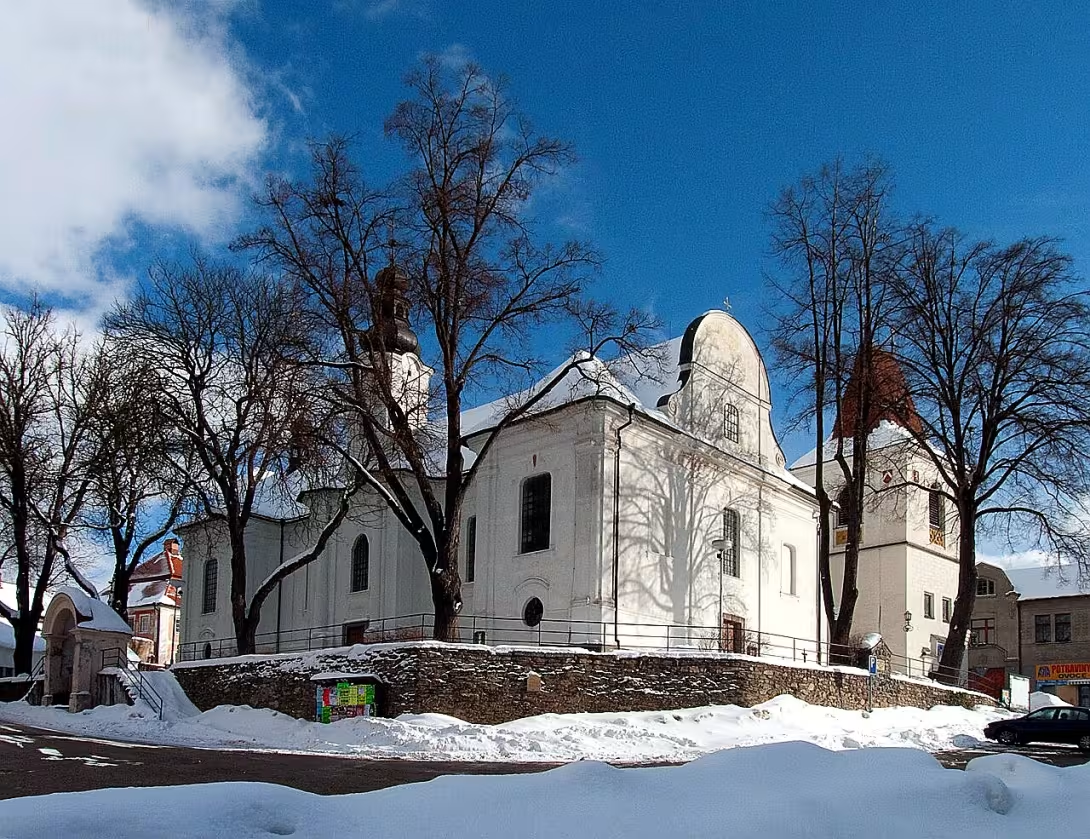
The Church of Saint Martin in Mladá Vožice is a baroque parish church located at the heart of Žižkovo Square. Built between 1790 and 1794, it serves as a prominent cultural landmark within the town, offering views of nearby historical sites such as a late Gothic bell tower and a statue of St. Wenceslas. The church's significance is highlighted by its architectural evolution and its role in the community's spiritual life over centuries.
The origins of the Church of Saint Martin date back to 1348 when an earlier chapel was mentioned on the site. Throughout history, it has undergone several transformations reflecting broader historical currents. Initially rebuilt in 1582, the church remained utraquist until 1623 before becoming a Roman Catholic parish. The baroque reconstruction began in 1764 with new foundations for towers and extensions to the presbytery and rear part of the nave, culminating in completion by 1797. This period marked significant architectural development influenced by the baroque style prevalent across Europe during the Habsburg Monarchy's reign.
Architecturally, the Church of Saint Martin is a single-nave structure with two towers, one taller than the other and equipped with a bell. The church’s exterior features memorial plaques: one commemorating spiritual internees from the 1960s and another marking the deportation of 99 residents to gas chambers on September 2, 1942. These elements highlight its historical significance beyond architectural interest.
Over the years, the church has experienced several renovations reflecting its enduring importance. Notably, it underwent a major renovation in the 1990s, followed by facade repairs in 2018. The interior includes a semi-circular presbytery with two side chapels and oratories, as well as a pentagonal chapel attached to the nave’s north side. A low sacristy with a timbered roof is also present, featuring an ornate pulpit.
The church houses significant historical artifacts, including its organ history. In 1802, new organs were commissioned by Anton Reiss, and in 1943, additional ones were crafted by Vladimír Skopek. These were later expanded and repaired by masters Kubát and Filípek in 1971. The church's bell collection has also evolved; originally four bells were mentioned in the early 18th century, but only one survived both World Wars before a new bell was acquired in 1952.
Today, the Church of Saint Martin stands as a testament to Mladá Vožice’s rich cultural and historical tapestry. It remains accessible to visitors who can explore its architectural beauty and reflect on its storied past. The church is not only an emblem of religious heritage but also a witness to significant historical events that have shaped the community. Its preservation and continued use underscore its importance as both a spiritual center and a historical monument, making it a worthwhile destination for those interested in history and architecture.
Then and now
Drag the slider to compare how the landmark may have looked when it was built with the view today.
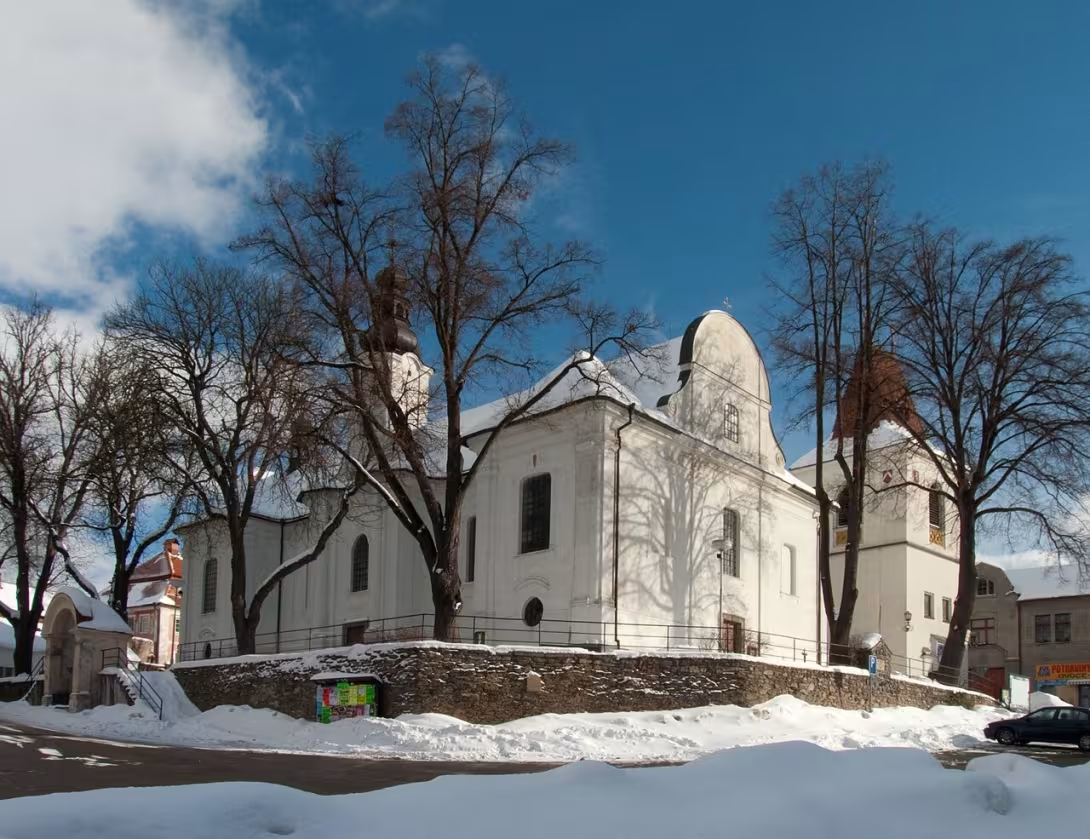
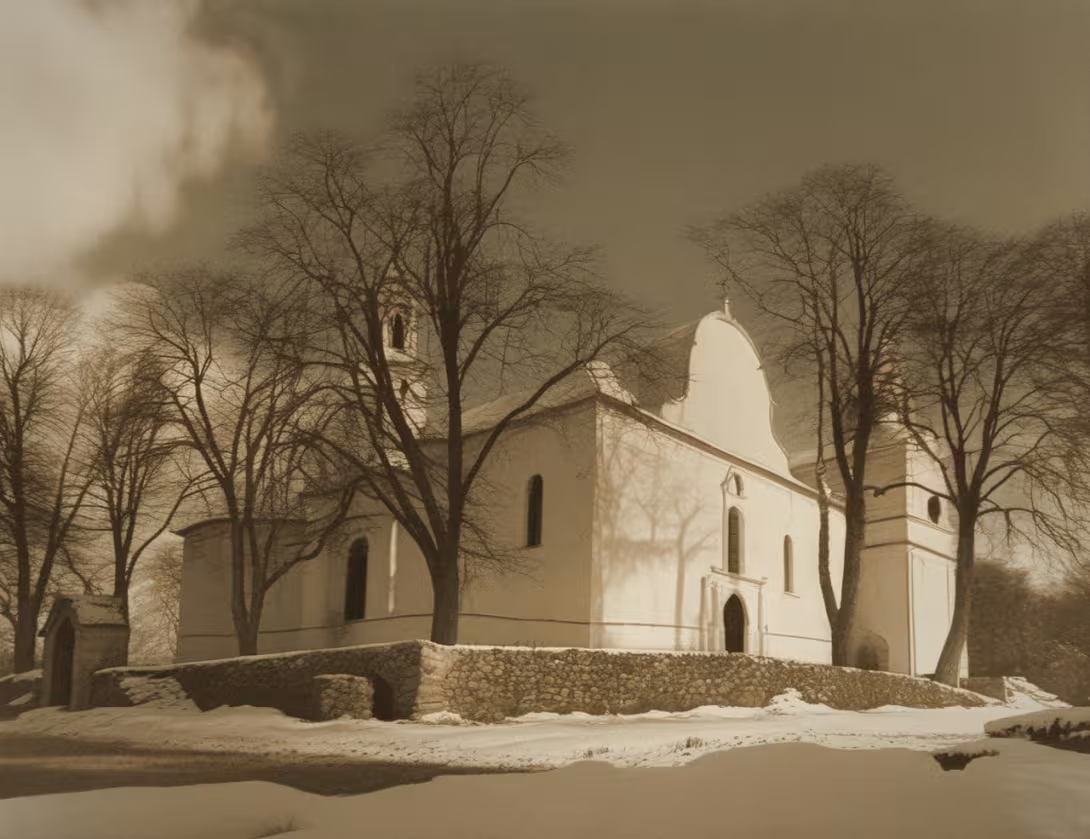
The historical appearance on the left is an AI-generated visualisation and serves as inspiration only.
Historical milestones
- 1348
- The site of an earlier chapel was mentioned.
- 1582
- The church was rebuilt after its previous form.
- 1764
- Significant reconstruction began, including new foundations for towers and extensions to the presbytery and nave.
- 1797
- Completion of the baroque reconstruction.
- 1900
- The church underwent renovation.
- 1929
- Another round of renovations took place.
- 1990s
- A major renovation occurred.
- 2018
- Facade repairs were completed.
Architectural development
The Church of Saint Martin has evolved through several architectural phases. Initially mentioned in 1348, it was rebuilt in 1582 and remained utraquist until 1623. The baroque reconstruction began in 1764, with completion in 1797. Further renovations took place in 1900, 1929, and the 1990s.
Historical events
The original site of a chapel was mentioned as early as 1348.
In 1764, the church underwent significant reconstruction with new foundations laid for towers and an extension to the presbytery and rear part of the nave.
A major renovation occurred in the 1990s, followed by facade repairs in 2018.
Points of interest
- The Church of Saint Martin originally had an earlier chapel on its site dating back to 1348, highlighting the long-standing spiritual significance of this location in Mladá Vožice.
- During the baroque reconstruction period from 1764 to 1797, significant architectural changes were made, including new foundations for towers and extensions that reflect the broader European baroque influence during the Habsburg Monarchy's reign.
- The church features memorial plaques on its exterior: one commemorates spiritual internees from the 1960s, while another marks the deportation of 99 residents to gas chambers on September 2, 1942, serving as poignant reminders of the community’s historical struggles.
- In terms of musical heritage, the church's organ history is notable; originally commissioned in 1802 by Anton Reiss and later expanded by Vladimír Skopek in 1943, these instruments were further repaired and enhanced by masters Kubát and Filípek in 1971, illustrating a commitment to preserving its auditory legacy.
- The bell collection of the church has undergone significant changes; originally featuring four bells in the early 18th century, only one survived both World Wars before a new bell was acquired in 1952, reflecting resilience and continuity through turbulent times.
Guide
This guide is narrated by a synthetic voice generated by artificial intelligence.
Show guide text
This text was created by artificial intelligence and has not been editorially reviewed. It may contain inaccuracies.
Welcome to the Church of Saint Martin in Mladá Vožice, a remarkable testament to baroque architecture nestled at the heart of Žižkovo Square. As you stand here today, take a moment to absorb the grandeur before you. The church dominates this historic square with its impressive façade and offers panoramic views that include nearby cultural landmarks such as a late Gothic bell tower and an evocative statue of St. Wenceslas.
The story of this sacred site begins in 1348 when it was home to an earlier chapel, marking the long-standing spiritual significance of this location within Mladá Vožice. Over time, the church underwent several transformations that reflect its enduring importance. In 1582, the church was rebuilt after its previous form, and a significant turning point came between 1764 and 1797 when extensive baroque reconstruction took place. This period saw new foundations laid for towers and extensions added to both the presbytery and nave, culminating in a stunning completion of the baroque vision by 1797.
As you wander around this architectural gem, take note of its elegant baroque style, which is evident in the harmonious proportions and intricate detailing. Although the specific architects remain unknown, their work has left an indelible mark on Mladá Vožice's cultural landscape. The church’s structure speaks volumes about the craftsmanship and artistic sensibilities of that era.
While exploring, consider the unnamed historical figures who contributed to this site's storied past. Their efforts have ensured that the Church of Saint Martin remains a beacon of heritage and history in the region. One intriguing aspect is its evolution from an earlier chapel mentioned as far back as 1348, reminding us of the deep-rooted spiritual legacy here.
As you continue your journey around Žižkovo Square, let yourself be captivated by the layers of history that envelop this place. The Church of Saint Martin invites you to delve deeper into its past and appreciate the cultural tapestry it has woven over centuries.
Thank you for joining us on this exploration. We hope you leave with a newfound appreciation for this historical gem in Mladá Vožice, and we encourage you to continue your journey through its rich history and stunning architecture. Safe travels!
Tips for visitors
The best time to visit the Church of Saint Martin is during late spring or early autumn, when the weather is pleasant for exploring both the church and its surroundings. This period offers comfortable temperatures perfect for walking around Žižkovo Square and enjoying outdoor cultural landmarks like the Gothic bell tower and the statue of St. Wenceslas. Additionally, visiting outside peak tourist seasons ensures a more tranquil experience with fewer crowds, allowing you to appreciate the baroque architecture in peace.
Parking is available nearby, but it's advisable to check for availability as spaces can be limited during busy times. For those preferring public transport, Mladá Vožice is accessible by train and bus services from larger cities like České Budějovice. Upon arrival, walking or cycling are convenient options to reach the church, allowing you to fully immerse yourself in the local atmosphere without the hassle of navigating traffic.
When visiting the Church of Saint Martin, it's recommended to bring comfortable walking shoes as there is a fair amount of walking involved when exploring the square and nearby landmarks. A hat or sunscreen might also be useful during sunny days for protection against UV rays. Additionally, carrying a water bottle can help keep you hydrated throughout your visit.
For photography enthusiasts, early morning or late afternoon light offers the best conditions to capture the Church of Saint Martin's baroque details and its surrounding landmarks. The soft lighting accentuates textures and creates dramatic shadows, enhancing the architectural beauty. Žižkovo Square itself provides a picturesque backdrop for photographs, with the church dominating the scene.
Within a 30-minute drive from Mladá Vožice, visitors can explore other cultural sites that enrich their understanding of the region's history and artistry. The late Gothic bell tower is an architectural marvel worth visiting, offering insights into medieval craftsmanship. Additionally, the statue of St. Wenceslas in Žižkovo Square stands as a symbol of Czech heritage, making it a meaningful stop for those interested in local legends and historical figures.
Businesses nearby
Do you run a restaurant, accommodation, shop, museum, rental, wellness or other visitor service near this monument? Show yourself directly to the people heading to it — this is how they will see you in the app and on the web:
Nearby
The church is surrounded by several cultural landmarks within Mladá Vožice, including a late Gothic bell tower and a statue of St. Wenceslas in Žižkovo Square.
Accommodation nearby
Themed route
Tematická výletní trasa: Kostel svatého Martina a kulturní památky Mladé Vožice
1. Kostel svatého Martina (Mladá Vožice) - Kostel Začněte svou cestu u kostela svatého Martina, ikony místní architektury a duchovního života v Mladé Vožici. Tento barokní kostel je známý svou bohatou historií a uměleckou hodnotou, zejména pro svůj interiér s nádhernými freskami a sochami.
2. Žižkovo náměstí - Náměstí Krátce po navštívění kostela se přesuňte do Žižkova náměstí, kde stojí impozantní socha svatého Václava. Toto místo je nejen kulturním centrem města, ale také vhodným místem pro odpočinek a užití si krásy venkovního prostoru.
3. Gothický zvonice - Zvonice Nyní se podíváme na pozůstatky gotické minulosti Mladé Vožice, konkrétně na gotickou zvonici postavenou v pozdním období středověku. Tato struktura je fascinujícím příkladem architektonických změn a historie města.
4. Žižkovo náměstí - Návštěva sochy svatého Václava Navrátíme se do Žižkova náměstí, tentokrát zaměřující se na sochu svatého Václava. Tato socha je nejen uměleckým dílem, ale také symbolem místní tradice a historie.
5. Kostel svatého Martina (nádvoří) - Nádvoří Zavřeme naši cestu návštěvou nádvoří kostela svatého Martina, kde můžete užít si klidné chvilky a dýchání historie. Toto místo nabízí příležitost pro reflektivní okamžiky a pohled na celkový kontext kostela v rámci městského prostředí.
Tato trasa umožňuje hluboký pohled do historie a kultury Mladé Vožice, zaměřený především na klíčová místa uvedená v okolí kostela svatého Martina.
Seasonal recommendations
Spring: Visiting the Church of Saint Martin during spring offers a serene experience as nature begins to awaken. The surrounding landscape is painted with vibrant colors from blooming flowers and budding trees, creating an idyllic setting that enhances the church's historical charm. This season often sees milder temperatures and gentle breezes, making it ideal for outdoor exploration after your visit. Visitors should consider wearing layers, as mornings can be cool while afternoons warm up. While crowds are generally lighter than in summer, arriving early is still recommended to fully enjoy the tranquil atmosphere.
Summer: Summer at the Church of Saint Martin provides a lively and vibrant backdrop with longer daylight hours that allow for extended visits. The lush greenery surrounding the church creates a picturesque environment perfect for photography enthusiasts. However, this season also attracts more visitors due to its popularity as a travel time, so it's wise to arrive early in the day to avoid larger crowds. Dressing comfortably is key; lightweight and breathable clothing is recommended to stay cool under the sun. Additionally, carrying water and wearing sunscreen are practical tips for a pleasant visit during the warmer months.
Autumn: Autumn transforms the Church of Saint Martin into a scene straight out of a painting, with rich hues of reds, oranges, and yellows adorning the foliage. The cooler temperatures make it an ideal time to explore without the summer heat, offering a comfortable environment for sightseeing. This season often brings fewer visitors compared to summer, providing a more peaceful experience. Visitors should dress in layers to accommodate the fluctuating weather conditions typical of autumn. An afternoon visit can be particularly rewarding as the soft light enhances the church's architectural details and the surrounding landscape.
Winter: Winter at the Church of Saint Martin offers a unique and magical atmosphere with snow often blanketing the area, creating a picturesque winter wonderland. The cooler temperatures mean fewer visitors, allowing for a more intimate experience with the historic site. However, it is important to dress warmly in layers, including a hat, gloves, and waterproof footwear, as conditions can be quite chilly. Visitors should check opening hours in advance, as they may vary during this season due to shorter daylight hours. Exploring the church under soft winter lighting adds an enchanting quality to the visit, making it a memorable experience despite the cold weather.
Visualizations and artistic views


The visualisations are generated by artificial intelligence and serve as inspiration.
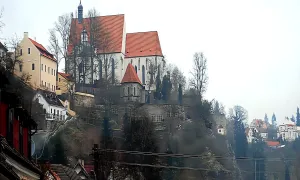
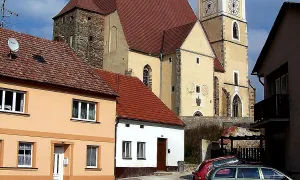
Photos from the area
Real photos taken near the monument


Zdroj a licence jsou uvedeny u každého snímku.
Tips from visitors
No tips yet. Be the first!
Log in and add your tip.
Sources and literature
Fotografie: Jitka Erbenová (cheva) / CC BY-SA 3.0 — Wikimedia Commons. The author and licence also appear when you hover over the image.
Faktickým podkladem tohoto textu byl článek na Wikipedii, jehož autory jsou přispěvatelé Wikipedie. Článek je dostupný pod licencí CC BY-SA 4.0.
Location on the map


Příběhy a pověsti
Legendy, pověsti a příběhy spjaté s touto památkou

Příběh: Kostel svatého Martina (Mladá Vožice)
Bylo to v pondělí ráno, kdy Bartoloměj zjistil, že jeho duše je na hranici zoufalství. Vítr se mihl kolem něho s lehkým šelestem listů jako varování nebo vít…
Číst příběh
Pověst: Kostel svatého Martina (Mladá Vožice)
Podle místní pověsti, která se v Mladé Vožici přenášela z pokolení na pokolení u krbů i na lavicích před kostelem, byl farář zdejšího chrámu svatého Martina …
Číst příběhFotografie návštěvníků
Zatím žádné fotografie. Buďte první, kdo přidá fotografii z návštěvy!
Přihlaste se a přidejte svou fotografii nebo hodnoťte.
Za ověřenou návštěvu v aplikaci získáte víc bodů — poznáme podle GPS, že jste na místě.
Reviews and comments