






kostel svatého Martina (Zámrsk) Church
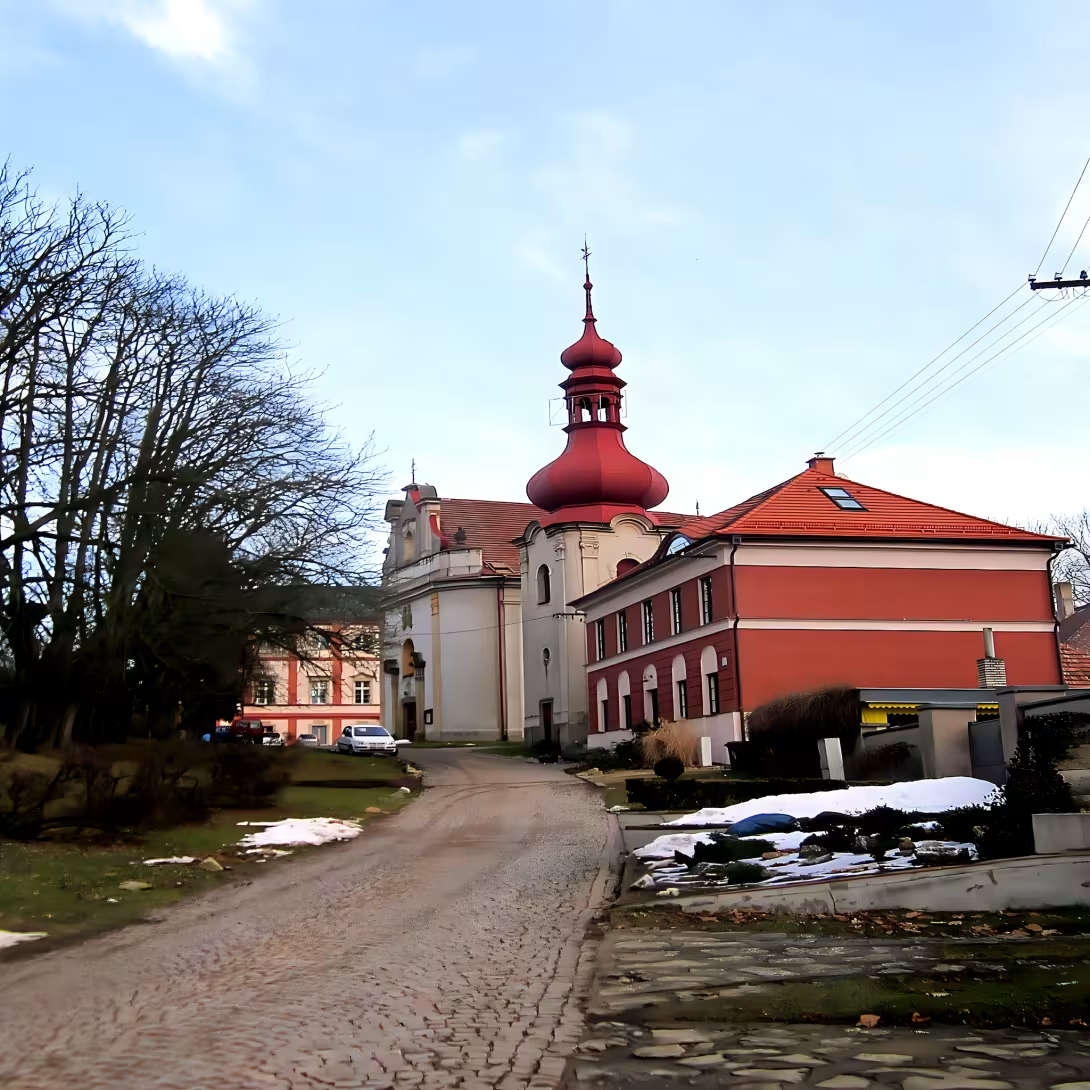
The Church of Saint Martin in Zámrsk is an outstanding example of Baroque architecture located in the town of Zámrsk, Pardubice Region, Czech Republic. First recorded as a parish church in 1350 by Arnošt z Pardubic, it stands today as a cultural monument noted for its historical and architectural importance. Originally built on the site of an older Gothic structure, the current Baroque building was constructed between 1781 and 1782 under Jiří Jeník Zásadský z Gamsendorfu's ownership. He commissioned its transformation during a period marked by cultural and architectural developments in Bohemia within the Habsburg Monarchy.
The church's origins date back to medieval times, first mentioned in documents from 1350. Over centuries, it underwent significant changes, culminating in its Baroque reconstruction between 1781 and 1782. During this time, Jiří Jeník Zásadský z Gamsendorfu took ownership of the church, leading to its redesign by architect František Kermer. This transformation reflects broader trends during the late 18th century when Bohemia experienced a flourishing of Baroque and Rococo styles.
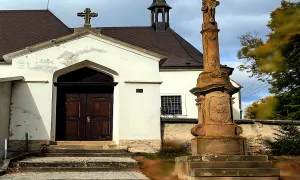
Architecturally, the Church of Saint Martin is distinguished by its single-nave structure with rounded corners and a semi-circular chancel. Its gabled roof is covered in shingles, while smooth plastered walls are accentuated by pilasters with cornice capitals. The west façade features pilasters that frame a low attic adorned with volute pediments and Rococo vases. Notably, the entrance portal is flanked by sandstone volute-pilasters, above which lies an inscription from 1782. Inside, the church boasts a richly decorated interior: the chancel measures 9.60 meters in length and 4.85 meters in width, featuring stuccoed vaults with side sacristies and a rosette-shaped tomb of Christ. The nave is divided by pilasters into three sections, capped by a barrel vault segmented by bands. A notable feature is the pulpit supported by columns with Ionic capitals, adorned with Rococo motifs including the Gamsendorf family crest.
Throughout its history, the church has seen various owners and administrators, beginning as part of the parish before transitioning to Jiří Jeník Zásadský z Gamsendorfu in the late 18th century. This ownership change was pivotal for the Baroque reconstruction that defines the church today. The interior houses significant artistic elements such as a main altar from 1751 attributed to František Pacák of Litomyšl, and a baptismal font made of sandstone dating back to the original Gothic structure.
The Church of Saint Martin is surrounded by notable features including a bell tower built concurrently with the church, a mid-19th century parsonage, and a statue of Saint John Nepomucene from 1727. These elements contribute to the historical ambiance of the site, enhancing its appeal as a destination for those interested in architectural history.
Today, the Church of Saint Martin remains an accessible cultural monument, inviting visitors to explore its rich history and Baroque architecture. Its significance is underscored by its transformation over centuries and its role within the community of Zámrsk. Visitors are encouraged to appreciate this historical site, which offers a glimpse into the architectural evolution and cultural heritage of the region.
Then and now
Drag the slider to compare how the landmark may have looked when it was built with the view today.
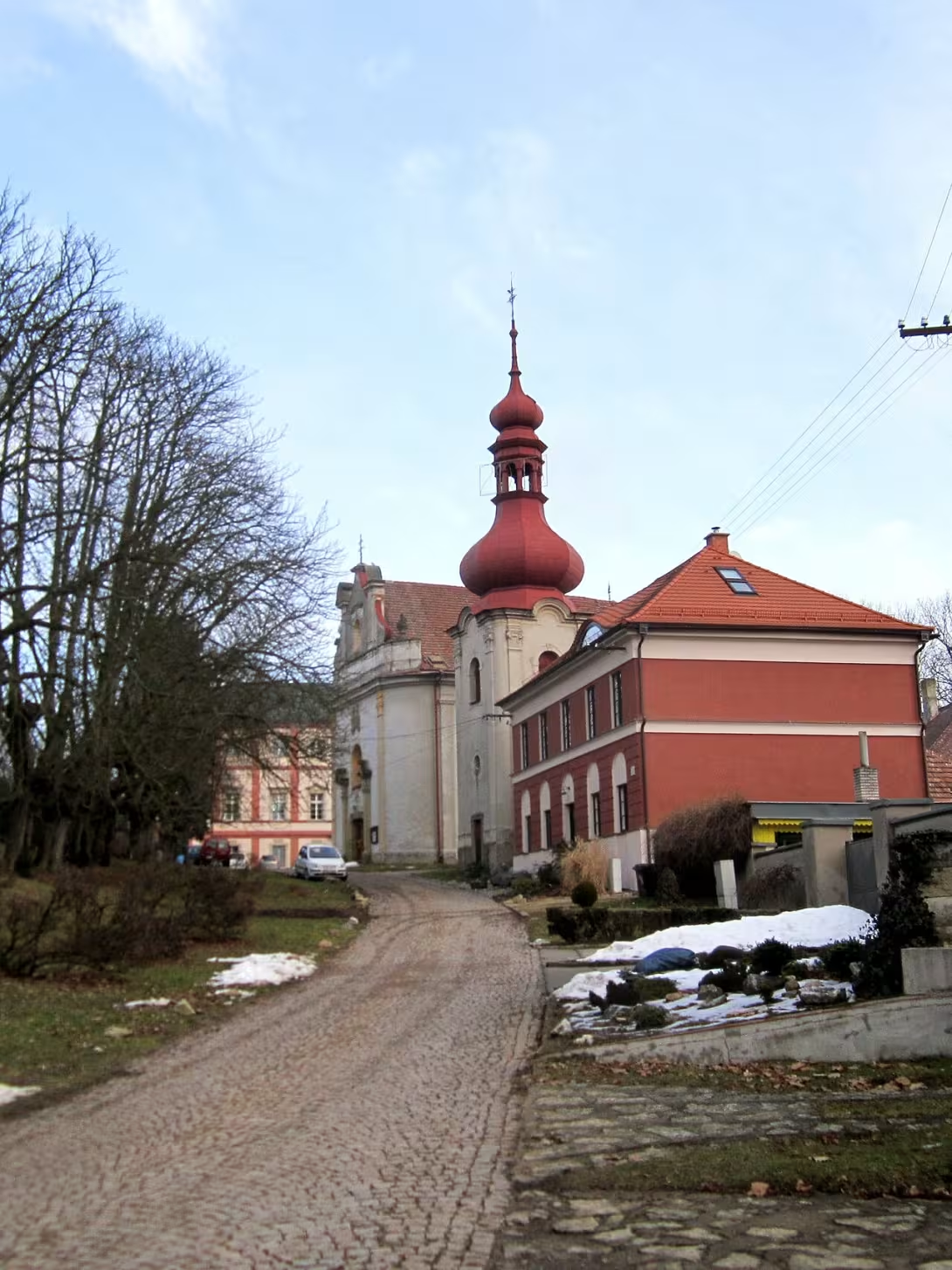

The historical appearance on the left is an AI-generated visualisation and serves as inspiration only.
Historical milestones
- 1350
- First recorded as a parish church by Arnošt z Pardubic.
- 1781
- Construction of the current Baroque building began.
- 1782
- Completion of the Baroque reconstruction under Jiří Jeník Zásadský z Gamsendorfu.
- 1751
- Main altar attributed to František Pacák of Litomyšl was created.
- 1727
- Statue of Saint John Nepomucene erected.
Architectural development
The Church of Saint Martin underwent significant architectural changes, transitioning from a medieval Gothic structure to a Baroque edifice between 1781 and 1782. The current design features a single-nave building with rounded corners, a semi-circular chancel, and a gabled roof covered in shingles. Notable elements include Rococo vases on the attic and a portal adorned with volute-pilasters.
Historical events
1350: First documented mention as a parish church by Arnošt z Pardubic.
1781-1782: Reconstruction of the church into its current Baroque form under Jiří Jeník Zásadský z Gamsendorfu.
Owners
Initially part of the parish, ownership transitioned to Jiří Jeník Zásadský z Gamsendorfu in the late 18th century who commissioned its Baroque reconstruction. Subsequent details on ownership are not specified.
Points of interest
- The Church of Saint Martin was originally built on the site of an older Gothic structure, indicating a rich layering of architectural history that predates its Baroque transformation.
- During its 18th-century reconstruction, the church's interior features a rosette-shaped tomb of Christ, which is a unique and symbolic element reflecting religious artistry from that period.
- The pulpit within the church is supported by columns with Ionic capitals adorned with Rococo motifs, including the Gamsendorf family crest, highlighting the personalized touch given by its owner during reconstruction.
- A notable artistic piece inside the church is the main altar from 1751, attributed to František Pacák of Litomyšl, showcasing the craftsmanship and religious art prevalent in Bohemia before the Baroque redesign.
- Surrounding the church is a statue of Saint John Nepomucene dating back to 1727, adding historical depth and serving as an enduring testament to the region's religious heritage.
Guide
This guide is narrated by a synthetic voice generated by artificial intelligence.
Show guide text
This text was created by artificial intelligence and has not been editorially reviewed. It may contain inaccuracies.
The parish church of Saint Martin in Zámrsko is first mentioned in writing in the year 1350, in a document of Arnošt of Pardubice. It was already a parish church at that time. The original building was Gothic. In its place, a new church was built in the years 1781 and 1782. It was built by Jiří Jeník Zásadský of Gamsendorf, the then owner of the Zámrsko estate. The architect of the building was apparently František Kermer.
The church is single-aisled and built of brick. The rectangular nave has rounded corners and connects to an elongated semicircular chancel. On its sides stand a sacristy and a sepulchre, and above them are galleries opening into the chancel. Smooth plaster is articulated by pilasters. The western facade ends with a low attic with a voluted gable and a niche with a shell conch, and Rococo vases stand on its sides. On the sandstone frame of the entrance, an inscription with the date 1782 is carved. The entrance doors are carved with Rococo motifs, and above the window above the entrance is the coat of arms of the Gamsendorf family.
The nave is thirteen meters long and over nine meters wide, and the ceiling is formed by rounds separated by bands. The brick gallery is supported by two pillars and two consoles. Its three times curved balustrade is decorated with stucco rocailles and again the coats of arms of the Gamsendorffs. The organ was made in the year 1907 by Josef Kobrle from Lomnice nad Popelkou. It replaced the older instrument, which is mentioned already in an inventory from the year 1768.
Some pieces of furnishings are older than the present building. The Rococo high altar of Saint Martin from the year 1751 and the pulpit from the year 1753 were made by František Pacák from Litomyšle. The side altar of Saint Francis of Paula was commissioned by Countess Terezie of Bubna a Litic. It was carved in the year 1760 by František Špička and the painting was done by Leopold Felix. The second side altar is dedicated to the Immaculate Conception of the Virgin Mary. From the original Gothic church comes a sandstone baptismal font in the shape of a chalice. Tombstones of Jan Lukavský from Lukavice and his grandson Václav from the years 1531 and 1590 have been preserved.
In the year 1846, the church received a shingled roof, today it is covered with asphalt shingles. It had a sanctus bell until the year 1986. In the nineteen seventies, the interior was repaired and electricity was introduced.
The church is accompanied by a bell tower, built at the same time as the church. In the surroundings also stands a rectory from the middle of the nineteenth century and a statue of Saint John of Nepomuk from the year 1727.
Tips for visitors
The best time to visit the Church of Saint Martin in Zámrsk is during late spring or early autumn, when the weather is pleasant for walking around the church grounds and exploring nearby attractions. These seasons offer mild temperatures and lush landscapes, enhancing your experience as you admire the Baroque architecture. Additionally, visiting outside peak tourist season ensures a more tranquil atmosphere, allowing you to fully appreciate the intricate Rococo altars and historical ambiance of the site.
For visitors preferring public transportation, there are options that can bring you close to the church; however, it's advisable to check current routes and schedules using a travel planner or local transport website before your visit. This ensures smooth access to the church without any last-minute surprises.
When visiting the Church of Saint Martin, consider bringing comfortable walking shoes as there may be some walking involved, especially if you plan to explore nearby features like the bell tower and the statue of Saint John Nepomucene. Additionally, carrying a camera or smartphone is recommended for capturing the stunning architecture and serene surroundings. Don't forget to bring water and perhaps a light snack, particularly if you're planning an extended visit.
For photography enthusiasts, the best spots around the church are those that capture its smooth plastered walls against the natural backdrop of Zámrsk's landscape. Early morning or late afternoon light provides soft illumination, perfect for highlighting the intricate details of the Baroque and Rococo elements. The bell tower offers a unique vantage point for panoramic shots, while the statue of Saint John Nepomucene can be framed beautifully with its historical context in mind.
Nearby attractions within 30 minutes include the mid-19th century parsonage, which provides insight into the local history and architecture of that era. Exploring this area offers a glimpse into the past lifestyle and adds depth to your visit. For families with children, these sites can be both educational and engaging, as they offer stories and visuals that bring history to life.
Frequently asked questions
Can the monument be visited?
Religious buildings are usually open mainly during services; at other times a visit is normally arranged with the parish or the operator. We have not verified specific times.
Where is the monument?
Location: Zámrsk, Pardubický kraj. The map on this page shows the exact spot.
Why is the monument protected?
It is listed in the Central List of Cultural Monuments of the Czech Republic as a cultural monument (register no. 34648/6-4138).
Businesses nearby
Do you run a restaurant, accommodation, shop, museum, rental, wellness or other visitor service near this monument? Show yourself directly to the people heading to it — this is how they will see you in the app and on the web:
Nearby
Nearby features include a bell tower built concurrently with the church, a mid-19th century parsonage, and a statue of Saint John Nepomucene from 1727.
Accommodation nearby
Themed route
Tematická výletní trasa Zámrsk
1. Kostel svatého Martina (Zámrsk)
Typ: Kostel
Proč stojí za návštěvu: Tento barokní kostel, postavený na počátku 18. století, je nejen duchovním centrem obce Zámrsk, ale také architektonickou perle s bohatou historií a uměleckými prvky. Jeho interiér nabízí krásné fresky a sochy, které přitahují návštěvníky svou detailností a historickou hodnotou.
2. Věž kostela
Typ: Věž
Proč stojí za návštěvu: Věž, postavená současně s kostelem, nabízí nejen výhled na okolní krajinu Zámrsku, ale také příležitost prozkoumat její historickou architekturu. Je to ideální místo pro ty, kdo mají rádi panoramatické pohledy a chtějí se dozvědět více o technice stavby z této éry.
3. Parsonáž (Zámrsk)
Typ: Parsonáž
Proč stojí za návštěvu: Tato parsonáž, postavená v polovině 19. století, je příkladem klasicistní architektury a sloužila jako bydliště kněze. Její elegantní design a historický kontext nabízejí zajímavý pohled na životní styl duchovních v minulosti.
4. Socha svatého Jana Nepomuckého
Typ: Socha
Proč stojí za návštěvu: Postavená v roce 1727, tato socha představuje důležitého patrona českých zemí. Je nejen uměleckým dílem, ale také symbolickým místem pro poutníky a návštěvníky, kteří se zajímají o historii a tradice regionu.
Tato trasa nabízí kompaktní průzkum klíčových historických a kulturních míst v Zámrsku, každé z nichž přispívá k pochopení bohatého dědictví obce.
Seasonal recommendations
Spring: Visiting the Church of Saint Martin in Zámrsk during spring offers a serene experience as nature begins to awaken from its winter slumber. The surrounding landscape is adorned with blooming flowers and fresh greenery, creating an idyllic setting for reflection. This time of year sees fewer visitors compared to summer, allowing for a more tranquil exploration of the church's historic architecture. It’s advisable to wear layers, as temperatures can vary throughout the day. Early morning visits are recommended to enjoy the soft light filtering through the budding trees and to avoid any lingering chill from the night.
Summer: Summer at the Church of Saint Martin is characterized by vibrant greenery and long daylight hours, making it an ideal time for photography enthusiasts wanting to capture the church against a lush backdrop. The atmosphere during this season is lively, with more visitors drawn to the area’s beauty. It's wise to plan your visit early in the morning or later in the afternoon to avoid peak tourist times when the site can become crowded. Comfortable walking shoes and light clothing are recommended due to warmer temperatures, ensuring a pleasant experience as you explore.
Autumn: The autumn months transform Zámrsk into a picturesque landscape of warm hues, with golden leaves creating a stunning contrast against the church’s historic facade. This season offers a unique atmosphere filled with tranquility, especially during weekends when local markets or events might add to the charm without overwhelming crowds. Visitors should dress in layers to accommodate fluctuating temperatures and consider bringing a light jacket for cooler evenings. The soft autumn light enhances the beauty of the church's architecture, making it an excellent time for photography.
Winter: Winter brings a quiet, almost mystical atmosphere to the Church of Saint Martin, with snow often blanketing the surrounding landscape. This creates a unique opportunity to see the church in a different light, as its historic features stand out against the white backdrop. Warm clothing is essential, along with sturdy footwear for any icy paths. Early visits are advisable to maximize daylight and enjoy the peacefulness before winter crowds arrive seeking holiday experiences in the area.
Visualizations and artistic views


The visualisations are generated by artificial intelligence and serve as inspiration.
Photos from the area
Real photos taken near the monument


Zdroj a licence jsou uvedeny u každého snímku.
Tips from visitors
No tips yet. Be the first!
Log in and add your tip.
Sources and literature
Photos: marv1N / CC BY-SA 3.0, rozlišení zvýšeno umělou inteligencí — Wikimedia Commons. The author and licence also appear when you hover over the image.
Faktickým podkladem tohoto textu byl článek na Wikipedii, jehož autory jsou přispěvatelé Wikipedie. Článek je dostupný pod licencí CC BY-SA 4.0.
Location on the map
More monuments – Zámrsk
Show all in the municipality

Příběhy a pověsti
Legendy, pověsti a příběhy spjaté s touto památkou
Fotografie návštěvníků
Zatím žádné fotografie. Buďte první, kdo přidá fotografii z návštěvy!
Log in a přidejte svou fotografii nebo hodnoťte.
Za ověřenou návštěvu v aplikaci získáte víc bodů — poznáme podle GPS, že jste na místě.
Reviews and comments