






zámek Zámrsk Chateau
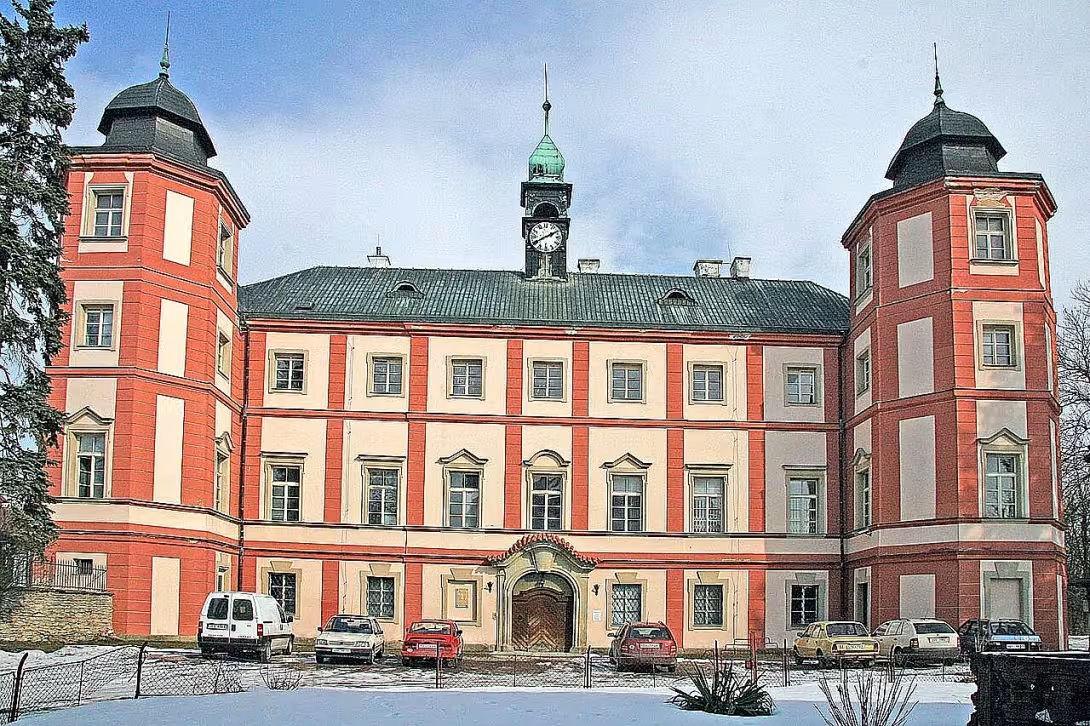
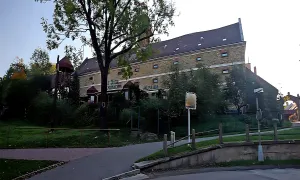
Zámek Zámrsk is a historically significant cultural monument located in Zámrsk, Pardubický kraj, Czech Republic. First mentioned as a fortress in 1469, it has evolved from its medieval origins into a Baroque-style chateau during the Kolovrat family's ownership. Its history includes periods of nationalization and varied uses, such as serving as an educational and correctional facility before housing an archive since 1960.
The earliest documented mention dates back to 1469 when Matyáš Korvín's forces burned it. The chateau experienced numerous ownership changes, starting with Vaněk ze Zámrsku in the late 15th century. Jan Lukavský z Lukavice transformed it into a Renaissance structure in the mid-16th century. After the Battle of White Mountain in 1622, Karel Kapoun's property was confiscated and later owned by Albrecht z Valdštejna until it became part of the Kolovrat family estate.
Architecturally, Zámek Zámrsk began as a fortress with an octagonal tower. Under the Kolovrats in the late 17th century, it transformed into a Baroque-style chateau. The eastern wing was added later that century, while the western and southern wings were completed at the start of the 18th century. Architect Jan Blažej Santini-Aichel likely oversaw some renovations during this period.
The ownership history includes notable figures such as Vaněk ze Zámrsku, Jan Lukavský z Lukavice, and the Kolovrat family. After various owners, it was nationalized post-World War II and served as a correctional facility until 1954. A fire in 1924 caused significant damage, but restoration was completed by 1926.
Throughout its history, Zámek Zámrsk has been the site of key events. It was burned by Matyáš Korvín's forces in 1469 and later nationalized after World War II. Its transformation into a Baroque chateau during the Kolovrat family's ownership reflects broader European architectural trends under Habsburg rule.
Today, Zámek Zámrsk houses the Státní oblastní archiv v Hradci Králové, which has been there since 1960. The chateau remains a site of historical interest due to its rich past and architectural evolution. Visitors can explore its well-preserved structures and learn about its multifaceted history.
Zámek Zámrsk stands as a testament to the region's dynamic history, offering insights into cultural and political shifts over centuries. Its preservation allows visitors to appreciate both its historical significance and architectural beauty, making it a worthwhile destination for those interested in Czech heritage.
Then and now
Drag the slider to compare how the landmark may have looked when it was built with the view today.
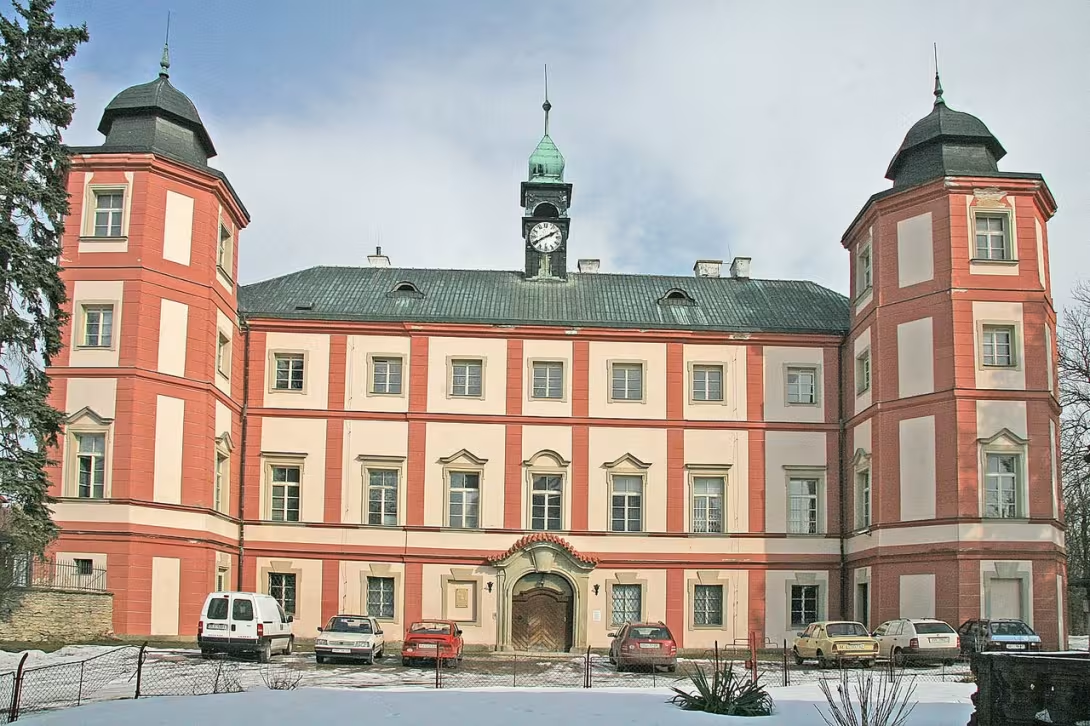

The historical appearance on the left is an AI-generated visualisation and serves as inspiration only.
Historical milestones
- 1469
- The chateau was first mentioned and destroyed by the forces of Matthias Corvinus.
- Late 15th century
- Vánek ze Zámrsku became the owner of the chateau.
- Mid-16th century
- Jan Lukavský z Lukavic transformed the chateau into a Renaissance structure.
- 1622
- After the Battle of White Mountain, the property was confiscated from Karel Kapoun and later taken over by Albrecht von Wallenstein.
- Late 17th century
- The chateau was transformed into a Baroque château under the Kolowrats.
- 1924
- A significant fire caused damage that was repaired by 1926.
Architectural development
Originally a fortress with an octagonal tower, the chateau underwent significant architectural changes. During the Kolovrat family's ownership in the late 17th century, it was transformed into a Baroque style structure. The eastern wing was added in the latter half of the 17th century, while the western and southern wings were completed at the start of the 18th century. Architect Jan Blažej Santini-Aichel likely oversaw some renovations.
Historical events
The chateau was burned by the forces of Matyáš Korvín in 1469.
In 1622, following the Battle of White Mountain, Karel Kapoun's property was confiscated.
Zámek Zámrsk was nationalized after World War II and served as a correctional facility until 1954.
Owners
Vaněk ze Zámrsku (1471–1501)
Jan Lukavský z Lukavice (1533–1541)
Karel Kapoun ze Svojkova (1613–1622)
Albrecht z Valdštejna (1624)
Vincenzo Muschinger z Gumpendorfu (1624–1628)
Vincenzius Zucco (1628–1635)
Eleonora, manželka Ferdinanda II. (1635–1640)
Albrecht Libštejnský z Kolovrat (1640–1657)
Leopold Oldřich a Kateřina Barbora Krakovská z Kolovrat (1657–1704)
Jan Norbert (1704–1736)
Rudolf (1736–1748)
Anna Karolína, provdaná za Antonína Víta hraběte z Bubna a Litic (1748–1772)
Points of interest
– The chateau's octagonal tower is a rare architectural feature that served as the core of its original fortress design, symbolizing medieval military architecture in Bohemia.
– In 1924, Zámek Zámrsk was severely damaged by fire, yet remarkably, it underwent restoration and reopened to the public just two years later, showcasing resilience and dedication to preservation.
– The chateau's transformation under Jan Blažej Santini-Aichel is particularly intriguing as he is renowned for his unique blend of Baroque and Gothic styles, which can be seen in some of Zámek Zámrsk’s architectural details.
– After the Battle of White Mountain, Karel Kapoun lost ownership due to confiscation by Albrecht z Valdštejna. This reflects the turbulent political shifts during the early 17th century and the impact on local nobility.
– Despite its varied uses over centuries—from a Renaissance residence to an educational facility—the chateau has maintained its historical integrity, allowing it to serve as a repository for regional archives since 1960.
Guide
This guide is narrated by a synthetic voice generated by artificial intelligence.
Show guide text
This text was created by artificial intelligence and has not been editorially reviewed. It may contain inaccuracies.
Welcome to the historic Zámek Zámrsk, nestled in the charming town of Zámrsk within the picturesque Pardubický kraj. As you stand before this remarkable cultural monument, imagine stepping back into a tapestry woven with centuries of history and transformation.
The story of Zámek Zámrsk begins as early as 1469 when it was first mentioned in historical records. Originally serving as a fortress, the chateau experienced its initial destruction at the hands of Matyáš Korvín's forces. Over time, it transitioned through various hands and styles. By the end of the 15th century, Vaněk ze Zámrsku became the owner, setting the stage for future developments.
As you gaze upon the chateau today, notice how its architecture has been shaped by numerous influences over the centuries. The most striking feature is undoubtedly the octagonal tower at its core—a rare architectural gem that symbolizes medieval military strength in Bohemia. This unique structure serves as a testament to the chateau's origins and its enduring legacy.
Moving through time, the 16th century saw Jan Lukavský z Lukavic transform Zámek Zámrsk into a Renaissance structure. However, it was not until the end of the 17th century that the chateau truly embraced Baroque elegance under the ownership of the Kolovrat family. This transformation marked a new chapter in its illustrious history.
The chateau's narrative is rich with notable figures who have left their mark on its legacy. Albrecht z Valdštejna, for instance, acquired it following the Battle of White Mountain in 1622. Later, the visionary architect Jan Blažej Santini-Aichel contributed to its architectural evolution. Each owner and historical figure added layers to Zámek Zámrsk's storied past.
One intriguing chapter unfolded in 1924 when a devastating fire severely damaged the chateau. Remarkably, it was restored and reopened to the public by 1926—a testament to resilience and dedication to preserving history.
As you continue your exploration, let the spirit of these historical figures guide you through the corridors of time. Each stone and spire holds whispers of the past, inviting you to delve deeper into its mysteries.
We invite you to wander further, uncovering more secrets and stories that Zámek Zámrsk has to offer. Thank you for joining us on this journey through history, and may your visit be both enlightening and inspiring.
Frequently asked questions
Can the monument be visited?
Some buildings of this kind are open for guided tours, others serve another purpose or are privately owned. We have not verified whether and when this monument is open – please ask the operator.
What are the opening hours and admission?
We have not verified the opening hours or admission. Current information is published by the operator.
Where is the monument?
Location: č.p. 1, Zámrsk, Pardubický kraj. The map on this page shows the exact spot.
Why is the monument protected?
It is listed in the Central List of Cultural Monuments of the Czech Republic as a cultural monument (register no. 40421/6-4137).
Businesses nearby
Do you run a restaurant, accommodation, shop, museum, rental, wellness or other visitor service near this monument? Show yourself directly to the people heading to it — this is how they will see you in the app and on the web:
Nearby
Surrounded by the scenic landscape of Pardubický kraj, Zámek Zámrsk is near other historical sites and natural features within a five-kilometer radius.
Accommodation nearby
Themed route
Tematická výletní trasa zámek Zámrsk a okolí
1. Zámek Zámrsk
Typ: Historický zámek
Proč stojí za návštěvu: Zámek Zámrsk, nacházející se v obci Zámrsk, je krásnou reprezentací barokní architektury a historie Pardubického kraje. Jeho impozantní stavba a bohaté interiéry nabízejí návštěvníkům pohled do minulosti, zatímco jeho parky a zahrady poskytují klidné prostory k relaxaci.
2. Park Zámku Zámrsk
Typ: Park
Proč stojí za návštěvu: Park kolem zámku je ideálním místem pro krátké procházky nebo pikniky, nabízející krásné výhledy na okolní krajinu. Jeho pečlivě udržované cesty a kvetoucí zahrady přitahují milovníky přírody a poskytují únik do klidného prostředí.
3. Nádvoří Zámku Zámrsk
Typ: Historické nádvoří
Proč stojí za návštěvu: Nádvoří zámku je centrem historických aktivit a výstav, které se konají po celý rok. Je to skvělý prostor pro sledování kulturních akcí nebo jen pro užívání atmosféry starobylého zámku.
4. Věž Zámku Zámrsk
Typ: Historická věž
Proč stojí za návštěvu: Věž zámku nabízí jedinečný pohled na okolní krajinu a je ideálním místem pro ty, kteří chtějí ocenit historickou architekturu z vyšší perspektivy. Je to také výhodné místo pro fotografování.
5. Expozice Zámku Zámrsk
Typ: Historická expozice
Proč stojí za návštěvu: Expozice zámku představuje historii a kulturu Pardubického kraje prostřednictvím výstavy artefaktů, uměleckých děl a dokumentů. Je to skvělá příležitost pro hlubší pochopení regionální historie.
Tato trasa nabízí kombinaci kulturního objevování a relaxace v krásném prostředí Pardubického kraje.
Seasonal recommendations
Spring: Visiting Zámek Zámrsk during spring offers a breathtaking display of nature as the chateau grounds burst into life with vibrant wildflowers and lush greenery, creating an enchanting atmosphere perfect for leisurely strolls. The soft light of spring enhances the beauty of the historic architecture, making it ideal for photography enthusiasts. Visitors should be prepared for occasional rain showers, so wearing layers is advisable, along with comfortable walking shoes to navigate the grounds easily. Although crowds can still be present during weekends and school holidays, arriving early in the morning can provide a more tranquil experience.
Summer: In summer, Zámek Zámrsk becomes a lively destination as the chateau's gardens are at their peak bloom, offering a picturesque setting for picnics or simply enjoying the outdoors. The longer daylight hours allow ample time to explore both the interior and exterior of the chateau, with guided tours providing fascinating insights into its history. Visitors should expect larger crowds during this busy season, so it is recommended to arrive early in the day to avoid long lines at popular exhibits. Light clothing and sun protection are essential due to the warm weather, along with staying hydrated throughout your visit.
Autumn: The autumn months transform Zámek Zámrsk into a stunning tapestry of reds, oranges, and yellows as the leaves change color in the surrounding landscape. This season offers a more serene atmosphere compared to summer, making it perfect for those seeking a quieter experience. The cooler weather is ideal for walking around the extensive grounds without the discomfort of summer heat. Visitors should dress warmly in layers to accommodate fluctuating temperatures throughout the day and consider bringing an umbrella or raincoat as autumn can bring unpredictable weather.
Winter: Winter at Zámek Zámrsk provides a magical experience with its snow-covered landscapes, offering a unique perspective on the chateau's architecture against the white backdrop. The atmosphere is often quieter during this season, allowing for more intimate exploration of the chateau's interiors and gardens, which are beautifully lit to enhance their charm. Visitors should dress warmly in layers and wear waterproof boots to navigate the potentially icy paths comfortably.
Visualizations and artistic views


The visualisations are generated by artificial intelligence and serve as inspiration.
Photos from the area
Real photos taken near the monument


Zdroj a licence jsou uvedeny u každého snímku.
Tips from visitors
No tips yet. Be the first!
Log in and add your tip.
Sources and literature
Photos: Prazak / CC BY 2.5 — Wikimedia Commons. The author and licence also appear when you hover over the image.
Faktickým podkladem tohoto textu byl článek na Wikipedii, jehož autory jsou přispěvatelé Wikipedie. Článek je dostupný pod licencí CC BY-SA 4.0.
Location on the map
Příběhy a pověsti
Legendy, pověsti a příběhy spjaté s touto památkou
Fotografie návštěvníků
Zatím žádné fotografie. Buďte první, kdo přidá fotografii z návštěvy!
Log in a přidejte svou fotografii nebo hodnoťte.
Za ověřenou návštěvu v aplikaci získáte víc bodů — poznáme podle GPS, že jste na místě.
Reviews and comments