






Kostel svatého Mikuláše v Mikulášovicích Church
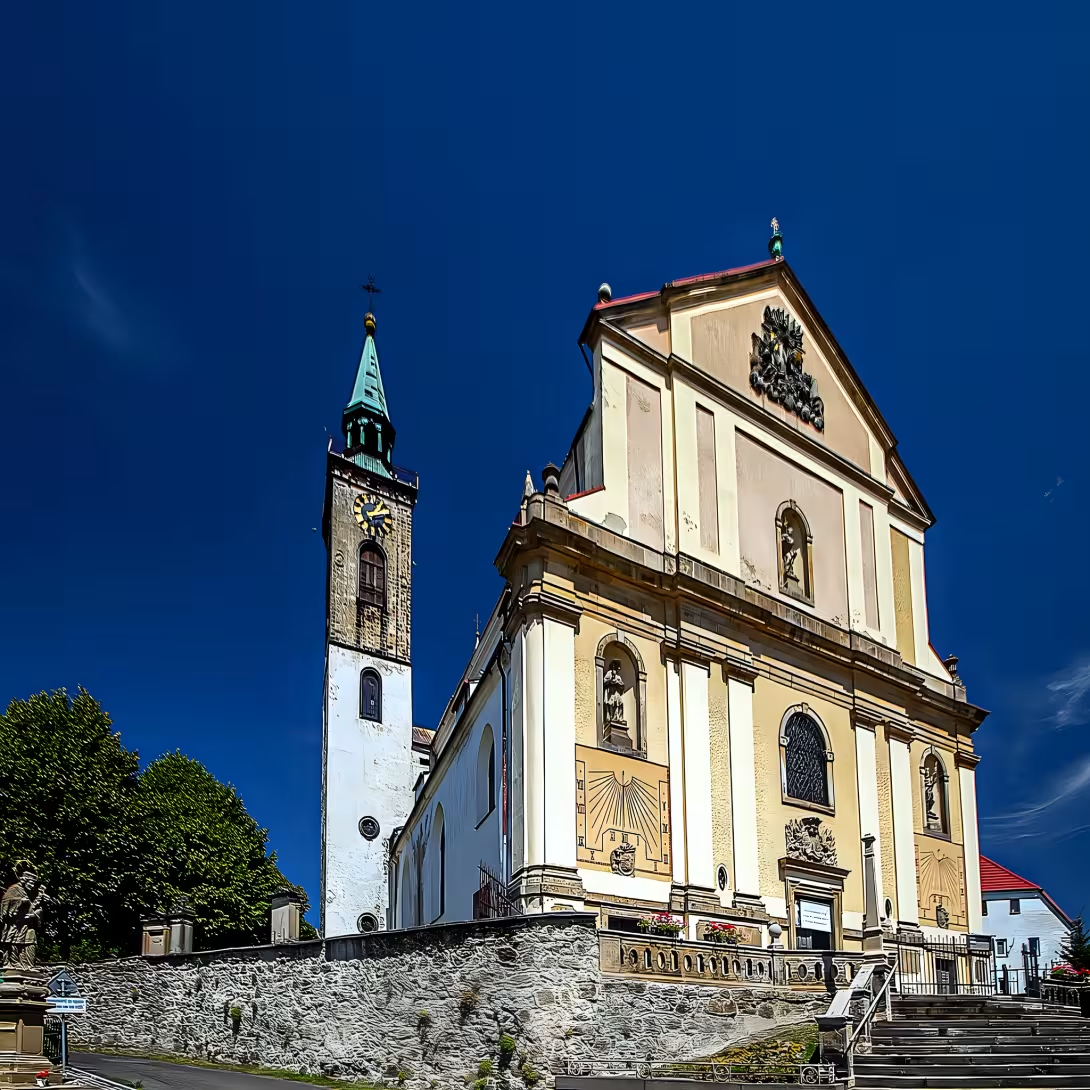
The Saint Nicholas Church in Mikulášovice is a significant cultural monument in the Ústecký kraj region of the Czech Republic. Located in the historic center of the town, this Baroque church was built between 1750 and 1751. It is a testament to the region's rich history and architectural heritage. The church has survived several wars and renovations, and its current state is a result of its restoration in the 19th century.
The first church dedicated to Saint Nicholas in Mikulášovice was built in the 13th century. The current church was built on the site of the original Renaissance church, constructed between 1551 and 1555. The Baroque church was designed by Zacharias Hoffmann and features a richly decorated interior with a main altar, side altars, a pulpit, and an organ. The church's tower reaches 60 meters, making it a prominent landmark in the town.
The church has undergone several renovations and restorations over the centuries, including a major restoration in the 19th century. The current building is a result of this restoration, which aimed to preserve the church's original Baroque style. The church's interior is adorned with artistic elements, including a main altar, side altars, a pulpit, and an organ. The main altar, completed in 1766, features an image of Saint Nicholas by Johann Lucas Kracker.
The church has been owned by the parish and the town of Mikulášovice. The current building was constructed between 1750 and 1751. The church was declared a cultural monument in 1958, recognizing its historical and architectural significance. The church survived World War II, although it was damaged during the conflict. The church's equipment, including its organ, has been preserved, with the exception of the bell, which was lost during the war.
The church's surroundings are characterized by rolling hills and forests, providing a picturesque backdrop to the town. The church's location in the historic center of Mikulášovice makes it a significant part of the town's identity and heritage. Visitors can explore the church's interior and admire its artistic elements. The church's tower offers a panoramic view of the surrounding landscape, making it a must-visit destination for anyone interested in history, architecture, and culture.
The Saint Nicholas Church in Mikulášovice is a testament to the region's rich history and cultural heritage. Its Baroque architecture, richly decorated interior, and significant cultural monument status make it a must-visit destination for anyone interested in exploring the region's history and culture. Visitors can explore the church's interior, admire its artistic elements, and enjoy the picturesque surroundings, making it a truly unforgettable experience.
Then and now
Drag the slider to compare how the landmark may have looked when it was built with the view today.
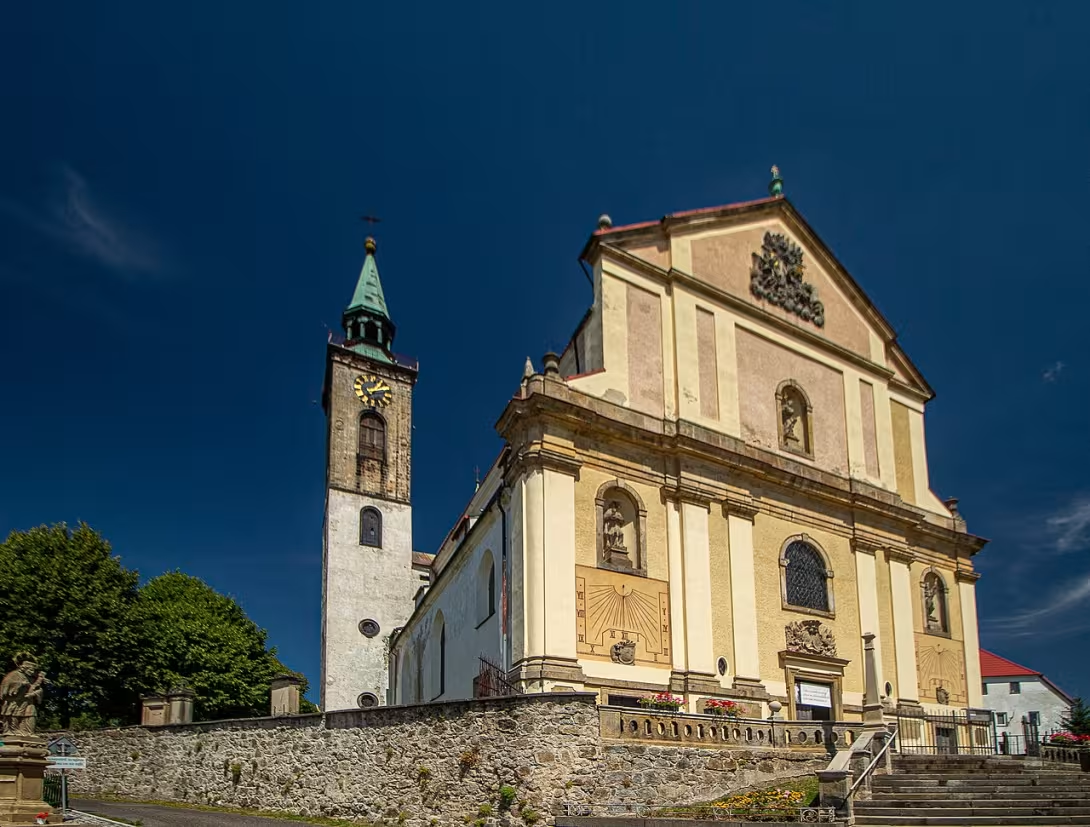

The historical appearance on the left is an AI-generated visualisation and serves as inspiration only.
Historical milestones
- 1445
- The first church dedicated to Saint Nicholas was mentioned in written records.
- 1551
- A new Renaissance church was built on the site of the original church.
- 1694
- The church was renovated and expanded in the Baroque style.
- 1750
- The current Baroque church was built.
- 1958
- The church was declared a cultural monument.
Architectural development
The church was built in the Baroque style between 1750 and 1751. The building was designed by Zacharias Hoffmann. The church has undergone several renovations and restorations over the centuries, including a major restoration in the 19th century.
Historical events
The first church dedicated to Saint Nicholas was built in the 13th century.
The current church was built between 1750 and 1751.
The church was damaged during World War II.
The church was declared a cultural monument in 1958.
Owners
The church has been owned by the parish and the town of Mikulášovice.
Points of interest
– The church's bell was lost during World War II, but the rest of its equipment, including the organ, was preserved.
– The church's tower offers a panoramic view of the surrounding landscape, making it a must-visit destination for anyone interested in history, architecture, and culture.
– The church's interior features a main altar, side altars, a pulpit, and an organ, all of which are richly decorated and well-preserved.
– The church was declared a cultural monument in 1958, recognizing its historical and architectural significance.
– The church's current state is a result of its restoration in the 19th century, which aimed to preserve the church's original Baroque style.
Guide
This guide is narrated by a synthetic voice generated by artificial intelligence.
Show guide text
This text was created by artificial intelligence and has not been editorially reviewed. It may contain inaccuracies.
Saint Nicholas Church is a Roman Catholic parish church in the historical center of Mikulášovice in the Šluknovský výběžek region in northern Bohemia. It stands in the middle of a square that has no official name, but locals call it the church square. The main road from Dolní Poustevna to Rumburku passes by it.
The church dedicated to Saint Nicholas was documented in Mikulášovice from the year 1445. The first church probably arose together with the village in the second half of the thirteenth century. In its place, between the years 1551 and 1555, a Renaissance church was built, which was then renovated and expanded in the Baroque style in the years 1694 and 1695. Today's building dates from the years 1750 and 1751 and was solemnly consecrated at the end of 1751. Since 1958 it has been protected as a cultural monument.
It is a Baroque three-nave church, fifty meters long, twenty meters wide and eighteen meters high. Its tower measures sixty meters. It was designed by the builder Zacharias Hoffmann from Lipová.
The interior furnishings are predominantly late Baroque and Rococo. They date from the second half of the eighteenth century and were supplemented throughout the nineteenth century. The most precious is the richly decorated main altar, completed in 1766, with a painting of Saint Nicholas by Johann Lucas Kracker. Several side altars and the pulpit from 1758 also deserve attention. The organ from 1901 has 2166 pipes. Of the bells, only one survived the wartime requisitions during the Second World War. It is the bell of Saint Anna, which was cast in 1921 by the workshop of Richard Herold.
The parsonage was rebuilt in 1846 after a fire in the city. In 2008 the city of Mikulášovice took it over and today it serves as a residential building. The church is surrounded by a former cemetery, which was closed in 1872. A number of Rococo and Neoclassical tombstones have been preserved there. Several of them were created by the Dresden sculptor Franz Pettrich.
Tips for visitors
The best time to visit the Saint Nicholas Church in Mikulášovice is during the spring and summer months when the weather is pleasant and the surrounding landscape is in full bloom.
You can check the current schedule on the official website or a journey planner website.
It's a good idea to bring a camera to capture the beautiful architecture and stunning views of the surrounding landscape. The best spots for photography are around the church's exterior and in the nearby park.
If you're looking for more things to see and do in the area, consider visiting the nearby Mikulášovice Spa, which is about a 10-minute walk from the church. You can also explore the charming town center and its shops and cafes.
Families with children can enjoy the nearby park, which has a playground and a small pond. The church itself is also a great place to learn about history and architecture, and the friendly staff may be able to provide more information and insights.
Frequently asked questions
Can the monument be visited?
Religious buildings are usually open mainly during services; at other times a visit is normally arranged with the parish or the operator. We have not verified specific times.
Where is the monument?
Location: Mikulášovice, Ústecký kraj. The map on this page shows the exact spot.
Why is the monument protected?
It is listed in the Central List of Cultural Monuments of the Czech Republic as a cultural monument (register no. 16253/5-3858).
Businesses nearby
Do you run a restaurant, accommodation, shop, museum, rental, wellness or other visitor service near this monument? Show yourself directly to the people heading to it — this is how they will see you in the app and on the web:
Nearby
The church is located in the historic center of Mikulášovice, a small town in the Ústecký kraj region of the Czech Republic. The surrounding landscape is characterized by rolling hills and forests.
Accommodation nearby
Themed route
Trasa: Mikulášovice - historické jádro
1. Kostel svatého Mikuláše - hlavní cíl trasy, stojí za návštěvu kvůli své jedinečné architektuře a historickému významu. Kostel je dominantou historického jádra obce Mikulášovice a jeho stavba je spojena s legendou o zakladateli obce.
2. Historické jádro obce - stojí za návštěvu kvůli své původní architektuře a atmosféře. Historické jádro obce je plné původních domů a ulic, které dodávají místu autentickou atmosféru.
3. Náměstí - stojí za návštěvu kvůli své klidné atmosféře a jedinečné architektuře. Náměstí je centrem historického jádra obce a je obklopeno původními domy a kostelem svatého Mikuláše.
4. Park u kostela - stojí za návštěvu kvůli své klidné atmosféře a jedinečné architektuře. Park je umístěn u kostela svatého Mikuláše a nabízí klidné místo pro odpočinek a relaxaci.
Seasonal recommendations
Jaro:
In the spring season, St. Nicholas Church in Mikulášovice is surrounded by blooming trees and flowers, creating a pleasant atmosphere. A special feature is also the sunny weather, which allows visitors to admire the details of the façade and sculptures.
We recommend visiting the church during the spring in early morning hours or later in the afternoon to avoid crowds of tourists. The best time for a visit is from April to May when the weather is pleasant and nature is in full bloom.
Léto:
In the main summer season, St. Nicholas Church in Mikulášovice is surrounded by green trees and flowers, as well as tourist groups. A special feature is the warmth and sunshine that allows visitors to admire the details of the church's interior.
We recommend visiting the church in the summer during early morning hours to avoid crowds of tourists who usually gather later in the afternoon. The best time for a visit is from June to August when the weather is warm and sunny.
Podzim:
In the autumn season, St. Nicholas Church in Mikulášovice is surrounded by colorful leaves on trees and cooling weather. A special feature is also the calm atmosphere that allows visitors to admire the details of the church's interior.
We recommend visiting the church during the autumn in early morning hours to avoid crowds of tourists who usually gather later in the afternoon. The best time for a visit is from September to October when the weather is cool and peaceful.
Zima:
In the winter season, St. Nicholas Church in Mikulášovice is surrounded by snow and cooling weather.
We recommend visiting the church during the winter in early morning hours to avoid crowds of tourists who usually gather later in the afternoon. The best time for a visit is from December to February when the weather is cold and peaceful.
Visualizations and artistic views


The visualisations are generated by artificial intelligence and serve as inspiration.
Photos from the area
Real photos taken near the monument


Zdroj a licence jsou uvedeny u každého snímku.
Tips from visitors
No tips yet. Be the first!
Log in and add your tip.
Sources and literature
Photos: VitVit / CC BY-SA 4.0, rozlišení zvýšeno umělou inteligencí — Wikimedia Commons. The author and licence also appear when you hover over the image.
Faktickým podkladem tohoto textu byl článek na Wikipedii, jehož autory jsou přispěvatelé Wikipedie. Článek je dostupný pod licencí CC BY-SA 4.0.
Location on the map


Příběhy a pověsti
Legendy, pověsti a příběhy spjaté s touto památkou

Fotografie návštěvníků
Zatím žádné fotografie. Buďte první, kdo přidá fotografii z návštěvy!
Log in a přidejte svou fotografii nebo hodnoťte.
Za ověřenou návštěvu v aplikaci získáte víc bodů — poznáme podle GPS, že jste na místě.
Reviews and comments