






kaple Matky Boží (Mikulášovice) Chapel
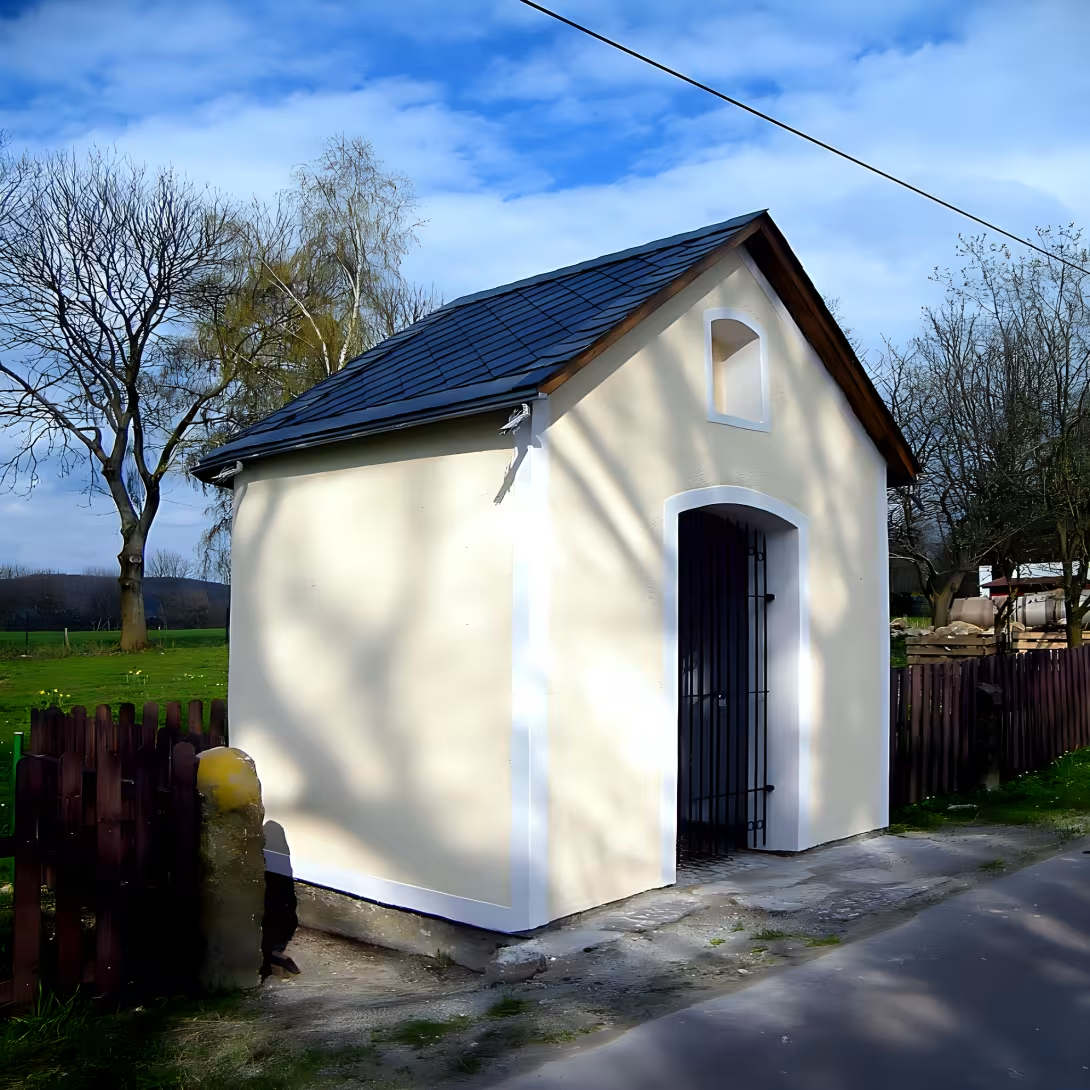
The Chapel of Our Lady is located at the upper end of Mikulášovice near the source of the Mikulášovský Brook, in a part of the city originally called Wildes Viertel – Divoká Čtvrť. Its existence is thanks to the bell founder master Nikolaus Pietschmann, who had it built in 1803. Pietschmann was born in 1766 and lived in house number 173, which was demolished after World War II. The reasons that led him to build a chapel dedicated to Our Lady remain unknown.
The original building was simple and modest – wooden, with very small dimensions, equipped with a small wooden altar featuring an image of the Sorrowful Mother of God. According to a register of chapels from 1837, the chapel had no capital for its maintenance, and the Pietschmann family took care of it. Over time, the original wooden structure was replaced by a larger brick chapel. The exact date of this construction is unknown, presumably occurring at some point during the twentieth century.
Like many other chapels in Mikulášovice – such as Balzer's Chapel, Melchior's Chapel, or St. Joseph's Chapel in Mikulášovičky – the Chapel of Our Lady became a victim of the post-World War II era. After the original inhabitants were expelled, no one took care of it. It deteriorated and gradually disappeared until only the remains of the building remained by the end of the twentieth century. Later, only the foundations and a small piece of hanging eaves survived.
The chapel's restoration began in 2014 when the city administration of Mikulášovice initiated negotiations about it. In spring 2015, the Regional Assembly of Ústí Region approved funding from the Program for the Rescue and Restoration of Small Monuments. The construction cost 257,670 koruna; the region contributed 180,000 koruna. Construction work was completed in November 2015, and the following year, the façade, damaged by frost, was repaired. The chapel was consecrated on May 13, 2016, by the local parish administrator.
The new chapel, now the third in its history, was built based on preserved photographs. Its floor plan is rectangular with a segmental end. In the façade, there is an entrance protected by grilles, above which is an empty niche in the pediment. The walls are plain, divided only by narrow white pilasters. The plastering is rough, with a yellow coating. The roof without a tower is covered with slate tiles, and the gables are decorated with small gargoyles. Inside, the floor is paved with granite slabs featuring a cross made of fired bricks in the center. A wooden crucifix with a metal body of Christ and a large wooden cross hanging from the ceiling shape the space.
The chapel is now property of the city of Mikulášovice and is not monument-protected. It is not used for regular services, although once a year it serves as a place of devotion during a novena to the Holy Spirit.
Then and now
Drag the slider to compare how the landmark may have looked when it was built with the view today.
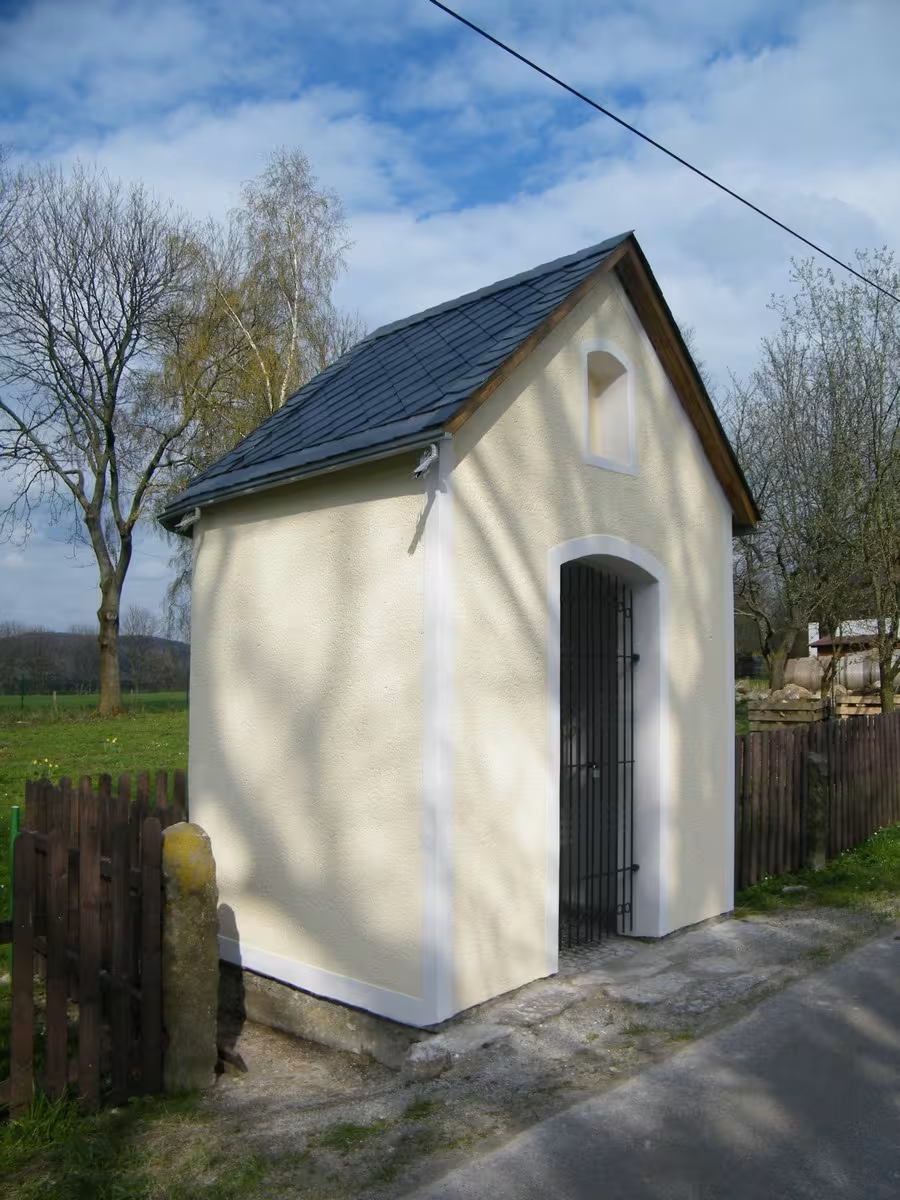

The historical appearance on the left is an AI-generated visualisation and serves as inspiration only.
Historical milestones
- 1803
- Construction of the original wooden chapel by Nikolaus Pietschmann.
Architectural development
The first chapel, built in 1803 by Nikolaus Pietschmann, was a small wooden structure. It was later replaced by a brick chapel, which eventually fell into disrepair and disappeared by the late 20th century. The current chapel, reconstructed in 2015, is based on surviving photographs and features a simple design with a gabled roof covered in tiles.
Historical events
- 1803
- Construction of the original wooden chapel by Nikolaus Pietschmann.
- 2015
- Reconstruction of the chapel completed with financial support from Ústecký kraj.
Owners
The chapel is owned by the municipality of Mikulášovice.
Points of interest
- The Chapel of the Virgin Mary is located at the upper end of Mikulášovice near the source of the Mikulášovský stream in a part of the town originally called Wildes Viertel – Divoká čtvrť. - Its existence is attributed to the blacksmith master Nikolaus Pietschmann, who had it built in 1803. Pietschmann was born in 1766 and lived in house number 173, which was demolished after World War II. - The original structure was simple and modest – wooden with very small dimensions, equipped with a small wooden altar featuring an image of the Sorrowful Mother of God.
Guide
This guide is narrated by a synthetic voice generated by artificial intelligence.
Show guide text
This text was created by artificial intelligence and has not been editorially reviewed. It may contain inaccuracies.
Welcome. You have arrived at a place of profound stillness, a small sanctuary tucked away where the rhythm of nature meets the echoes of history. As you stand here, take a moment to simply breathe and absorb the atmosphere. You are standing before the Chapel of the Virgin Mary in Mikulášovice. Notice how the air feels different here, perhaps a bit cooler, a bit more tranquil, as you are positioned near the very source of the Mikulášovický stream. The gentle presence of the water nearby seems to set the tone for this entire location, inviting you to leave the rush of the modern world behind and enter a space dedicated to quietude and reflection.
As you look at the structure before you, you are seeing a beautiful dialogue between the past and the present. While the chapel you see today feels fresh and contemporary, it is not a new idea. It is a modern reconstruction, completed only recently in 2015, yet it carries the weight of over two centuries of devotion. It stands here as a testament to the resilience of faith and the community's desire to honor what came before. This building is not merely a structure of stone and mortar; it is a bridge across time, connecting the people of today with the villagers of the nineteenth century.
To understand why this chapel exists, we must travel back in time to the year 1803. Imagine this landscape as it was then—perhaps more rugged, more isolated. In those days, the chapel was not this modern reconstruction, but a humble wooden structure. It was born from the devotion of a local man, a blacksmith master named Nikolaus Pietschmann. In an era where life was defined by hard manual labor and the unpredictable forces of nature, the creation of such a sacred space was a monumental act of spirit. Nikolaus Pietschmann did not just build a shelter; he established a landmark of hope for the people of this region.
As you observe the chapel's design, I invite you to pay close attention to how the architects have approached this challenge. Although the specific names of the architects behind this 2015 reconstruction remain unknown to history, their intentions are clearly visible in the way the building sits in the landscape. They have achieved something quite delicate: they have respected the traditional elements that defined the original spirit of the site while adapting the form to meet contemporary needs. Notice how the design does not try to mimic the old wooden chapel perfectly, but instead uses modern sensibilities to evoke the same sense of peace. It is a design that values light, space, and a sense of harmony with the surrounding environment. It is a place built not for the grandiosity of large, regular services, but for the intimate, personal moments of prayer and contemplation that draw people to this specific spot.
The story of this place is deeply intertwined with the identity of the man who started it all. Nikolaus Pietschmann was a blacksmith master, a man who worked with fire, iron, and strength. There is a poetic contrast in the fact that a man whose daily life was defined by the heavy, rhythmic striking of metal on an anvil would dedicate his resources to creating something as delicate and spiritual as a chapel. It reminds us that even in the most hardworking and industrial lives, there is always a profound need for the sacred. His legacy is not found in the iron he forged, but in the sanctuary he helped establish here, near the flowing waters of the Mikulášovický stream.
As you continue to look around, you might find yourself wondering about the very ground you are standing on. This part of Mikulášovice has a history that is as rugged as the landscape itself. You are standing in an area that was originally known by the name Wildes Viertel, or as it is known in Czech, Divoká čtvrť. The name itself—the Wild Quarter—suggests a place that was once untamed, a frontier of sorts, located at the upper end of the town. It gives you a sense of how significant it was to establish a place of peace and order, like this chapel, in a part of the world that felt so wild and unpredictable.
There is a certain mystery in the way this site has endured. From a simple wooden building in 1803 to a modern architectural tribute in 2015, the Chapel of the Virgin Mary has survived the changing tides of history, the shifting borders of regions, and the passage of generations. It remains a constant, a fixed point near the source of the stream, watching as the world changes around it.
As you prepare to continue your walk, I encourage you to take one last look at the chapel. Do not just see it as a building, but as a vessel for the memories of those who came before you and a sanctuary for those who come after. Whether you are seeking a moment of silence, a bit of historical connection, or simply a beautiful view by the water, you have found a truly special corner of Mikulášovice.
Thank you for listening. Please, take your time, enjoy the serenity of the Mikulášovický stream, and continue your exploration of this beautiful landscape.
Tips for visitors
The best time to visit the kaple Matky Boží is during the morning or late afternoon when the light is soft, which is ideal for photography of the chapel and the surrounding natural landscapes. The area near the source of the Mikulášovický stream offers a particularly peaceful atmosphere for capturing scenic views.
To reach the chapel, you can use a car or public transport; please verify current connections and schedules using a search engine. Once you arrive in Mikulášovice, you will need to head towards the upper part of the village to find the site.
It is recommended to bring comfortable walking shoes and appropriate clothing for a visit to a natural area. For families with children, the tranquil surroundings provide a calm environment for a walk, though visitors should maintain a respectful silence suitable for a place of prayer and reflection.
While visiting, you can explore the immediate surroundings of Mikulášovice, specifically the area near the source of the Mikulášovický stream, which offers a deep connection to local history and natural beauty.
For kids
Imagine going back to when our country was full of forests and rivers. It was a different time, other people lived here and there. They had different ways of life, different customs and traditions.
Mikulášovice was a small village with several houses and settlements. People here have fed on agriculture and animal husbandry. They were good guys who worked hard all year long to have something to eat and besiege for the winter.
Businesses nearby
Do you run a restaurant, accommodation, shop, museum, rental, wellness or other visitor service near this monument? Show yourself directly to the people heading to it — this is how they will see you in the app and on the web:
Nearby
Located in the upper part of Mikulášovice near the source of the Mikulášovický stream, the chapel is surrounded by natural landscapes. The area offers tranquility and a connection to local history.
Accommodation nearby
Themed route
1. Source of the Mikulášovický stream Type: Natural landmark Begin your journey at the origin of the stream located in the upper part of the village.
2. Natural landscapes of Mikulášovice Type: Nature area Walk through the scenic surroundings to enjoy the tranquility and the connection to the local environment.
3. kaple Matky Boží (Mikulášovice) Type: Chapel Reach the main destination to experience the historical significance and the peaceful atmosphere of this site.
Seasonal recommendations
In spring, the area around kaple Matky Boží in Mikulášovice awakens with fresh greenery and blooming flora, creating a revitalizing atmosphere. The soft, morning light is ideal for photography and appreciating the chapel's excellent condition. Visitors should wear layered clothing to adapt to fluctuating temperatures and consider visiting on weekdays to enjoy a more peaceful experience.
Summer brings vibrant colors and bright sunlight, highlighting the monument against a backdrop of lush, deep-green foliage. As this is the peak tourist season, arriving early in the morning is recommended to avoid the largest crowds and the midday heat. Light, breathable clothing and sun protection are essential for a comfortable visit.
During autumn, the landscape around Mikulášovice transforms into a palette of gold and red, lending a contemplative and serene mood to the site. The low angle of the sun provides a warm, dramatic glow that beautifully accentuates the architecture. It is advisable to bring a waterproof jacket and visit during the late afternoon to witness the most vivid seasonal colors.
Winter offers a quiet, stark beauty, where the chapel may stand out against a blanket of snow, creating a peaceful and secluded feeling. Because days are shorter and temperatures drop significantly, heavy winter clothing and sturdy footwear are a must. Visitors should be mindful of potentially shorter opening hours and plan their trip for the middle of the day to maximize available daylight.
Visualizations and artistic views


The visualisations are generated by artificial intelligence and serve as inspiration.
Photos from the area
Real photos taken near the monument

Zdroj a licence jsou uvedeny u každého snímku.
Atmosphere of the place
This atmospheric visualisation of the place and period was generated by artificial intelligence. It is not real footage of the location.
Tips from visitors
No tips yet. Be the first!
Log in and add your tip.
Sources and literature
Fotografie: Gumideck / CC BY-SA 4.0, rozlišení zvýšeno umělou inteligencí — Wikimedia Commons. The author and licence also appear when you hover over the image.
Faktickým podkladem tohoto textu byl článek na Wikipedii, jehož autory jsou přispěvatelé Wikipedie. Článek je dostupný pod licencí CC BY-SA 4.0.
Location on the map
Příběhy a pověsti
Legendy, pověsti a příběhy spjaté s touto památkou

Fotografie návštěvníků
Zatím žádné fotografie. Buďte první, kdo přidá fotografii z návštěvy!
Přihlaste se a přidejte svou fotografii nebo hodnoťte.
Za ověřenou návštěvu v aplikaci získáte víc bodů — poznáme podle GPS, že jste na místě.
Reviews and comments