



Lékárna Other
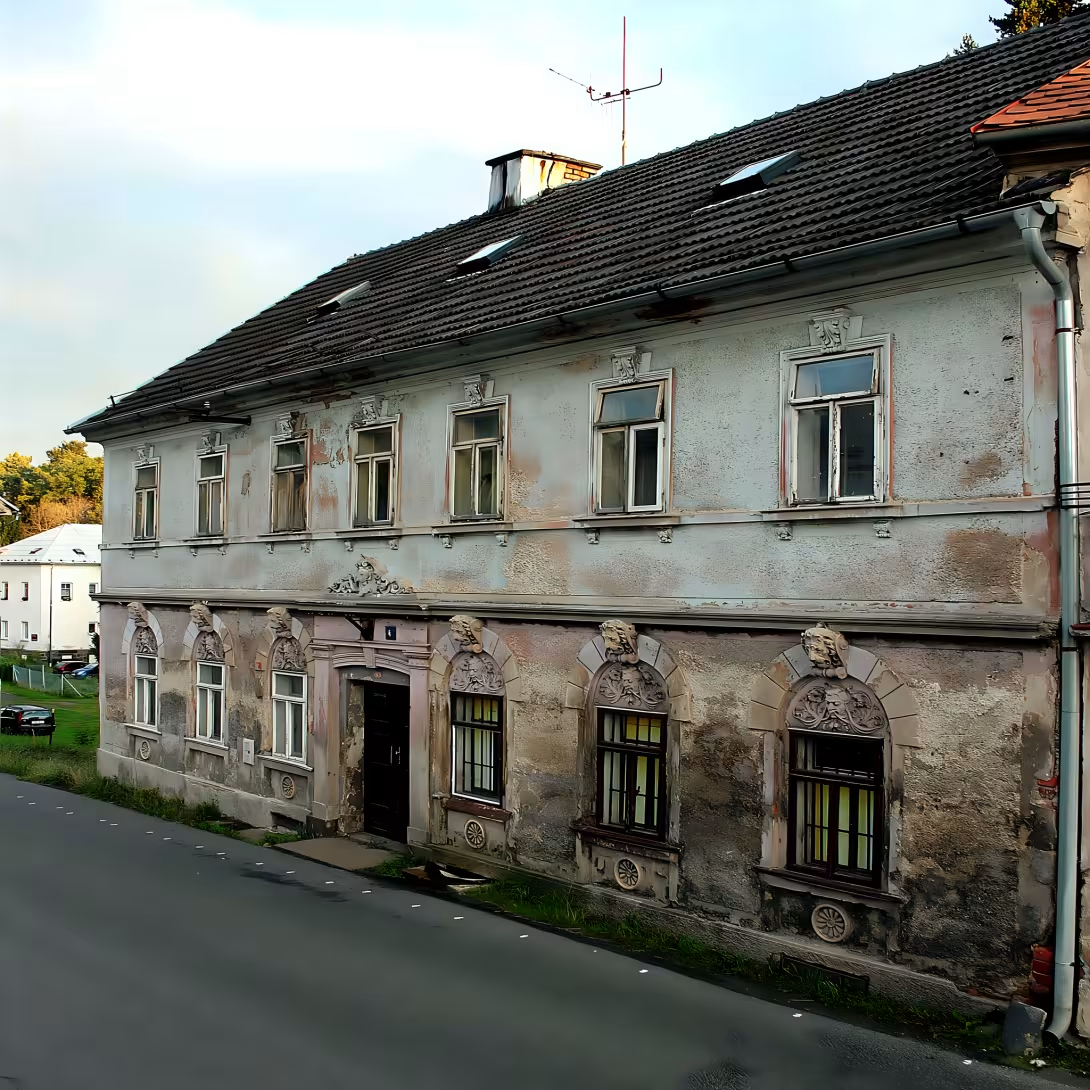
The former pharmacy U Lva in Mikulášovice is a historical object that combines Neo-Renaissance architecture with Art Nouveau Wing observatory. This monument is important in its long history since the end of the 18th century and a unique combination of pharmacy tradition with astronomical purpose.
The original building probably dates back to the last quarter of the 18th century and had a classical character. In 1833 it was purchased by pharmacist Johann Jakobie, who moved it to a pharmacy house operated since 1831 in the neighbouring Imperial House no. 2. During the 19th century the region of northern Bohemia underwent the development of industry and urbanization, which brought new aesthetic elements to the architecture of public buildings. A major event was the great fire of Mikulášovice on September 20, 1842, which destroyed the house. After this disaster, Jakobie the pharmacist rebuilt the building and restored the pharmacy.
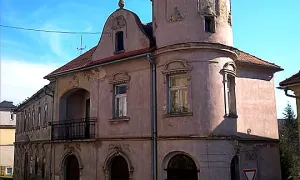
The current appearance of the building is the result of a neo-Renaissance reconstruction after a fire. It is a rectangular storey building standing on a plinth of variable height, which equalizes terrain inequalities. The cover side is headed towards the main road and the former Church Square. The facade is decorated with various architectural elements. On the ground floor, the windows are surrounded by smooth stucco shamrans ending with arc frontons made of illusionary vaults on top of which the lion's heads are placed. There are floral mascarons in the suprafenestras. The upstairs shampoo is simpler and decorated with a volute jewel with an acanthus leaf. On the south wall there is a wooden parchment and the whole building is covered by a saddle roof with burnt bags. In 1913 the Art Nouveau building of the observatory was built to the west wall.
After his wife died in 1861, Johann Jakobie sold the building to a pharmacist named Anton Stohr. Since 1886 the property belonged to the Kraus family, first Josef Adolf Krause and after his death in 1910 the son of Adolf Krause. In 1913 he added the mentioned Art Nouveau observatory to the main building. Lékárna worked in connected buildings until 1962, then the premises were used for various purposes, such as a semi-shop, bookstore, bazaar or gambling hall.
The facade of the building has undergone changes; It was originally pink with a white crown ledge, later painted into shades of brick and purple. The lion's heads on the facade refer to the name of the pharmacy U Lva. On 14 April 1992, the building was declared a cultural monument. After the sale to the city of Mikulášovice in 1994, the city bought it again at a total price of CZK 600,000 in 2012.
Currently, the building serves as an entrance to the observatory and its owner plans to reconstruct. This monument is a valuable witness to the historical development of the region and its architecture, offering a view of the combination of science and traditional craft in one place.
Then and now
Drag the slider to compare how the landmark may have looked when it was built with the view today.
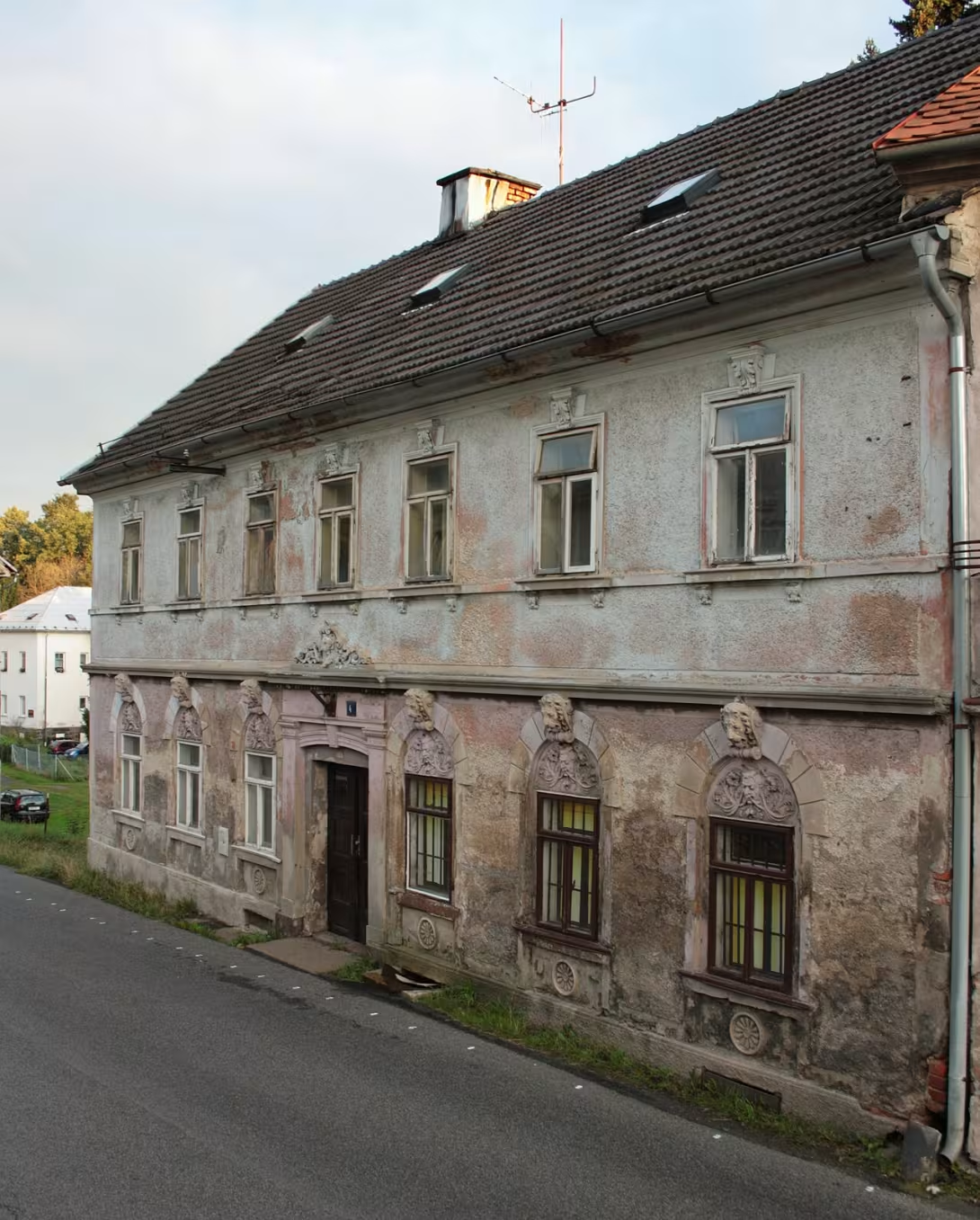

The historical appearance on the left is an AI-generated visualisation and serves as inspiration only.
Historical milestones
- 1833
- Buying the house by pharmacist Johann Jakobia and moving the pharmacy to building No. 4.
- 1842
- Destruction of the building by a large fire and subsequent neo-Renaissance reconstruction.
- 1913
- Construction of Art Nouveau building of Adolf Kraus observatory.
- 1992
- Declaration of the pharmacy building and the observatory for a cultural monument.
Architectural development
Originally a classicist building, newly remodeled after 1842. In 1913 an Art Nouveau building was added to the west wall. The facade is decorated with lion heads, mascarons and volute jewels.
Historical events
September 20, 1842: The Great Fire of Nicholas destroyed the building. 14 April 1992: Declaration of construction for a real estate cultural monument.
Owners
Johann Jakobie (from 1833), Anton Stohr (from 1861), Kraus family (from 1886), Mikulášovice city (owner in 1992 and since 2012)
Points of interest
- The former pharmacy U Lva in Mikulášovice combines Neo-Renaissance architecture with Art Nouveau Wing observatory. - The original building probably dates back to the last quarter of the 18th century and had a classical character. - After the great fire of Mikulášovice in 1842, the building was rebuilt with a neo-Renaissance design. - The Art Nouveau building of the observatory was added to the west wall in 1913. - On 14 April 1992, the building was declared a cultural monument.
Guide
Show guide text
This text was created by artificial intelligence and has not been editorially reviewed. It may contain inaccuracies.
Welcome to Nicholas. You just stopped in front of a building that carries the incredible power of time and stories that took place on these streets. You're standing in front of the former pharmacy at Leo's. Before we go into her history, pay attention to what's right in front of you. This storey construction does not act as one continuous whole, but rather as a fascinating combination of different periods. Feel how different shapes and moods collide here, which flow smoothly into each other. It's a building that survived the destruction that was changing, and that came from where the human body was being cured, a place where the infinity of the universe is observed.
Now let's go back deep into the past to understand how this house came into being. The roots of this construction range back to the last quarter of the eighteenth century. At that time, the building had a rather simple, classicist character, being part of an early town. The breakthrough for her fate was 1833. At that time the pharmacist Johann Jakobie purchased this house and decided to move his pharmacy right here, to building number four. Imagine the times, the smell of herbs, the glass vessels and the silence that accompanied the preparation of drugs for the locals. This pharmacy was the heart of health throughout the surrounding area.
However fate had a cruel decision for Mikulášovice in 1842. The great fire that engulfed the city at that time carries a tragedy, but also an opportunity for recovery. Even though the fire destroyed the original shape of the building, the pharmacy was born again from the ashes. At this time the construction was rebuilt into a neo-Renaissance style. If you look at the main body of the building now, this is the style that dominates it. The Neo-Renaissance brought a sense of stability, order and grandeur to the Mikuláš. This new form of the building was intended to express the importance of the pharmacy as an institution on which people could rely.
But now pay attention to what you see when you look at another part of the construction. Once the eyes move to the wing attached, you'll see a whole different world. In 1913, the architecture of this place changed dramatically again. Josef Adolf Krause has built a new wing built in Art Nouveau style. Art Nouveau is a style that loves curves, organic shapes and softness. This new wing brought light and modern breath to the building back then. And it is in this wing that there is something quite extraordinary - the observatory.
This contrast between the solid, neo-Renaissance part and the lighter, Art Nouveau extension is what makes this monument so unique. It's like you're reading a serious historical document in one book and on the next, a beautiful dream poetry. This building is a living witness to how human needs and aesthetic taste change. For decades, until 1962, the pharmacy actually worked here. People came here with pain, hope for healing, and pharmacists helped them in their difficult moments.
But when the pharmacy closed, the building could be forgotten. Fortunately, it didn't. In 1992 this building and the observatory were officially declared a cultural monument. This means that its history and its beauty are now protected for future generations. It is proof that even if the function of the place changes, his soul remains.
The interesting thing that may surprise you is the unusual path this building has taken. Most historical buildings remain loyal to their original purpose, or turn into residential houses or offices. But here we see a rise from earthly to heavenly. Lékárna has dealt with what's inside us, what's bothering us on this earth. The observatory then deals with what is far above us, what is infinite and untouchable. It's a fascinating transition from healing the body to finding answers in the depths of the universe.
Looking at the building, you can imagine the characters that left their mark. Imagine Johann Jakobieho planning the future of his pharmacy in 1833. Imagine Adolf Krause, who in 1913 brought science to the Mikuláš and a view of the stars. Each of them contributed to the fact that you are standing right here today looking at this unique whole.
Now you have no more long talk, but an invitation to explore. This building is not just an object to observe from a distance. It's a gateway. This is where your journey to the celestial bodies begins. If you feel like it, go ahead and enter the observatory which is hidden in this Art Nouveau Wing. Let yourself be carried away by the secrets of the universe that awaits you there. Thank you for your time and attention to this historic monument. We wish you a wonderful continuation of your tour and many experiences, whether looking at history or looking into the night sky. Goodbye.
Tips for visitors
Best time to visit the former pharmacy At Lva in Mikulášovice is early spring or late autumn when the weather is pleasant and fewer people. These periods offer a peaceful atmosphere to explore historical architecture without unnecessary noise.
Transport by public transport is also available; check the latest information in the local search engine for current connections and times.
When visiting, bring your shoes suitable for walking, because the area around the former pharmacy may not have comfortable journeys. Also bring protective clothes and sunglasses, especially in the summer months.
Photography of the former pharmacy will offer the best effects in the light of morning or late afternoon. It is especially recommended to consider the sunrise when light is soft and pleasant to capture historical details of the building.
In the vicinity of the former pharmacy you can visit the former Church Square, located nearby. This place can offer an interesting history and atmosphere for further exploration.
Frequently asked questions
Can the monument be visited?
We have not verified whether this monument is accessible. Please ask the owner or operator, or the local municipal office.
Where is the monument?
Location: Mikulášovice, Ústecký kraj. The map on this page shows the exact spot.
Why is the monument protected?
It is listed in the Central List of Cultural Monuments of the Czech Republic as a cultural monument (register no. 1000118631_0002).
Businesses nearby
Do you run a restaurant, accommodation, shop, museum, rental, wellness or other visitor service near this monument? Show yourself directly to the people heading to it — this is how they will see you in the app and on the web:
Nearby
Budova se nachází v obci Mikulášovice v blízkosti hlavní silnice a bývalého Kostelního náměstí.
Accommodation nearby
Themed route
Thematic cruise route from the Pharmacy in Nicholas
1.Lékárna - Type: Historical building - Why it is worth a visit: This pharmacy is one of the oldest in Moravia and offers an attractive look in the past. It's a place where you can explore the history of pharmacy and see the old tools.
2. Former Church Square - Type: Historical Square - Why is it worth visiting: This place is an important part of local history and culture. The square was once the centre of the village, which is reflected in the architecture of the surrounding buildings.
3. Main Road - Type: Historical communication - Why is it worth a visit: Walk on the main road allows an overview of today's and historical development of the village. The road connected Mikulášovice to the surrounding sites and was a living artery for local residents.
4. Ambient green areas - Type: Places to rest - Why is it worth a visit: These places offer a quiet break during walks. They are ideal for relaxing and enjoying the natural environment near historical monuments.
This route allows you to view Mikulášovice from different angles, from history to the present.
Seasonal recommendations
Spring: In the spring period Lékárna in Mikulášovice is revived by flowers that celebrate the arrival of warm days. The sun illuminates the building in a strange way and the wood becomes brighter after a freezing winter. It is advisable to visit the memory in early afternoons when the temperature is pleasant and the crowds have not yet grown. It is recommended to wear clothes at a mild temperature because in the morning they may still be cold.
Summer: In summer Lékárna in Mikulášovice takes on life and attraction for visitors. The sun illuminates the building for a long time, allowing detailed monitoring of architectural details. A high number of visitors are expected in this period, therefore it is recommended to arrive early in the morning or later in the afternoon to avoid long fronts. It is advisable to wear light clothes and carry a supply of drinking water.
Autumn: In autumn, Lékárna in Mikulášovice offers a view of colored leaves that add a mild and calm feeling to the atmosphere. The sun illuminates the building for a shorter time, which provides a proper opportunity for photography in a less disturbed environment. During this period, the first cold days appear and it is advisable to take a mild dress with you. Visiting a memory in early afternoons may be a good way to enjoy a quieter moment.
Winter: In winter Lékárna in Mikulášovice takes a mysterious and peaceful character. The sun illuminates the building only briefly, which brings extraordinary light effects on the shaded walls. A smaller number of visitors are expected in this period and the memory can often be closed earlier, so it is recommended to check the current time of operation. It is necessary to wear warm clothes and suitable shoes for cooler conditions on the outside. Visiting a memory in the early afternoon may be an ideal way to enjoy a quiet atmosphere without large crowds.
Visualizations and artistic views


The visualisations are generated by artificial intelligence and serve as inspiration.
Photos from the area
Real photos taken near the monument


Zdroj a licence jsou uvedeny u každého snímku.
Tips from visitors
No tips yet. Be the first!
Log in and add your tip.
Sources and literature
Photos: Matěj Baťha / CC BY-SA 3.0, rozlišení zvýšeno umělou inteligencí — Wikimedia Commons. The author and licence also appear when you hover over the image.
Faktickým podkladem tohoto textu byl článek na Wikipedii, jehož autory jsou přispěvatelé Wikipedie. Článek je dostupný pod licencí CC BY-SA 4.0.
Location on the map


Příběhy a pověsti
Legendy, pověsti a příběhy spjaté s touto památkou
Fotografie návštěvníků
Zatím žádné fotografie. Buďte první, kdo přidá fotografii z návštěvy!
Log in a přidejte svou fotografii nebo hodnoťte.
Za ověřenou návštěvu v aplikaci získáte víc bodů — poznáme podle GPS, že jste na místě.
Reviews and comments