






Kostel svatého Petra a Pavla (Rotava) Church
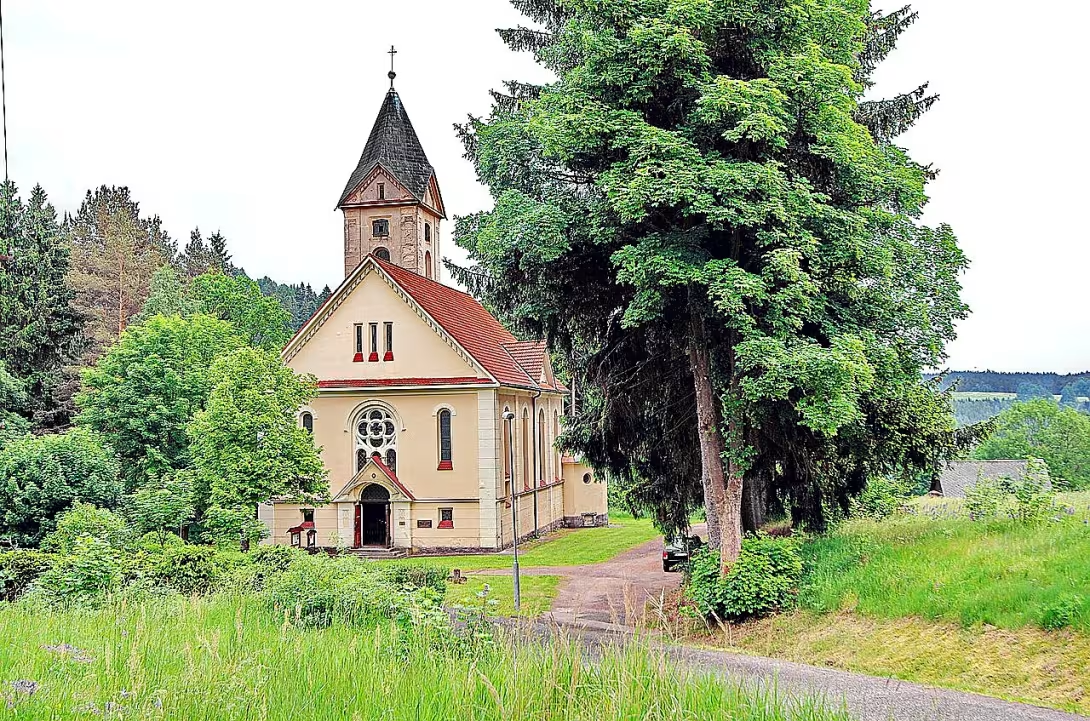
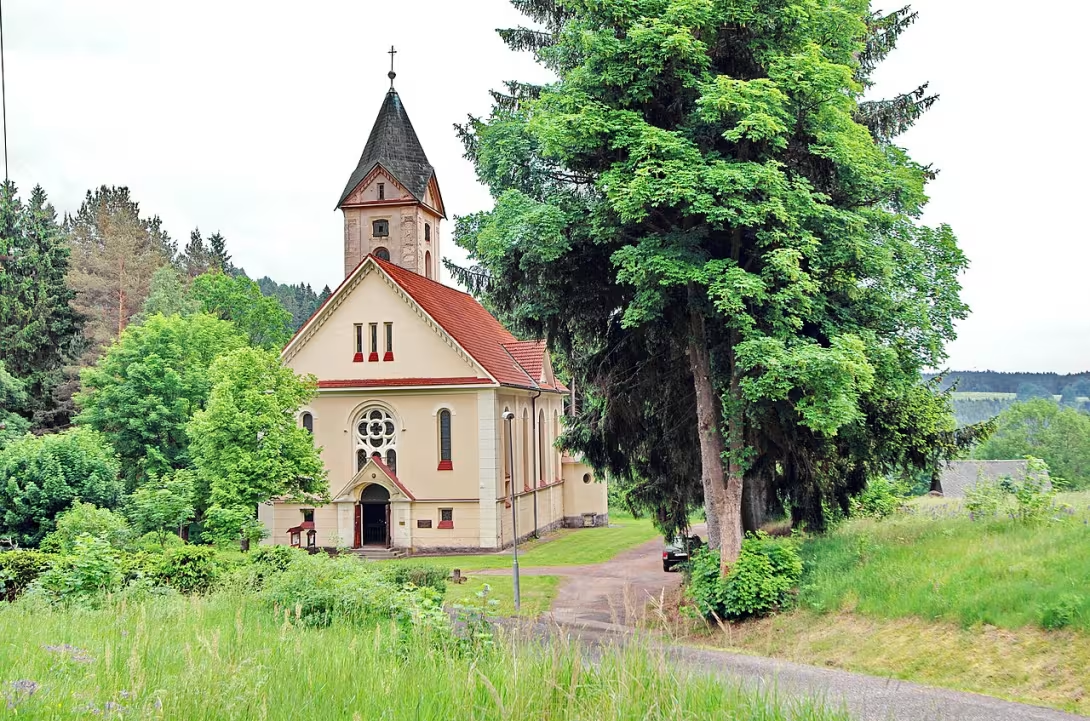
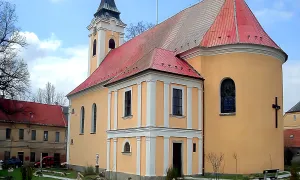
The Church of Saint Peter and Paul in Rotava is a Roman Catholic filial church located at the junction between the town's upper and lower sections. Designed by Anton Möller, it was completed in 1925 after delays caused by financial issues during World War I. The church features pseudoromanesque architecture with distinctive elements such as a bell tower and stained glass windows from 1916. It underwent significant restoration from 1993 to 2005, funded largely through donations.
The origins of the Church of Saint Peter and Paul date back to discussions starting in 1904, with financial contributions coming not only from within the Austro-Hungarian Empire but also from neighboring Germany. Construction was officially permitted in 1913, with plans for completion by 1915. However, World War I caused significant delays due to financial constraints, and it wasn't until after the war that construction could be completed. Anton Möller's design was realized by the Kraslice firm Hochsieder & Bohland, and the church was consecrated on September 20, 1925, by Archbishop František Kordač of Prague.
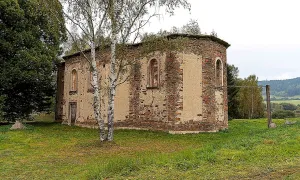
Architecturally, the Church of Saint Peter and Paul is a pseudoromanesque structure oriented towards the southeast. It features a single nave with an elongated presbytery ending in three sections. A distinctive bell tower with a spire and gable roofs adjoins the presbytery, while a polygonal sacristy extends from its southern side. The western facade includes a portal topped by a gable and a window above it, both adorned with pseudoromanesque arches. The roofline is accentuated by two triangular gables on either side of the nave. Notably, the church's stained glass windows were crafted in 1916 by Richard Schlein from Hrádek nad Nisou, adding to its artistic allure.
Throughout its history, the church has experienced various phases of fortune and administration. After World War II, changes in population led to neglect, but a significant restoration effort took place between 1993 and 2005, funded largely through donations from former residents and public collections. This period saw the installation of a new roof, replacement of gutters and lightning conductors, and updates to electrical installations. The church also received a new exterior facade, covered entrances, plastering, painting, and interior restoration.
Key events in the church's history include the unveiling of a monument for World War I victims near its northern wall on October 14, 1928. However, post-World War II, both the bronze bust and commemorative plaque were lost. In 1992, the church became a target for thieves and artifact traffickers, leading to further community involvement in its preservation. Notably, in 2004, a memorial plaque was installed to honor Rotava's war victims, reflecting ongoing efforts to commemorate local history.
Today, the Church of Saint Peter and Paul stands as a testament to both historical resilience and community solidarity. It is accessible to visitors who can explore not only the church itself but also its surrounding park with heart-shaped linden trees and nearby natural attractions like the Rotava Fossils. The church's restoration has made it a symbol of cooperation among believers of different faiths, showcasing how shared heritage can unite communities.
Visitors are invited to experience this remarkable site, where history and architecture converge in a testament to enduring community spirit. Whether drawn by its architectural beauty or the rich tapestry of local history, the Church of Saint Peter and Paul offers a meaningful glimpse into Rotava's past and present.
Then and now
Drag the slider to compare how the landmark may have looked when it was built with the view today.
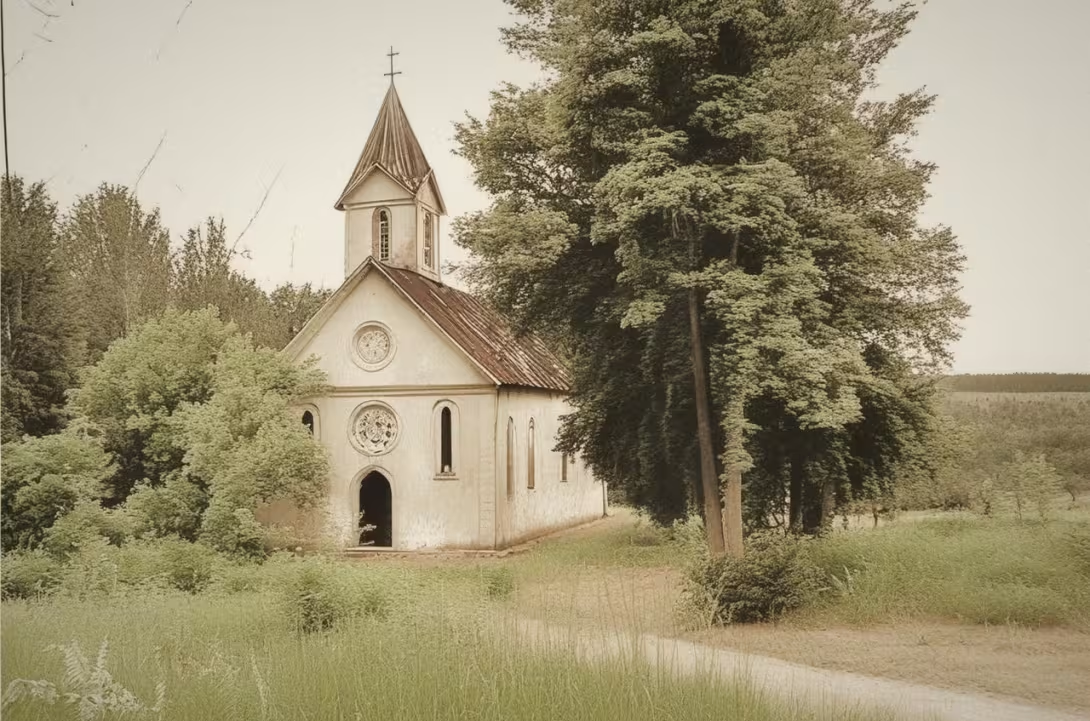
The historical appearance on the left is an AI-generated visualisation and serves as inspiration only.
Historical milestones
- 1904
- Začátek diskusí o stavbě kostela.
- 1913
- Oficiální povolení k výstavbě kostela.
- 1916
- Vytvoření barevných skleněných oken Richardem Schleinem.
- 1925
- Dokončení a posvěcení kostela svatého Petra a Pavla.
- 1928
- Odkrytí pomníku obětem první světové války.
- 1993
- Začátek významné restaurace kostela.
Architectural development
Originally designed by Anton Möller and constructed between 1913 and 1925, the Church of Saint Peter and Paul features pseudoromanesque architecture. It underwent extensive renovations from 1993 to 2005, which included a new roof, facade restoration, and interior refurbishments.
Historical events
Construction of the church began in 1913 but was delayed by World War I, completing in 1925.
The church experienced neglect post-World War II due to population changes, leading to restoration efforts from 1993 to 2005.
Points of interest
- The Church of Saint Peter and Paul's stained glass windows were crafted in 1916 by Richard Schlein from Hrádek nad Nisou, adding a unique artistic touch to the church that predates its completion.
- A monument for World War I victims was unveiled near the northern wall of the church on October 14, 1928. However, both the bronze bust and commemorative plaque were lost after World War II, highlighting the impact of conflict on cultural heritage.
- In 1992, the church became a target for thieves and artifact traffickers, prompting increased community involvement in its preservation and underscoring ongoing challenges in protecting historical sites from vandalism.
- The restoration efforts between 1993 and 2005 were largely funded through donations from former residents and public collections, demonstrating strong ties between the diaspora and their hometown's heritage.
- In 2004, a memorial plaque was installed to honor Rotava’s war victims, reflecting continued community efforts to commemorate local history and ensure that stories of past conflicts are remembered.
Guide
This guide is narrated by a synthetic voice generated by artificial intelligence.
Show guide text
This text was created by artificial intelligence and has not been editorially reviewed. It may contain inaccuracies.
Welcome to the Church of Saint Peter and Paul in Rotava—a remarkable testament to faith and history nestled at the junction where the upper and lower parts of this charming town meet. As you stand here, take a moment to absorb the serene ambiance surrounding you. The church's distinctive bell tower rises gracefully into the sky, its silhouette a familiar landmark for locals and visitors alike.
The story of this church begins in 1904 when discussions about constructing a new place of worship first took shape. It wasn't until 1913 that official permission was granted to begin building what would become a significant spiritual haven for the community. However, as you might imagine, the journey from blueprint to completion was not without its challenges. World War I brought financial difficulties and delays, yet the vision persisted.
Designed by Anton Möller, this church is an embodiment of pseudoromanesque architecture—a style that evokes a sense of timeless grandeur. As your eyes wander across the structure, notice how the bell tower stands as a sentinel over Rotava, its form both commanding and elegant. The stained glass windows crafted in 1916 by Richard Schlein from Hrádek nad Nisou are particularly captivating. These vibrant hues dance with light, casting colorful patterns that animate the church's interior long before you even step inside.
The completion of the Church of Saint Peter and Paul was a momentous occasion in 1925 when it was finally consecrated. This event marked not only the end of an architectural journey but also the beginning of its enduring legacy as a community cornerstone. Just three years later, in 1928, a poignant monument honoring the victims of World War I was unveiled near the northern wall of the church—a silent tribute to those who sacrificed so much.
As you continue your exploration, take time to reflect on these layers of history that have unfolded here. Each stone and window pane tells a story of resilience, community, and artistic expression. The stained glass windows are particularly intriguing; their creation predates the completion of the church itself, offering a glimpse into the dedication and artistry involved in bringing this vision to life.
We invite you to linger a little longer, perhaps wandering around the church's exterior or pausing at the memorial nearby. Each step offers new perspectives and connections to the past. As we conclude our tour, remember that places like these are not just structures of stone and glass but living narratives waiting for you to discover them.
Thank you for joining us on this journey through time and artistry. We hope your visit has been as enriching as it is inspiring. Feel free to explore further and let the stories of Rotava continue to unfold around you. Safe travels, and until next time!
Frequently asked questions
Can the monument be visited?
Religious buildings are usually open mainly during services; at other times a visit is normally arranged with the parish or the operator. We have not verified specific times.
Where is the monument?
Location: Rotava, Karlovarský kraj. The map on this page shows the exact spot.
Businesses nearby
Do you run a restaurant, accommodation, shop, museum, rental, wellness or other visitor service near this monument? Show yourself directly to the people heading to it — this is how they will see you in the app and on the web:
Nearby
Surrounding the church is a park with heart-shaped linden trees and a former cemetery established in 1925. The area also features natural attractions like the Rotava Fossils.
Accommodation nearby
Trips and activities nearby
Guided tours, tickets and activities nearby from GetYourGuide
Affiliate link: if you buy from the partner, we may receive a commission. The price for you does not change.
Search tours and activities →Themed route
Tematická výletní trasa: Kostel svatého Petra a Pavla (Rotava)
1. Kostel svatého Petra a Pavla (Rotava) - Typ: Náboženská památka - Proč stojí za návštěvu: Tento historický kostel je centrem kulturního dědictví obce Rotava. Jeho architektura a bohatá historie nabízejí pohled na minulost regionu, což jej činí nezbytnou návštěvní pro všechny zájemce o historii a architekturu.
2. Park s srdcovitými línavami - Typ: Park - Proč stojí za návštěvu: Okolo kostela se rozkládá park, který je domovem jedinečných srdcovitých línan. Tato přírodní krása poskytuje klidné místo k odpočinku a procházce, zatímco jeho historické kořeny odkazují na bývalou pohřebiště oblasti.
3. Bývalé pohřebiště (1925) - Typ: Historická lokalita - Proč stojí za návštěvu: Toto místo, založené v roce 1925, je důležitým historickým prvkem oblasti. Představuje změny v místních tradicích a poskytuje vhled do minulosti komunity Rotavy.
4. Rotavské fosilie - Typ: Přírodní atrakce - Proč stojí za návštěvu: Okolní příroda nabízí fascinující rotavské fosilie, které jsou důležitým příspěvkem k pochopení geologických a paleontologických aspektů regionu. Jejich návštěva je neocenitelná pro milovníky přírody a věd.
Tato trasa nabízí komplexní pohled na kulturní, historické a přírodní bohatství obce Rotava.
Seasonal recommendations
Spring: Visiting the Church of Saints Peter and Paul in Rotava during spring offers a unique experience as nature awakens around this historic site. The surrounding landscape is adorned with blooming flowers, creating a vibrant tapestry that enhances the church's serene beauty. With longer daylight hours, visitors can enjoy the soft, natural light illuminating the intricate architecture. This time of year typically sees fewer tourists, allowing for a more intimate exploration of the area. It’s advisable to wear comfortable layers as temperatures can vary, and an early visit will help you avoid any unexpected rain showers common in spring.
Summer: Summer is ideal for experiencing the Church of Saints Peter and Paul due to its favorable weather conditions that highlight both the church's architecture and the lush greenery of Rotava. The warm sunlight accentuates the details of the structure, making it a perfect time for photography enthusiasts. However, this season also brings larger crowds, especially during peak tourist periods in July and August. To fully enjoy your visit, consider arriving early to avoid long lines and ensure you have comfortable walking shoes, as well as sunscreen and hats to protect against the sun.
Autumn: Autumn provides a picturesque setting for visiting the Church of Saints Peter and Paul, with Rotava's landscape transforming into a palette of warm colors. The golden hues of fall foliage create a stunning backdrop that complements the church’s historic charm. This season is generally less crowded than summer, offering a more peaceful experience. Visitors should dress in layers to accommodate cooler temperatures and unpredictable weather, such as sudden rain or wind. An afternoon visit can be particularly rewarding when the late sun casts a warm glow over the surroundings.
Winter: Winter offers a magical atmosphere for visiting the Church of Saints Peter and Paul, with snow often blanketing Rotava in a serene white landscape that enhances the church's historic beauty. The shorter days mean fewer tourists, allowing for a quiet and reflective visit. However, it’s important to dress warmly, as temperatures can be quite cold, and some services or tours may have limited hours due to weather conditions. If visiting during this season, consider bringing gloves and hats, and check the church's schedule in advance to ensure access.
Visualizations and artistic views


The visualisations are generated by artificial intelligence and serve as inspiration.
Photos from the area
Real photos taken near the monument


Zdroj a licence jsou uvedeny u každého snímku.
Tips from visitors
No tips yet. Be the first!
Log in and add your tip.
Sources and literature
Photos: Lubor Ferenc / CC BY-SA 4.0 — Wikimedia Commons. The author and licence also appear when you hover over the image.
Faktickým podkladem tohoto textu byl článek na Wikipedii, jehož autory jsou přispěvatelé Wikipedie. Článek je dostupný pod licencí CC BY-SA 4.0.
Location on the map
Příběhy a pověsti
Legendy, pověsti a příběhy spjaté s touto památkou
Příběh: Kostel svatého Petra a Pavla (Rotava)
Bylo to v pondělí ráno, kdy Martin zjistil, že cesta do jeho duše byla uzavřena stejně pevně jako brána kostela svatého Petra a Pavla. Pohlcen pocitem viny z…
Číst příběh
Pověst: Kostel svatého Petra a Pavla (Rotava)
Traduje se, že v době, kdy ještě nikdo nepomýšlel na stavbu kostela, rostly na kopci nad Rotavou jen divoké smrky a vítr v nich zpíval píseň, které nikdo ner…
Číst příběhFotografie návštěvníků
Zatím žádné fotografie. Buďte první, kdo přidá fotografii z návštěvy!
Log in a přidejte svou fotografii nebo hodnoťte.
Za ověřenou návštěvu v aplikaci získáte víc bodů — poznáme podle GPS, že jste na místě.
Reviews and comments