



kostel svatého Václava (Konojedy) Church
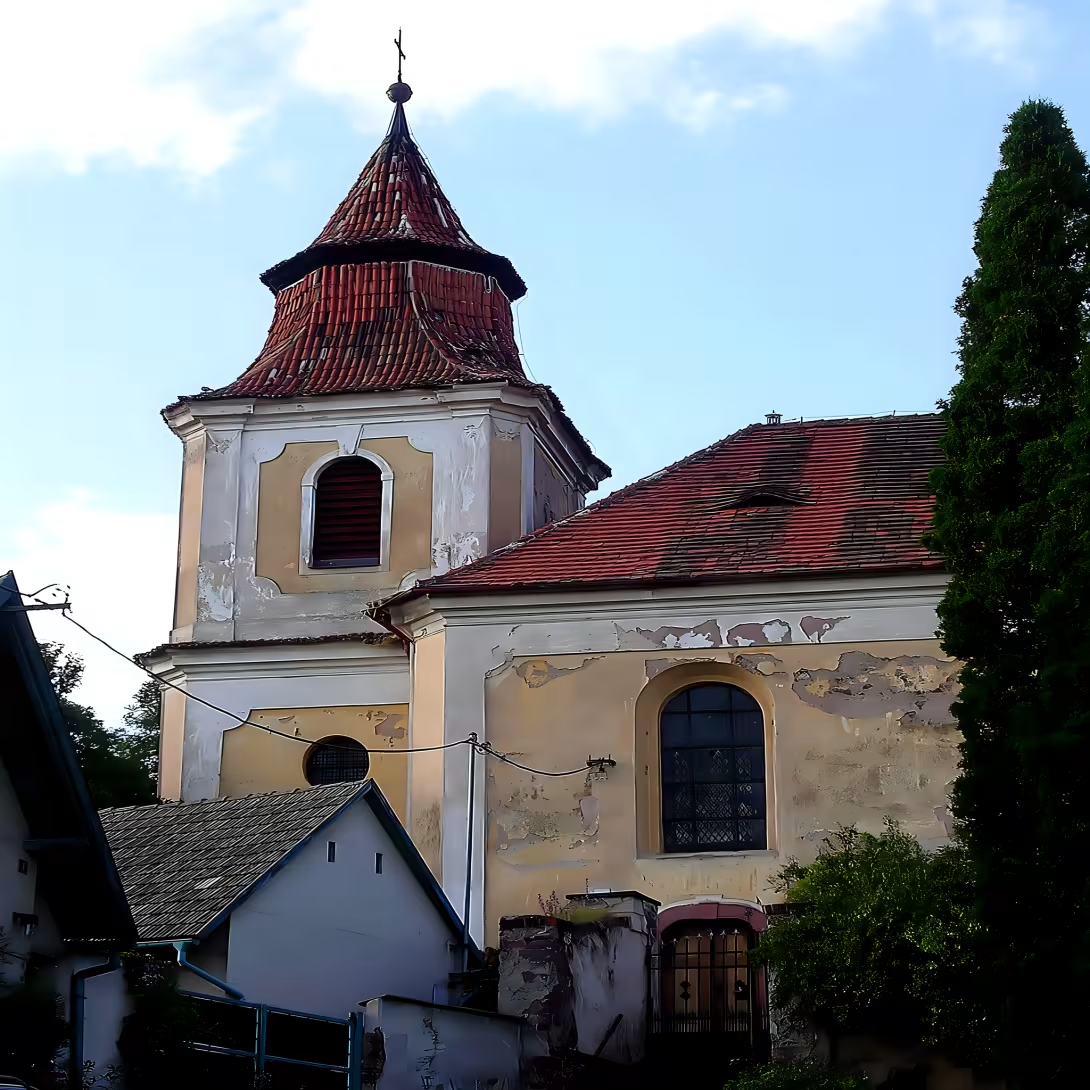
The church of St. Wenceslas in Konojedí is a filial church falling under the parish of the Church of the Black Forest. This is a rare example of late Baroque architecture from the second half of the 18th century in the Praha-východ district, protected since 1958 as a cultural monument of the Czech Republic.
The place where the church stands today has a long spiritual history. Written sources mention the wooden Gothic parish church of St. Wenceslas for the first time in Konojedy already in 1352. The older building was killed by lightning, but in 1530 it was replaced by a new brick church of the same Gothic style. During the Hussite wars, the church suffered religious alternatures: from 1435 it served as a Hussite temple until in 1623 it was abandoned by the last Hussite priest Václav Karion. Only since 1652 did the church return to the Catholic administration.
The decisive turning point came in 1765, when the owner of the Black Church estate Marie Theresa Savojská left the old church demolished. The construction of a new Baroque temple with a tower started in 1766. It was led by builder Jan Václav Smutný according to the modified design of architect Josef Jäger. The construction was completed already in 1768 and soon afterwards, namely on 10 January 1768, she blessed the Black Church Dean František Boskovský. The church served as a parochial until 2005, when it became a filial of the parish of Kostelka above the Black Forest.
The construction is typical of one-ship construction of a rectangular plan with a square presbytery of the same height as the ship. On the west side of the facade lies the prism tower, ending with an occipital mansard jehlanové roof covered with overalls. Typical are bevelled corners of the building. A rectangular sacristy is attached to the presbytery. The church is characterized by rectangular windows with semi-circular ends and a valb roof covered with bags. The interior embodies flat vaults in the ship as well as presbytery and a walled crust on two pillars.
A Baroque crucifix from the 18th century was preserved from the older equipment on the south wall of the presbytery and baptist with the relief of baptism from the end of the 18th century. The new altar set purchased in 1892 from Vienna's carpentry company František Leiner brought a significant addition. The painting of St. Wenceslas on the main altar dates back to 1884 from the painter John Umlauff, while the side altar is decorated with paintings from the unknown Vienna painter in 1893. The organ on the ring dates back to 1896 and is the work of Prague organist company Josef Rejna and Josef Černý. Two bells were preserved in the tower: older from 1556 and younger from 1723 from the Prague bell man Valentine Lissiack.
A stone wall with a gate and a stone cross was preserved in the church area. The church has been gradually and long-term protected: since 1958 and since 1965 and in the state list of cultural monuments. The substantial repairs between 2012 and 2013 included the regeneration of roofs, roofs, outer coats and stained glass, thus maintaining its function and appearance to this day.
Then and now
Drag the slider to compare how the landmark may have looked when it was built with the view today.
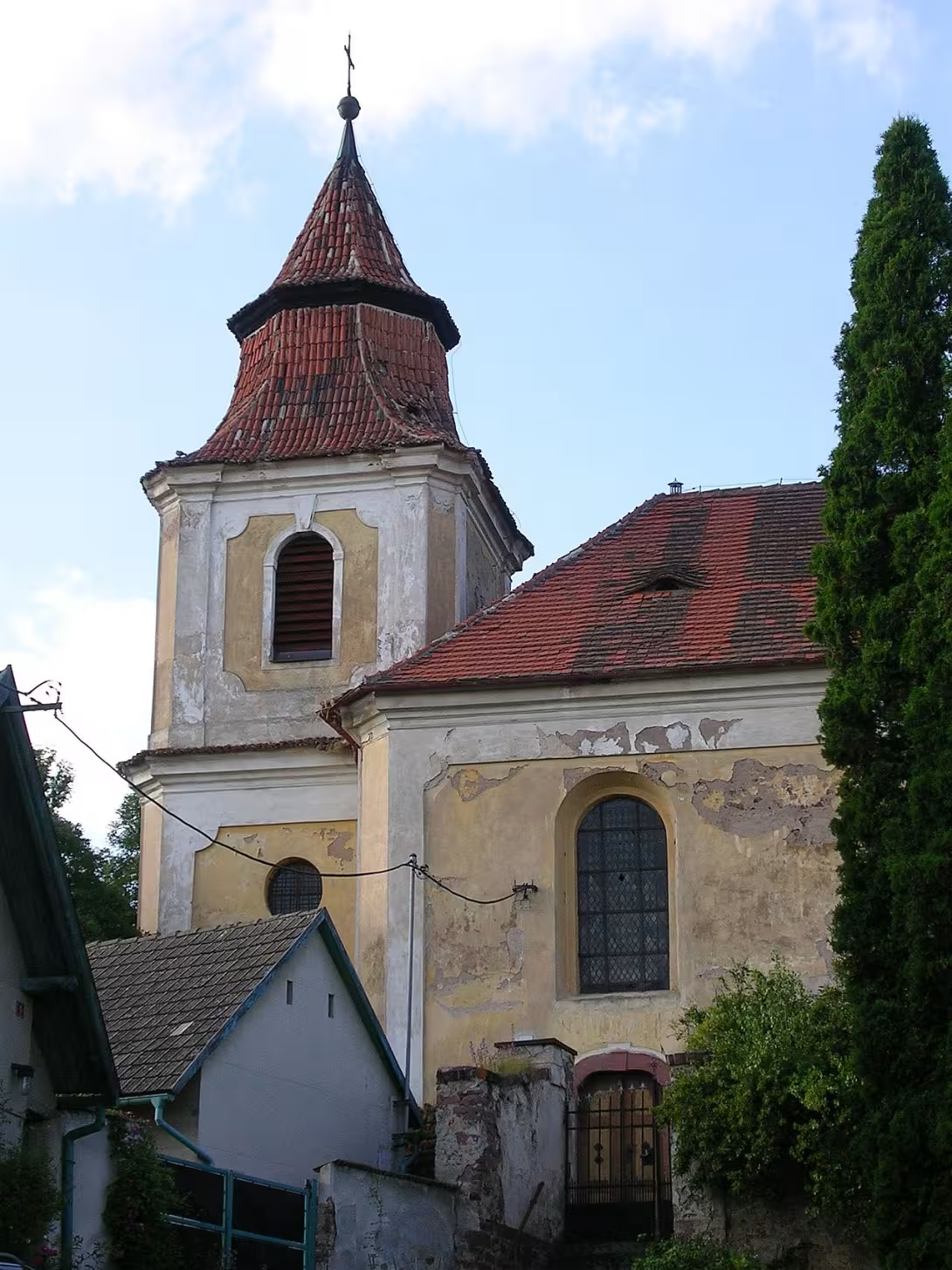
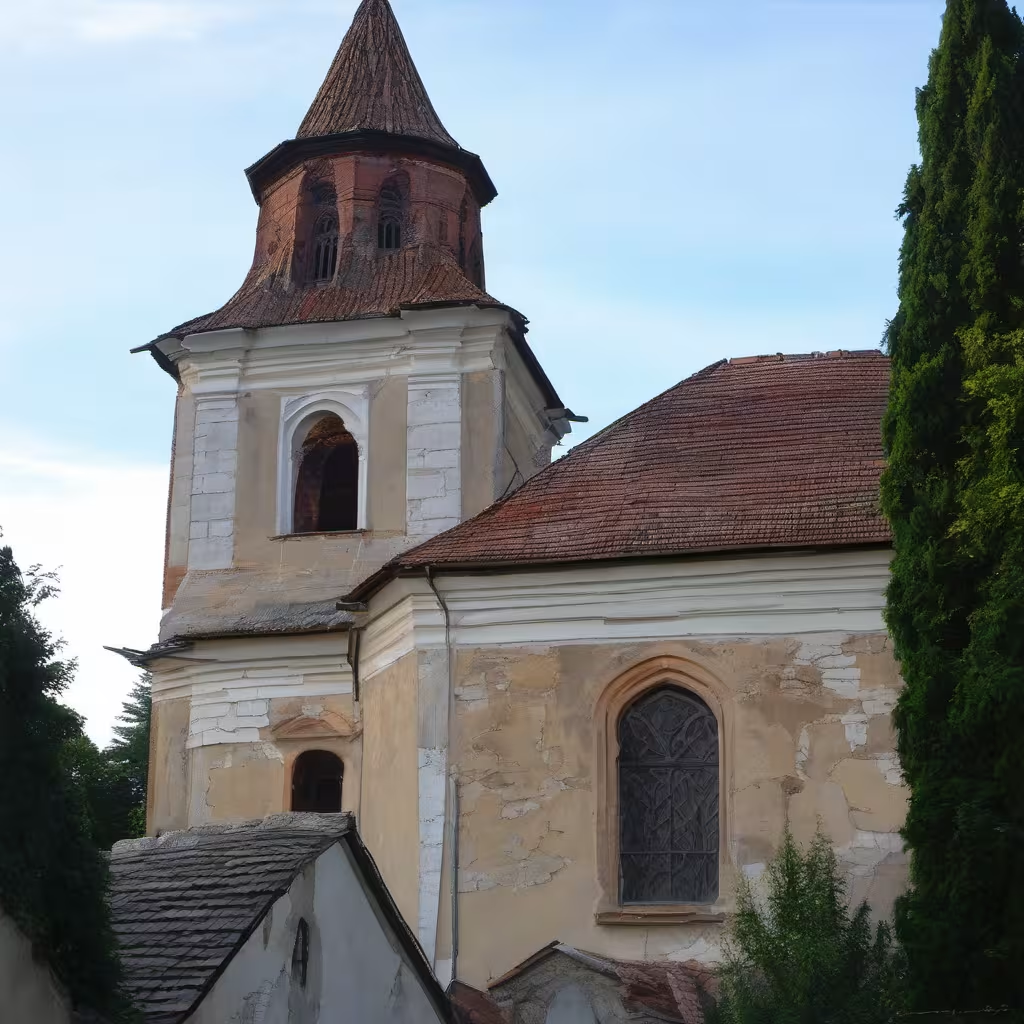
The historical appearance on the left is an AI-generated visualisation and serves as inspiration only.
Historical milestones
- 1768
- Blessed is the newly built church of the Black Church dean Franz Boskovský.
- 1958
- The church and the wall of the former cemetery were protected as a cultural monument.
- 1965
- Listed on the state list of cultural monuments.
Architectural development
Originally there was a wooden Gothic parish church dedicated to St. Wenceslas, which burned down after lightning intervention and was replaced by a brick Gothic church in 1530. After its demolition in 1765, the present Baroque church was built with a prism tower, which is now one of its characteristic elements.
Historical events
- 1352
- First written mention of the church.
- 1530
- Built a new brick Gothic church.
- 1768
- Blessed is the newly built Baroque church.
Owners
Konojde Parish Office
Points of interest
- The church is a rare example of late Baroque architecture from the second half of the 18th century in the district of Praha-východ. - Written sources mention the wooden Gothic church in Konojedy for the first time in 1352. - During the Hussite wars, the church served as a Hussite temple until 1623. - Two bells were preserved in the tower, older from 1556 and younger from 1723. - The former cemetery, bounded by a stone wall with a gate and a stone cross, was preserved in the church area.
Guide
This guide is narrated by a synthetic voice generated by artificial intelligence.
Show guide text
This text was created by artificial intelligence and has not been editorially reviewed. It may contain inaccuracies.
The Church of Saint Wenceslas in Konojedy is a late Baroque structure from the second half of the 18th century. It stands on the site of older churches and today belongs to the Roman Catholic parish in Kostelec nad Černými lesy.
The first written mention of the village from the year 1352 already references a wooden Gothic parish church dedicated to Saint Wenceslas at this location. After being struck by lightning, it burned down and in 1530 it was replaced by a brick Gothic church. Until 1435 the church was Catholic, then it served the Hussites, more precisely the Utraquists. The last Hussite priest Václav Karion left from here in 1623 and from 1652 the church was Catholic again.
In 1765 the owner of the Černý Kostelec estate Marie Terezie Savojská had the old church demolished. The construction of the new church with a tower began a year later. It was probably led by builder Jan Václav Smutný according to an adapted project by Josef Jäger. The church was completed in 1768 and on January 10th of the same year it was consecrated by the Černý Kostelec dean František Boskovský.
Around the church there used to be a cemetery. To this day a stone boundary wall with a gate has been preserved from it. The church, the wall and the stone cross in front of the church are protected as cultural monuments. It was a parish church until the end of 2004. In 2012 and 2013 it underwent extensive reconstruction after approximately 170 years. The roof trusses, roof, outer shell and stained glass windows were repaired.
The church has one nave with a rectangular floor plan and a square presbytery which is the same height as the nave. An angular tower with an octagonal mansard pyramid roof covered with tiles is attached to the western facade. A sacristy is built onto the south side of the presbytery. The corners of the church and tower are beveled and the windows have semicircular endings at the top. Inside there are barrel vaults and a brick gallery on two pillars.
Only a few objects remained from the original furnishings. These include a Baroque crucifix from the 18th century and a baptismal font with a relief of baptism from the end of the same century. The altars were made in 1892 by the Viennese carpentry firm of František Leiner. The painting of Saint Wenceslas on the main altar was painted in 1884 by Jan Umlauf. On the side altars are paintings of Saint John of Nepomuk and the Madonna by an unknown Viennese painter from 1893. The Madonna is based on Raphael's Renaissance work Madonna del Granduca. The organ from 1896 was built by the Prague firm Josef Rejna and Josef Černý.
Two bells hang in the tower. The larger one dates from 1556. The smaller one was cast in 1723 by the Prague bellmaker Valentin Lissiack.
Tips for visitors
The best time to visit is late afternoon during sunny days, when the setting sun illuminates the baroque facade of the church and highlights its architectural details.
You can easily reach Konojej by car. Public transport can be used, please check the current connection in the appropriate connection search engine.
Please pack comfortable shoes suitable for the movement of the building and the camera for the visit. Since it is a historical object, we recommend that you carry a bottle of water, as there may not always be refreshments in the immediate vicinity.
The best pictures can be taken from a slight distance from the main entrance, from where the overall composition of the building stands out. Ideal lighting conditions for the capture of dynamic baroque elements occur shortly before sunset.
For families with children, the location is suitable as a stop on a trip through the Central Bohemia region. The surrounding area of the church offers a quiet environment, however, due to the nature of the monument take care of the safety of children and respect the quiet environment of the historic place.
Frequently asked questions
Can the monument be visited?
Religious buildings are usually open mainly during services; at other times a visit is normally arranged with the parish or the operator. We have not verified specific times.
Where is the monument?
Location: Konojedy, Středočeský kraj. The map on this page shows the exact spot.
Why is the monument protected?
It is listed in the Central List of Cultural Monuments of the Czech Republic as a cultural monument (register no. 36322/2-799).
For kids
Think of yourself as a little adventurer, and you are going back in time for approximately 258 years - that is the number of years before the last king of France was born! Your treasure? Church of St. Wenceslas in village Konojedy. And what's great about this trip is that you'll find a lot more here than just an ancient church - there's secrets and stories since he stood up.
Businesses nearby
Do you run a restaurant, accommodation, shop, museum, rental, wellness or other visitor service near this monument? Show yourself directly to the people heading to it — this is how they will see you in the app and on the web:
Nearby
The surrounding landscape is characterized by a flat landscape with forests and forests.
Accommodation nearby
Trips and activities nearby
Guided tours, tickets and activities nearby from GetYourGuide
Affiliate link: if you buy from the partner, we may receive a commission. The price for you does not change.
Search tours and activities →Themed route
Thematic trip route from Konojd
1. Church of St. Wenceslas (Konojedy) * Type: * Religious landmark * Why is it worth visiting: * This Baroque church is one of the most prominent architectural monuments in Konojedy. Its rich history and artistic elements, such as frescoes and statues, attract visitors from all over the region.
2. St. Wenceslas Church * Type: * Historical area * Why is it worth visiting: * The reservoir around the church offers a peaceful atmosphere for relaxation and reflection. It is an ideal place for notes about the history and architecture of the church, or for a short look at local artistic elements.
3. Chapel at St. Wenceslas church * Type: * Religious structure * Why is it worth visiting: * Chapel is a small but important addition to the main church. Its simplicity and location offer a quiet place for meditation or short prayers.
4. Local rectory * Type: * Religious administration centre * Why is it worth visiting: * Fara is not only an administrative centre for the church, but also a place with a rich history. Its architecture and interior bring another dimension to understanding the local religious tradition.
5. Park at St. Wenceslas church * Type: * Green space * Why is it worth a visit: * Park offers an opportunity to look at natural beauty and quiet moments after visiting the church. It is an ideal place to relax, picnic or just walk in a pleasant surroundings.
This route offers a comprehensive view of the history and culture of Konojest with an emphasis on the Church of St. Wenceslas.
Seasonal recommendations
Spring brings a fresh green color and a fine, scattered light to the surrounding church that highlights the shapes of the historical building. The atmosphere is full of anticipation and calm while nature wakes up. For a visit it is best to choose the morning hours when there are the least people. We recommend wearing layered clothes, because spring mornings can still be cold, while afternoons are pleasant.
In the summer months the surrounding area is surrounded by dense vegetation and the sun hits the memory very intensely, creating a clear and lively atmosphere. Due to the warmth and possible increased interest of visitors, it is advisable to arrive as early as possible in the morning to enjoy your peace and avoid the greatest heat. Remember light summer clothes and plenty of water for cooling.
Autumn brings melancholy beauty into the landscape thanks to golden shades of leaves and morning fog, which give the church a mysterious ring. The light is low at this time and very suitable for photography. It is practical to carry waterproof shoes and a warmer layer of clothing because the humidity in the area can be higher. The best time to visit is this afternoon, when the colors most excel.
Winter covers the church with silence and often with snow, which creates a rough but very impressive view of architecture in the landscape. The atmosphere is the quietest of all seasons. It is necessary to wear very warm clothes and high-quality shoes for walking in difficult terrain. Due to short days, plan to visit around noon to use the maximum amount of daylight.
Visualizations and artistic views


The visualisations are generated by artificial intelligence and serve as inspiration.
Photos from the area
Real photos taken near the monument


Zdroj a licence jsou uvedeny u každého snímku.
Atmosphere of the place
This atmospheric visualisation of the place and period was generated by artificial intelligence. It is not real footage of the location.
Tips from visitors
No tips yet. Be the first!
Log in and add your tip.
Sources and literature
Photos: cs:ŠJů / CC BY-SA 3.0, rozlišení zvýšeno umělou inteligencí — Wikimedia Commons. The author and licence also appear when you hover over the image.
Faktickým podkladem tohoto textu byl článek na Wikipedii, jehož autory jsou přispěvatelé Wikipedie. Článek je dostupný pod licencí CC BY-SA 4.0.
Location on the map





Příběhy a pověsti
Legendy, pověsti a příběhy spjaté s touto památkou
Fotografie návštěvníků
Zatím žádné fotografie. Buďte první, kdo přidá fotografii z návštěvy!
Log in a přidejte svou fotografii nebo hodnoťte.
Za ověřenou návštěvu v aplikaci získáte víc bodů — poznáme podle GPS, že jste na místě.
Reviews and comments