



Kostel svatého Václava (Sýčina) Church
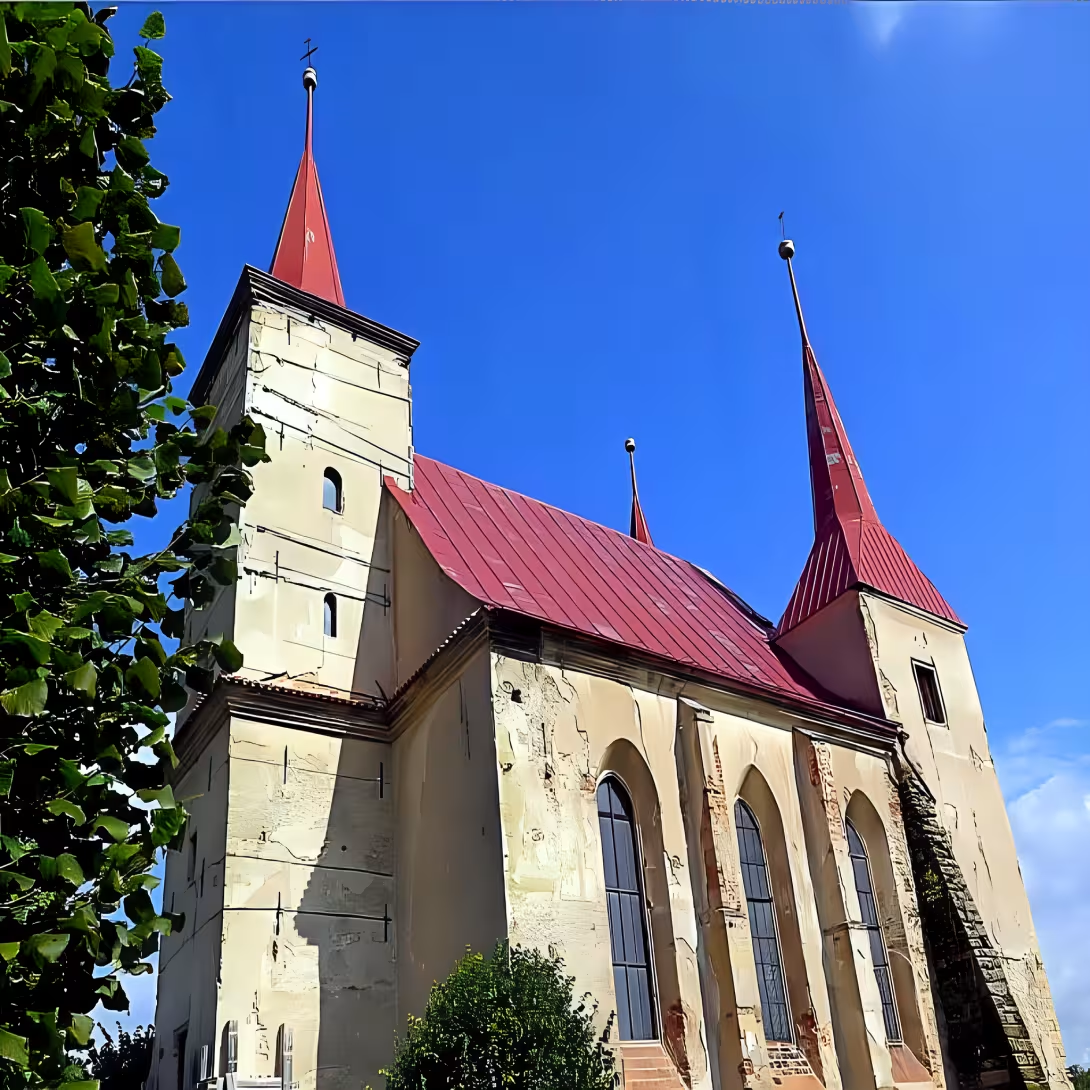
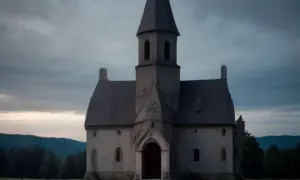
The church of St. Wenceslas is located in Sýčina, part of the town of Dobrovice in the district of Mladá Boleslav, and forms a local landmark, which is visible from far away. The construction is protected as a cultural monument of the Czech Republic.
The church was built in 1571 by Jiří Cetenský of Cetná, one of the great knights of the time. Less than 40 years later, in 1609, his Renaissance design and decoration took place. In the course of the 18th century it was slightly baroque, especially in 1736 under the guidance of architect F.I. Prée, who put it in a new form. Key reconstruction was carried out in 1867 according to the design of architect Alois Turk. During the second half of the 20th century, during the period of communist totalitarianism, the church gradually faded. Since the beginning of the 21st century he has been working on his rescue and restoration of the foundation dedicated to protecting this monument.
The construction represents a goticorenesance double boat with a polygonal closed rectangular presbytery. Two prism towers are attached to the presbytery, on which the needles sit different heights. The third tower is located in the axis of the western facade. The tower in the north side contains a sacristy, which is equipped with a Baroque window and features of the noble families of Cetenské and Valdštejn. The walls of the church are smooth, equipped with pointy elements and gothic pointed windows without circles. The main entrance consists of a portal in the west tower, behind which is a hall glassed with a vaulted vault with stucco ribs.
The interior is richly decorated and speaks of the godliness of the time. The presbytery is shrouded with lunnets. In the north side there is a semicircular entrance to the sacristy in the late Renaissance stone edition with the characters of the Cetenské and Materns of the Flower. The main ship has a rolling arch with lunettes and is divided by two pillars into two different parts - the northern ship, which is arched cross and contains a bleachers, also cross-glazed. In the western part there is a circle on the pillars, connected with a side circle along the south wall. The railing contains original boards with images of apostles and saints, as well as fourteen boards with images of Christ's life by Kreger Karg of Würtenberg from 1609.
The walls and vaults are decorated with Baroque frescoes by J.E. Vodňanský from 1736, which later was repainted by K. Javěrek in 1867. Among the most famous are the meeting of St. Wenceslas with Jindřich Birddog on the vault of the ship. The main altar from 1736 is the work of carpenter P. Šešek from Dobrovice, created according to the sketch of architect Prée. There is a picture of St. Wenceslas by Fr. Barbieri, painted over by Javarka. Under the south tower is a funeral chapel with the tombstones of Maximilian Thurn-Taxis and his spouse Marie Eleonora from 1834. The twelve Renaissance tombstones of Cetensky and Kinsky from the second half of the 16th century recall the importance of local nobility.
A visit to the church provides a unique view of goticorenesan architectural evolution and artistic work nесколькиProcessing generations of craftsmen and painters. The church is one of interesting examples of Czech regional construction and piety that deserve the attention of those interested in Czech history and art. / p >
Then and now
Drag the slider to compare how the landmark may have looked when it was built with the view today.
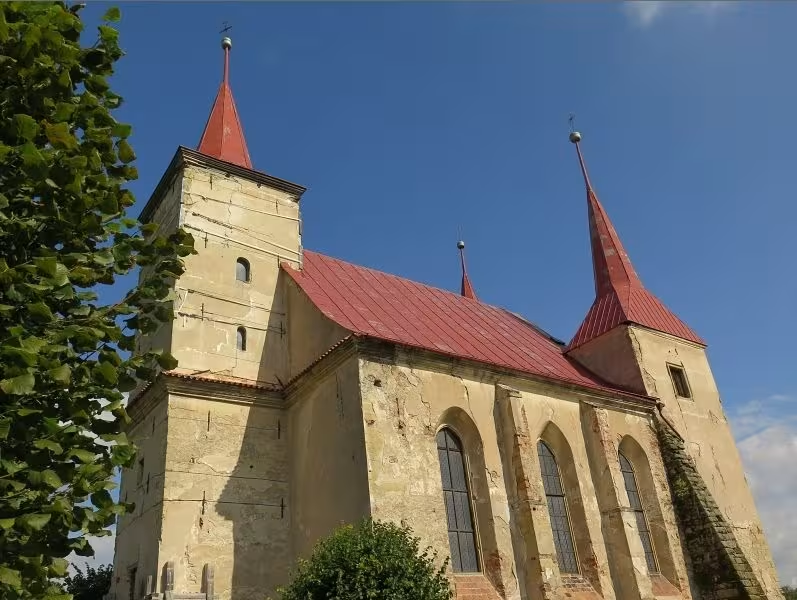
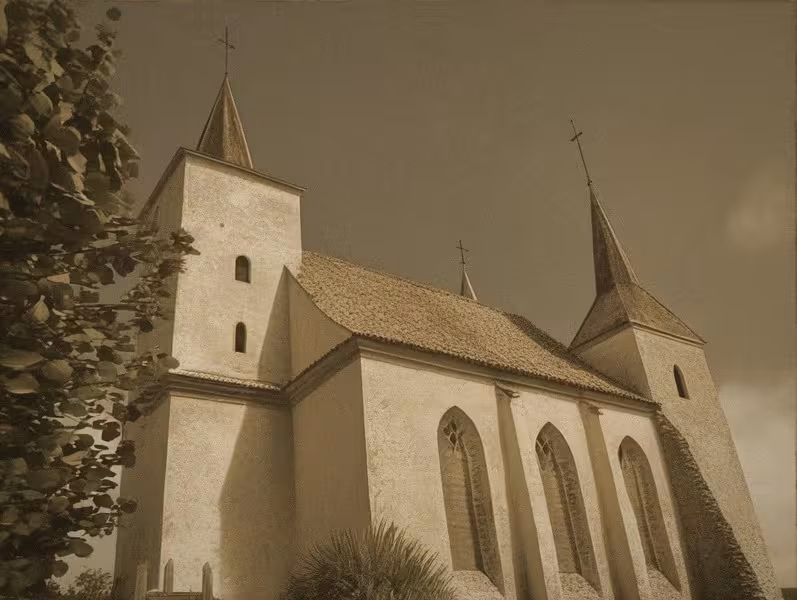
The historical appearance on the left is an AI-generated visualisation and serves as inspiration only.
Historical milestones
- 1571
- The position of the church of Jiří Cetenský from Cetná.
- 1609
- Renaissance decorations and decorations.
- 1736
- Baroque modifications under F.I. Préea.
- 1867
- A thorough repair by Alois Turk.
Architectural development
The church was built as a Gothic-Renaissance double boat with a polygonally closed rectangular presbytery. Over the years he has undergone several stages of modifications, including Renaissance and Baroque changes. The walls are smooth with backrest and thick windows without circles. The interior is richly decorated with frescoes and tombstones.
Historical events
- 1609
- The church was renaissance and decorated.
- 1736
- Insignificant baroque modifications under the direction of architect F.I. Préea.
- 1867
- A thorough repair by architect Alois Turk.
Points of interest
- St. Wenceslas Church is located in Schečina and forms a local dominant view. - The building is protected as a cultural monument of the Czech Republic. - The church was built in 1571 by Jiří Cetenský from Cetná and renaissance in 1609. - During the 18th century it was slightly baroque, especially in 1736 under the guidance of architect F.I. Prée. - Key reconstruction took place in 1867 according to the design of architect Alois Turk.
Guide
This guide is narrated by a synthetic voice generated by artificial intelligence.
Show guide text
This text was created by artificial intelligence and has not been editorially reviewed. It may contain inaccuracies.
The Church of Saint Wenceslas in Sýčina, a part of the town of Dobrovice in the Mladoboleslavsko region, is an atypical late Gothic and Renaissance building. Thanks to its three pointed towers, it is visible from a great distance and forms a local landmark. It is protected as a cultural monument.
The church was built in fifteen seventy-one by Jiří Cetenský of Cetná. In sixteen oh-nine it was renovated and decorated in the Renaissance style. In seventeen thirty-six it was modestly adjusted in the Baroque style by architect Prée and in eighteen sixty-seven it was thoroughly repaired by architect Alois Turek. During the communist regime the church fell into disrepair. Since the beginning of the twenty-first century a foundation has been taking care of its preservation.
The building is two-aisled. On the sides of the presbytery stand two unevenly wide prismatic towers with pyramidal roofs, a third tower is in the middle of the western façade and the main entrance leads through it. The walls are smooth, with buttresses and pointed windows without tracery. Around the church is a cemetery with a late Gothic gate.
The main nave is separated from the narrower and lower northern nave by two pillars with three arcades. Above the northern nave is a tribune and along the southern wall runs a narrow balcony-like gallery. Into its wooden railing are set twelve panels with apostles and saints and fourteen panels with scenes from Christ's life. They apparently come from sixteen oh-nine by Kreger Karg of Württemberg, who was inspired by Dutch graphic sheets.
The vaults are decorated with Baroque frescoes by Vodňanský from seventeen thirty-six. They show the meeting of Saint Wenceslas with Henry the Fowler, Saint Wenceslas founding a school at Budč and saints with banners. In eighteen sixty-seven they were repainted by Javůrek. In the presbytery on glass panels are painted six Czech patrons, apparently around nineteen thirty.
Under the southern tower is a burial chapel with tombs of Maximilian Thurn-Taxis and his wife Marie Eleonory from eighteen thirty-four. Above it is an oratory with a Renaissance coffered ceiling, in whose eight fields are original painted scenes from Christ's life.
The Baroque main altar and pulpit from seventeen thirty-six were made by carpenter Vyšohlíd of Dobrovice according to the design of architect Prée. On the altar is a painting of Saint Wenceslas by Barbieri. Under the gallery and in the side aisle nine Renaissance tombs, mostly figurative, of the Cetenský and Kinský families have been preserved from the second half of the sixteenth century.
Tips for visitors
The best time to visit is early morning or late afternoon, when soft light best hits the facade and highlights architectural details of the building.
With us we recommend to take comfortable shoes for a walk around the church and photographic equipment. For the best pictures, focus on the overall view of the construction that forms the dominant landscape and look for details of the connection of two architectural styles.
For families with children, the visit is suitable as a short lesson in the history of architecture in a quiet environment; We encourage children to engage in searching for differences between Gothic and Renaissance elements.
There are no others in the background of the mentioned monument within short range, so we recommend focusing on the architecture of the church itself and the surrounding landscape.
Frequently asked questions
Can the monument be visited?
Religious buildings are usually open mainly during services; at other times a visit is normally arranged with the parish or the operator. We have not verified specific times.
Where is the monument?
Location: Sýčina, Středočeský kraj. The map on this page shows the exact spot.
Why is the monument protected?
It is listed in the Central List of Cultural Monuments of the Czech Republic as a cultural monument (register no. 37633/2-1748).
For kids
Imagine going back 455 years to the past when the new church of St. Wenceslas in Syria was only in the plans of small people with great dreams. It was like seeing the future through witch dandruff! When he stood up, he became the center of the village and captured everyone with his beauty.
Businesses nearby
Do you run a restaurant, accommodation, shop, museum, rental, wellness or other visitor service near this monument? Show yourself directly to the people heading to it — this is how they will see you in the app and on the web:
Nearby
➜ Zobrazit interaktivní přehled okolí – restaurace, ubytování, půjčovny a další místa v okruhu 15 km.
Data: OpenStreetMap contributors, okruh 15 km.
🏰 Historické památky
- 1914-1918 (1.6 km)
- Myškův Hrádek (4.1 km)
- Muzeum Mladoboleslavska (5.1 km)
- Okresní museum Mladá Boleslav - palác Templ (5.2 km – Krajířova 102)
- Svatopluk Čech (5.7 km)
- Jan Ámos Komenský (5.7 km)
- Letci II.sv války (6.3 km)
- Dražice (9.2 km)
🍽️ Restaurace a stravování
- Sportbar Astra Crücos (5.1 km – třída T. G. Masaryka 1075)
- Pizzeria Diverso (5.2 km – třída T. G. Masaryka 1076)
- Restaurace Zlatá Kovadlina (5.2 km – Železná 33)
- Pivnice U Vobrázků (5.2 km – třída T. G. Masaryka 1077)
- Vinárna (5.2 km)
- OXY (5.4 km)
- Hospoda nad muzeem (7.8 km – 87)
- U Janka (7.8 km – Karla Veselého 795)
🏨 Ubytování
- Motel R10 (3.2 km)
- Ubytovna Na Letišti (4.5 km – Regnerova 1199)
- Hotel Stefanie (4.5 km)
- Viva Residence (5.0 km – Viničná 153)
- Hotel U Hradu (5.1 km – Staroměstské náměstí 108)
- Hotel Zimní stadion (5.1 km – Viničná 31)
- Hotel Zlatý Kohout (5.2 km – Staroměstské náměstí 31)
- Hotel La Romantica (5.2 km)
🚲 Půjčovny a sport
- Koupaliště Nepřevázka (1.7 km)
- Sport centrum (3.1 km)
- Kopaliště (3.5 km)
- Decathlon (4.7 km – Jičínská 1419)
- Sportisimo (4.7 km)
- Stevens (5.0 km)
- Sokolovna (5.7 km)
- Sport Český Ráj (6.3 km – Nerudova 616/30)
🥾 Turistika a příroda
- Začátek Zlaté stezky Českého Ráje (5.1 km)
- Info Bus (5.9 km)
- Debř - Radouč (8.2 km)
- Debř - přejezd (9.3 km)
- Lhotky (mysl.) (9.4 km)
- Dobrá Voda (10.2 km)
- Karlovec hájovna (11.0 km)
- Petkovy (11.4 km)
Accommodation nearby
Themed route
1. Kostel svatého Václava (Sýčina), sacral monument: A tour of the temple interior where you can admire religious elements and historical architecture. 2. Chateau near the church, immediate area: A quiet walk around the building, which allows a detailed view of its exterior. 3. Church tower, tower: Output to get a view of the surrounding landscape and observe the details of the roof.
Seasonal recommendations
Spring: In the spring period, the Church of St. Wenceslas in Schečina opens with fresh nature. Flowers and trees are beginning to bloom, giving the surrounding countryside its unique color shine. The atmosphere is full of recovery and hope. Visitors can use mild weather for long walks around the church, but they should still bring a warm sweater or plaid for morning cold morning and evenings. The best time to visit is usually in the afternoon when the sun warms up enough.
Summer: The Church of St. Wenceslas is a popular destination for tourists. Intense lighting and long days offer ideal conditions for exploring historical details of the church. The atmosphere is full of life, especially in the main summer season, when large crowds of visitors can gather here. Visitors should take with them a protective umbrella and light clothes on a warm day, while the right time for a visit is earlier in the day or later in the evening to avoid the peak noon hours. Do not forget the drinking bottles if you are planning a long tour.
Autumn: In autumn, the Church of St. Wenceslas in Shecka offers views dedicated to changing colour spectra of leaves. The atmosphere is calm and pleasant, making this time ideal for a relaxing visit without excessive crowds. Nature offers beautiful contrasts of light and shadow that give the church a romantic character. Visitors should be prepared for colder weather with warm clothes and perhaps an umbrella if necessary. The best time to visit is usually in the afternoon, when the autumn sun is still warm enough.
Winter: The winter visit of St. Wenceslas's Church in Syria offers unique views, where the church is surrounded by snow and ice crown. The atmosphere is calm and quiet, which allows deeper reflection on the historical significance of the monument. Visitors should wear warm clothes and have quality shoes suitable for walking on snow or ice. Do not forget also the protective umbrella because the winter sun can be very strong and surprisingly warm.
Visualizations and artistic views


The visualisations are generated by artificial intelligence and serve as inspiration.
Atmosphere of the place
This atmospheric visualisation of the place and period was generated by artificial intelligence. It is not real footage of the location.
Tips from visitors
No tips yet. Be the first!
Log in and add your tip.
Sources and literature
Photos: Sovicka169 / CC BY-SA 4.0, rozlišení zvýšeno umělou inteligencí — Wikimedia Commons. The author and licence also appear when you hover over the image.
Faktickým podkladem tohoto textu byl článek na Wikipedii, jehož autory jsou přispěvatelé Wikipedie. Článek je dostupný pod licencí CC BY-SA 4.0.
Location on the map





Příběhy a pověsti
Legendy, pověsti a příběhy spjaté s touto památkou
Fotografie návštěvníků
Zatím žádné fotografie. Buďte první, kdo přidá fotografii z návštěvy!
Log in a přidejte svou fotografii nebo hodnoťte.
Za ověřenou návštěvu v aplikaci získáte víc bodů — poznáme podle GPS, že jste na místě.
Reviews and comments