






Kostel svatého Vavřince (Jinonice) Church
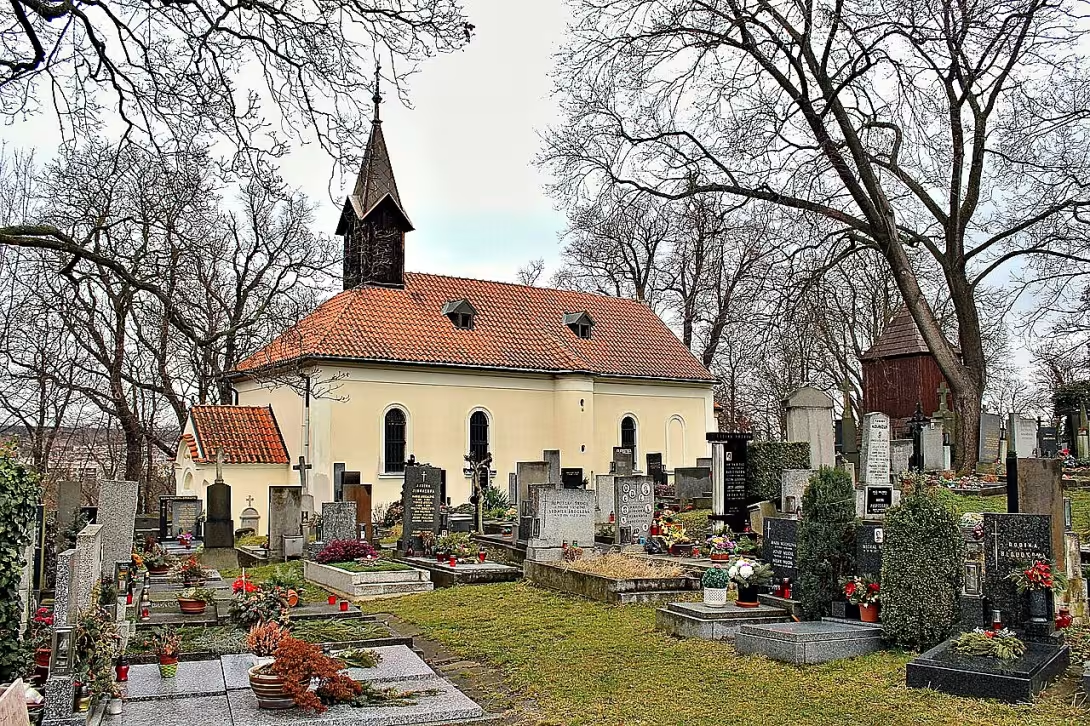
The church of St. Vavríce in Butovice (part of Jinonice in Prague) is one of the oldest temples of Great Prague. It is originally a Romanesque building which historians date back to the 11th century based on the character of its quad wall. The first written mention of the church dates back to the 13th century, but the building itself has been on Czech territory for over a thousand years.
The church is located in the cadastral area of Jinonic at the crossroads of U guardhouse and Vavřinecká, approximately a mile from the station Jinonice. From the metro is available by yellow tourist sign. The location is appropriately combined with a walk through the Prokopská valley, which is situated nearby.
Only an apsid and a crypt of four metres long, containing several ancient graves, were preserved from the original building. These remains are indicative of the Romanesque origin of the building. Over the centuries the church has undergone several reconstruction. In 1571 he was expected to repair the first recorded repair. At the end of the 18th century the building was rebuilt in Baroque style and the sacristy was added. The last major reconstruction took place between 1894 and 1901. The restaurant's work in 2005 revealed the remains of the original block wall and small Romanesque windows that confirm the old face of the temple.
A wooden bell tower and cemetery with a six-sided funeral chapel are located close to the church. The bell tower contains a bell called Vavřinec, which bears the name of the church itself. Although originally there were three bells, today only this largest one survived. The bell tower remains fully functional and forms an integral part of the historical complex.
St. Vavrnice Church is an interesting stop for those interested in the medieval architecture of Czech countries and its surviving remains in the middle of modern Prague.
Then and now
Drag the slider to compare how the landmark may have looked when it was built with the view today.
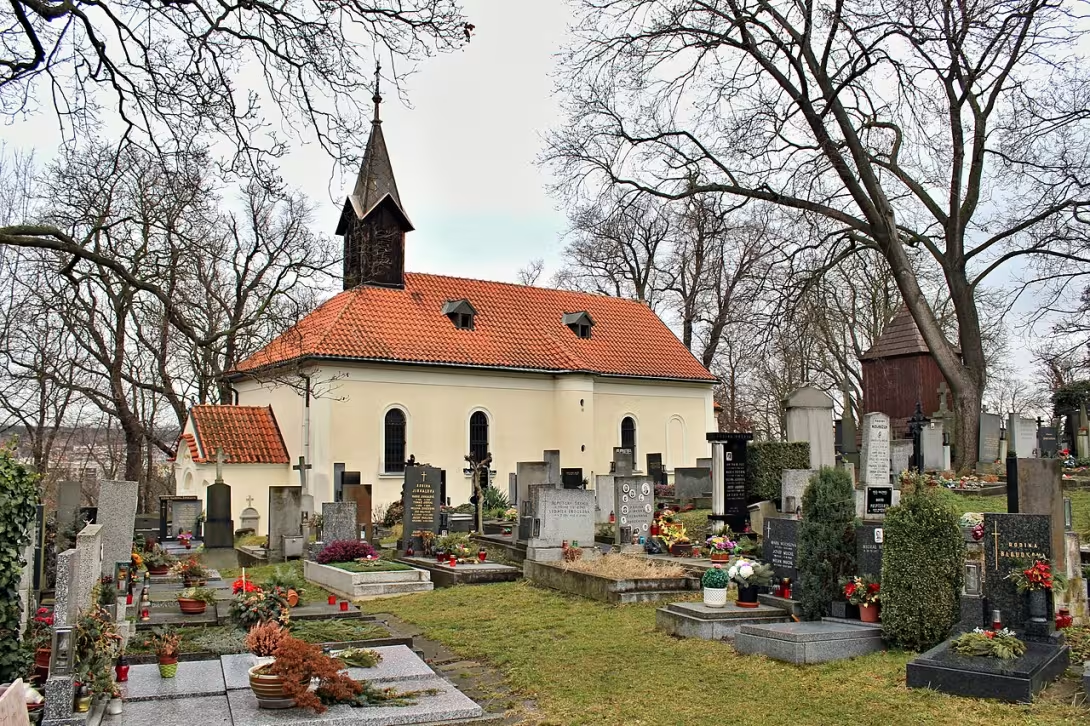

The historical appearance on the left is an AI-generated visualisation and serves as inspiration only.
Historical milestones
- 13th Century
- The first written mention of the church of St. Lawrence
- 1571
- First documented reconstruction of the church
- 1894-1901
- Last extensive reconstruction of the church in the historical style
- 2005
- Restoration works revealed the remains of Romanesque masonry and windows
Architectural development
The original Romanesque building from the 11th century consisted of apsid and crypt. In the 16th century the church was expanded and modified, in the 18th century it was rebuilt in a Baroque style with an added sacristy. The last extensive reconstruction took place in 1894- 1901 when it gained today's form. Only apsid and crypt survived from the original Romanesque phase.
Historical events
The first written mention of the church dates back to the 13th century, but traces from the 11th century were preserved. In 1571 the first documented reconstruction took place, followed by Baroque reconstruction in the 18th century. In 2005, Romanesque remains were discovered during restoration work.
Points of interest
- The church of St. Lawrence in Butovice (Jinonice) is originally a Romanesque building from the 11th century, which is evidenced by its quad wall.
- The first written mention of the church dates back to the 13th century, although the building itself has been on Czech territory for over a thousand years.
- The original Romanesque building has preserved only apsid and crypt with several ancient graves.
The oldest recorded repair of the church took place in 1571.
- In 2005, the remains of the original quad masonry and small Romanesque windows were exposed at restaurants.
Guide
This guide is narrated by a synthetic voice generated by artificial intelligence.
Show guide text
This text was created by artificial intelligence and has not been editorially reviewed. It may contain inaccuracies.
Welcome to the church of Saint Vincent in Butovice, in the part of Prague Jinonic. Stop for a moment, take a breath and feel the atmosphere of this place. You are standing before a construction that is not just an ordinary church, but a real silent witness to history that has been here for over a thousand years. Now, if you look at the building in front of you, you might see in it the influences of different times, but underneath that visible layer is a secret from the early Middle Ages. This church is one of the oldest preserved sacral buildings in the whole territory of Great Prague and its presence here reminds of the time when this area was completely different from today's urban development.
Now let's think together about how this building came into being. Imagine the eleventh century. At that time, Romanesque architecture was in full swing in Czech countries, which was betting on massive, simple and unshakable safety. It is from this era that the basic core of the church of St. Lawrence comes. Although the first written mention of this place dates back to the 13th century, the wall itself tells us a much older story. It's fascinating to realize that the building existed two years ago before someone decided to write about it in chronicles or documents. This gap between the actual creation and the first reference in the texts gives the place a certain sense of mystery. Who built this place? Who prayed in these walls for the first time? The names of architects and founders have been lost in oblivion over time, but their work still stands here.
Now please pay attention to the architecture itself and to what you can see right in front of you. If you look carefully at the masonry, notice its specific character. It is the block wall that is the key evidence that confirmed the Roman origin of the construction from the eleventh century. Quads are treated stone blocks, which at that time required great precision and effort in working and laying. Feel the texture of these stones that have survived a thousand years of history, war and storm.
In addition to the walls themselves, there is a very important element of the apsida, that is the semi-circular part of the church, and connected to it the crypt. The crypt, a space beneath the ground, was a very common element in the Romanesque era, used to store the remains of prominent figures or as a place to worship holy relics. Even though today we see the church in its later form, this Romanesque base remains preserved and forms the spiritual and building basis of the entire building.
But how did the church look like you see it today? The building was not static, but it evolved along with the times and needs of the people who visited it. Over the centuries, it has undergone several major reconstructions. One of the most important was the Baroque style in the eighteenth century. The Baroque has brought dynamism, decorating and trying for emotional action into architecture. Even though the Romanesque core remained, baroque interventions changed the perception of space and exterior appearance to match the then taste and religious feeling.
Another big break came at the turn of the nineteenth and twentieth centuries. From 1894 to 1901, a major reconstruction took place in the so-called historic style. Historism was at that time very popular in a direction which returned to the ideals of past epoch, combined them and tried to find harmony in them. It is this last great reconstruction that gave the church its present face, which you are now observing. It's a fascinating layer of styles where Romanesque brutality meets baroque elegance and historical diligence.
Although we do not know the specific names of the personalities that would be closely linked to the church, we can imagine the generations of the local inhabitants of Butovic and Jinonic, for which this church was the center of their world. It was a place for baptism, weddings, and a final farewell. Every stone here carries a trace of human life from centuries.
Now, I want to impress you with one interesting thing that goes with the latest. Even though we think we know everything about buildings this old, history sometimes surprises us. In 2005, extensive restoration work was carried out, bringing unexpected revelations. It was during these works that the remains of the original Romanesque masonry and small Romanesque windows were found and uncovered under layers of later modifications. This window was at the original time narrow and high, reminiscent of a shooting house, which was typical of Romanesque buildings, where the walls had to be very strong to carry the weight of the vaults. The idea that this window was covered by centuries and saw the light of day again in 2005 shows us how deep history is anchored in a place.
Now, when you look around you, remember that you are standing in front of one of the oldest sacral spaces in Prague. The Church of St. Lawrence is not only a monument from the past, but it still serves as an active sacral object where people meet today. It's a bridge between the eleventh century and our present.
Before we say goodbye, I suggest you admire the entire structure. Try to stop at the different sides of the building and think about how it was changing. Note the details in the stone and try to separate in your mind what is from the eleventh century, from what has been added in the Baroque or the late nineteenth century. It's like reading a book where every chapter was written in another century, but it tells a coherent story about faith, architecture, and endurance.
Thank you for accompanying me on this short journey through time. I hope that this meeting with the Church of St. Lawrence enriched you and that you felt the depth of the history that still breathes in Butovice. You are now being left to explore this quiet corner of Prague. I wish you a pleasant rest of the day and an inspirational continuation of your travels. Goodbye.
Tips for visitors
The best time to visit the church is Friday and Saturday from 10:00 to 16:00, when tours are most frequent. If you want to have the church to yourself, visit it on Wednesday or Thursday.
Frequently asked questions
Can the monument be visited?
Religious buildings are usually open mainly during services; at other times a visit is normally arranged with the parish or the operator. We have not verified specific times.
Where is the monument?
Location: Vavřinecká, Jinonice, Praha, Hlavní město Praha. The map on this page shows the exact spot.
Why is the monument protected?
It is listed in the Central List of Cultural Monuments of the Czech Republic as a cultural monument (register no. 40301/1-1363).
For kids
Imagine going back to the past, when the country was full of secrets and mysterious construction. The Church of St. Lawrence in Jinonice is one of the oldest monuments of our country and has many surprising stories.
How did it look here? Who lived here? What happened here? Many centuries ago, the area around the church was inhabited by tribes that fed on collecting fruits and fruits. They were people who had an amazing ability to communicate with nature and its secrets. The church was their sanctuary where ritual ceremonies and prayers were held.
Businesses nearby
Do you run a restaurant, accommodation, shop, museum, rental, wellness or other visitor service near this monument? Show yourself directly to the people heading to it — this is how they will see you in the app and on the web:
Events nearby

Zdroj akcí: otevřená data měst a obcí ČR (Národní katalog otevřených dat) a kalendář akcí Národního památkového ústavu.
Nearby
The church is located near the Prokopská valley, which is an important natural location with rich flora and fauna. There are also a number of other historical objects within a 5 km radius, such as the site of the former military escape of Březina or a complex of monuments in Prague-Jinonice, including a cemetery with a funeral chapel.
Accommodation nearby
Trips and activities nearby
Guided tours, tickets and activities nearby from GetYourGuide
Affiliate link: if you buy from the partner, we may receive a commission. The price for you does not change.
Search tours and activities →Themed route
Thematic cruise route: Jinonice and their historical and natural treasures
1. Church of St. Lawrence Baroque church from the 18th century, which stands in place of the older Gothic temple. Its interior with rich decoration and historical tombstones is fascinating. In the vicinity of the church there is a quiet courtyard with a commemorative plate reminiscent of local history.
2. Prokopská valley (approximately 1 km from the church) One of the most visited natural sites in Prague. The valley offers picturesque paths between rocks, a variety of flora and fauna, including rare plant species. Ideal for relaxation or a short walk.
3. Former military escape of Březina (approximately 3 km from the church) Today a freely accessible area with vast forests and historic objects from military use. The place is popular for cycling, hiking and nature observation. The rest of the military buildings are interesting.
4. Funeral chapel in the Yinonical cemetery (approximately 0.5 km from the church) A small but historically important chapel in the local cemetery, which served as the last rest for many Yinonical families. There are also some interesting tombstones and commemorative records.
Seasonal recommendations
Spring In the spring months, the church of St. Vavríce is dressed in light, which penetrates through bright windows and creates on the stone walls a game of color reflections. The surrounding area is still quiet until the leaves and trees of the parish yard bloom, and the air smells fresh soil and first flowers. The atmosphere is peaceful, almost meditative, as if the monument was waiting for visitors to enjoy the silence between the ringing bell and the rustling of the leaves. Practically, it is best to visit the church in March or April when the crowds are not piling up yet - ideal is the morning when the light falls into the interior most beautiful. Comfortable shoes are recommended because after rainy days the roads to the church can be muddy, and a light sweater, as spring temperatures change rapidly.
Summer In the summer months, the church of St. Lawrence shines in full strength, when the sun's rays are reflected from white facade elements and create cold shadows in the corridors. The surrounding park turns into a green oasis, where birds hide between trees and bushes, whose singing complements a calm atmosphere. In the main summer season, however, there is a higher interest for visitors, especially on Sunday morning when services are held. It is recommended to arrive early, preferably before nine o'clock to avoid crowds, and to bring water and light clothes - temperatures may rise in the interior without air conditioning. For those who want to explore the surroundings, it is advisable to visit the nearby Jinonic Valley, where you can walk comfortably even on hot days.
Autumn Autumn brings golden shades to the church of St. Lawrence, which are reflected in windows and create a warm, almost intimate atmosphere in the interior. The surrounding area turns into a mosaic of red, yellow and brown colours, while the air is fresh and slightly cold. In November, in the time of St. Catherine's, the church can become a place of quiet prayers or a meeting of local residents, but without large gatherings. Practically best to visit a monument in September or October, when the weather is still pleasant and the traffic is lower than in winter. It is recommended to warm but not too heavy clothing - the morning and evening can be cold while the sun is still warm at noon. For those who like to photograph, autumn is the perfect time to capture the church in its most beautiful colors.
Winter In winter, the church of St. Vavrnice will turn into a quiet sanctuary, where it reflects the white snow tide and the shadows of long winter days. The atmosphere is serious and meditative, with a quiet snow rustling and distant bell ringing. In advent time, the church becomes a place of peace and reflection, where visitors often stop for a while to enjoy its architecture lit with candles and Christmas decorations. Practically best to visit the memory in the morning, when the light is the most beautiful, and take warm clothes - temperatures may fall below freezing. For those who like to pass through, the surroundings in winter are magical, but you must be careful of slippery terrain.
Visualizations and artistic views


The visualisations are generated by artificial intelligence and serve as inspiration.
Photos from the area
Real photos taken near the monument


Zdroj a licence jsou uvedeny u každého snímku.
Atmosphere of the place
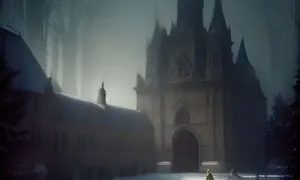
This atmospheric visualisation of the place and period was generated by artificial intelligence. It is not real footage of the location.
Tips from visitors
No tips yet. Be the first!
Log in and add your tip.
Sources and literature
Photos: VitVit / CC BY-SA 4.0 — Wikimedia Commons. The author and licence also appear when you hover over the image.
Faktickým podkladem tohoto textu byl článek na Wikipedii, jehož autory jsou přispěvatelé Wikipedie. Článek je dostupný pod licencí CC BY-SA 4.0.
Location on the map
Příběhy a pověsti
Legendy, pověsti a příběhy spjaté s touto památkou
Fotografie návštěvníků
Zatím žádné fotografie. Buďte první, kdo přidá fotografii z návštěvy!
Log in a přidejte svou fotografii nebo hodnoťte.
Za ověřenou návštěvu v aplikaci získáte víc bodů — poznáme podle GPS, že jste na místě.
Reviews and comments