






Kostel svatého Víta (Zbytiny) Church
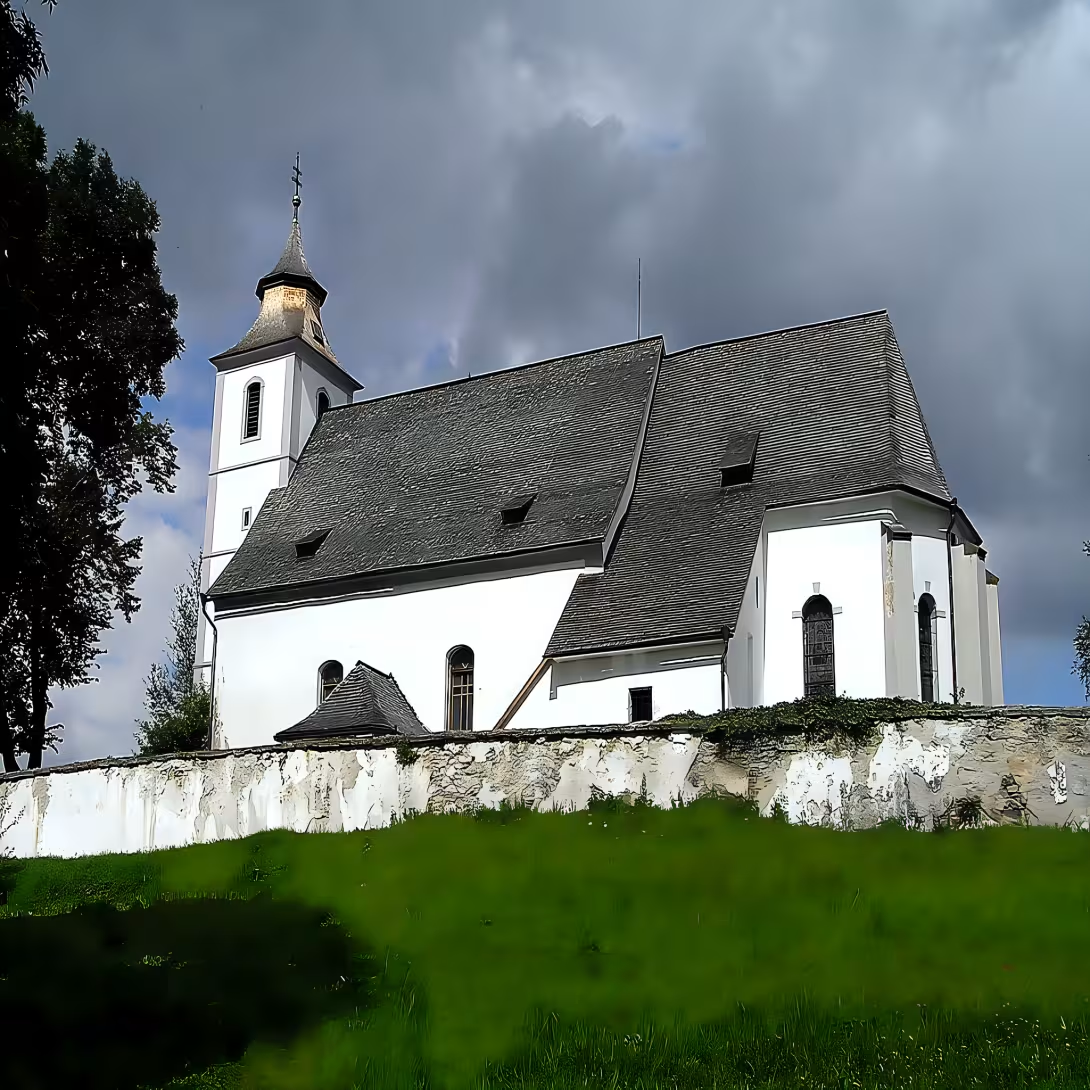
The Church of Saint Vitus in Zbytiny is a testament to Gothic architecture from the second half of the 14th century. This cultural monument is located in the South Bohemian district of Prachatice and is remarkable for historical importance and resilience. Despite the damage caused by the fire in 1738 and the restoration in the 18th century, it retains its original spirit as a parish church for the Roman Catholic community in Zbytiny, where services are held only occasionally.
By the time the Czechs were part of the Holy Roman Empire under Charles IV, the Church of St. Vitus appeared at a time characterised by significant cultural development. In the middle of the 14th century, Gothic architecture flourished throughout Europe, while Prague became the main centre of art and learning. This historical context underlines the architectural importance of the church as part of a wider European movement.
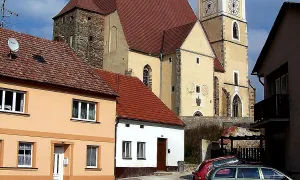
Architecturally, the church of St. Vitus has an original Gothic design, including a one-ship building with a five-sided handle, sacristy and hall on the north side. The western facade boasts a tower that complements its distinctive silhouette. While the ship has a flat wooden ceiling, as chancel and sacristy are arched with cross-ribbed vaults, shows complex Gothic craftsmanship. This combination of structural elements underlines the architectural integrity of the church despite changes after the fire 1738.
The interior is equally remarkable, with the main altar from the chateau chapel in Český Krumlov. Made by sculptor Johann Vorath, this piece represents the detailed art of the period. Altarka was painted by J. Putz, which added to the art wealth. In addition, the church is located baroque side altars and pulpit from the beginning of the 18th century, as well as stone baptism and organ pipes from 1735.
During his history, the Church of St. Vitus witnessed significant events, including his half-14th century building and restaurant efforts after the fire of 1738. These events shaped his current form and function within the community. Today it is surrounded by a cemetery with a wall that increases its historical environment.
Currently, the Church of St. Vitus remains a cultural monument under the protection of the Czech Republic. Although it serves as a parish church for the Roman Catholic community in Zbytiny, services are rare, so it is more a historical place than a regular place of worship. Its architectural and artistic elements continue to attract visitors who are interested in its historical significance.
Visiting St. Vitus Church offers a unique opportunity to explore the Gothic architecture that resisted the time test. Rich history and complex design make it a valuable destination for people interested in cultural heritage and architectural beauty. The church is a reminder of the continuing heritage of medieval craft work in European history.
Then and now
Drag the slider to compare how the landmark may have looked when it was built with the view today.
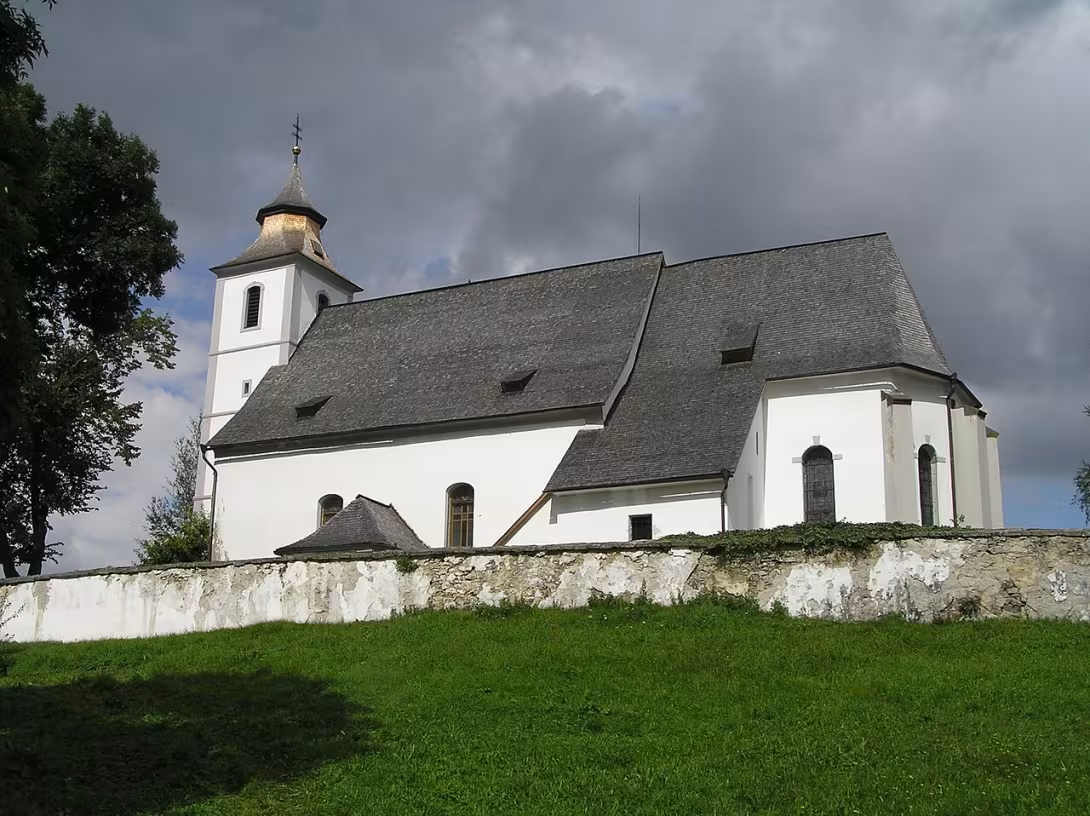

The historical appearance on the left is an AI-generated visualisation and serves as inspiration only.
Historical milestones
- 1348
- The founding of the Holy Vitus Cube in the Residents.
- 1738
- Church damaged by fire.
- 18th Century
- Restore the church after the fire.
Architectural development
The church of St. Vitus was originally built as a Gothic building and after the fire in 1738 there were significant changes. The reconstruction carried out in the 18th century preserved its architectural integrity while updating certain elements to meet current needs.
Historical events
the church was built in the second half of the 14th century.
In 1738 he suffered a fire and in the 18th century there was a restoration.
Owners
Parish Zbytiny
Tannery Monastery
Points of interest
- St. Vitus Church is a cultural monument of the Czech Republic.
- It is a Gothic building from the second half of the 14th century which burned down in 1738 and was restored during the 18th century.
- Priests and sacristy are arched, while the temple ship has a flat wooden ceiling.
- The main altar comes from the chateau chapel in Český Krumlov and is the work of the carver Johann Wrath, the painting was painted by J. Putz.
- Side altars and pulpit are baroque from the first half of the 18th century.
Guide
This guide is narrated by a synthetic voice generated by artificial intelligence.
Show guide text
This text was created by artificial intelligence and has not been editorially reviewed. It may contain inaccuracies.
The Church of Saint Vitus in Zbytiny na Prachaticku is a cultural monument of the Czech Republic. The adjacent cemetery with its boundary wall is also heritage protected. The church is the parish church of the local Roman Catholic parish, though services are held here only occasionally.
It is a Gothic structure from the second half of the fourteenth century. In seventeen thirty-eight the church burned down and was renovated during the eighteenth century. The chancel and sacristy have vaulted ceilings, while the church nave is covered with a flat wooden ceiling.
The main altar came here from the castle chapel in Český Krumlov, but without its altarpiece. It was carved by woodcarver Johann Worath. The painting that hangs on the altar today was painted by painter Putz. The side altars and pulpit are Baroque and date from the first half of the eighteenth century. The baptismal font is made of stone and the organ is from seventeen thirty-five.
Tips for visitors
The best time to visit the church of St. Vitus in Zbytiny is at the end of spring or early autumn, when the weather is pleasant for exploring outdoor areas such as the surrounding cemetery with its clogging wall. These seasons offer mild temperatures and beautiful natural scenery typical of South Bohemia, which increases your experience in this historic place.
For those who use public transport, local buses serve the area, but it is recommended to verify the current routes and plans through the transport search tool.
When planning your visit, consider bringing comfortable walking shoes as you wish to explore the church grounds and cemetery. In addition, wearing the camera allows you to capture the complex Gothic architecture of the church, especially during the golden hour of early morning or late afternoon, when natural light increases the beauty of historical buildings.
For families with children, St. Vitus Church offers an educational experience of Gothic architecture from the 14th century. The surrounding cemetery and its wall provide a peaceful environment for a peaceful walk. Keep in mind that there are no specific attractions within the 30-minute circuit given, so plan activities accordingly or take this time to enjoy the natural surroundings.
Frequently asked questions
Can the monument be visited?
Religious buildings are usually open mainly during services; at other times a visit is normally arranged with the parish or the operator. We have not verified specific times.
Where is the monument?
Location: Zbytiny, Jihočeský kraj. The map on this page shows the exact spot.
Why is the monument protected?
It is listed in the Central List of Cultural Monuments of the Czech Republic as a cultural monument (register no. 37800/3-3923).
For kids
About 678 years ago, when people dressed in long cloaks and wore hats with wide arms, the small village of Zbytiny grew a stunning building. It was a church of Saint Vitus, like a stunning toy made of stone and wood, which people imagined was a heavenly temple on earth.
When the church first appeared around 1348, many villagers lived in Zbytiny. They were peasants and fishermen who worked every day in fields and rivers. Saint Vít became their temple where they came on a quiet Sunday or in the sanctuary to sing a song and thank you for a good harvest.
Businesses nearby
Do you run a restaurant, accommodation, shop, museum, rental, wellness or other visitor service near this monument? Show yourself directly to the people heading to it — this is how they will see you in the app and on the web:
Nearby
St. Vitus Church is located in Zbytiny in Prachatic district, surrounded by natural beauty typical of South Bohemia. There is a cemetery with a wall that complements the historical environment.
Accommodation nearby
Trips and activities nearby
Guided tours, tickets and activities nearby from GetYourGuide
Affiliate link: if you buy from the partner, we may receive a commission. The price for you does not change.
Search tours and activities →Themed route
Thematic walking tour: St. Vitus Church and surroundings
1. Church of St. Vitus (Zbytiny) * Type: * Religious pages * Why Visit: * St. Vitus Church stands as proof of the historical and architectural heritage of South Bohemia. Its peaceful environment, supplemented by a closed cemetery wall, offers visitors a view of the past of the region while surrounded by natural beauty.
2. Cemetery with wall closure * Type: * Historic site * Why Visit: * To the Church of St. Vitus this cemetery is not only a landmark place but also an integral part of the historical atmosphere. The tilting wall adds its charm and calls for reflection on the cultural history of the area.
3. Surrounded area of church * Type: * Scenic stain * Why Visit: * Explore the immediate surroundings of St. Vitus Church, where fresh greenery and open spaces provide a quiet environment for relaxation. The natural landscape around the church increases its spiritual atmosphere, making it ideal for a peaceful walk.
This tour offers an intimate survey of the church of St. Vitus and its surroundings, allowing visitors to immerse themselves in history while enjoying a quiet beauty typical of South Bohemia.
Seasonal recommendations
Spring: The chateau of St. Vitus' Church in the Oztiny in the spring of the beauty purchase has fallen on animals and trees that are close to the new human condition. Sunshine days provided by ideal estimation for photography and preliminary historical data on the cube. In this case, the excess beauty of the surrounding driving is at its peak, creating an atmosphere of calm and new. For the purposes of this Regulation, the following definitions shall apply: While the crowd is not too much, it is a good idea for the natives or on Wednesday to avoid a potential group of tourist buses.
Summer: Summer is a popular destination for milestones of history and nature. Long sunny days and a test winter allow the use of the Holy Vitus cube, which is intended to obtain liquid history. Summer is also a time when it should appear in more tourists and partitions and other events or exhibitions. It is exciting to build a church early in the morning or later in the evening to avoid the peak of summer tide. The dark rounded and sun protection are key to a good experience.
Autumn: In the autumn possible acquisition of Residues of exfoliation a unique atmosphere, when tree leaves are studied in material colours. This time of year is ideal for peaceful prosthetics around St. Vitus and for border photography with a position full of colors. Translated may occur in more cases than is necessary if possible. It should be noted that the recalculated quantity of cold temperatures and the quantity allocated for this year.
Winter: Winter value of the St. Vitus cube in Zeztiny offered quiet and quiet products with possible use with an increased share of the surrounding landscape. It is not possible for the church to be awarded special lights because it has an architecture that is part of the project. The remaining quantities of transferred equipment to be manufactured are intended for products. It is possible that these will be specific measures that could affect the situation.
Visualizations and artistic views


The visualisations are generated by artificial intelligence and serve as inspiration.
Photos from the area
Real photos taken near the monument

Zdroj a licence jsou uvedeny u každého snímku.
View from the area
This animation was generated by artificial intelligence from a real photograph of the surroundings. The motion and details are not real footage of the location.
Tips from visitors
No tips yet. Be the first!
Log in and add your tip.
Sources and literature
Photos: Kubajzs / Public domain, rozlišení zvýšeno umělou inteligencí — Wikimedia Commons. The author and licence also appear when you hover over the image.
Faktickým podkladem tohoto textu byl článek na Wikipedii, jehož autory jsou přispěvatelé Wikipedie. Článek je dostupný pod licencí CC BY-SA 4.0.
Location on the map
Příběhy a pověsti
Legendy, pověsti a příběhy spjaté s touto památkou
Fotografie návštěvníků
Zatím žádné fotografie. Buďte první, kdo přidá fotografii z návštěvy!
Log in a přidejte svou fotografii nebo hodnoťte.
Za ověřenou návštěvu v aplikaci získáte víc bodů — poznáme podle GPS, že jste na místě.
Reviews and comments