



Vodárna Českých drah Waterworks
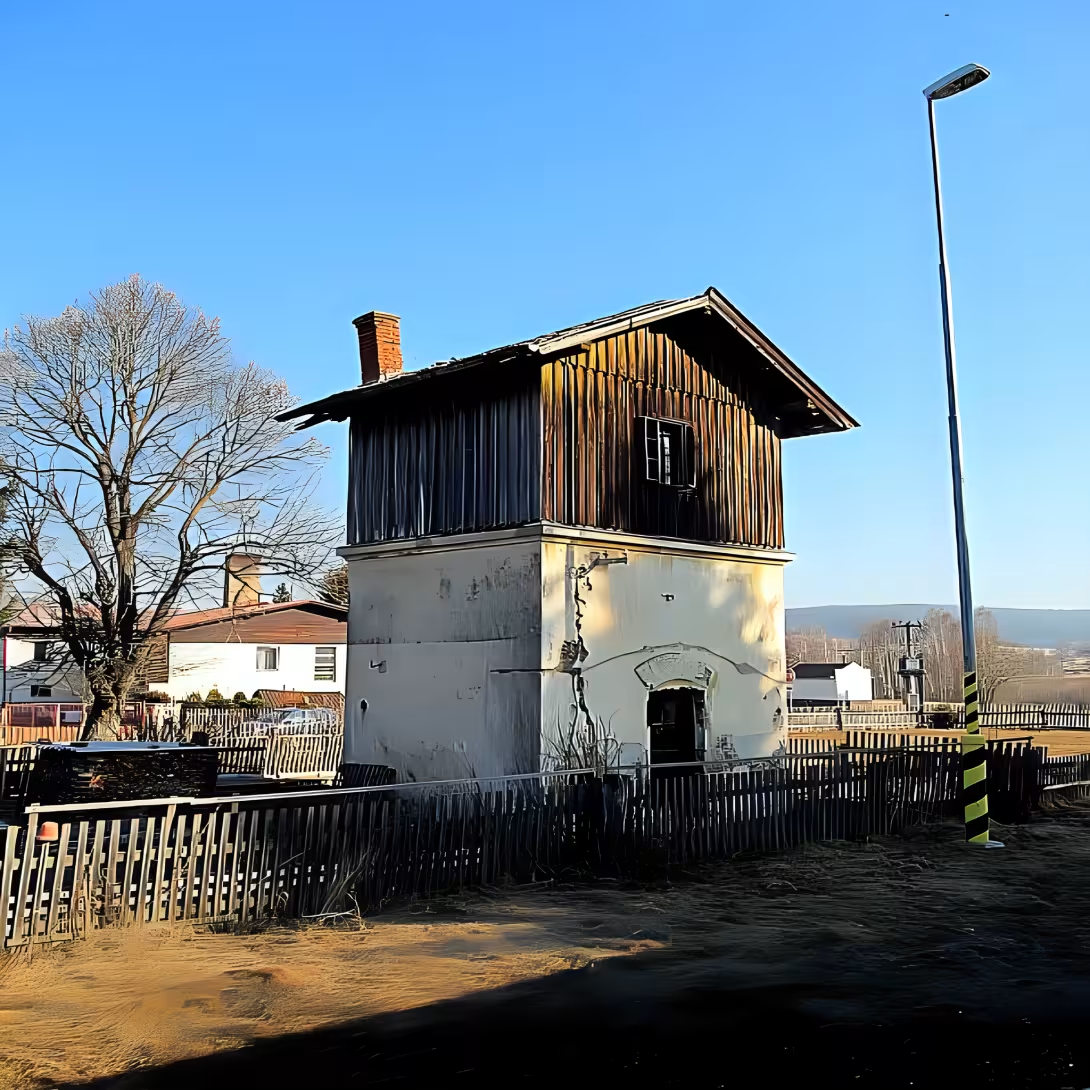
The railway water station in Zeztiny is a cultural monument of the Czech Republic, which can be viewed by any curious visitor to the railway line 197 Čechenice - New Valley in the district of Prachatika. This self-standing tower building, built at the end of the 19th century, is remarkable with its historical function and architectural design. It was used to supply steam locomotives with water, which was necessary during the era of steam traction.
The development of the railway water tower is closely linked to the development of the railway network in the Czech Republic at the end of the 19th century when the regional line Vodňany-Prachatice was launched and later extended to Volary. During this phase of intensive industrial development, it was necessary to build water in station Zbytiny to provide sufficient water for steam locomotives. Architecturally, the building is a combination of a stone base and a raked floor with wooden panelling, reflecting the practical functionality and aesthetic requirements of the time.
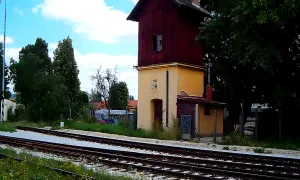
Architecturally, it is built on a rectangular floor plan with a stone plinth of barefoot blocks. The ground floor consists of a masonry wall with a lime plaster, while the floor is made of a raked wall with a wooden panelling. The whole object ends with a saddle roof covered with bombers. The original steel water tank was preserved in the interior, which shows the historical function of the construction.
After the introduction of motor transport, the water plant lost its importance and was abandoned. However, its historical value was acknowledged by the State when it was declared a cultural monument by the Ministry of Culture of the Czech Republic in 2006.
Today, the railway water in Zeztiny is accessible to visitors who are interested in the history of railways and architecture of the 19th century. It is a unique example of railway architecture, which offers an insight into the past of industrial development in Bohemia.
Visiting this monument is not only a road to the history of railways, but also an opportunity to appreciate the architectural art and technology of past times. The railway water in Zeztiny is worth visiting not only for its historical value, but also as a reminder of the time when railways opened up new possibilities and changed Europe's face.
Then and now
Drag the slider to compare how the landmark may have looked when it was built with the view today.
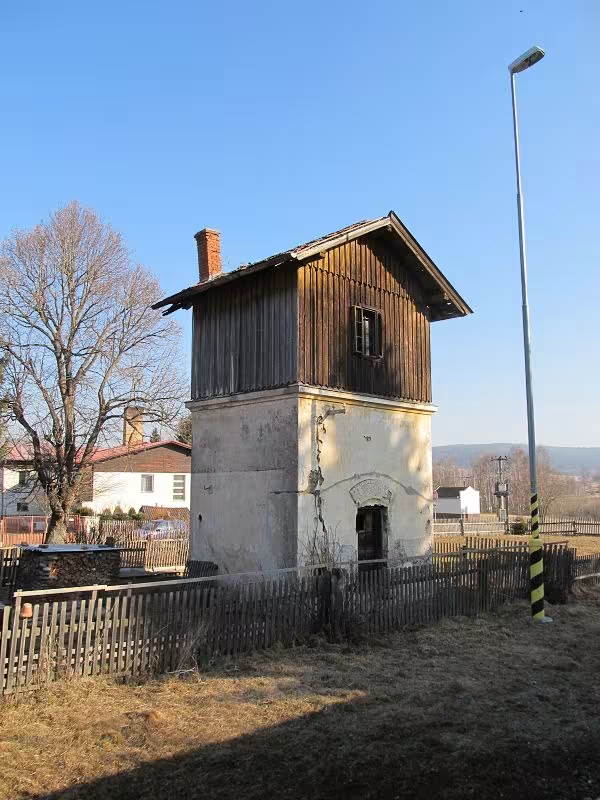
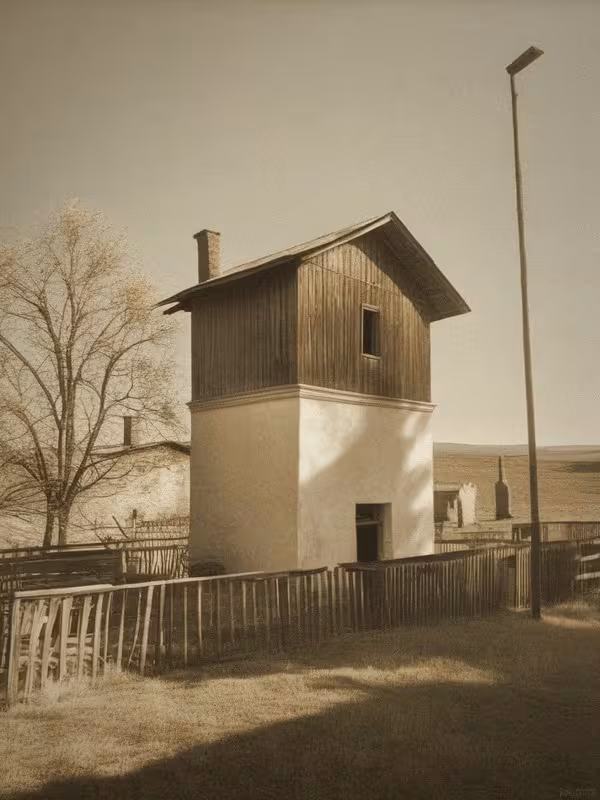
The historical appearance on the left is an AI-generated visualisation and serves as inspiration only.
Historical milestones
- end of the 19th century
- Position of the groove water tower in station Zbytiny
- end of the 19th century
- Development of the railway network, opening of the line Vodňany-Prachatice and its extension to Volary
- 2006
- Declaration by the Ministry of Culture of the Czech Republic
Architectural development
The construction is built on a rectangular ground plan with a stone plinth of barefoot blocks. The ground floor consists of a masonry wall with a lime plaster, while the floor is made of a raked wall with a vertical wooden panelling. The whole object is finished with a saddle roof covered with bobbies.
Historical events
1893 - start of operation of the Vodňany-Prachatice line; 2006 - declaration for cultural monument of the Czech Republic.
Points of interest
- The railway water in Zeztiny is a cultural monument of the Czech Republic. - The tower was built at the end of the 19th century to supply steam locomotives with water. - Architecturally combines stone base and paved floor with wooden panelling, ended with a saddle roof covered with beavers. - In 2006 the water plant was declared a cultural monument by the Ministry of Culture of the Czech Republic. - It is accessible to visitors who are interested in the history of railways and architecture of the 19th century.
Guide
Show guide text
This text was created by artificial intelligence and has not been editorially reviewed. It may contain inaccuracies.
Welcome to Zbytin. You're standing right in front of this fascinating architectural jewel that stands over the surrounding landscape as a silent witness to the past. In front of you is a stand-alone tower building, which at first sight acts as an unusual mixture of materials and styles. Take a closer look. You see a massive stone base that will anchor the entire structure in the ground. Above it is raised a floor with a characteristic wooden panelling, called a railing, which gives a whole lightness and rustic charm. And upstairs, as a crowning element, the saddle roof is covered with beaver shingles. This combination of stone, wood and roof creates a unique visual impression that will attract the attention of anyone who goes here. It is not a residential house or a classical bell tower, but a building with a very specific and technical purpose, which few people now fully understand.
Let's move forward in time and find out why this tower was created. This building is not a random work of architects, but a result of the industrial revolution and massive development of railway transport in the second half of the nineteenth century. It was built in connection with the construction of the railway line which connected Chechenice to the New Valley. At the time when trains were powered by steam locomotives, water was vital. The steam engines used a huge amount of water that they had to replenish during the journey. This is why special waterjams were built at stations and along the line, which were used to supply steam engines. This tower in Zbytiny performed this function. It was a storage tank from which the water by gravity was brought into the locomotives' tanks. Imagine a scene from the late nineteenth century. The rail network has developed rapidly in this area. Construction of the line from Vodňan to Prachatic started and later its extension towards Volary. Each new section of the track required a reliable water supply, so these water jams were created. The architects who designed this structure remained anonymous, but their work has served its purpose for generations.
Now pay attention to the architectural details you see before you. Notice how the construction is divided into two distinct parts. The lower part consists of a stone file, probably from a local stone, which ensures stability and weather resistance. This massive foundation is needed to carry the enormous weight of water that stood at the top of the tower. There is a wooden structure above the stone pedestal. It is the so-called paved floor where wooden beams and gaps between them are visible. This type of construction was traditional in Czech countries and was often used for economic buildings, but it was modified here for technical purposes. The wood lining protected the inner structure and tank from moisture and freeze. And finally, the saddle roof. Its inclination is to effectively drain rainwater and snow water. The beaver shingles cover, i.e. wooden slices, was common at the time and provided a warm, natural look to the construction. This combination of materials is not random. The stone base provides strength, the wooden part allows for easier construction and maintenance, and the roof protects the whole structure. It is an example of practical architecture where the form fully corresponds to the function.
Key stories associated with this construction are not about famous personalities, but about the daily lives of railway workers and passengers. Imagine a train driver coming to the station with an exhausted locomotive. He had to replenish the water quickly to continue his journey. This tower was a source of life for him. Without it, trains couldn't move. However, with the onset of motor transport, the situation has changed substantially. Diesel and later electric locomotives did not require that much water. The water lost its original meaning and gradually ceased to be used. The building is in opposition, abandoned and forgotten. It became a symbol of the end of the era of steam transport. Yet she remained standing, resisting the tooth of time. Her fate was long uncertain. Many similar waterjams in the Czech Republic have been demolished or modified for other purposes. This one, however, was preserved in Zbytiny.
The interesting fact that this seemingly ordinary technical construction was declared a cultural monument of the Czech Republic by the Ministry of Culture in 2006 is the fact that it is interesting. This was an important milestone. He recognized the historical and architectural value of the building. It meant that the building was protected from destruction and must be maintained. The declaration of cultural monument also attracted the attention of historians, architects and railway heritage lovers. It has shown that even technical constructions can be beautiful and valuable. This tower is not just a pile of stone and wood, but a document of history. He's telling us how traffic evolved, how technology changed, and how people solved the practical problems of their time. It is also a reminder that history is not only about castles and churches, but also about buildings that served ordinary life.
Looking at this structure, you can realize how quickly the world changes. What was necessary yesterday could be useless today. And yet, if we recognize it and protect it, it can serve as an inspiration and a lesson. This tower in Zbytiny is an example of how the technical construction can be aesthetically interesting and historically valuable. Its simple but efficient design is now rare. Take a moment and look at the details. How are stone blocks laid? What do wooden beams look like? How's the roof covered in shingles? Every detail has a story. And you are his witness.
Finally, I invite you to look at this memory from different angles. Go around it, if possible, and see how it relates to the surrounding landscape. Feel the atmosphere of the place. Imagine the sound of a steam locomotive, steam engine, and the clacking of the tracks. Even though trains don't come here anymore, history still lives here. This tower is a connection to the past that shaped us. Thank you for taking the time to stop by this place. I hope this visit has brought you new knowledge and pleasure. I wish you a pleasant continuation of your journey and many other discoveries. When you have time, come back and see how the building changes with the seasons. Each season gives her a different character. Whether it's spring, summer, autumn or winter, this tower is standing here waiting for you. So let's say goodbye with a smile and hope to see you soon. Good trip.
Tips for visitors
The sunny day provides ideal conditions for shooting the tower with the best lighting.
For those who prefer public transport, there is a place accessible on the rail line 197 Chečenice - New Valley. You can verify the current connection in the online search engine.
When visiting, wear a suitable suit because the outdoor conditions can be variable. Photographers should bring their camera and perhaps some additional equipment such as dandruff or mono for detailed footage.
For photography is the best place around the tower where you can capture different angles and perspectives. Sunlight in the morning or evening provides ideal conditions for dramatic shots.
For families with children it may be interesting to explore the surrounding natural environment and possibly plan to visit other historical sites nearby.
Frequently asked questions
Can the monument be visited?
The building is in use (offices, a school, shops and the like). The interior is generally accessible only during operating hours and tours are not usually offered; we have not verified the details. You can see the exterior from the street.
Where is the monument?
Location: Zbytiny, Jihočeský kraj. The map on this page shows the exact spot.
Why is the monument protected?
It is listed in the Central List of Cultural Monuments of the Czech Republic as a cultural monument (register no. 1670397319).
Businesses nearby
Do you run a restaurant, accommodation, shop, museum, rental, wellness or other visitor service near this monument? Show yourself directly to the people heading to it — this is how they will see you in the app and on the web:
Nearby
Objekt se nachází v areálu dopravny Zbytiny na železniční trati 197 Číčenice – Nové Údolí.
Accommodation nearby
Trips and activities nearby
Guided tours, tickets and activities nearby from GetYourGuide
Affiliate link: if you buy from the partner, we may receive a commission. The price for you does not change.
Search tours and activities →Themed route
1. Transport area Zbytiny (Type: Railway area) - A space with a technical character surrounding the main monument. 2.Vodárna Českých drah (Type: Tower) - Unique construction designed to supply water for rail transport. 3. Rail track 197 (Type: Rail connection) - A route leading towards Čečenice and Nové Vale which defines the location of the entire complex.
Seasonal recommendations
Seasonal recommendations for visiting historical monuments Memorial: Vodárna Českých drah (tower), Zbytiny
Spring: In spring, the surrounding tower awakens into life. The sun shines softer and trees begin to bloom around, giving the place a fresh look. The atmosphere is calm and hopeful. We recommend to take several layers of clothing because the morning cold can quickly take turns with heat. The best time for a tour is in the morning, when the light is the cleanest and the visitors are still few.
Summer: The summer season brings strong sun and long days, which illuminate the tower beautifully until late evening. Nature is in full bloom and everything around it is deep green. Due to high temperatures and more people, it is better to arrive immediately after opening to avoid the greatest heat and crowds. Don't forget the light substances and enough fluids to drink.
Autumn: Autumn turns the surroundings into a colorful palette of gold and brown colors. The morning fog around the water tower creates a mysterious and somewhat sad mood. The light is soft at this time and ideal for capturing the image in the photo. It is advisable to wear stronger shoes because of wet surface and warmer coat. For the best experience visit the place in the afternoon when the leaf colors most excel.
Winter: Zimą works the tower in the landscape very hard and lonely between bare trees. Short days and frost create a quiet, calm atmosphere. It is necessary to prepare for very cold weather, so choose strong and warm clothes. Due to the shorter opening time, we recommend planning a visit around noon, so that you don't have a shadow and frost in the biggest rush.
Visualizations and artistic views


The visualisations are generated by artificial intelligence and serve as inspiration.
Photos from the area
Real photos taken near the monument


Zdroj a licence jsou uvedeny u každého snímku.
Tips from visitors
No tips yet. Be the first!
Log in and add your tip.
Sources and literature
Photos: Krabat77 / CC BY-SA 3.0, rozlišení zvýšeno umělou inteligencí — Wikimedia Commons. The author and licence also appear when you hover over the image.
Faktickým podkladem tohoto textu byl článek na Wikipedii, jehož autory jsou přispěvatelé Wikipedie. Článek je dostupný pod licencí CC BY-SA 4.0.
Location on the map



Příběhy a pověsti
Legendy, pověsti a příběhy spjaté s touto památkou
Fotografie návštěvníků
Zatím žádné fotografie. Buďte první, kdo přidá fotografii z návštěvy!
Log in a přidejte svou fotografii nebo hodnoťte.
Za ověřenou návštěvu v aplikaci získáte víc bodů — poznáme podle GPS, že jste na místě.
Reviews and comments