



Kostel Zvěstování Panny Marie (Šumperk) Church
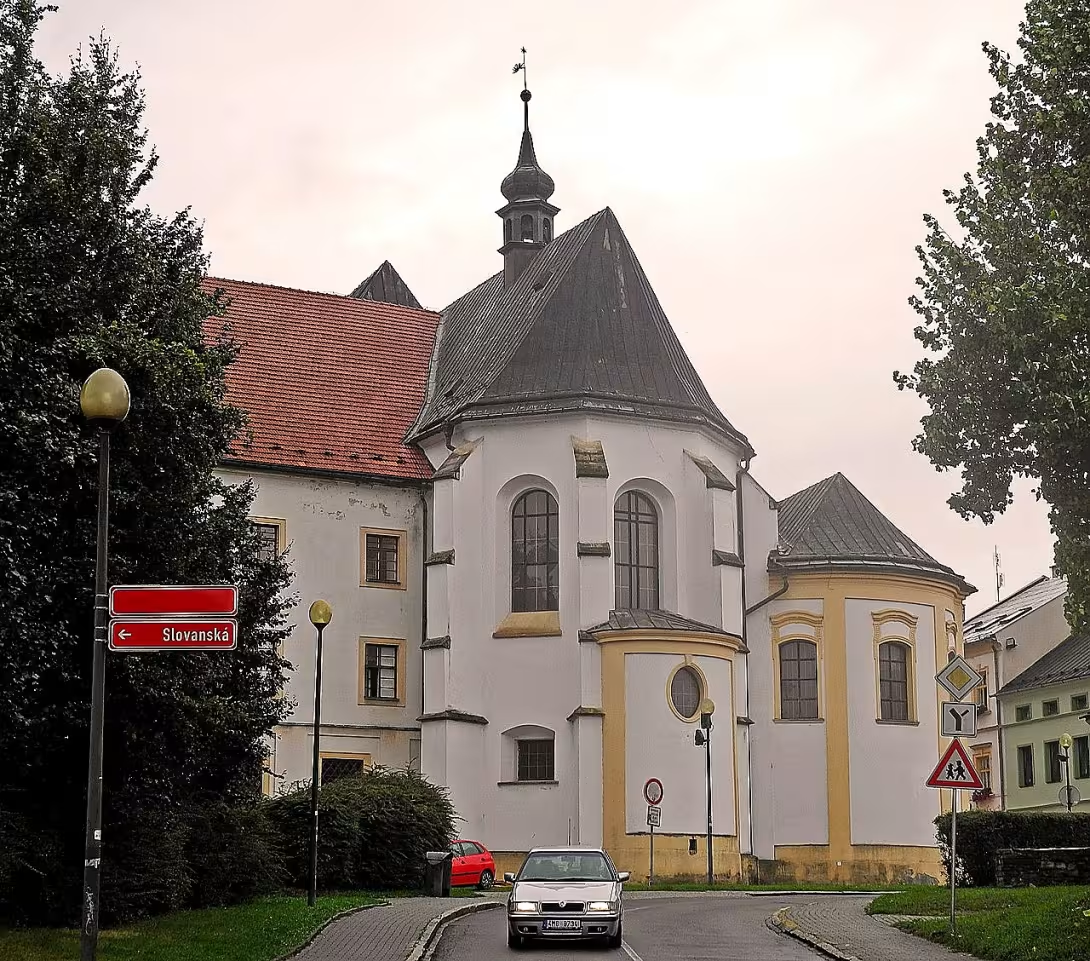
The Church of the Annunciation of the Virgin Mary in Šumperk is a historically significant monument showcasing architectural evolution from Gothic to Baroque styles. Located in Šumperk, within the Olomoucký kraj region, it was originally part of a Dominican monastery established at the end of the 13th century. Its current form results from several transformations, notably after a devastating fire in 1669 that led to its Baroque reconstruction. The church is renowned for its valuable Baroque furnishings and frescoes by Ignác Oderlik in the side chapel of Saint John Nepomuk. After various changes in ownership and purpose, it has been restored since 2005 for cultural and social use.
The origins trace back to the late 13th century when the Dominican Order established a monastery in Šumperk. The church's initial construction was Gothic, reflecting the architectural style of that period. Historical records indicate that by the end of the 13th century, the Dominicans had settled in the southeastern part of the town near city walls and fortifications. Construction likely began at the turn of the 13th and 14th centuries, with the chancel being one of the first parts completed. This period was marked by significant religious and political changes under King Wenceslaus II's reign in Bohemia.
Architecturally, the Church of the Annunciation has undergone substantial transformations over the centuries. Initially built in the Gothic style, it featured a high vaulted chancel with pointed arches and large windows divided by stone panels. After a fire in 1513, the church was repaired in the same Gothic tradition under the patronage of Petr I. ze Žerotína. The most significant architectural change occurred following another fire in 1669, leading to its Baroque reconstruction. This transformation included the addition of a side chapel dedicated to Saint John Nepomuk around 1730 and new Baroque furnishings from the late 17th to mid-18th centuries. Despite these changes, some elements of the original Gothic structure remain visible.
Ownership and administration have seen dramatic shifts over time. Initially under the Dominican Order until 1784, it was secularized by Emperor Joseph II, who dissolved the convent. Following this, the church came into the possession of the City of Šumperk. The Baroque reconstruction was initiated by Opus Hyacint Missenius and supported by Karl von Liechtenstein, reflecting notable figures' involvement in its history.
Key events include the fires of 1513 and 1669, which significantly influenced its architectural evolution. The latter fire led to the Baroque reconstruction that defined much of its current appearance. Another significant event was the secularization by Emperor Joseph II in 1784, marking a turning point in its use and ownership.
Today, the Church of the Annunciation serves as a cultural and social venue for the public. Its restoration began in 1990, culminating in its reopening in April 2005. The church is notable not only for its architectural beauty but also for its historical significance, reflecting centuries of religious and cultural changes. Visitors can appreciate the intricate Baroque furnishings and frescoes by Ignác Oderlik, which add to the church's allure.
The Church of the Annunciation of the Virgin Mary in Šumperk stands as a remarkable example of architectural transformation and historical resilience. Its journey from a Gothic structure to a Baroque masterpiece encapsulates centuries of cultural evolution. For those interested in history, architecture, or art, this monument offers a unique glimpse into the past and remains a valuable site worth visiting.
Then and now
Drag the slider to compare how the landmark may have looked when it was built with the view today.
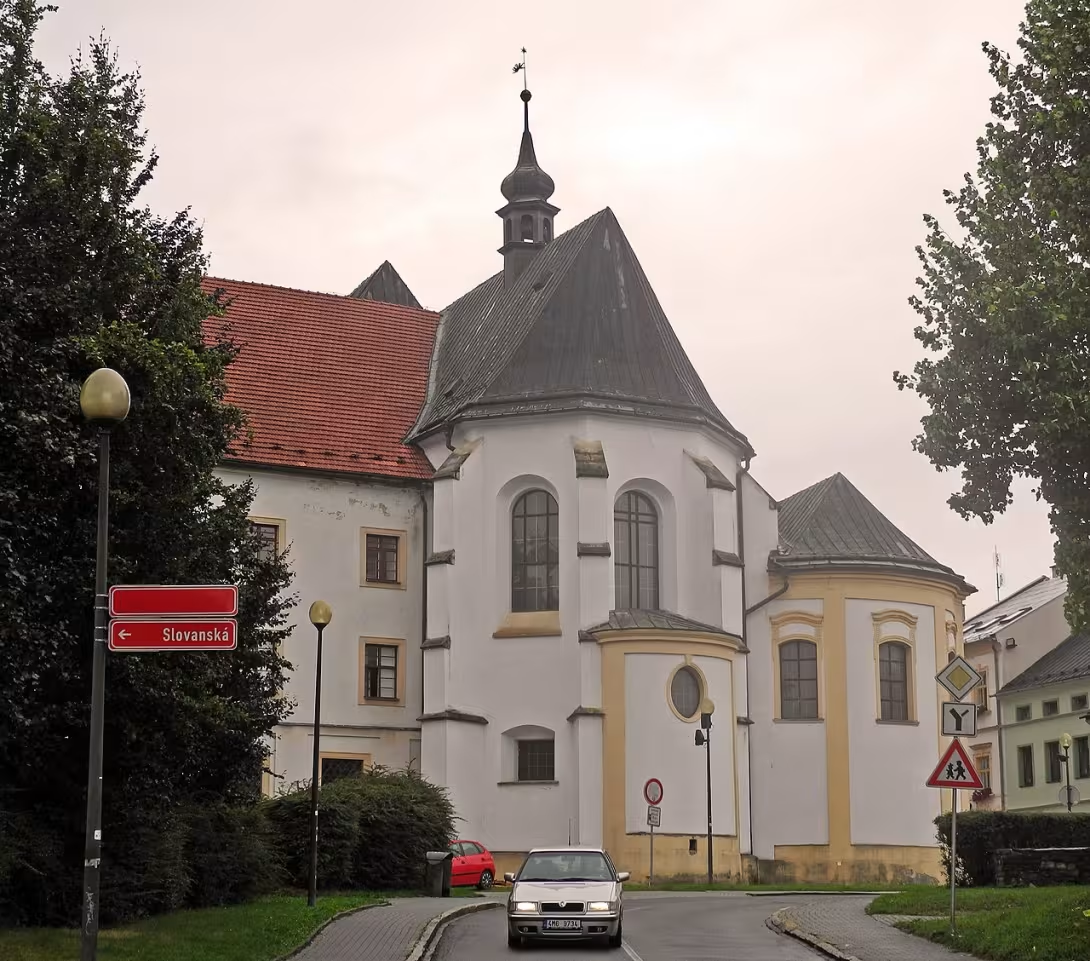
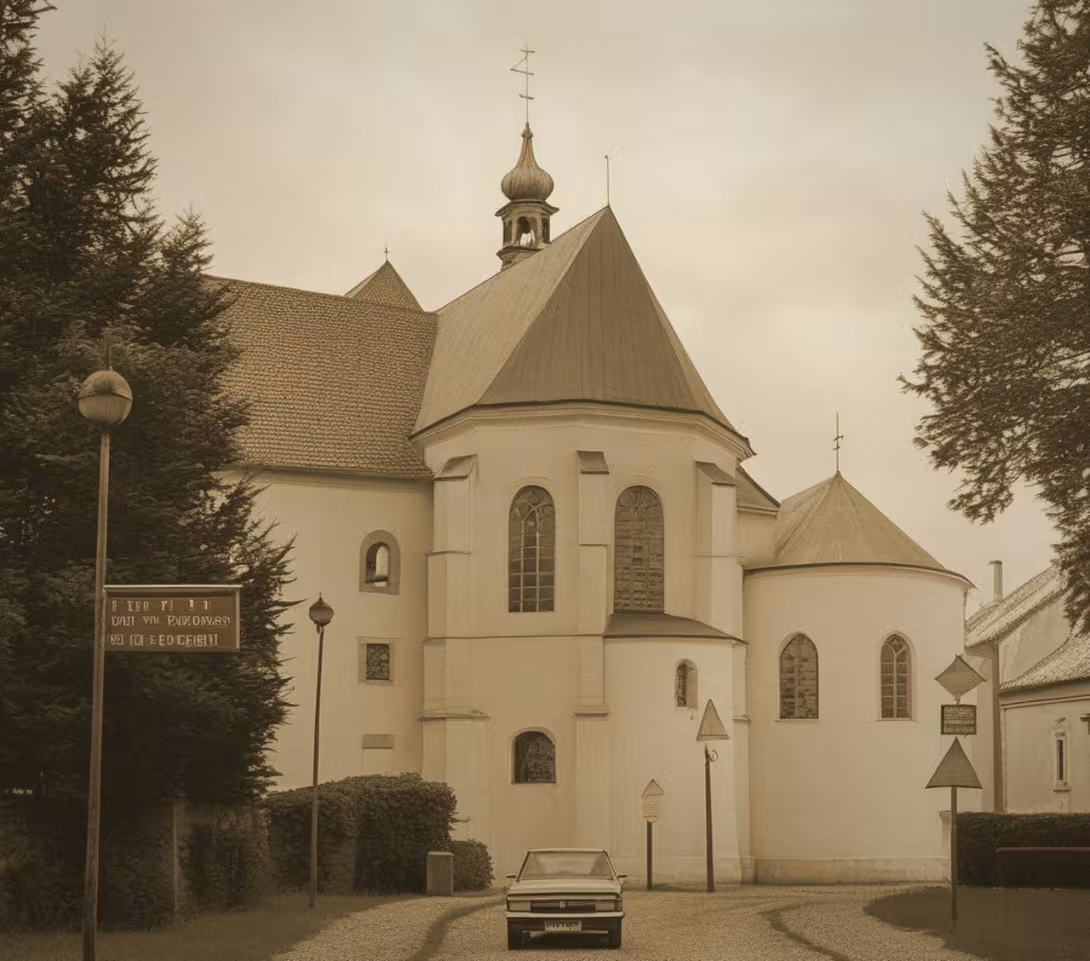
The historical appearance on the left is an AI-generated visualisation and serves as inspiration only.
Historical milestones
- end of the 13th century
- The Dominicans founded a monastery in Šumperk.
- 1513
- The church was destroyed by fire and restored in Gothic style.
- 1669
- A fire led to the Baroque reconstruction of the church.
- 1730
- Addition of the chapel of Saint John of Nepomuk.
- 1784
- The monastery was secularized by Emperor Joseph II.
- 2005
- Reopened after reconstruction for cultural and social use.
Architectural development
The Church of the Annunciation began as a Gothic structure in the late 13th century. It was significantly altered after a fire in 1513 and later transformed into its Baroque form following another fire in 1669. The church features Baroque furnishings from the late 17th to mid-18th centuries, including frescoes by Ignác Oderlik.
Historical events
- 1669
- A devastating fire led to the Baroque reconstruction of the church.
- 1784
- Emperor Joseph II dissolved the Dominican convent, leading to secularization.
Points of interest
- The Church of the Annunciation was originally part of a Dominican monastery established at the end of the 13th century, reflecting its deep roots in medieval monastic traditions and religious history.
- A lesser-known fact is that despite multiple fires, including one in 1513, the church's Gothic elements were preserved during repairs before it underwent significant Baroque transformation after the fire in 1669.
- The side chapel of Saint John Nepomuk, added around 1730, houses frescoes by Ignác Oderlik, a notable artist whose work contributes to the church’s artistic heritage and cultural value.
- A surprising historical twist is that Emperor Joseph II secularized the church in 1784, leading to its transition from religious to civic ownership, which marked a significant shift in its role within the community.
- During its Baroque reconstruction, Karl von Liechtenstein played a crucial supporting role, highlighting the involvement of prominent noble figures in shaping the church’s architectural and cultural legacy.
Guide
This guide is narrated by a synthetic voice generated by artificial intelligence.
Show guide text
This text was created by artificial intelligence and has not been editorially reviewed. It may contain inaccuracies.
Welcome to the Church of the Annunciation of the Virgin Mary in Šumperk—a remarkable historical monument with a story that stretches back centuries. As you stand before this architectural gem, take a moment to absorb its presence: it's a testament to resilience and transformation through time.
The origins of this site trace back to the end of the 13th century when Dominicans established a monastery here. This early foundation laid the groundwork for what would become an enduring symbol of faith and community in Šumperk. Over the years, the church has witnessed significant events that have shaped its structure and purpose.
Take a closer look at the church's architecture as you explore it today. What stands before you is primarily Baroque—a result of reconstruction following a devastating fire in 1669. While the original Gothic elements were lost to flames, the Baroque transformation brought new life and artistic vibrancy to this sacred space. As you walk around, notice the intricate details that speak to its rich history.
Throughout its existence, several key figures have left their mark on the church. Petra I. ze Žerotína and his descendants, such as Hyacint Missenius and Ludvík ze Žerotína, were instrumental in supporting the monastery's development. Karel z Lichtenštejna also played a significant role during its history.
A fascinating tidbit about this church is its resilience through adversity. Despite suffering from multiple fires, including one in 1513, it has continually been restored and preserved for future generations to appreciate. This perseverance highlights the community's dedication to maintaining their spiritual heritage.
As you conclude your visit, consider exploring more of Šumperk's rich history and culture. The Church of the Annunciation is just a part of what makes this town unique—a place where past and present converge in beautiful harmony. Thank you for joining us on this journey through time, and we hope you carry forward the stories and memories from your visit today.
Tips for visitors
The best time to visit the Church of the Annunciation of the Virgin Mary in Šumperk is during late spring or early autumn. These seasons offer pleasant weather, allowing you to comfortably explore both the church and its surrounding historical buildings. Additionally, visiting outside of peak tourist season ensures a more tranquil experience, giving you ample opportunity to appreciate the architectural details without large crowds.
Public transportation also serves the region well; however, it's advisable to check current routes and schedules in advance using a travel planner or local transit website. This ensures you can plan your visit efficiently without any last-minute surprises.
When visiting the Church of the Annunciation, consider bringing comfortable walking shoes as there are several historical sites within walking distance. A camera is also recommended to capture the stunning architecture and serene landscapes typical of the Olomouc Region. Additionally, carrying a light raincoat or umbrella can be useful if you're traveling during transitional seasons when weather can be unpredictable.
For photography enthusiasts, the best spots for capturing the church are from its front entrance and the surrounding gardens, especially during the golden hours of early morning or late afternoon when natural light beautifully highlights the structure. The interior offers excellent opportunities as well, with stained glass windows that create a captivating play of colors inside. Always check if photography is permitted within certain areas.
Nearby attractions within 30 minutes include other historical buildings and sites in Šumperk that reflect its rich cultural heritage. Exploring these can provide additional context to the church's history and significance. For families with children, consider planning a visit to local parks or interactive museums where kids can engage with both nature and educational exhibits, making the trip enjoyable for all ages.
Frequently asked questions
Can the monument be visited?
Religious buildings are usually open mainly during services; at other times a visit is normally arranged with the parish or the operator. We have not verified specific times.
Where is the monument?
Location: Šumperk, Olomoucký kraj. The map on this page shows the exact spot.
Why is the monument protected?
It is listed in the Central List of Cultural Monuments of the Czech Republic as a cultural monument. It is protected as part of a larger listed ensemble.
Businesses nearby
Do you run a restaurant, accommodation, shop, museum, rental, wellness or other visitor service near this monument? Show yourself directly to the people heading to it — this is how they will see you in the app and on the web:
Events nearby


Zdroj akcí: otevřená data měst a obcí ČR (Národní katalog otevřených dat) a kalendář akcí Národního památkového ústavu.
Nearby
Located in Šumperk, the church is surrounded by historical buildings and natural landscapes typical of the Olomouc Region. The area offers a glimpse into the region's rich cultural heritage.
Accommodation nearby
Themed route
Thematic Walking Tour: Šumperk and the Church of the Annunciation
1. Church of the Annunciation (Šumperk)
Type: Religious Site
Why Visit: Begin your journey at this stunning example of Baroque architecture, a centerpiece in Šumperk's historical landscape. The church is renowned for its intricate design and rich history, offering visitors a chance to explore its beautiful interiors and learn about the region's cultural heritage.
2. Historical Buildings Surrounding the Church
Type: Architectural Ensemble
Why Visit: As you stroll around the Church of the Annunciation, take in the surrounding historical buildings that reflect Šumperk’s architectural evolution over centuries. These structures provide a glimpse into the town's past and its development through different eras.
3. Local Streets and Market Square
Type: Urban Landscape
Why Visit: Walk along the cobblestone streets leading from the church to explore the vibrant market square of Šumperk. This area is alive with local culture, offering a chance to experience traditional shops and cafes that showcase regional products and cuisine.
4. Natural Landscapes in the Olomouc Region
Type: Scenic Area
Why Visit: Conclude your tour by taking a leisurely walk through the nearby natural landscapes typical of the Olomouc region. These areas offer serene views and a peaceful environment, perfect for reflecting on the rich cultural tapestry you've just explored.
This thematic walking tour provides an immersive experience into Šumperk's historical and cultural essence, centered around its iconic Church of the Annunciation and enriched by the surrounding heritage and natural beauty.
Seasonal recommendations
Jaro: During the spring season, the Church of the Annunciation of the Virgin Mary in Šumperk is revitalized by its green surroundings as trees and shrubs begin to bloom. Sunlight illuminates the church interior with gentle rays of light, creating a stunning atmospheric effect. This period is ideal for those seeking a more tranquil experience without crowds, as the spring months are still mild and not as popular as summer. It's recommended to wear comfortable walking shoes for grassy areas and a light jacket in case winter brings sudden snowfall.
Léto: Summer brings the Church of the Annunciation of the Virgin Mary into full tourist season. The sunlight brightens the church interior with clear, vibrant colors, enhancing the beauty of its architecture. During this time, visits can be popular, so it's advisable to arrive earlier in the day to avoid peak crowd times. Visitors should wear light clothing and sunglasses, while drinking plenty of water is essential for maintaining hydration during your visit.
Podzim: Autumn brings a colorful leaf-filled atmosphere around the Church of the Annunciation of the Virgin Mary as trees shed their leaves. The sunlight shifts into warm and darker hues, adding a melancholic touch to the church interior. Autumn sees fewer tourists compared to summer, making it an ideal time for a more relaxed and intimate experience. It's recommended to wear warmer clothing and possibly carry an umbrella or raincoat for potential autumn showers.
Zima: Winter, especially during frosty days, enhances the beauty of the Church of the Annunciation of the Virgin Mary as its surroundings are covered in snow and the light inside becomes brighter and more reflective. This season offers a peaceful atmosphere without unnecessary crowds, allowing visitors to appreciate every detail of the architecture. Visitors should wear warm clothing and footwear suitable for walking on snow or ice to enjoy the winter charm without issues.
Visualizations and artistic views


The visualisations are generated by artificial intelligence and serve as inspiration.
Photos from the area
Real photos taken near the monument


Zdroj a licence jsou uvedeny u každého snímku.
Tips from visitors
No tips yet. Be the first!
Log in and add your tip.
Sources and literature
Photos: SchiDD / CC BY-SA 4.0 — Wikimedia Commons. The author and licence also appear when you hover over the image.
Faktickým podkladem tohoto textu byl článek na Wikipedii, jehož autory jsou přispěvatelé Wikipedie. Článek je dostupný pod licencí CC BY-SA 4.0.
Location on the map

Příběhy a pověsti
Legendy, pověsti a příběhy spjaté s touto památkou

Fotografie návštěvníků
Zatím žádné fotografie. Buďte první, kdo přidá fotografii z návštěvy!
Log in a přidejte svou fotografii nebo hodnoťte.
Za ověřenou návštěvu v aplikaci získáte víc bodů — poznáme podle GPS, že jste na místě.
Reviews and comments