






Krematorium v Liberci Crematorium
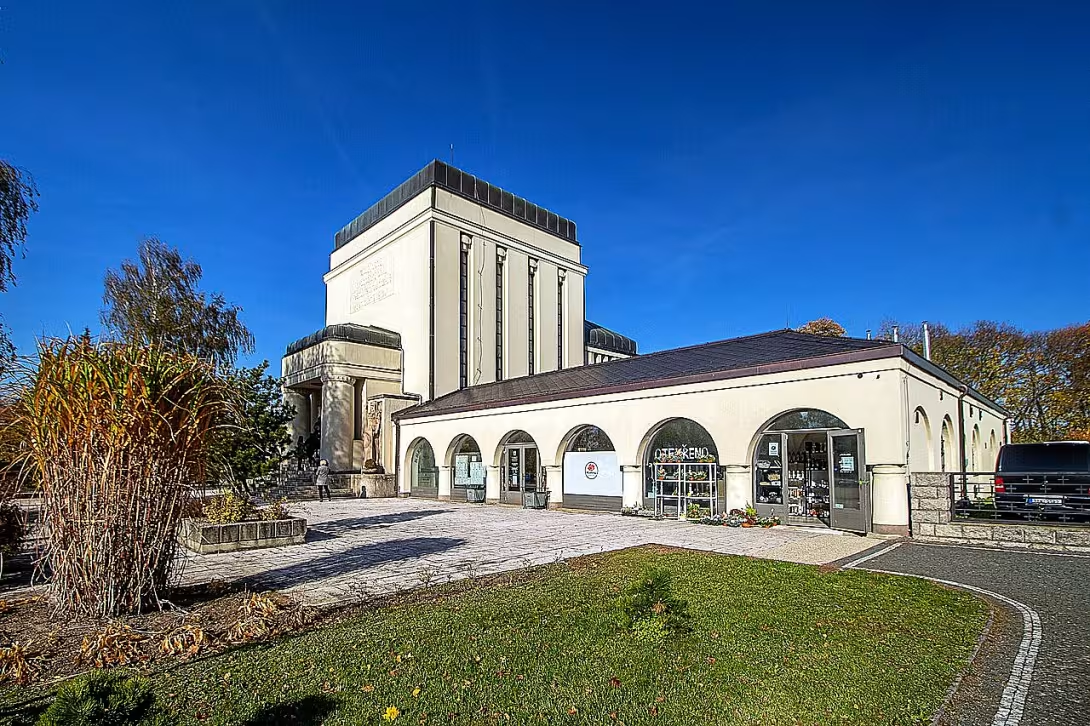
Krematorium v Liberci, located on 460 / 7 U Crematorium in the city of IV-Perstín, is a unique cultural monument. Built in 1917 as the first crematorium in the territory of Austria-Hungary, it represents a Art Nouveau building with richly decorated interior and artistic elements. This monument is a key part of the history of funeral practices in Central Europe and symbolizes the fight for the right to be cremated in Czech countries.
The idea of burying the irons came from Italy through Germany to the Czech Republic in the second half of the 19th century, but then the legislation was influenced by the Catholic Church, which allowed only traditional burial. Therefore, cremation supporters had to be taken to the German crematorium in Žitava and Dresden. Among Liberec's promoters were politicians MUDr. Václav Šamánek st. and his brother-in-law MUDr. Franz Bayer, who, as the purkmaster of Liberec in 1912, promoted a building permit for a new crematorium. Despite the Supreme Court litigation, it was decided that the building could be built, but the cremation was not allowed in it.
The construction was designed by Czech-German architect Rudolf Bitzan and was carried out by the company Gustav Sacher and sons. The foundation stone was laid on 4th May 1915, the construction was completed in 1916 and ceremonially opened on 23rd August 1917. Although cremation was not officially permitted during the First World War, the first official cremation of the city of Liberec by Robert Jahn was carried out on October 30, 1918.
After 1918, the number of cremated people ranged between 500 and 600 a year, while the crematorium served for the inhabitants of Liberec and the surrounding area. In the interwar period, an urn grove with a park architecture designed by Karl Kerl was established, which was already extended for capacity reasons in 1923. During World War II, there were cremated students executed after demonstrations in 1939, dead prisoners from the concentration camp and victims of the Leberian Gestapo.
After 1945, the crematorium became a place of memorable trysenes for the victims of the occupation. In 1968 they spoke on one of the destinations of a significant personality such as Václav Havel and Jan Tříska. In 1973, a large reconstruction was carried out according to the design of architect Poříze, which included glazing of the historic building and modifications of the urn grove. In 1994, additional buildings were built for new technologies.
Today the crematorium in Liberec is a protected cultural monument that attracts visitors with its historical and architectural wealth. Its Art Nouveau style and art elements such as window stained windows and a small fountain in the access space are an important part of its engaging character. The crematorium bears witness to the historic struggle for the right to cremation, as well as to architectural changes and modifications over the years.
Krematorium v Liberci is therefore a place full of history and art worth visiting. Its presence on Monstranski Hill and its connection to important events in Czech countries make it an essential part of the region's cultural heritage.
Then and now
Drag the slider to compare how the landmark may have looked when it was built with the view today.
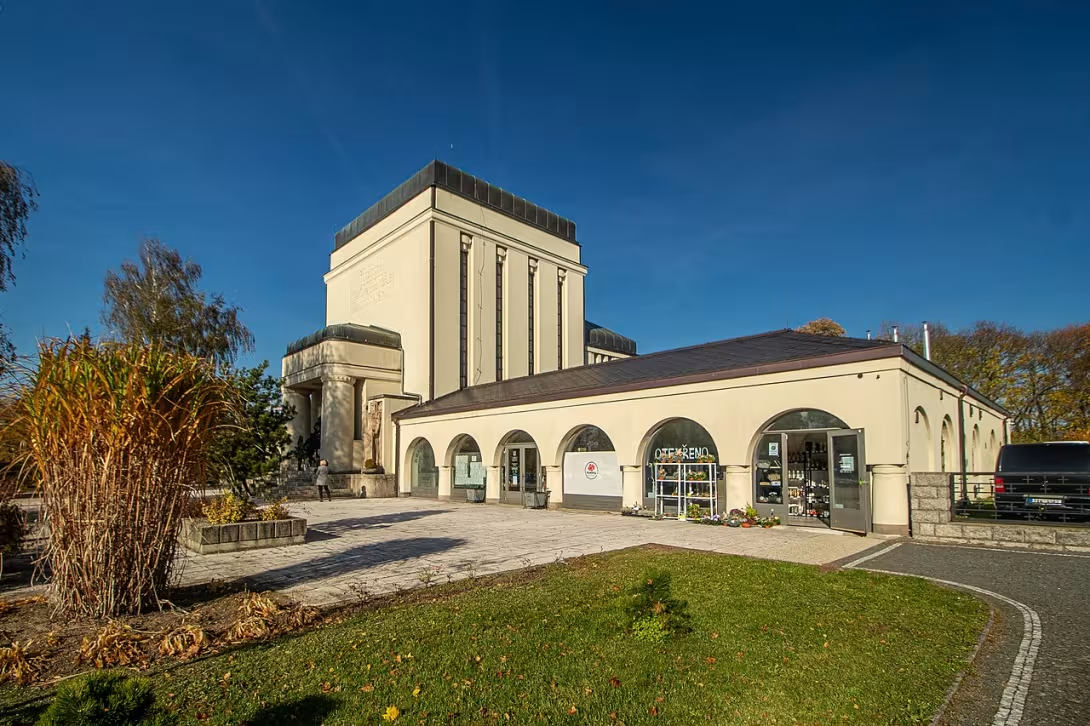
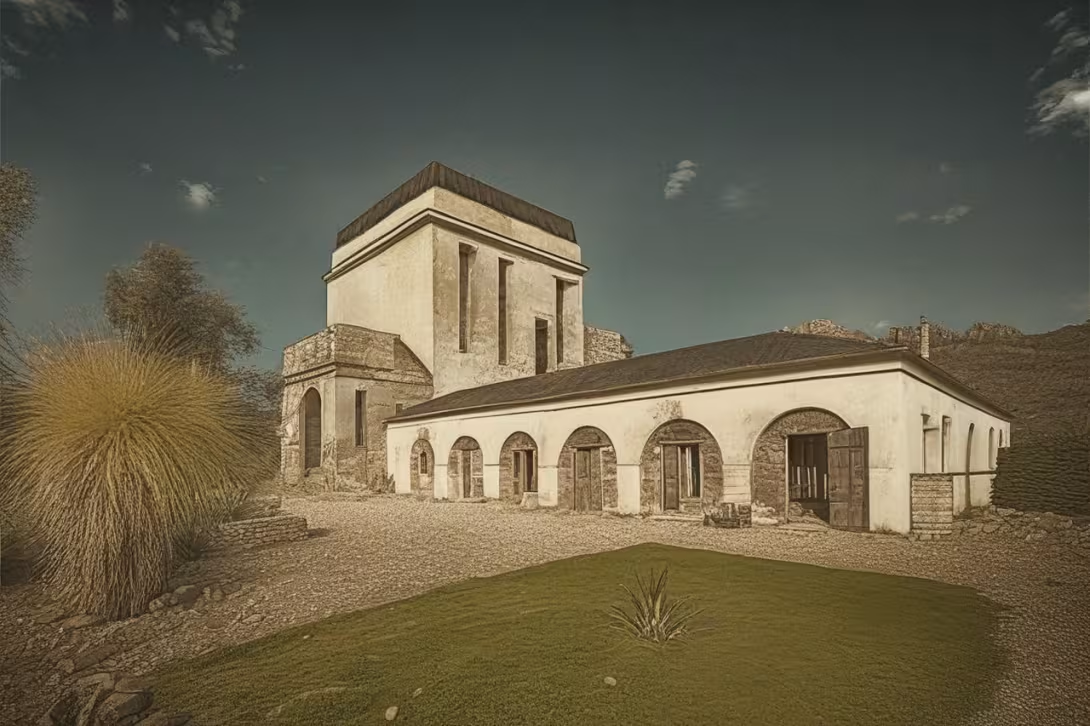
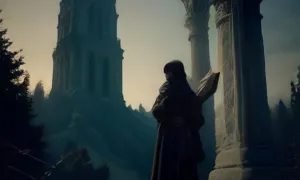
The historical appearance on the left is an AI-generated visualisation and serves as inspiration only.
Historical milestones
- 1912
- Issue of a building permit after a lawsuit.
- 1915
- The laying of the base stone.
- 1917
- The opening ceremony of the crematorium.
- 1918
- The first cremation carried out in the object.
- 1968
- Carrying out tryzen victims of occupation.
Architectural development
The original Art Nouveau building was designed by architect Rudolf Bitzan. In 1973, a large reconstruction was carried out according to the design of architect Pořízeho, during which the panelling was glazed. In 1994, additional buildings were built for new technologies.
Historical events
In 1912, a building permit was issued after a lawsuit. In 1917, the ceremonial opening of the crematorium took place. In 1968, there were large trysts during the victims of the occupation.
Points of interest
- Krematorium v Liberci is a unique cultural monument. - Built in 1917 as the first crematorium in the territory of Austria-Hungary, it represents a Art Nouveau building with richly decorated interior and artistic elements. - The idea of burying the irons came from Italy through Germany to the Czech Republic in the second half of the 19th century, but then the legislation was influenced by the Catholic Church. - The construction was designed by Czech-German architect Rudolf Bitzan and carried out by the company Gustav Sacher and sons. - After 1945, the crematorium became a place of memorable trysenes for the victims of the occupation.
Guide
Show guide text
This text was created by artificial intelligence and has not been editorially reviewed. It may contain inaccuracies.
Welcome to the Monstrarian Hill in Liberec, where you are facing a unique cultural monument - the Krematorius, which boasts rich history and architectural art. This building is the first crematorium in the territory of Austria-Hungary and stands as a witness to changes in cultural and social views.
Let's dive into his history. In 1912, a building permit was issued after a long trial, reflecting the controversial position of this idea in those times. The foundation stone was laid in 1915 and already two years later, in 1917, this first crematorium was opened in Austria-Hungary. The first cremation was carried out in 1918, which meant a new approach to burial rituals.
The architecture of the Crematorium is a real pearl Art Nouveau. Look up at the rich decoration of the ceremonial hall, which will enchant you with its window stained windows and a small fountain. These elements are proof of the champion of the architects Rudolf Bitzano, Cádiz and Janata, who carried the artistic ambitions of their time into this space.
The crematorium is also associated with several historical personalities. Václav Samánek older, Franz Bayer, Václav Havel and Jan Tříska are just some of the people whose lives have intertwined with this place. Their stories reflect the struggle for the right to cremation and cultural changes at that time.
The interesting thing is that the idea of burying the fire came from Italy through Germany to the Czech Republic in the second half of the 19th century. This process points to wider cultural and technological developments, which also affected this place.
Now that you've explored the history and architecture of the Crematorium, come and see the surrounding areas of Liberec. The city offers many other attractions and beautiful views. When you decide to come back, you will be able to relive this wonderful memory with a new look.
Thank you for your visit and we hope this guide inspired you to further discover history and architecture. God!
Tips for visitors
For the best experience we recommend a visit during a bright day when sunlight best accentuates rich decorating and color window vitrates in the ceremonial hall. Sun rays create a unique atmosphere in the interior.
You can reach the place by car or city transport. Please check current connections and parking options in internet search engines or official information services.
If you are interested in photography, focus on details of the stained glass and a small fountain inside the building. When maintaining peace and respect for the place you will get the best pictures of the interior.
In the surroundings you can enjoy walks on Monstransky Hill, visit the Liberec Central Cemetery in Ruprechtice or go to the Jedžitský Ridge. For families with children it is advisable to choose these nearby natural or walking areas rather than the interior of the building itself.
Businesses nearby
Do you run a restaurant, accommodation, shop, museum, rental, wellness or other visitor service near this monument? Show yourself directly to the people heading to it — this is how they will see you in the app and on the web:
Nearby
Monstranční vrch, liberecký ústřední hřbitov v Ruprechticích a nedaleký Ještědský hřeben.
Accommodation nearby
Trips and activities nearby
Guided tours, tickets and activities nearby from GetYourGuide
Affiliate link: if you buy from the partner, we may receive a commission. The price for you does not change.
Search tours and activities →Themed route
Thematic cruise route from Liberec
1. Krematorium v Liberci - memorial Type: Crematorial facilities and burial sites Why is it worth a visit: Visit this unique place that combines historical architecture with a modern approach to understanding death. Krematorium v Liberci is not only a technical facility but also an artistic and philosophical space.
2. Liberec Central Cemetery in Ruprechtice - burial ground Type: Cemetery Why is worth a visit: This cemetery is home to many memorable tombs and sculptures that represent rich history and artistic expression. It's a place of peace and reflection where you can enjoy beautifully planted monuments.
3. Monstrous Hill - Religious Place Type: Chapel Why is it worth a visit: Visit this place overlooking Liberec and the surrounding area where St. John Nepomuk's Chapel is located. It is a place of peace and shelter, ideal for short meditation or prayer.
4. Jested ridge - natural area Type: Horstata Why is it worth a visit: Although it is about 20 km away, Jested Ridge offers views of Liberec and the surrounding countryside. This area is ideal for a short walk or bike trip where you can enjoy the natural beauty and quiet environment.
This route offers you a combination of cultural knowledge, historical interest and natural views.
Seasonal recommendations
Spring: This season, the crematorium in Liberec is surrounded by flowering gardens that add a mild and refreshing touch to the atmosphere. Sunlight is projected on historical architecture, which creates beautiful lighting for photos. When visiting, it is advisable to have an open coat or plaid, because temperatures are medium and in the morning and evening can be colder. Best to visit the memory in the first half of the day when there are fewer people.
Summer: Summer brings long sunny days and warm nights, making a visit to the sights in Liberec an ideal experience. The appearance of historic buildings is dazzling for fulfilling the sun, but the presence of crowds can be great in the main summer season. It is recommended to visit early in the morning or late in the afternoon when fewer people and temperatures are milder. Don't forget the sunscreen and enough drinking water.
Autumn: Autumn brings a colourful palette of leaves that wrap the surrounding sights in golden and red shades. The sunlight is soft and creates an atmosphere of peace and pleasure. This season, visiting is slower, so you can enjoy the memory in a quieter atmosphere. Dress with a warm coat and don't forget the hat for sun protection, which is even softer.
Winter: Winter visit to Liberec offers a completely different experience. Historical architecture shines under snow and ice, which is extremely impressive. The sunlight reflects from snow, creating unique lighting. This season the opening hours may be shortened and it is important to prepare warm clothes, including hat and gloves. You will visit the memory in a quieter atmosphere because many of the visitors avoid cold days.
Visualizations and artistic views


The visualisations are generated by artificial intelligence and serve as inspiration.
Photos from the area
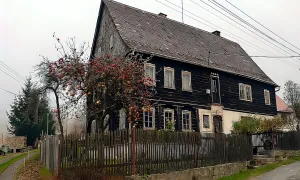
Real photos taken near the monument


Zdroj a licence jsou uvedeny u každého snímku.
Tips from visitors
No tips yet. Be the first!
Log in and add your tip.
Sources and literature
Photos: VitVit / CC BY-SA 4.0 — Wikimedia Commons. The author and licence also appear when you hover over the image.
Faktickým podkladem tohoto textu byl článek na Wikipedii, jehož autory jsou přispěvatelé Wikipedie. Článek je dostupný pod licencí CC BY-SA 4.0.
Location on the map
More monuments – Liberec IV-Perštýn
Show all in the municipality
Příběhy a pověsti
Legendy, pověsti a příběhy spjaté s touto památkou
Fotografie návštěvníků
Zatím žádné fotografie. Buďte první, kdo přidá fotografii z návštěvy!
Log in a přidejte svou fotografii nebo hodnoťte.
Za ověřenou návštěvu v aplikaci získáte víc bodů — poznáme podle GPS, že jste na místě.
Reviews and comments