



Křížová cesta k františkánskému klášteru v Kadani Way of the cross
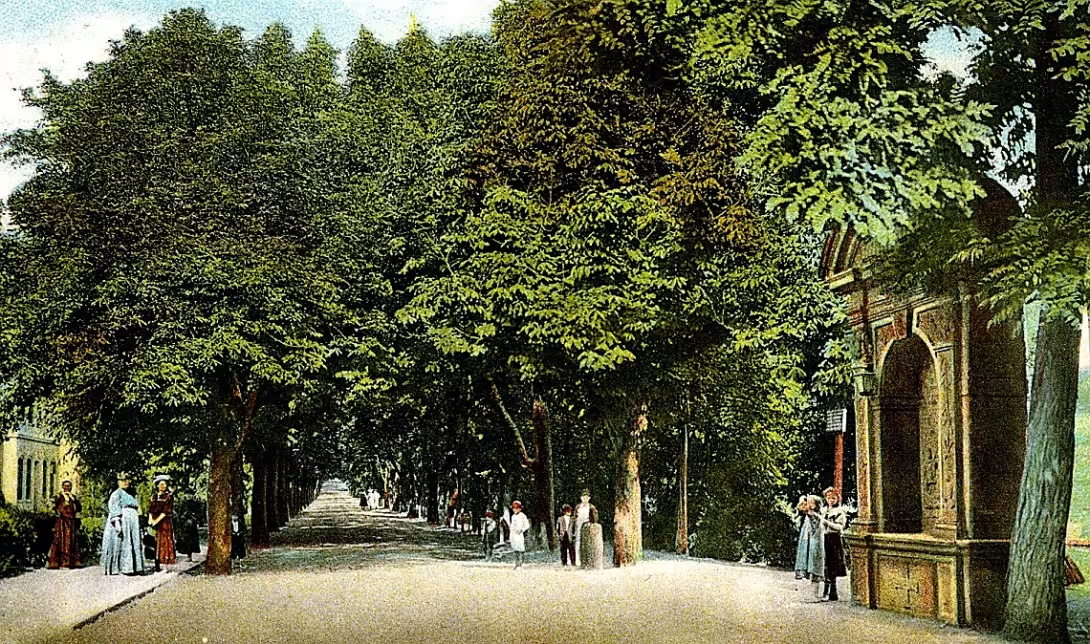
The cross road in Kadani, also known as the Seven Falls of Christ, is a Baroque sacral monument made up of a set of seven sandstone niche chapels. This unique route was created between 1694 and 1699. It leads from Mikulovická gate to the Franciscan monastery of Fourteen Holy Helpers and represents an important proof of baroque piety and urban planning in the royal city.
The history of the journey is closely linked to the Franciscan Order, which has long cared for the grave of God in Jerusalem and supported respect for the suffering of Christ. The original kadani crossroads consisted of wooden boards, but they died during the 30-year war. They were restored in the middle of the 17th century, but at the end of the same century, the idea of building a larger stone variant was born. The ideal creator of the concept was the Franciscan preacher Johannes Lorent. The length of the route was deliberately chosen to correspond to the distance from Pilate's Palace on Golgote, which was measured by Jan Hasištejnský z Lobkowicz when he travelled the Holy Land in 1493.
Architecturally, the monument consists of seven sandstone niche chapels on staircase steps. The artistic quality of individual stops is volatile, which suggests that more stonemakers and sculptors cooperated in their implementation. The chapel was originally decorated with the plastics of the Fourteen Holy Helpers, who were the main patrons of the city. The first chapel was completed in 1697, the second one followed in 1698 and the third one had Michal z Račína built in the same year. The fifth chapel, initiated by Count Zikmund Valentine Hrzán of Harasova, was probably the first of the entire ensemble in 1694.
Individual stops carry rich iconographic decoration. The first chapel bears the city emblem and relief of a woman with 14 children, referring to the legend of the miraculous rescue of a man who prayed to the Fourteen Holy Helpers. The second stop, financed by the imperial speedster František Madel, adorns the two-headed imperial eagle and coat of arms of the Donator. The third chapel carries the coat of arms of the Racine family, as well as the fourth stop, which Baroness Ludmila Racine had built. In addition to the coats of arms and statues of saints, the decoration also includes instruments of Christ's torture, plant motifs or scenes from the way to Golgot.
Over the centuries, the maintenance and development of the monument have been cared for by noble benefactors and the city. In modern history, the whole ensemble has undergone extensive restoration, which took place between 2005 and 2007. Work on the first and second chapel was carried out by Helena Forst and Vojtěch Míča, the remaining stop was restored by Jan Vích.
Today the cross road is open to the public and forms an integral part of the historical space between the Mikulovická gate and the Franciscan monastery. This monument is a valuable proof of the baroque perception of the spiritual landscape and encourages a stop in places where the history of the city combines with the tradition of Christian meditation. Visiting this place offers a unique opportunity to meet one of the most important sacral units in Kadani.
Then and now
Drag the slider to compare how the landmark may have looked when it was built with the view today.
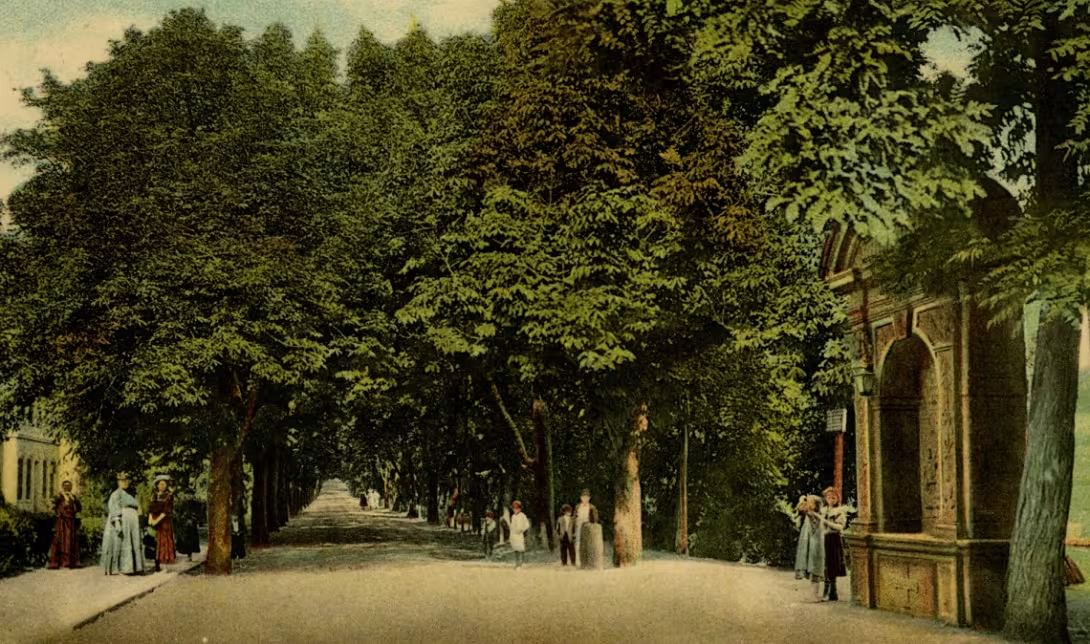
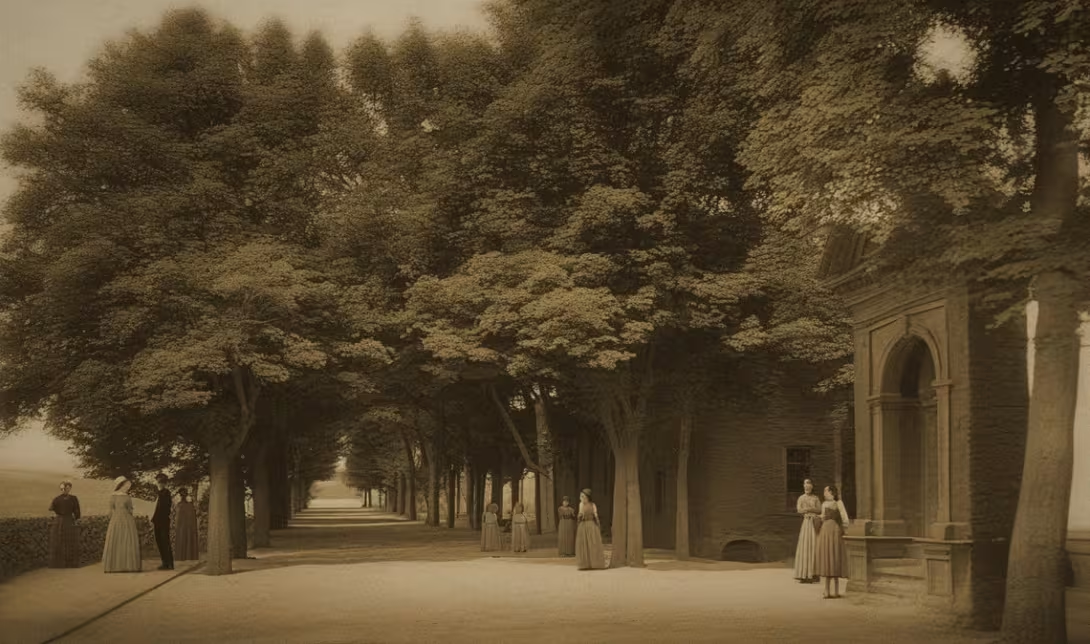
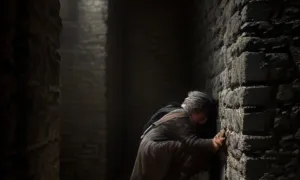
The historical appearance on the left is an AI-generated visualisation and serves as inspiration only.
Historical milestones
- 1697
- Complete the first chapel of the cross road.
- 1698
- Completion of the second chapel and construction of the third chapel by Michal from Racín.
- 2005
- Commencing extensive restoration of all stops.
Architectural development
The original crossroads were made up of wooden boards that were destroyed during the Third-Year War. At the end of the 17th century they were replaced by seven sandstone wedges mounted on stairs. Several sculptors participated in the chapel decoration, which explains the fluctuating artistic quality of individual stops.
Historical events
(a.k.a. 1694-1699: Implementation of the construction of seven sandstone chapel. 2005- 2007: Total restoration of all seven stops.
Points of interest
- The cross road, known as the Seven Falls of Christ, is made up of a set of seven sandstone wedges. - The length of the route was deliberately chosen to correspond to the distance from Pilate's Palace on Golgot, which was measured by Jan Hasištejnský z Lobkowicz in 1493. - The fifth chapel was probably the first of the entire ensemble already in 1694, on the initiative of Count Zikmund Valentina Hrzán of Harasova. - The chapel was originally decorated with the plastics of the Fourteen Holy Helpers, who were the main patrons of the city. - The first chapel bears the city emblem and relief of a woman with 14 children who refers to the legend of the miraculous rescue of a man praying to the Fourteen Holy Helpers.
Guide
Show guide text
This text was created by artificial intelligence and has not been editorially reviewed. It may contain inaccuracies.
Welcome to Kadani. You just stopped at the beginning of something very special. You are facing a path that is not just a walking path, but a spiritual path that will guide you through history, faith and a deep symbol. Before your eyes, there is a route leading from Mikulovická gate towards the Franciscan monastery of the Fourteen Holy Helpers. Feel this moment, feel the calm of this place and prepare for a journey that will accompany you through seven stops. This cross road, which people often call the Seven Falls of Christ, is the unique treasure of our city. It's a place where architecture, history, and deep human emotions connect.
Let us now return to the time when everything began to be built. Imagine the end of the seventeenth century, a period when the baroque spirit in our countries was pervasive. This cross road was not created by accident. It is the result of the deep conviction and effort of an individual who wanted to bring people closer to the message of faith. The initiator of this work was the Franciscan preacher Johannes Lorent. It was by his vision and effort that this sacral monument began to take place between 1694 and 1699. The goal was not just to build a chapel, but to create space for reflection, for prayer, and for a physical and spiritual journey that would remind you of the most important moments in the history of Christianity.
Now that you're looking around, pay attention to the very form of these stops. The whole journey is made up of seven sandstone wedges. Notice how this sandstone works in the surrounding environment. It is a material that is closely linked to our region, a material that carries heat within it and also tells its texture stories of time. These niche chapels are not just buildings, they are spaces that have some depth and quiet inside them. Look at their shapes, their structure. Although time is relentlessly moving forward, these sandstone shapes still stand in our way and remind us of the work of masters from the past centuries.
The history of the construction was gradual and each chapel has its own time signature. If you look at the chronology of this work, you will find that the first chapel was completed already in 1697. That was the first big step in implementing Johannes Lorenta's plan. A year later, in 1698, work accelerated. At that time the second chapel was completed and the third chapel was then completed and Michal z Račína participated in its creation. This figure, Michal z Račína, is closely linked to building this path and its contribution has helped this monument to gain its present form. Other names, such as František Madel, have emerged in the process of building and developing this journey, which shows us that the construction of such a work was a joint effort by various personalities who shared the same goal.
Now, I want to invite you to think about something that can act at first glance as a mere geometry, but it's actually a profound symbolism. Notice the length of this route. Why is she like that? Why not shorter or longer? Here is one of the greatest attractions of this cross road. The length of the route was deliberately chosen to correspond exactly to the distance from Pilate's Palace on Jerusalem's Golgotha. This particular distance was not determined at random. In 1493 it was measured by Jan Hasištejnský z Lobkowicz. This is how Kadaň became a spiritual bridge between our world and Jerusalem's sacred history. It's a fascinating connection where the local landscape becomes a mirror of distant, sacred places. So every step you take along this path is not just a movement in Kadane space, but a simulation of the historical and spiritual journey that people went through centuries ago.
This journey has undergone many changes in time, but its essence has been preserved. Although things are changing, people are still trying to preserve it for future generations. For example, in 2005, extensive restoration of all stops started. Thanks to this effort, visitors like you can now perceive the beauty of these sandstone niche and feel the atmosphere created here by this historic heritage care.
Now that you know the basics, the people, and the meaning of this cross road, I suggest you continue walking. Let yourself be guided by this sandstone pedal, follow each next stop and see how the route gradually approaches the Franciscan monastery of the Fourteen Holy Helpers. Each chapel can offer you a different feeling, a different moment of silence. Take your time, don't rush. This road was not built to walk quickly, but to stop and think.
I wish your walk was peaceful and full of new sensations. Discover the details the recording didn't tell you, and let the atmosphere of this unique place consume you. Thank you for choosing to make this journey with us. Enjoy the rest of your visit to Kadani.
Tips for visitors
The best time to visit is in the morning or late afternoon when the sun creates an interesting game of shadows on sandstone capsules and in surrounding greenery. In these times, there is also the greatest peace of mind.
You can walk comfortably from the historical core of the city of Kadana.
For photography we recommend to use soft light at sunrise or sunset to highlight the details of sandstone niche. Ideal shots are obtained by looking at individual chapel in the context of the surrounding landscape.
For families with children, the route is a pleasant walk in nature. We recommend you take with you comfortable shoes and possibly a snack that you can enjoy in a quiet environment near the monastery.
Frequently asked questions
Can the monument be visited?
This is a structure in a public space that can usually be seen from outside free of charge. We have not verified that this particular one is freely accessible.
Where is the monument?
Location: Kadaň, Ústecký kraj. The map on this page shows the exact spot.
Why is the monument protected?
It is listed in the Central List of Cultural Monuments of the Czech Republic as a cultural monument (register no. 1000136994).
Businesses nearby
Do you run a restaurant, accommodation, shop, museum, rental, wellness or other visitor service near this monument? Show yourself directly to the people heading to it — this is how they will see you in the app and on the web:
Nearby
The Franciscan monastery of the Fourteen Holy Helpers, the historical core of the city of Kadana, Mikulovická gate.
Accommodation nearby
Themed route
Travel Route in Kadana
1. Franciscan monastery of the Fourteen Holy Helpers * Type: Historical landmark * This monastery is not only a cultural heritage but also a centre of Franciscan life in Kadana. Visiting his cross road and the interior of the monastery allows a deeper understanding of the history and spiritual tradition of the local community.
2. The historical core of the city of Kadana * Type: Historical area * After exploring the monastery, take a look at the beautiful alleys of the historical nucleus that resemble the earlier times. This part of town offers views of architecturally interesting houses and building elements that reflect the rich history of Kadana.
3. Mikulovice Gate * Type: Historical item * The Mikulovická gate is one of the most important examples of Gothic architecture in Kadana. It is an important historical element, which served as part of the city gates and still fascinates its construction and history.
This route offers a view of the key historical elements of Kadana, from the spiritual centre to the architectural structure of the city.
Seasonal recommendations
Spring: In the spring season Křížová cesta k františkánskému klášteru v Kadani is especially lovely because of its blooming nature. Green meadow and flowering bushes provide a path of live shine, creating an ideal environment for relaxation and sightseeing. The sunny spring days bring warm rays of light that emphasize the historical architecture of the monument. It is appropriate to visit it in the months of April to May, when we often avoid crowds. It is recommended to wear clothes on variable weather, as spring temperatures can be medium with morning cold and warm afternoons.
Summer: Summer is full of life and energy in Kadan. In the main summer season the monument becomes a popular destination for visitors, which can mean higher crowds. The sunny day illuminates every stone and creates an attractive environment for long walks. It is recommended to visit the Cross Road in the morning or late afternoon time to avoid the peak of the crowds. In clothes it is important to remember the warm weather; we recommend light and comfortable wearing with sun protection.
Autumn: Autumn offers the Cross Way a wonderful look when tree leaves turn into golden and red shades. The atmosphere is peaceful and friendly, which provides ideal conditions for celebrating the beauty and peace of mind. Visiting it in the months of October or November is particularly interesting when nature turns into a colored canvas. When visiting, you should bring warmer clothes and perhaps an umbrella for irregular autumn weather.
Winter: In winter, the Cross Road is of a calm and quiet nature, where it is covered with snow. Winter Dawn creates a unique atmosphere that attracts visitors looking for peace and quiet. The monument is usually less visited, which allows for intimate tours without undue delay. Visiting her is best in warm clothes and with suitable shoes for freezing surfaces. Opening times are shorter, so it is good to check the current times before visiting.
Visualizations and artistic views


The visualisations are generated by artificial intelligence and serve as inspiration.
Photos from the area
Real photos taken near the monument


Zdroj a licence jsou uvedeny u každého snímku.
Tips from visitors
No tips yet. Be the first!
Log in and add your tip.
Sources and literature
Photos: Sandelius de Cadano / CC BY-SA 4.0 — Wikimedia Commons. The author and licence also appear when you hover over the image.
Faktickým podkladem tohoto textu byl článek na Wikipedii, jehož autory jsou přispěvatelé Wikipedie. Článek je dostupný pod licencí CC BY-SA 4.0.
Location on the map
More monuments – Kadaň
Show all in the municipality
Příběhy a pověsti
Legendy, pověsti a příběhy spjaté s touto památkou
Fotografie návštěvníků
Zatím žádné fotografie. Buďte první, kdo přidá fotografii z návštěvy!
Log in a přidejte svou fotografii nebo hodnoťte.
Za ověřenou návštěvu v aplikaci získáte víc bodů — poznáme podle GPS, že jste na místě.
Reviews and comments