






Lichtenštejnský palác na Malostranském náměstí Palace
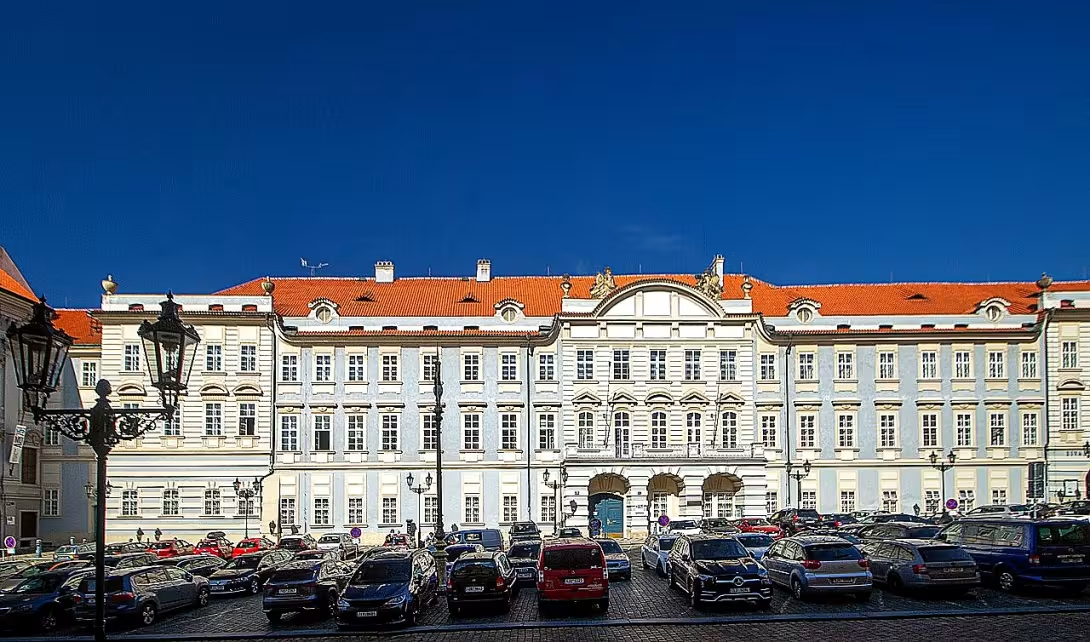
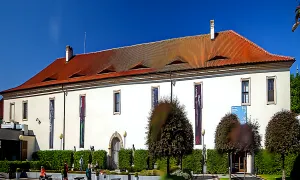
The Lichtenštejnský Palace on Malostranské náměstí is a stunning Baroque-style palace situated in the heart of Prague's historic Malá Strana neighborhood. Originally built for Karel I. of Liechtenstein in 1622, this magnificent structure has undergone several transformations and renovations over the centuries. Today, it serves as a hub for artistic activities, housing the Academy of Performing Arts in Prague and hosting various cultural events.
The palace's unique Baroque-style façade was designed by Matyáš Hummel after Alois Josef of Liechtenstein decided to renovate the building in 1791. The original Gothic-Renaissance structure was modified over time to create the current façade, featuring 27 heads on 27 metal pedestals at the entrance, created by academic sculptor Karel Nepraš.
The palace has had its fair share of notable owners and administrators, including Karel I. of Liechtenstein, Alois Josef of Liechtenstein, and Ledebour. In 1848, the palace became a military headquarters, marking another significant chapter in its history.
One of the most fascinating aspects of this monument is its unique blend of architectural styles. The palace's Baroque-style façade is a testament to the skillful craftsmanship of Matyáš Hummel and Jan Jiří Aichbauer, who worked on the project in the late 18th century.
Today, visitors can explore the palace and its surroundings, taking in the sights and sounds of this historic neighborhood. The palace's current status as a music conservatory and cultural hub makes it an excellent destination for anyone interested in art, history, or architecture.
In conclusion, the Lichtenštejnský Palace on Malostranské náměstí is a must-visit destination for anyone looking to experience the rich cultural heritage of Prague. With its stunning Baroque-style façade, fascinating history, and current status as a hub for artistic activities, this palace is sure to leave a lasting impression on all who visit.
Then and now
Drag the slider to compare how the landmark may have looked when it was built with the view today.
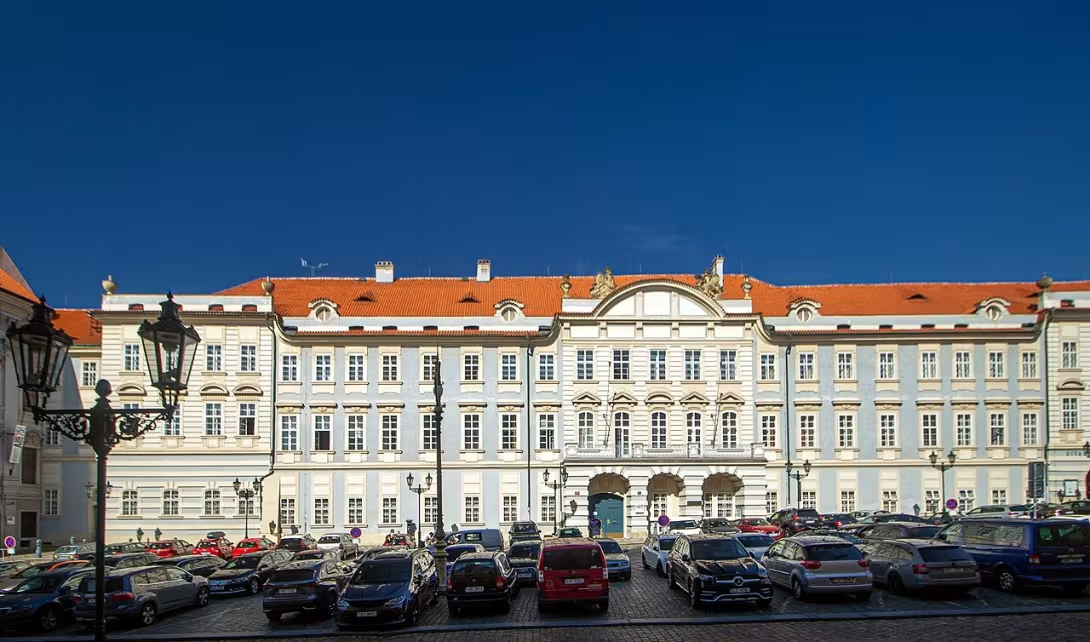
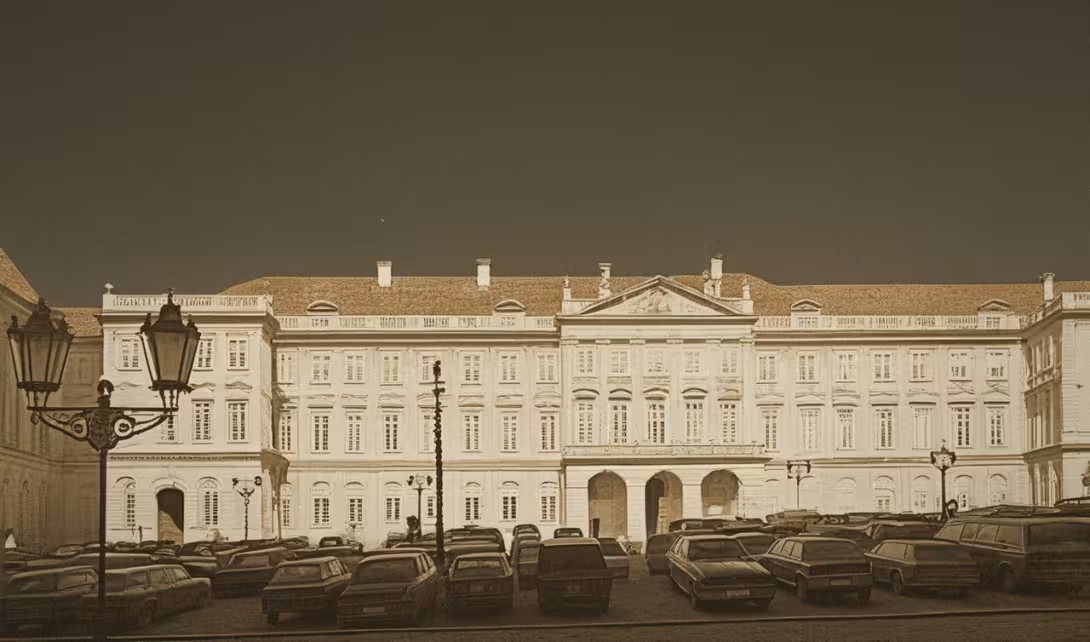
The historical appearance on the left is an AI-generated visualisation and serves as inspiration only.
Historical milestones
- 1622
- The palace was built for Karel I. z Lichtenštejna.
- 1791
- Alois Josef z Lichtenštejna decided to renovate the palace in its current Baroque style.
- 1848
- The palace became a military headquarters.
Architectural development
The palace has undergone several architectural phases, including Baroque and Classical styles. The original Gothic-Renaissance structure was modified over time to create the current Baroque-style façade.
Historical events
- 1622
- The palace was built for Karel I. z Lichtenštejna.
- 1791
- Alois Josef z Lichtenštejna decided to renovate the palace in its current Baroque style.
- 1848
- The palace became a military headquarters.
Owners
Karel I. z Lichtenštejna
Alois Josef z Lichtenštejna
Ledebourové
Points of interest
– The palace's original Gothic-Renaissance structure was modified over time to create its current Baroque-style façade, featuring 27 heads on 27 metal pedestals at the entrance.
– In 1848, the palace became a military headquarters, marking another significant chapter in its history. This period saw the palace serve as a hub for military operations and strategic planning.
– The palace's unique blend of architectural styles is not only visually stunning but also reflects the cultural exchange and artistic innovation that defined Prague during the Baroque era.
– The 27 heads on the metal pedestals at the entrance are actually depictions of famous figures from Czech history, including writers, artists, and politicians.
Guide
This guide is narrated by a synthetic voice generated by artificial intelligence.
Show guide text
This text was created by artificial intelligence and has not been editorially reviewed. It may contain inaccuracies.
Welcome to the Lichtenstein Palace on Malostranské náměstí in Prague. As you stand before this stunning Baroque-style palace, take a moment to absorb its grandeur.
The Lichtenstein Palace has a rich history that dates back to 1622, when it was built for Karel I. z Lichtenštejna. Over the centuries, the palace underwent several transformations and renovations, including a major renovation in 1791 by Alois Josef z Lichtenštejna, which gave it its current Baroque-style façade.
As you gaze up at the palace's impressive exterior, notice the intricate details that adorn its walls. The entrance is particularly striking, featuring 27 heads on 27 metal pedestals - a unique and fascinating feature of this historic building.
The Lichtenstein Palace has played host to many notable figures throughout its history. One such individual was Josef Dobrovský, a Czech scholar who lived in the palace during the late 18th century. His legacy lives on through his contributions to Czech culture and literature.
As you explore the palace's surroundings, keep an eye out for some of its lesser-known secrets. For instance, did you know that the palace's original Gothic-Renaissance structure was modified over time to create its current Baroque-style façade? Or that in 1848, it served as a military headquarters?
As you continue your exploration of this historic site, take a moment to appreciate the atmosphere and ambiance that surrounds you. The Lichtenstein Palace is more than just a building - it's a window into Prague's rich cultural heritage.
I hope you've enjoyed this brief introduction to the Lichtenstein Palace. There's much more to discover here, so I encourage you to continue exploring and uncovering its many secrets.
Tips for visitors
Best Time to Visit: The Lichtenstein Palace is a year-round attraction, but the best time to visit is during spring and autumn when the weather is mild and sunny. This allows you to fully appreciate the palace's stunning Baroque architecture and picturesque surroundings without the crowds that come with summer tourism. What to Bring: Comfortable shoes for walking around the neighborhood, a camera to capture the palace's stunning architecture and picturesque surroundings, and a map of Prague to help you navigate the area. Photography: The best spots for photography are from the palace's courtyard or from the nearby Charles Bridge. Try to visit during golden hour (early morning or late afternoon) when the light is soft and warm, making for stunning photos. What to See Nearby: Within a 30-minute walk, you can explore the historic Malá Strana neighborhood, visit the iconic Charles Bridge, or stroll through the picturesque Petřín Hill. Don't miss the nearby St. Nicholas Church and the charming streets of Little Quarter.
Frequently asked questions
Can the monument be visited?
Some buildings of this kind are open for guided tours, others serve another purpose or are privately owned. We have not verified whether and when this monument is open – please ask the operator.
What are the opening hours and admission?
We have not verified the opening hours or admission. Current information is published by the operator.
Where is the monument?
Location: Malostranské nám. 258/13, Malá Strana, Praha, Hlavní město Praha. The map on this page shows the exact spot.
Why is the monument protected?
It is listed in the Central List of Cultural Monuments of the Czech Republic as a cultural monument (register no. 39267/1-703).
Businesses nearby
Do you run a restaurant, accommodation, shop, museum, rental, wellness or other visitor service near this monument? Show yourself directly to the people heading to it — this is how they will see you in the app and on the web:
Events nearby

Zdroj akcí: otevřená data měst a obcí ČR (Národní katalog otevřených dat) a kalendář akcí Národního památkového ústavu.
Nearby
The palace is surrounded by the historic Malá Strana neighborhood and its picturesque streets, with nearby landmarks such as the Charles Bridge.
Accommodation nearby
Trips and activities nearby
Guided tours, tickets and activities nearby from GetYourGuide
Affiliate link: if you buy from the partner, we may receive a commission. The price for you does not change.
Search tours and activities →Themed route
Tematická výletní trasa
1. Charles Bridge: This iconic bridge is a must-see, offering stunning views of the Vltava River and the city skyline. Take a leisurely stroll across the bridge to admire its ornate statues and historic charm. 2. St. Nicholas Church: Located just off Charles Bridge, this beautiful Baroque church dates back to the 14th century. Admire its striking architecture and peaceful atmosphere. 3. Lichtenštejnský palác na Malostranském náměstí (main goal): This stunning palace is a masterpiece of Baroque architecture, with intricate frescoes and ornate decorations. Explore its grand halls and courtyards to get a glimpse into the lives of the aristocratic families who once resided here.
This route takes you on a journey through the historic heart of Malá Strana, showcasing some of the neighborhood's most iconic landmarks and architectural gems. With its picturesque streets, charming churches, and stunning palaces, this area is sure to leave you enchanted.
Seasonal recommendations
Here is the seasonal recommendation for visiting the Lichtenštejnský palác on Malostranském náměstí:
Spring
As you stroll through the picturesque streets of Malá Strana in the spring, the Lichtenštejnský palác is surrounded by blooming flowers and lush greenery. The gentle sunlight casts a warm glow over the palace's Baroque architecture, making it even more breathtaking. To avoid the morning crowds, consider visiting around lunchtime when the sun is high in the sky. Wear comfortable shoes for walking along the cobblestone streets, and don't forget your camera to capture the vibrant colors of the season.
Summer
During the summer months, the Lichtenštejnský palác is a popular destination for tourists and locals alike. Be prepared for larger crowds and consider arriving early in the morning or later in the evening to avoid the peak hours. The warm weather makes it an ideal time to explore the surrounding streets and alleys, so don't forget your sunscreen and a hat. Take your time to admire the palace's ornate details and enjoy the lively atmosphere of Malá Strana.
Autumn
As the leaves turn golden and crimson, the Lichtenštejnský palác takes on a cozy charm in the autumn. The soft sunlight casts long shadows across the streets, making for a romantic stroll. Consider visiting during the week or early morning to avoid the weekend crowds. Wear layers as the temperature can drop significantly at night, but don't miss the opportunity to capture the vibrant colors of the season.
Winter
In the winter, the Lichtenštejnský palác is bathed in a warm and cozy light, thanks to the festive holiday decorations. The cold weather makes it an ideal time to indulge in hot chocolate or coffee at one of the nearby cafes before visiting the palace. Wear warm clothing and comfortable shoes for walking along the icy streets, but don't miss the opportunity to experience the magic of Prague's winter wonderland.
Visualizations and artistic views


The visualisations are generated by artificial intelligence and serve as inspiration.
Photos from the area
Real photos taken near the monument


Zdroj a licence jsou uvedeny u každého snímku.
Tips from visitors
No tips yet. Be the first!
Log in and add your tip.
Sources and literature
Photos: VitVit / CC BY-SA 4.0 — Wikimedia Commons. The author and licence also appear when you hover over the image.
Location on the map

Fotografie návštěvníků
Zatím žádné fotografie. Buďte první, kdo přidá fotografii z návštěvy!
Log in a přidejte svou fotografii nebo hodnoťte.
Za ověřenou návštěvu v aplikaci získáte víc bodů — poznáme podle GPS, že jste na místě.
Reviews and comments