



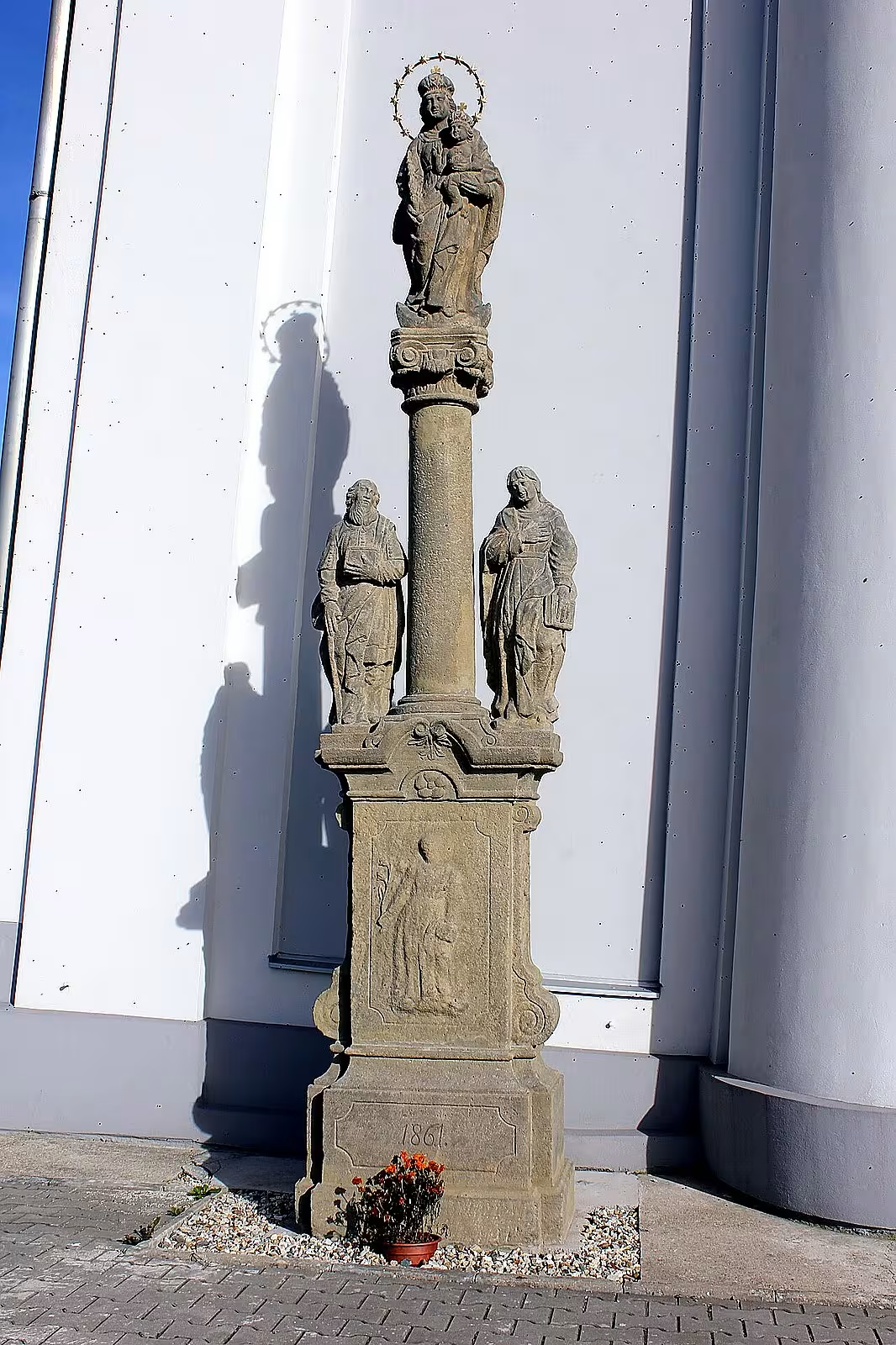
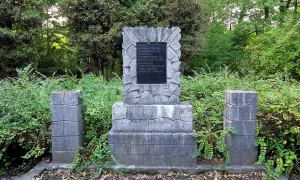
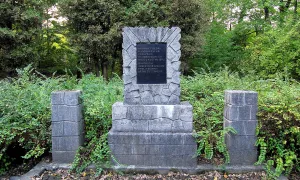
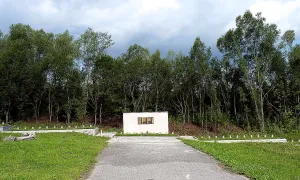
Mariánský sloup u kostela svatého Petra z Alkantary Marian column
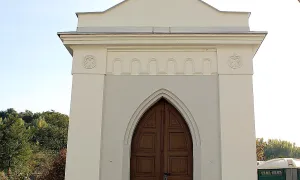
St. Peter's Church of Alkantara, also known as the Bold Church, is a Baroque building located in Karvina- Dolí. This temple is not only a cultural monument of the Czech Republic, but also a unique architectural oddity due to its inclination caused by coal mining. Originally there was a wooden temple dedicated to St. Martin, mentioned in 1447. The current brick building was built in 1756-1759 under the leadership of architect Jan František Larisch. The church is known for its history, which includes dramatic events such as coal mining and subsequent declines of land, which led to its significant tilt.
The history of the church dates back to the Middle Ages, when the first mention of a wooden temple dedicated to St. Martin was in place. This original church had a wooden boat and a walled presbytery, from which a stone medieval baptist was preserved. In the 17th century, the building was already used as a parish church. The present Baroque building was built in 1756-1759 under the leadership of Jan František Larisch, who chose the late Baroque style for the new building. During the construction, wooden vaults were replaced and the church was consecrated by Bishop Philip Gothard Schaffhotsch in 1759.
Architecturally, it is a single-boat hall with altar architecture equipment from the time of its construction. On the main altar is a painting of St. Peter of Alkantara, painted over in 1924. In the tower there are clocks with illuminated dial. In 2026 the reconstruction of the church was completed, which returned to the construction of the original look from the middle of the 18th century. Eternity patterns of roof coverings were replaced by red burnt bags - a huge one, which contributes to the historical authenticity of the building.
The church passed through several dramatic events during its existence. After the start of the coal mining in Karviné, the church began tilting since 1854 due to a fall in the soil below. This inclination led to the construction tilting more than six degrees from the vertical axis. General repairs and static securing of the church were carried out between 1994- 1995, which prevented its collapse. Thanks to the efforts of the then spiritual administrator Ernesto got the exposition for demolition of the building was cancelled.
Today, the Leaning Church is not only a cultural monument, but also an interesting destination for visitors. Its unique history and architecture attract interested people about history and art. The church is currently available for visit, which offers a unique opportunity to become acquainted with its rich past and architectural features. Visiting this temple is not only a journey to history, but also an experience full of surprises and knowledge.
The slant church of St. Peter of Alkantara is more than an architectural monument; It's a testament to the resilience and history of the local community. His presence in the Karvina- Dolí recalls the importance of protecting cultural heritage and recognising its value for future generations. Visiting this temple is not only a way to the past, but also an inspiration to understand the historical events that shaped the present appearance and importance of this unique monument.
Then and now
Drag the slider to compare how the landmark may have looked when it was built with the view today.
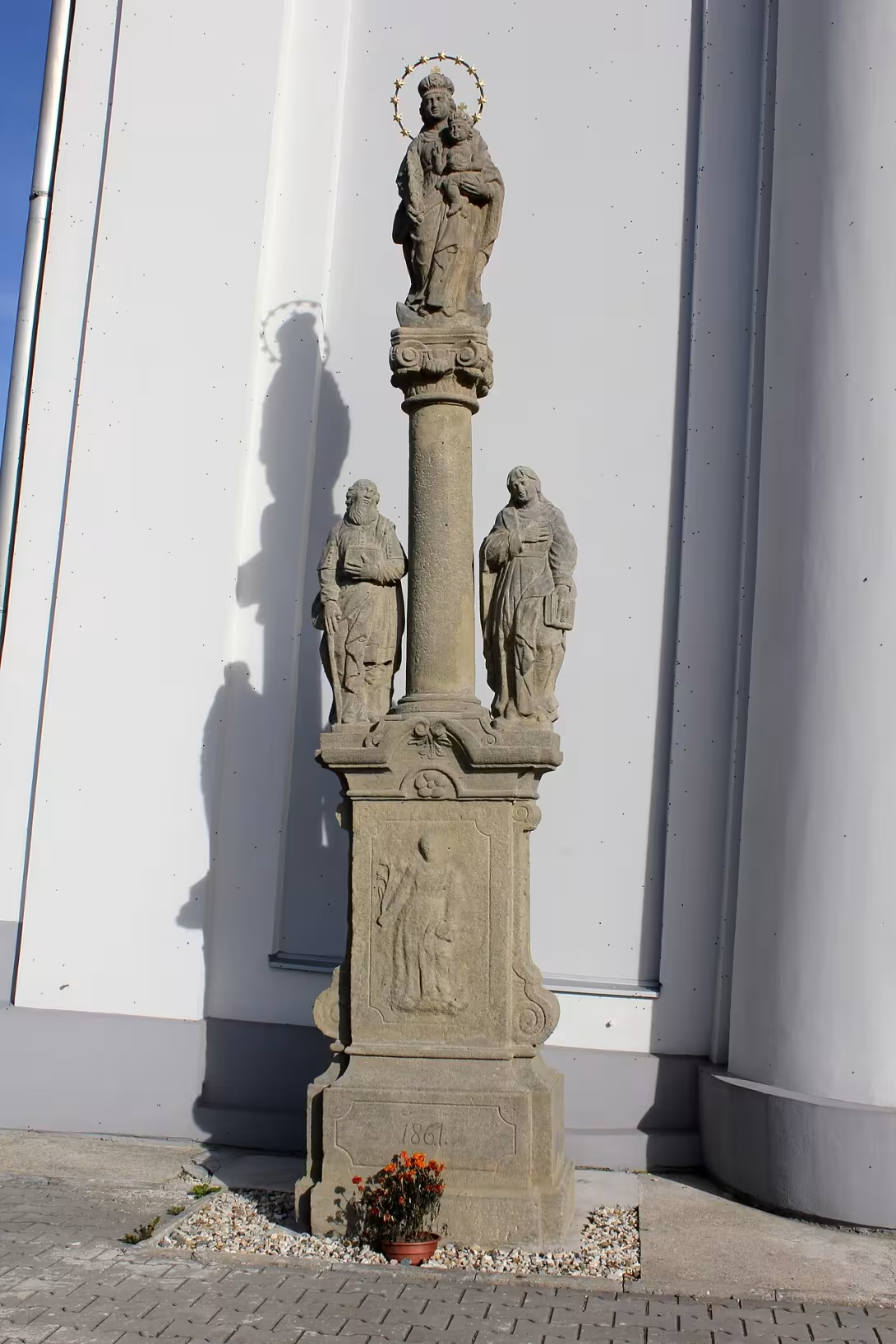
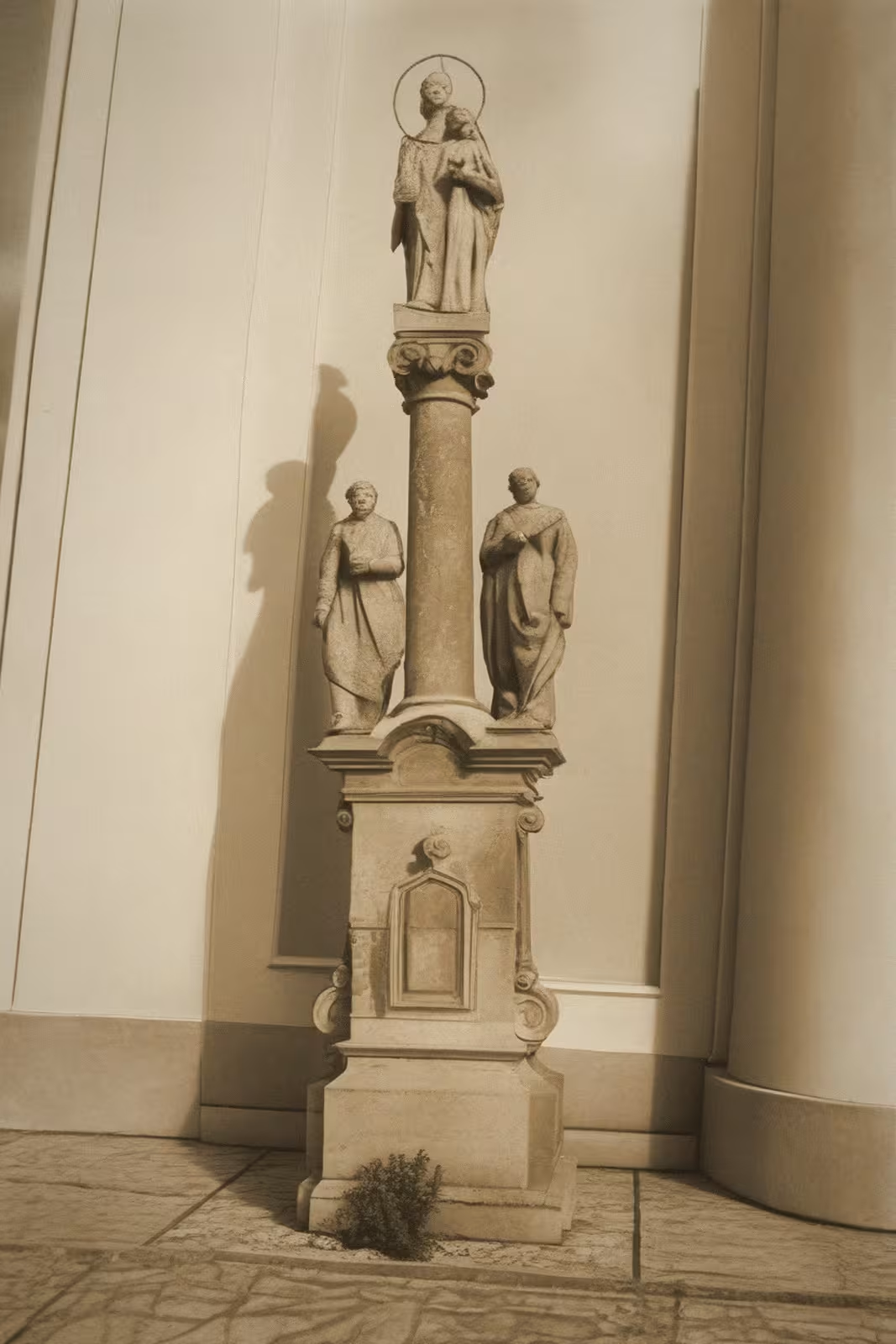
The historical appearance on the left is an AI-generated visualisation and serves as inspiration only.
Historical milestones
- 1447
- First mention of St. Martin's original wooden church.
- 1759
- The consecration of the new Baroque church by Bishop Philip Gothard Schaffhotsch.
- 1854
- The beginning of coal mining, which caused the land to drop and the church's tilt.
- 2012
- The acquisition of two new bronze bells.
Architectural development
The present Baroque church was established in 1756-1759, and the original brick vaults were later replaced with wooden vaults. In the second half of the 19th century the tower was supplemented with a new superstructure of the bell floor. The recent reconstruction gave the construction a look from the middle of the 18th century, including a new roof with a giant.
Historical events
In 1756-1759, the present Baroque building was built. Since 1854, the subsoil has decreased due to coal mining, causing the building to tilt. General repairs and static securing of the building took place between 1994- 1995.
Points of interest
- St. Peter's Church of Alkantara is also known as the Bold Church because of the tilt caused by coal mining. - Originally there was a wooden temple dedicated to St. Martin, mentioned already in 1447. - The current brick construction was built in 1756-1759 under the direction of architect Jan František Larisch. - The church tilted more than six degrees from the vertical axis due to the fall of the soil under it beginning in 1854. - General repairs and static securing of the church were carried out between 1994- 1995, which prevented its collapse.
Guide
Show guide text
This text was created by artificial intelligence and has not been editorially reviewed. It may contain inaccuracies.
Welcome to the unique cultural heritage of Karvine- Down, where you are now located in front of the Marian Column and St. Peter's Church of Alkantara. Look up at this distinctive religious site, which is known for its unusual tilt. This conspicuous angle, caused by coal mining under the soil, makes the church unique and fascinating to explore.
Let's move on to the past. The first mention of the place dates back to 1447, when a wooden church dedicated to St. Martin was built here. This original temple served as a centre of faith for the local community before dramatic changes began at the end of the 18th century. Between 1756 and 1759, the current brick church was built under the leadership of architect Jan František Larisch. His work brought to life this late Baroque championship, which became a wonderful part of the local region.
Now pay attention to the architecture of the church. Its facade is full of details and historical elegance, although the entire object occupies a senseless angle. This tilt, which he experienced during coal mining in 1854, shows not only a technological change in the area, but also the resilience and adaptability of local people. Notice how the church seems to be ready to step out of the way, which gives its architecture an enormous drama.
Key personalities associated with this monument include not only Jan František Larisch, but also Bishop Philip Gothard Schaffhotsch. It was in 1759 when the new church was ceremonially consecrated and began its service as a spiritual centre for the local population.
The interesting thing is that this church takes its place in the Czech Book of Records. Its senseless angle reflects not only the historic event of coal mining, but also the courage and innovation of the people who have dealt with this situation. It is a monument to the past and the future, showing how history can be integrated into modern life.
As long as you're standing here, we invite you to explore this fascinating place. Think about the history and stories that took place behind these walls, and you will appreciate their influence on the current landscape. We hope your visiting day here was full of discoveries and inspiration. Goodbye and thank you for your attention to the Marian Column and St. Peter's Church of Alkantara!
Tips for visitors
The best time to visit the Marian Column at the church of St. Peter of Alkantara is in the spring or autumn season when the weather is pleasant and sunny. This time of year allows you to explore the historical building without adverse weather conditions.
Transport to the Mines can be reached either by car or by public transport. Check specific connections and routes in the previous time using an online search engine.
When you visit, bring a suitable suit, especially if you visit the church in colder months. It is also important to have a camera or mobile phone to capture the beauty of baroque architecture and the surrounding environment.
For photography of St. Peter's Church from Alkantara are ideal times near dawn or before sunset when light is softer and shadow effects are more pronounced. Don't forget to also see the interior of the church, which offers interesting artistic elements.
The town of Karviná-Doly and the area of former mines can be explored. These places offer insight into the industrial past of the region and are an interesting complementary attraction to visit the church.
Frequently asked questions
Can the monument be visited?
This is a structure in a public space that can usually be seen from outside free of charge. We have not verified that this particular one is freely accessible.
Where is the monument?
Location: Doly, Moravskoslezský kraj. The map on this page shows the exact spot.
Why is the monument protected?
It is listed in the Central List of Cultural Monuments of the Czech Republic as a cultural monument (register no. 1000157212_0005). It is protected as part of a larger listed ensemble.
Businesses nearby
Do you run a restaurant, accommodation, shop, museum, rental, wellness or other visitor service near this monument? Show yourself directly to the people heading to it — this is how they will see you in the app and on the web:
Nearby
Městská část Karviná-Doly a oblast bývalých dolů.
Accommodation nearby
Themed route
Thematic cruise route: Doly and mining history
1. Mariánský sloup u kostela svatého Petra z Alkantary (church)
Type: Religious monument
Why is it worth visiting: This column is a symbol of the faith and history of the village Doly. Its important architecture and location next to the church of St. Peter of Alkantara attract visitors who want to explore the spiritual and cultural aspects of the region.
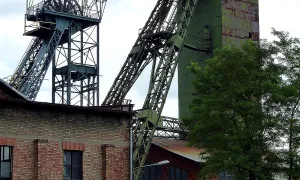
2. Former mining inputs
Type: Historical site
Why it is worth a visit: These inputs are witnessed by the rich mining past of the area that shaped local culture and the economy. Their exploration provides insight into the lives of earlier generations working in the mine.
3. Miners Memorial
Type: Memorial
Why is worth a visit: This monument is dedicated to the memory of miners who worked in local mines. It is a place for respect and a memory of their contribution and of the victims associated with coal mining.
4. Tree Memorial
Type: Natural monument
Why is it worth a visit: This ancient tribe resembles the history and nature of an area that has evolved around mining activity. It's a place of peace and reflection near urban structures.
5. Church of St. Peter of Alkantara
Type: Cultural construction
Why is it worth a visit: In addition to the Marian Column, the church itself is an architectural work offering a view of Baroque art and the history of the region. His interior is full of art wealth worth exploring.
This route offers a combination of spiritual, historical and natural experiences that reflect the unique character of the village Doly.
Seasonal recommendations
Spring: During the spring season Mariánský sloup u kostela svatého Petra z Alkantary lights up with soft and warm sunlight, which creates a wonderful atmosphere. Flowers around the monument begin to bloom, adding color to the surroundings. Visitors are advised to wear light clothes with the possibility of adding a layer in winter afternoon. The best time to visit is in the morning when the crowds are usually smaller and can enjoy a quiet moment.
Summer: Summer brings long sun days and warm air, which makes visiting the sights an ideal way to spend your vacation. The sun illuminates the architecture of the church in full bloom, attracting many tourists and locals. An earlier visit is recommended to avoid the hottest hours and manage a large crowd. Don't forget your sunglasses and enough hydration.
Autumn: In autumn, Mariánský sloup u kostela svatého Petra z Alkantary offers views fertilized by colorful glossy leaves that add mild melancholy to the atmosphere. The climate is usually quieter and less challenging than in the summer months. Visitors are advised to wear clothes suitable for colder weather, such as shirts and sun hats. The best times to visit are early afternoon, when the temperature is pleasant and the crowds are already smaller.
Winter: Winter moons bring cool air and shorter days, creating a calm atmosphere around the monument. The sun appears later and sets early, making the visit more short-lived. Visitors are advised to wear warm clothes with protective layers against cold and humidity. The best time to visit is in the early afternoon when the sun is best visible and pleasant for photography.
Visualizations and artistic views


The visualisations are generated by artificial intelligence and serve as inspiration.
Photos from the area
Real photos taken near the monument


Zdroj a licence jsou uvedeny u každého snímku.
Tips from visitors
No tips yet. Be the first!
Log in and add your tip.
Sources and literature
Faktickým podkladem tohoto textu byl článek na Wikipedii, jehož autory jsou přispěvatelé Wikipedie. Článek je dostupný pod licencí CC BY-SA 4.0.
Location on the map
Příběhy a pověsti
Legendy, pověsti a příběhy spjaté s touto památkou

Fotografie návštěvníků
Zatím žádné fotografie. Buďte první, kdo přidá fotografii z návštěvy!
Log in a přidejte svou fotografii nebo hodnoťte.
Za ověřenou návštěvu v aplikaci získáte víc bodů — poznáme podle GPS, že jste na místě.
Reviews and comments