



Masarykův kulturní dům Cultural centre
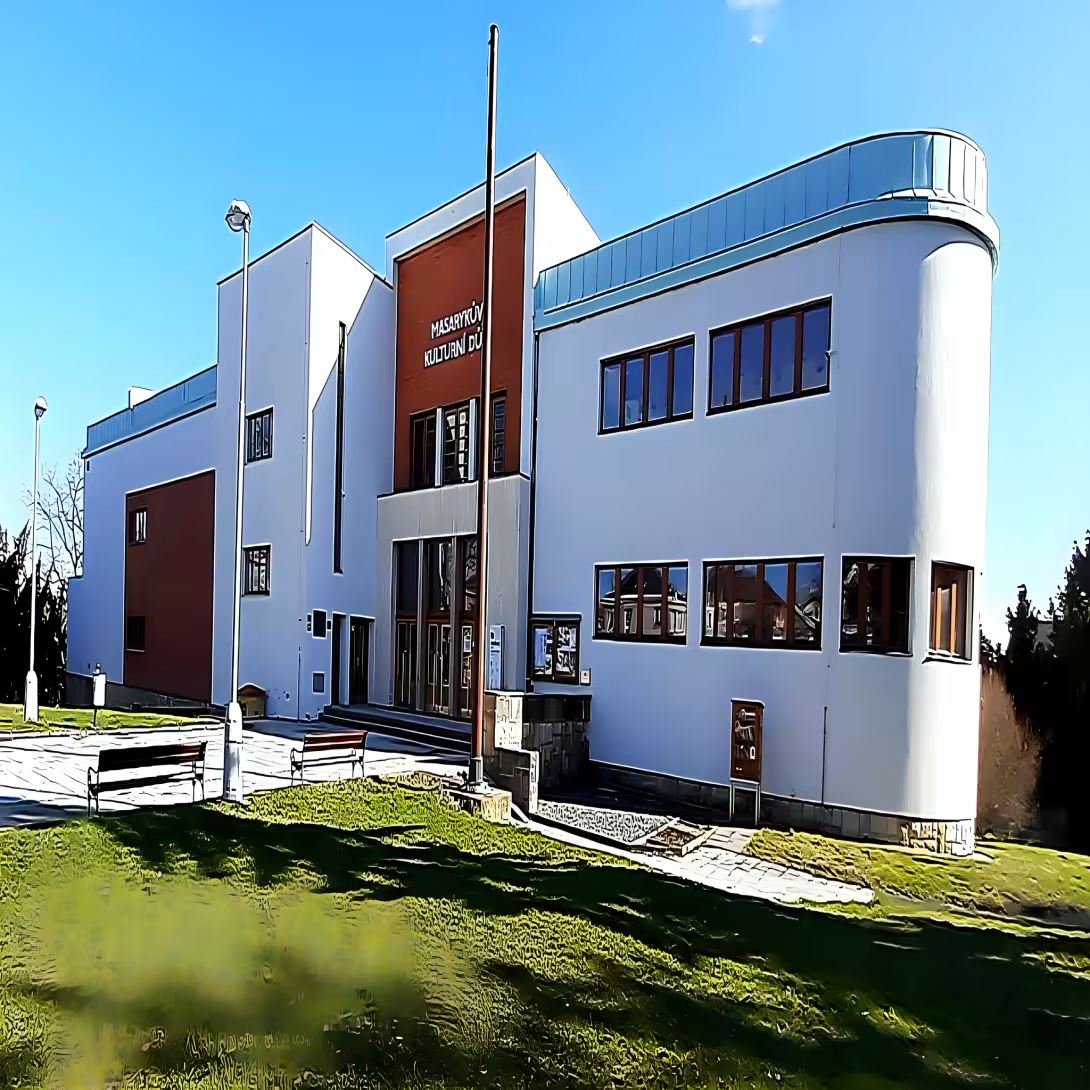
Masarykův kulturní dům in Mělník is a modernist building from 1936. It represents a significant example of functionalist architecture in the region. The building is situated in Central Bohemia in the park on a slight slope between the streets of Kpt Jaros and Krombholc. Since 2008, the building, the designated land and statue T. G. Masaryka have been the subject of monument protection.
The construction was created during the period of top functionalism. This era was characterised by the modernization of cities and the development of public cultural centres. The town for the building purchased the land of the former vineyard of Safranice. Here was also a ornamental park designed by architect and Professor Josef Adamek. The architectural competition from 1930 was won by the shallow architects Josef Širc and Bedřich Zeman. Their proposal was then merged with a more economical project by Jan B. Green. At the time, Green was the preferred city building office and author of the city's regulatory plan from 1936.
The funding was provided in 1932 by the Masaryk Cultural House on Mělnice. He was raising money through cultural programs. Local institutions, businesses and individuals who helped, for example, their materials contributed to the construction. The operation of the house was initiated on June 28, 1936 by the production of Our Furianti by Vojan Theatre Association and by opening the Masaryk exhibition and cultural effort on Mělník.
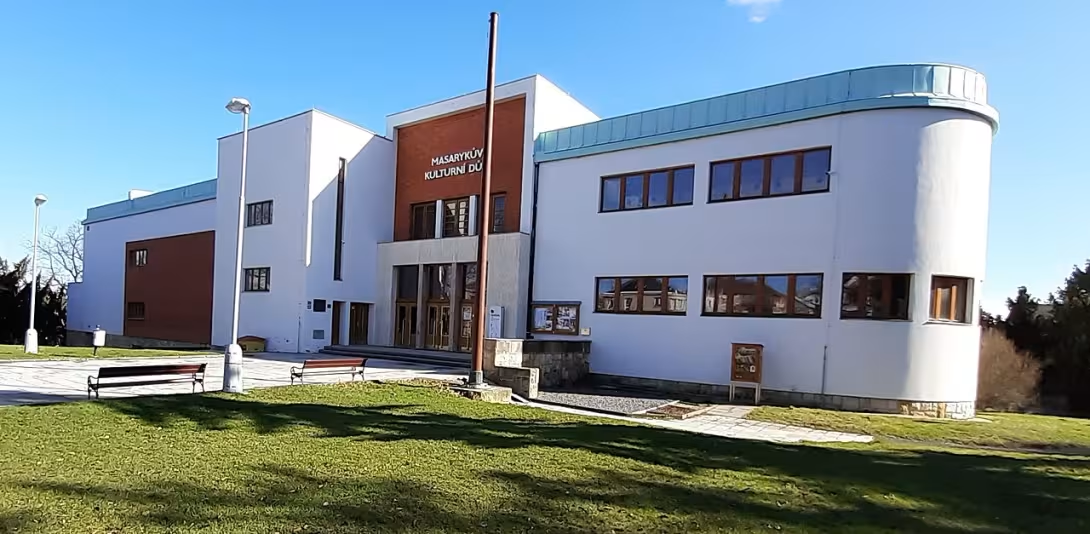
The building has a rectangular plan, brick wall and reinforced concrete ceilings. The roof of steel ligaments is covered with copper. The facades combine birch and red bricks, which complement details of copper, wood and stone. In the west front dominates the elevated, slightly forward risalites. It has a simple portal lined with stone plates and a triple glass door filling. The metal commemorative plate is located on the left of the entrance. On the south side of the building is a half-circle formation.
The interior is divided according to the original multipurpose design. The central part consists of an entrance hall which follows the street axis on October 28th and contains a monumental staircase to the first floor. A library with reading room and exhibition space were located in the southern part. The northern part was reserved for the theatre and its background. There is a large hall in the building, which also served as a cinema, a small concert hall and multipurpose lounges. An important artistic element is the bronze statue T. G. Masaryka by Vincent Makovsky.
Over the years, the use of the building has changed depending on political events. In 1952 the house was renamed the Cultural House of Captain Otakar Jaros. This name is also referred to in the statue of this native in front of the building. The museum was moved from the house after 1948 and the library in the 1970s. The interesting thing is that in 1982, there was a film of how the world loses its poets in the premises of the house.
Masarykův kulturní dům remains a unique witness to interwar architecture and social efforts of the inhabitants of Mělníka. It is a valuable goal for anyone interested in the region's functionalism and history. Visiting this building offers insight into the cultural development of the city in the 1930's.
Then and now
Drag the slider to compare how the landmark may have looked when it was built with the view today.
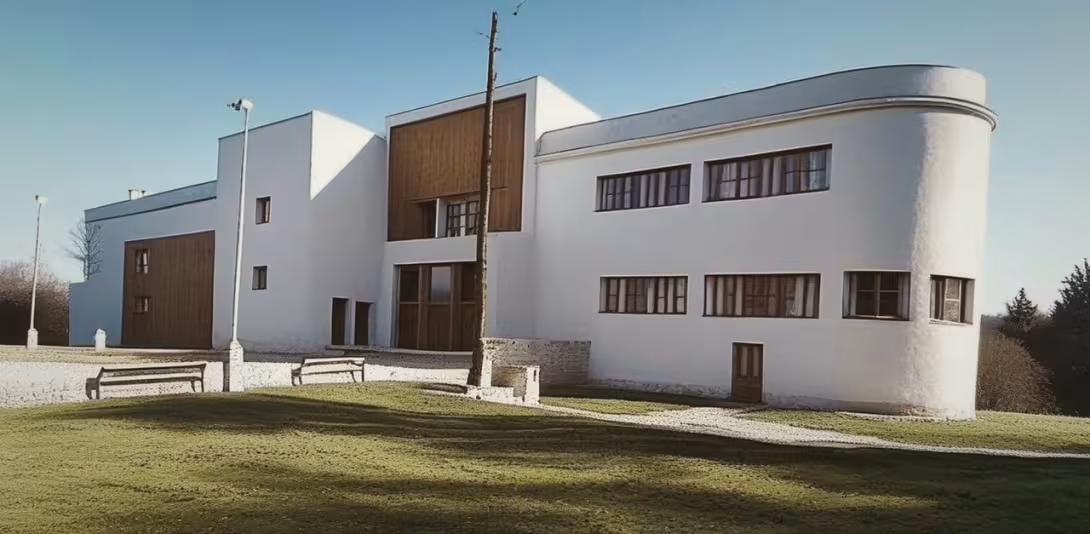
The historical appearance on the left is an AI-generated visualisation and serves as inspiration only.
Historical milestones
- 1930
- Announcement of an architectural competition for building a house.
- 1932
- The establishment of the Masaryk Cultural House in Mělník for fundraising.
- 1936
- Opening of the cultural house on June 28.
Architectural development
A brick building of rectangular shape with iron concrete ceilings and copper roof cover. Facades combine birch and red bricks with accessories made of copper, wood and stone. Architectural dominates the oversized risalite in the western facade and half-circle formation on the south side.
Historical events
1936: Starting the operation of the staging game Our Furianti; 1952: Renaming to the Cultural House of Captain Otakar Jaros; 2008: Announcement of the building by cultural monument.
Points of interest
- The 1936 building is an important example of functionalist architecture in the region. - The site for the construction was the former vineyard of Safranice, where the ornamental park was created. - Funding was provided by a association founded in 1932, which raised money through cultural programs. - In the interior there is a bronze statue T. G. Masaryka by Vincent Makovsky. - In 1982, there was a movie about how the world loses its poets.
Guide
This guide is narrated by a synthetic voice generated by artificial intelligence.
Show guide text
This text was created by artificial intelligence and has not been editorially reviewed. It may contain inaccuracies.
Welcome to Mělník, the heart of Central Bohemia. Right now, you're standing in front of a building that stands out significantly from the surrounding building. It's Masarykův kulturní dům. If you look at it, you'll see a clean line and simplicity that's typical of its time. It is a place that should have been and is still at the heart of social events, education and art for all residents and visitors of this city. Stop for a moment, take a breath and feel the atmosphere of this place that connects the history of the first republic with modern times.
Let us now move back a few decades in time to understand how this house was built. It all started in the year of nine thirty, when a great architectural wish was announced, a competition aimed at finding the best project for a new cultural building. At that time, it was necessary to create a space that would unite multiple functions at once. The aim was to find refuge in theatre, cinema, museum and library. It was an ambitious plan that required not only the creativity of architects, but, above all, considerable funding.
This is where an interesting human story comes into play. In the year nine thirty-two a special association was founded, which was called Masaryk Cultural House in Mělník. This association was not only a formal organization, but a group of enthusiastic people who believed in the development of culture in their city. They didn't just get the construction money out of the budget, but they actively collected it. They organised various cultural programmes, performances and events to gradually accumulate sufficient resources to implement this great project. It is fascinating to realize that the building that you are currently facing is the result of joint efforts and efforts by residents who wanted the best for their city.
Now pay attention to the architecture itself. The building was completed and ceremonially opened on June 28th in the year of tyre devystiste 36. If you look at the overall form of the house, you will notice that it does not contain unnecessary ornaments or complex ornaments. This is because it is a significant example of functionalist architecture. This style emphasizes that the appearance of the building corresponds exactly to its function. Everything here is practical, airy and clear. Architects Josef Širc, Bedřich Zeman and Jan B. Zelený are responsible for this look. Look at the facade and see how these clean shapes work in the context of the entire city. It is a symbol of modernity and progress, which in the year nine-thirty-six represented the peak of the thought of space at that time.
When we talk about this place, we can't forget the personalities that are connected to it. The name of the house refers to Tomáš Garrigue Masaryk, the first president of the independent Czechoslovak Republic. Masaryk was a symbol of democracy, education and humanity, the values that this cultural house should have spread. Besides, Vincenc Makovský is connected to the building. The relationship with these personalities is not only in the name, but in the very spirit of this place. If you go in later, I suggest you search for the bronze statue T. G. Masaryka, which reminds us of the founder of our state and the inspiration for the creation of this centre of culture.
Now, I want to take you to one of the attractions of the very place where the house stands. Look around you at the surrounding space. It may surprise you that there was no concrete construction before, but there was a vineyard called Safranice. Mělník is famous for its guilt, and it is this particular vineyard that has been sacrificed to create this cultural space. Along with the building was also a ornamental park, which was intended for relaxation and relaxation. It is an interesting contrast that the place where wine once grew has become a place where human education and culture are now growing.
All these elements, from architecture to history to the surrounding park, are now protected. Since two thousand eight, Masarykův kulturní dům has been officially declared a cultural monument. This protection is not only for the walls of the building itself, but also includes the designated land around it and the said statue of President Masaryk. This means that future generations will be able to see this house in exactly the form you see it now.
It's a place that reminds us of how important culture is to the life of the community. Imagine those first days of operation in July of the year, the most devytiste 36, the enthusiasm for a new cinema or library in a modern building that looked like it came from the future. This house has survived for many decades and is still fulfilling its purpose of connecting people.
Now that you know the story of the creation, the names of the architects and the secrets of the former Safranice vineyard, I suggest you explore the building more closely. Walk around it, perceive its geometry, and if you have the chance, look inside to feel the atmosphere of this multipurpose space. You may be interested in how in one building you managed to combine such different things as the silence of the library and the noise of the theatre or the cinema.
Thank you for joining me in this fascinating example of modern architecture in Mělník. I hope this short trip to history has helped you understand more what you're seeing right now. I wish you a pleasant ongoing tour of the city and enjoy everything Mělník offers you. Goodbye.
Tips for visitors
For the best experiences we recommend a visit in spring or summer months, when the surrounding nature is in the greatest bloom. In these times offers the surroundings the most colors and pleasant shielding for walks.
Transport to the place is possible both by own vehicle and by public transport. For up-to-date information about connections and paths, we recommend using internet search engines.
If you are interested in photography, focus on the modernist facade of the building. The best light to capture clean lines of architecture is in the afternoon. Great pictures will also be taken in the ornamental park designed by Josef Adamek.
For families with children it is ideal to walk near the streets of Kpt. Jaros and Krombolco, where you can move freely in a pleasant environment. For convenience we recommend taking with you comfortable shoes suitable for walking in nature.
Frequently asked questions
Can the monument be visited?
Some buildings of this kind are open for guided tours, others serve another purpose or are privately owned. We have not verified whether and when this monument is open – please ask the operator.
What are the opening hours and admission?
We have not verified the opening hours or admission. Current information is published by the operator.
Where is the monument?
Location: Nad Šafranicí 323/1, Mělník, Středočeský kraj. The map on this page shows the exact spot.
Why is the monument protected?
It is listed in the Central List of Cultural Monuments of the Czech Republic as a cultural monument (register no. 103199).
For kids
Imagine going back 90 years to the city of Mělník and its beautiful center. There you will find Masarykův kulturní dům, who is like one of the least expected heroes in town. And really, this place has many secrets and stories.
It's like a portal of time opened up and brought you here where people used to live years ago. Mělník was a small town back then, but the cultural house was the heart of the city. People held weddings, balls, concerts and theatre games here. But it was those people who lived here every day who were born here, lived and died.
Businesses nearby
Do you run a restaurant, accommodation, shop, museum, rental, wellness or other visitor service near this monument? Show yourself directly to the people heading to it — this is how they will see you in the app and on the web:
Nearby
Budova stojí v okrasném parku navrženém Josefem Adamkem, v blízkosti ulic Kpt. Jaroše a Krombholcové.
Accommodation nearby
Trips and activities nearby
Guided tours, tickets and activities nearby from GetYourGuide
Affiliate link: if you buy from the partner, we may receive a commission. The price for you does not change.
Search tours and activities →Themed route
1. Kpt. Jaroš (street) - Default point walks in the immediate vicinity of the main destination. 2. Ornamental park (park) - The space designed by Josef Adam, which offers a pleasant environment for relaxation. 3. Masarykův kulturní dům (building) - The main destination of the trip and a significant monument serving cultural purposes. 4. Krombholco street (street) - The final part of the route in close proximity to the cultural house.
Seasonal recommendations
In the spring, the city wakes up in fresh green, and the surrounding landscape around the confluence of rivers begins to flourish. The light is delicate and pleasant, which creates a fresh atmosphere for walks near the building. We recommend light coating of clothes and shoes suitable for walking on urban roads, ideally in the morning when the air is the cleanest.
Summer brings intense sun and hot air, which typically accompanies the main season of travel. The building in the city centre is very representative in bright light, while the surrounding parks offer shade. It is advisable to choose light, breathable substances and visit the site in the early morning or late evening to avoid the greatest heat.
In autumn, the surroundings of the shallow vineyards turn into gold and red tones, which gives the whole place a melancholy touch. The lighting is softer and the shadows are longer, which is ideal for shooting architecture. It is practical to carry a waterproof coat or sweater for colder days and choose the time around noon when the most light is.
Zimą is quiet in the streets and the atmosphere is affected by frost or snow, which can cover the building with a white layer. At advent time the surroundings are lit up and appear more cosy despite low temperatures. Hot clothes, high-quality winter shoes and gloves are essential, and it is best to leave in short daylight.
Visualizations and artistic views


The visualisations are generated by artificial intelligence and serve as inspiration.
Photos from the area
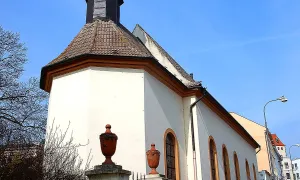
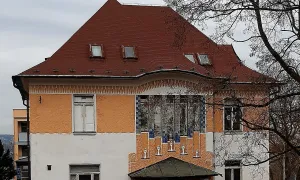
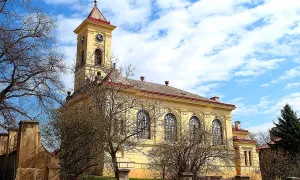
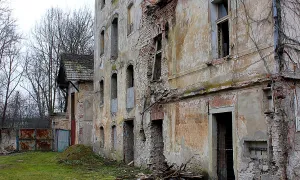
Real photos taken near the monument


Zdroj a licence jsou uvedeny u každého snímku.
View from the area
This animation was generated by artificial intelligence from a real photograph of the surroundings. The motion and details are not real footage of the location.
Atmosphere of the place
This atmospheric visualisation of the place and period was generated by artificial intelligence. It is not real footage of the location.
Tips from visitors
No tips yet. Be the first!
Log in and add your tip.
Sources and literature
Photos: Jrnka ka / CC0, rozlišení zvýšeno umělou inteligencí — Wikimedia Commons. The author and licence also appear when you hover over the image.
Faktickým podkladem tohoto textu byl článek na Wikipedii, jehož autory jsou přispěvatelé Wikipedie. Článek je dostupný pod licencí CC BY-SA 4.0.
Location on the map

Příběhy a pověsti
Legendy, pověsti a příběhy spjaté s touto památkou
Fotografie návštěvníků
Zatím žádné fotografie. Buďte první, kdo přidá fotografii z návštěvy!
Log in a přidejte svou fotografii nebo hodnoťte.
Za ověřenou návštěvu v aplikaci získáte víc bodů — poznáme podle GPS, že jste na místě.
Reviews and comments