






Valinova vila Villa
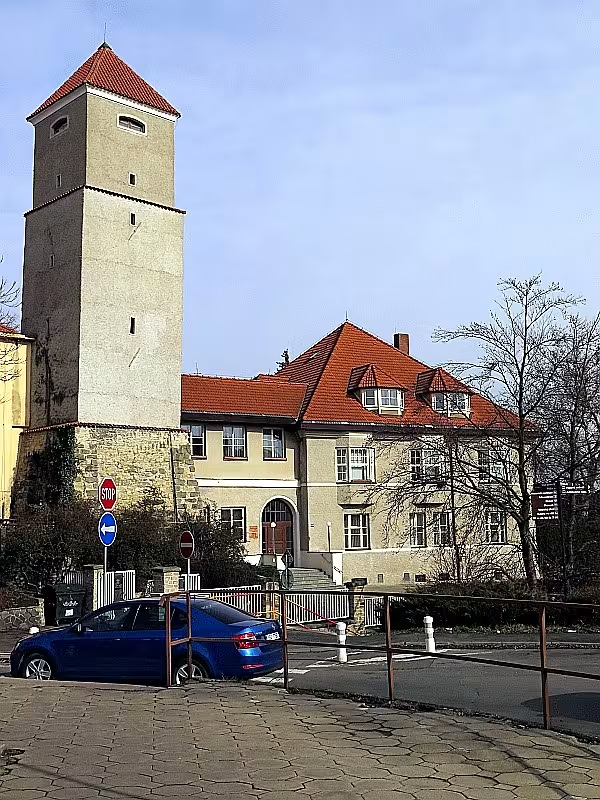
Valinova Vila is a heritage-protected residence built in 1910 on Vodárenská Street in Mělník. Designed by architect Bohumil Hypšman for the city's mayor, the building is noted for its geometric details and strategic urban placement.
JUDr. František Valina, who served as the mayor of Mělník from 1908 to 1919 and again from 1923 to 1925, commissioned the project. Hypšman had already designed two other villas in the town before undertaking this assignment.
The structure comprises two wings: a main floor and a recessed ground-floor entrance with a terrace. This layout distances the villa from the massive volume of the adjacent late Gothic water tower. The facade features geometric ornamentation, including a stepped cornice, smooth moldings between windows, and a rounded semi-circular entrance portal. Three-sided bay windows adorn the first floor, while polygonal dormers break the roofline.
The garden facade opens into a columned loggia with semi-circular corners. Although the columns were originally fluted, later renovations replaced the ground-floor sections with brizolit plaster. A small polygonal gazebo also sits within the grounds.
Initially a family home for JUDr. Valina, the residence underwent structural changes in the second half of the 20th century. During this period, the ground-floor wing was raised and the original fluted columns were modified.
The property is currently used by the District State Attorney's Office in Mělník. Heritage protection extends to the villa, the gazebo, and the designated plot of land, including the fencing.
This villa exemplifies the transition toward modern architectural forms in the early 20th century. It remains a significant site for those interested in the urban development of Mělník and the work of Bohumil Hypšman.
Historical milestones
- 1908
- František Valina becomes the mayor of Mělník
- 1910
- Valinova Vila is built on Vodárenská Street in Mělník
- 1919
- František Valina ends his first term as mayor of Mělník
- 1923
- František Valina becomes the mayor of Mělník again
- 1925
- František Valina ends his second term as mayor of Mělník
Architectural development
The original 1910 design by Bohumil Hypšman featured a two-wing structure with a columned loggia and fluted columns. In the second half of the 20th century, the ground-floor wing was raised and the original fluted columns were replaced with brizolit plaster in the ground floor.
Historical events
1910: Construction of the villa for Mayor František Valina. Second half of the 20th century: Structural modifications including the raising of the ground-floor wing.
Owners
Built for JUDr. František Valina in 1910; currently used by the District State Attorney's Office in Mělník.
Points of interest
– The heritage-protected residence was built in 1910 on Vodárenská Street in Mělník.
– The building is noted for its geometric details and strategic urban placement.
– The structure comprises two wings: a main floor and a recessed ground-floor entrance with a terrace.
– The facade features geometric ornamentation, including a stepped cornice, smooth moldings between windows, and a rounded semi-circular entrance portal.
– The property underwent structural changes in the second half of the 20th century, including raising the ground-floor wing and modifying the original fluted columns.
Guide
Show guide text
This text was created by artificial intelligence and has not been editorially reviewed. It may contain inaccuracies.
Welcome to Mělník. Take a moment to stand still and let the atmosphere of this historic town settle around you. You are currently standing on Vodárenská Street, a location that holds a quiet but significant place in the urban fabric of this city. Look up and take in the structure before you. This is Valinova Vila, a heritage-protected family residence that has stood as a silent witness to the changing tides of local history for over a century. The building presents itself with a distinct two-wing layout, a design choice that gives it a balanced and composed appearance from your current vantage point. As you look at the facade, you will notice that it is not merely a wall of brick or stone, but a carefully arranged composition of geometrized architectural elements. These geometric forms are not random; they are the signature of a specific era of design, one that sought to bring order and elegance to domestic life.
To truly understand what you are looking at, we need to travel back in time to the early twentieth century. The story of this villa is inextricably linked to the man for whom it was built, František Valina. In 1908, František Valina assumed the role of mayor of Mělník. This was a position of considerable responsibility and public visibility. It was during this period of his civic leadership, specifically in 1910, that the decision was made to construct this residence. The choice of location on Vodárenská Street was strategic, placing the home of the mayor in a prominent yet residential part of the town. The architect entrusted with bringing this vision to life was Bohumil Hypšman. Hypšman was a skilled professional who understood how to blend the functional needs of a family home with the aesthetic trends of the time. The result is the building you see today, a structure that has survived more than a hundred years of weather, war, and social change.
Now, let us look closer at the architectural details that make this villa unique. Please direct your attention to the facade once more. One of the most striking features of Valinova Vila is its use of geometrized elements. In the early 1900s, there was a growing movement away from the heavy, ornate decorations of the past toward cleaner lines and more abstract forms. You can see this influence here. The facade is punctuated by three-sided bay windows. These are not flat, simple windows; they project outward, creating a sense of depth and volume. As you stand here, you can appreciate how these bay windows break up the plane of the wall, allowing light to enter from multiple angles and giving the interior a sense of openness. The geometry of these windows, combined with the overall two-wing layout, creates a rhythm to the building’s exterior.
The structure itself is divided into two distinct wings. There is the main floor, which likely housed the primary living spaces for the Valina family, and a ground-floor entrance wing. This entrance wing is slightly recessed, a design feature that adds a layer of complexity to the building’s silhouette. Attached to this entrance area is a terrace. Imagine the life that unfolded on this terrace. It would have been a place for morning coffee, for evening conversations, and for watching the street life of Mělník pass by. The terrace serves as a bridge between the private world of the home and the public sphere of the street, a common feature in residential architecture of this period. The strategic urban placement of the villa, combined with these architectural details, ensures that it remains a focal point on Vodárenská Street.
The history of this house is deeply intertwined with the political career of František Valina. His tenure as mayor was not a single, continuous stretch of time. After his first term ended in 1919, there was a brief period of transition. However, the people of Mělník clearly valued his leadership, as he was elected to the position again in 1923. He served a second term, which concluded in 1925. This political journey reflects the dynamic and sometimes turbulent nature of the interwar period in Czechoslovakia. The villa, built in 1910, would have been the backdrop for many of the decisions made during his first term. It was a place where the mayor could retreat from the pressures of public office, a sanctuary for the man who served the city. The fact that the building has been preserved as a heritage site is a testament to the importance of both the architecture and the history it represents.
There is a certain quiet mystery to standing before a house that has seen so much. While the walls do not speak, they hold the echoes of the lives lived within them. Think about the conversations that took place in the rooms behind those three-sided bay windows. Think about the views from the terrace as the seasons changed. The geometric precision of the facade suggests a household that valued order and clarity, perhaps mirroring the civic duties of its owner. The building is noted for its geometric details and strategic urban placement, which means that it was designed to be seen, to be admired, and to stand as a symbol of stability and progress. In a town like Mělník, where history is visible on nearly every corner, Valinova Vila stands out for its elegant simplicity and its connection to a key figure in the city’s modern history.
As you continue your walk through Mělník, keep the image of this villa in your mind. It serves as a reminder of the era in which it was built, a time when architecture was beginning to shed the excesses of the past and embrace new forms. The work of Bohumil Hypšman is a fine example of this transition. The villa is not just a building; it is a chapter in the story of Mělník. It is a place where the personal life of a mayor intersected with the public life of a community. The fact that it remains standing today, protected and preserved, allows us to connect with that past. We can see the craftsmanship of the early twentieth century, the thoughtfulness of the design, and the enduring nature of well-built structures.
I encourage you to take a moment to really absorb the details. Look at the way the light hits the geometrized elements of the facade. Notice the depth created by the recessed entrance wing and the projection of the bay windows. Feel the atmosphere of the street. This is a place that has been part of the daily life of Mělník for over a century. It has seen the city grow, change, and evolve. By standing here, you are participating in that continuity. You are linking the present moment to the past, connecting your own experience to the history of František Valina and the architect Bohumil Hypšman.
As we conclude this stop at Valinova Vila, I hope you feel a deeper appreciation for the architectural heritage of Mělník. This villa is just one of many treasures that this town has to offer. As you move on to your next destination, carry with you the knowledge of this place. Remember the two-wing layout, the geometric details, and the story of the mayor who called this home. Let the image of the terrace and the bay windows linger in your memory. Mělník is a city rich in history, and every building has a story to tell. Valinova Vila has told you its story today. I hope it has been a fascinating one. Thank you for joining me on this audio tour. Enjoy the rest of your time in Mělník, and take your time to explore the many other historic sites that await you. The past is always present here, waiting to be discovered. Safe travels and happy exploring.
Businesses nearby
Do you run a restaurant, accommodation, shop, museum, rental, wellness or other visitor service near this monument? Show yourself directly to the people heading to it — this is how they will see you in the app and on the web:
Nearby
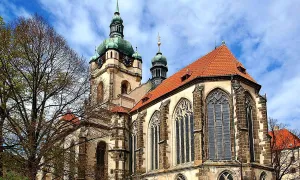
The villa is located in the immediate vicinity of the historical late Gothic water tower in Mělník.
Accommodation nearby
Trips and activities nearby
Guided tours, tickets and activities nearby from GetYourGuide
Affiliate link: if you buy from the partner, we may receive a commission. The price for you does not change.
Search tours and activities →Themed route
1. late Gothic water tower in Mělník (Historical landmark) Admire the unique late Gothic architecture of this structure located near the villa.
2. Valinova vila (Villa) Explore the main destination and its historical significance.
3. Valinova vila immediate vicinity (Surroundings) Stroll through the area directly surrounding the villa to experience its setting.
Seasonal recommendations
Valinova Vila, Mělník
Spring (Jaro)
As you visit Valinova Vila in the spring, you'll be greeted by blooming flowers and lush greenery. The atmosphere is filled with the sweet scent of blossoms, making it a perfect time to take a leisurely stroll around the villa's gardens. Be prepared for moderate crowds, especially on weekends, so plan your visit accordingly. Wear comfortable shoes and layers for unpredictable spring weather.
Summer (Léto)
During the summer months, Valinova Vila comes alive with vibrant colors and lively atmosphere. The warm sunshine casts a golden glow over the villa's architecture, making it an ideal time to take photos. Be prepared for larger crowds, especially during peak hours, so consider arriving early or later in the day to avoid the rush. Wear light, breathable clothing and don't forget your sunscreen.
Autumn (Podzim)
As autumn arrives, Valinova Vila takes on a cozy, rustic charm. The foliage transforms into a kaleidoscope of colors, creating a picturesque backdrop for your visit. Be prepared for cooler temperatures, so dress in layers and bring a light jacket. Moderate crowds are expected, but the atmosphere is generally more relaxed than during peak summer months.
Winter (Zima)
In the winter season, Valinova Vila takes on a serene, peaceful quality. The snow-covered landscape creates a magical ambiance, perfect for a romantic stroll or a family outing. Be prepared for shorter opening hours and cooler temperatures, so dress warmly and consider visiting earlier in the day to avoid the crowds.
Visualizations and artistic views


The visualisations are generated by artificial intelligence and serve as inspiration.
Photos from the area
Real photos taken near the monument


Zdroj a licence jsou uvedeny u každého snímku.
Tips from visitors
No tips yet. Be the first!
Log in and add your tip.
Sources and literature
Fotografie: Sovicka169 / CC BY-SA 4.0 — Wikimedia Commons. The author and licence also appear when you hover over the image.
Faktickým podkladem tohoto textu byl článek na Wikipedii, jehož autory jsou přispěvatelé Wikipedie. Článek je dostupný pod licencí CC BY-SA 4.0.
Location on the map

Příběhy a pověsti
Legendy, pověsti a příběhy spjaté s touto památkou
Fotografie návštěvníků
Zatím žádné fotografie. Buďte první, kdo přidá fotografii z návštěvy!
Přihlaste se a přidejte svou fotografii nebo hodnoťte.
Za ověřenou návštěvu v aplikaci získáte víc bodů — poznáme podle GPS, že jste na místě.
Reviews and comments