






Vodní mlýn (Pšovka) Water mill
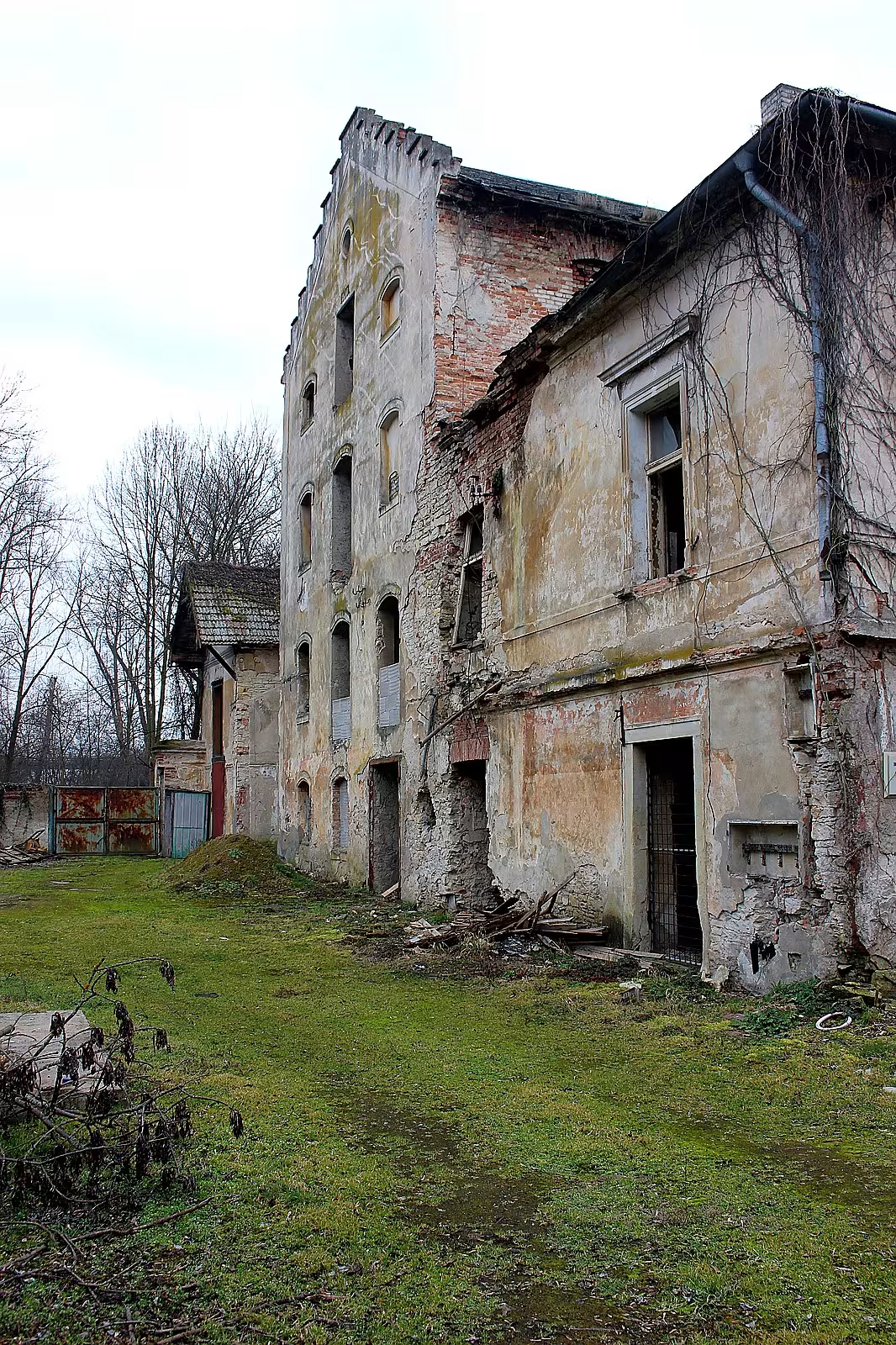
The Polish mill in Pšovka near Mělníka comes from the Middle Ages. Since 2010 it has been protected as a real-estate cultural monument of the Czech Republic. The building stands on the river Pšovka and documents the technical development of the mill industry from monastic property to private economy to industrial transformation into a cylindrical mill.
The earliest mention of the mill dates back to the Middle Ages, when it belonged to the monastery in Pšovka. Later, the property was transferred to the property's property. The significant date in history is March 28, 1740, when František Antonín Lichmann purchased it.
The area, also known as Podlabský, Čertovský or Kosair Mill, includes a residential building, a mill, a shalanda, a horticulture, a barn and a wall with gates. The mills and the house are under a common roof, even if they are dislocated. The brick residential area has one floor, while mill three. Other operating and economic structures are also single storey. On the shield there is dating 1910 in the plaster. It corresponds to the reconstruction of the building into a large cylindrical mill at the beginning of the 20th century.
The mill lies by the creek on the west side of Certovská Street. East of it is the Augustinian monastery. On the west side there is a embankment on which the road leads to the port and railway tracks. This structure occupies part of the original mill garden and leads in close proximity to the northwest corners of the residential building.
Water for the water wheel and later on the turbine was supplied with a drive located between two operating buildings. In 1930, a francis turbine was installed in the mill with an output of 7.6 HP and a drop of 2.2 metres, but it had already disappeared.
Today the entire complex is protected as a cultural monument, which ensures the preservation of its historical substance. It is a valuable witness to the technical development of the region and the milling craft in Polabi. The building is worth visiting as a demonstration of the transformation of the traditional mill into industrial operation.
Historical milestones
- 1740
- Purchase of mill by Franz Antonín Lichmann
- 1910
- Data on the mill shield
- 2010
- Protection as a real-estate cultural monument of the Czech Republic
Architectural development
The original building was converted into a large cylindrical mill in the early 20th century, which confirms dating 1910 on the shield. The living building is single storey, while the mill is three storey; Both buildings are under the same roof, but dissociated. Operating and economic buildings are single storey.
Historical events
1740: Purchase of mill by František Antonín Lichmann. 1910: Dating on the shield mill corresponding to the reconstruction. 2010: Announcement of a real cultural monument of the Czech Republic.
Owners
Monastery in Pšovka (Middle Ages), farm Yevinéves, František Antonín Lichmann (since 28 March 1740)
Points of interest
- The mill dates from the Middle Ages and has been protected as a real-estate cultural monument since 2010. - The area is also known as Podlabský, Čertovský or Kosair Mill. - The building has one floor, while the mill has three floors under the roof. - On the shield there is a 1910 dating in the plaster, which corresponds to the reconstruction into a large cylindrical mill. - The building documents technical developments from monastery property to private economy to industrial transformation.
Guide
Show guide text
This text was created by artificial intelligence and has not been editorially reviewed. It may contain inaccuracies.
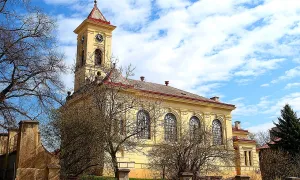
Welcome, distinguished visitors. Stop for a moment, take a breath and feel the peace of the neighborhood. Right now, you're standing in front of a place where the power of water, human labor and centuries of history are united. In front of you is the area of water mill in Pošovka near Mělníka. It is a place that carries the silent testimony of how people lived and worked in times when the rhythm of the day did not determine the clock, but the stream of rivers and the needs of agriculture. Look at the overall view of this complex. Here you will see a set of buildings that were closely related and formed one functioning unit in which each corner had its exact purpose. It is a space that immediately transmits you beyond the rush of the modern world to a time when water was the main source of energy.
Let us now look together at how this place was created and how it evolved. The roots of this mill go deep into the Middle Ages. Imagine there was already a grain milling machine here at that time that served the locals. At that time the mill was not a private business in the sense of today's sense, but it was the property of the monastery. The monasteries at that time served not only as spiritual centres, but also as centres of economic development and knowledge. It is thanks to them that these buildings have been maintained and developed. But time passed and ownership changed. The crucial break was the year seven hundred forty when the mill bought František Antonín Lichmann. With its arrival, the mill became part of a private business, which probably brought new impetus to its development and governance. From that time until our days the mill has undergone many changes to maintain its usefulness. In the early 20th century, a wave of modernization came. The mill was rebuilt at this time to meet the new technical standards of that time, which gave it the form we see today.
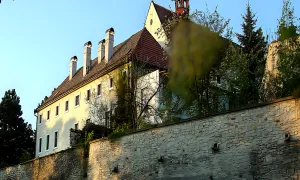
Now pay attention to the architecture itself before you. Look carefully at the facade and layout of the buildings. Note the interesting contrast in the anotomy of the main structures. The building's residential area where the grinder and his family lived has one floor. It's a space created for home and peace. On the other hand, the mill building, where the main technological process of grinding took place, is much higher and has three floors. But both of these parts are connected under one common roof, creating a harmonious whole. Look up now, at the windshield. If you take into account the plaster, you'll see the date of the thousand nine hundred and ten. This number tells us exactly when the building was completed or substantially modified at the time. It's like a little signature of time that reminds us of the last great era of the mill trade before the start of full industrial production.
In addition to the main building, there are other important elements that complement the image of the farm at the time. Notice the shalanda, which was a building designed to store goods and raw materials. It's a place where grain was hoarding before milling or full flour before shipping. Next to it you will find a horse show, which reminds of the time when horses were the only and most important transport for heavy bags. Don't forget about the barn that was a necessary part of any such economy. The whole area is closed by a wall with gates, which gives the area a feeling of a closed, safe world in which everything was done in accordance with the natural cycle of work.
When we think about the people who worked here, we remember characters like the František Antonín Lichmann mentioned. Imagine him managing his newly purchased goods in the eighteenth century, overseeing the state of the wheels and planning future development. The mill industry was at that time highly respected, but also a demanding profession. The miller had to be not only a skilled craftsman, but also a manager and sometimes a diplomat. Life in such an area was full of work from dawn to dark, accompanied by a constant noise of water from the river Pšovka, which was the heart of the whole operation.
Now, let's invite you to an interesting event that may trigger your curiosity. This mill is not known in local memory only under its official name. It has a number of aliases that reflect different views of this place. Some are known as the Polabska or Podlabská Mill, which refers to its proximity to the great Elbe River. Others refer to it as the Devil's Mill. Why so? In folk mythology and legend, mills have often been associated with secrets, waterfoils, or the devils who supposedly helped build or moved machiners at night. It's fascinating how one building can have such different names, from descriptive to full of secrets. Another name is the Kosair Mill, which brings us back to the personalities who left their mark here in later times.
This combination of history, technology, and folk stories of the mill in Pošovka is unique. That is why it was officially recognised and protected as a real-estate cultural monument of the Czech Republic in the year two thousand and ten. This means that the state has recognised its irreplaceable value for our grandfathers and decided that this architecture and atmosphere must be preserved for future generations so that they too can feel the connection to the past.
Now that you know the story of this place, I suggest you take a slow walk around the wall, look at the details of the gates and look again at the high mill with the dates on the shield. Try to imagine the sound of spinning stones, the smell of freshly ground flour and the noise of horses in the horseman. Feel how the water from the Pšovka river continues to wave quietly, just as it did hundreds of years ago, when the mill belonged to the monastery or when Mr. Lichmann took over in seven hundred and forty.
Thank you for accompanying me on this short journey in time. I hope that this view of the water mill in Oshovka helped you better understand its meaning and beauty. Now all you have to do is look at everything at your own pace and enjoy the peace of this historic corner of Mělníka. I wish you a pleasant further walk and many new discoveries. Goodbye.
Tips for visitors
The best time to visit the water mill in Pšovka is autumn or spring, when nature in the surroundings is particularly charming and the light is ideal for photography. Parking is possible in local parking lots near the monastery or by bus or tram (check the current connection in the search engine).
When visiting, bring shoes suitable for walking on lawn and wet surface as well as protective clothing against rain. Photography is best in semiconductor light when the sun is not directly above the head.
In the surroundings there is an Augustinian monastery in Pšovka, which offers a beautiful experience of old architecture and quiet surroundings. Monastic terraces are an ideal place to relax and admire the landscape.
For families with children, the water mill is an interesting place to enjoy the natural environment. Children can enjoy watching birds or playing in the shady arches of the River Pošovka.
Businesses nearby
Do you run a restaurant, accommodation, shop, museum, rental, wellness or other visitor service near this monument? Show yourself directly to the people heading to it — this is how they will see you in the app and on the web:
Nearby
Východně od mlýna stojí augustiniánský klášter v Pšovce, v okolí protéká říčka Pšovka.
Accommodation nearby
Themed route
1. Augustinian monastery in Pšovka (Monastery) - This historic building stands east of the mill. It's an interesting place to explore architecture. 2. The River Shovka (Water flow) - Continuous water flows all over the area. It offers a pleasant journey along the shore. 3.Vodní mlýn (Pšovka) (Mill) - Your main destination. You can observe a historical object right by the water.
Seasonal recommendations
In spring the mill will surround the lush greenery and awakening nature. The water in the stream flows stronger, creating a dynamic atmosphere. We recommend moisture-resistant footwear because the surrounding roads can be muddy. The best place to visit is in the morning when the air is the cleanest.
The summer season brings thick shielding of trees and bright sun, which beautifully illuminates historical masonry. It is the time of the greatest number of visitors, so it is advisable to come first thing in the morning to avoid clusters. Dress light and breathable fabrics and remember to protect against the sun.
In autumn, the landscape around the Oshka will turn into gold and red tones, creating a melancholy mood. Fog above water gives the memory a mysterious look. Because of the weather, reach for layered clothes. The ideal time for visiting is late afternoon, when light gently hits the buildings.
In winter, there is peace and quiet around the mill, possibly a snowy landscape that highlights the white walls. The atmosphere is withdrawn and intimate. Don't forget to wear very warm clothes and a firm sole so you don't slip. The opening times are shorter in this period, so we recommend checking the time of entry in advance.
Visualizations and artistic views

The visualisations are generated by artificial intelligence and serve as inspiration.
Photos from the area
Real photos taken near the monument


Zdroj a licence jsou uvedeny u každého snímku.
Tips from visitors
No tips yet. Be the first!
Log in and add your tip.
Sources and literature
Photos: Sovicka169 / CC BY-SA 4.0 — Wikimedia Commons. The author and licence also appear when you hover over the image.
Faktickým podkladem tohoto textu byl článek na Wikipedii, jehož autory jsou přispěvatelé Wikipedie. Článek je dostupný pod licencí CC BY-SA 4.0.
Location on the map

Příběhy a pověsti
Legendy, pověsti a příběhy spjaté s touto památkou

Fotografie návštěvníků
Zatím žádné fotografie. Buďte první, kdo přidá fotografii z návštěvy!
Přihlaste se a přidejte svou fotografii nebo hodnoťte.
Za ověřenou návštěvu v aplikaci získáte víc bodů — poznáme podle GPS, že jste na místě.
Reviews and comments