



Melchiorova kaple Chapel
Objekt se nedochoval — na místě dnes nestojí. Následující text popisuje jeho historii, ne současnou návštěvu.
The Melchiorova kaple, also known as Fischerova kaple, is a small stone chapel located in Mikulášovice, in the Ústecký kraj region of the Czech Republic. Built in 1733 by Melchior Wäber, a member of the local Bratrstvo Bolestné Matky Boží pod černým škapulířem fraternity, it was a simple building with a wooden altar and a few paintings on the walls. Unfortunately, the chapel was not a significant historical monument and was not protected by law, which led to its demolition after World War II.
The chapel was built in 1733 by Melchior Wäber, a member of the local Bratrstvo Bolestné Matky Boží pod černým škapulířem fraternity. The fraternity maintained the chapel after Wäber's death. Dedicated to the Holy Family, it served as a place of worship for the local community. The exact reasons for its construction are unclear, but it likely served the spiritual needs of the local population.
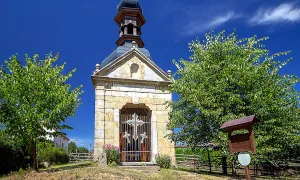
The chapel was a small, stone building with a tiled roof and a wooden altar. Inside, there was a painting of the Holy Family, and a few ordinary paintings on the walls. The chapel's architecture and artistic style are not well-documented.
The chapel changed hands several times, initially owned by Melchior Wäber, then the local fraternity, and later a private landowner, Fischer. Its fortunes were tied to the local community, and it was maintained by the fraternity and later by the private landowner. However, after World War II, the chapel was demolished, and its inventory was lost.
The chapel's history is marked by a series of events leading to its demolition. It was built in 1733, and after Wäber's death, it was maintained by the fraternity. However, after the fraternity disbanded, the chapel was left to the local community. Unfortunately, it was not a significant historical monument, and it was not protected by law. As a result, it was demolished after World War II, and its inventory was lost.
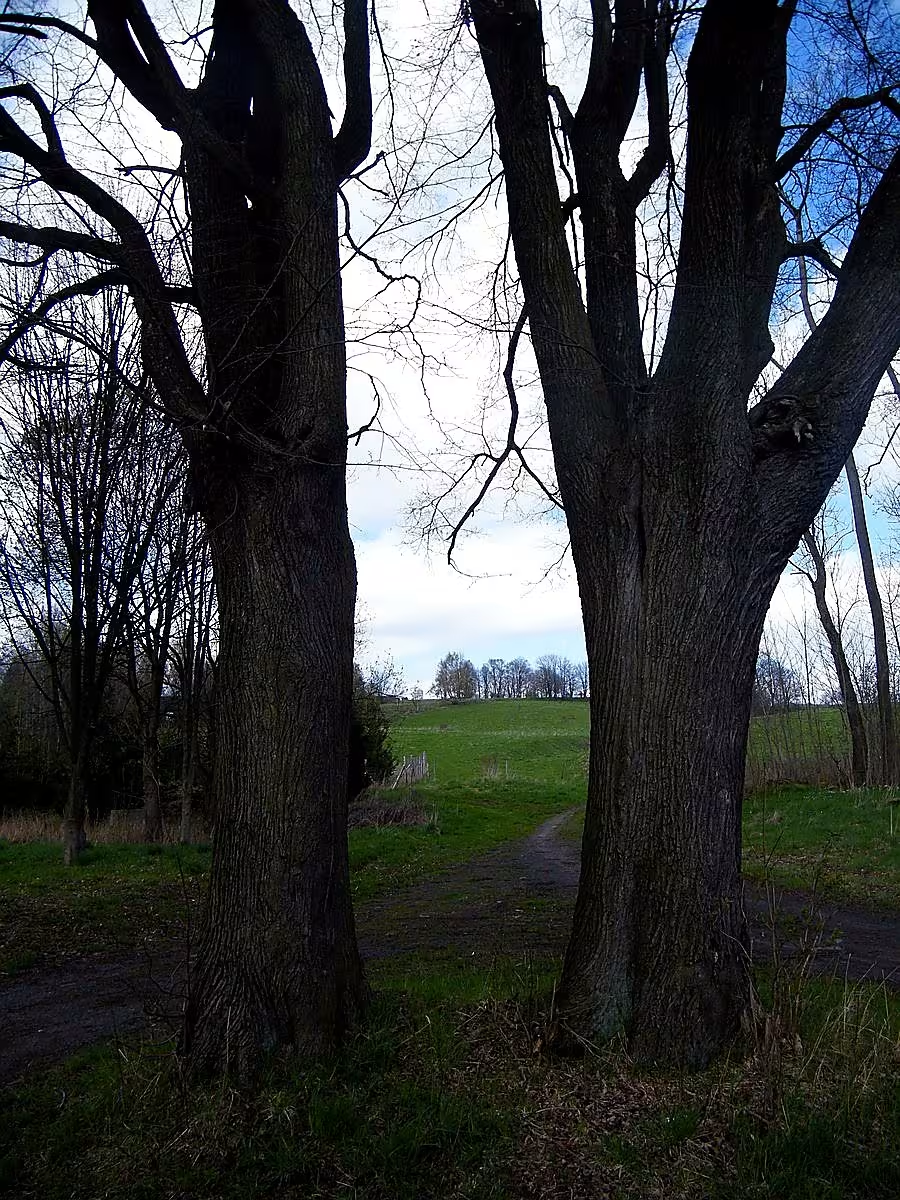
Today, the site where the chapel once stood is marked by two linden trees and a small plot of land privately owned. The chapel itself is gone, and its legacy is largely forgotten. However, its story serves as a reminder of the importance of preserving cultural heritage and the role small, local monuments play in shaping our understanding of the past.
The Melchiorova kaple may be gone, but its story remains an important part of the region's history. It serves as a reminder of the importance of preserving cultural heritage and the role small, local monuments play in shaping our understanding of the past. If you are interested in learning more about the region's history, I invite you to visit the site where the chapel once stood, and reflect on the significance of this small, but important, piece of history.
Then and now
Drag the slider to compare how the landmark may have looked when it was built with the view today.
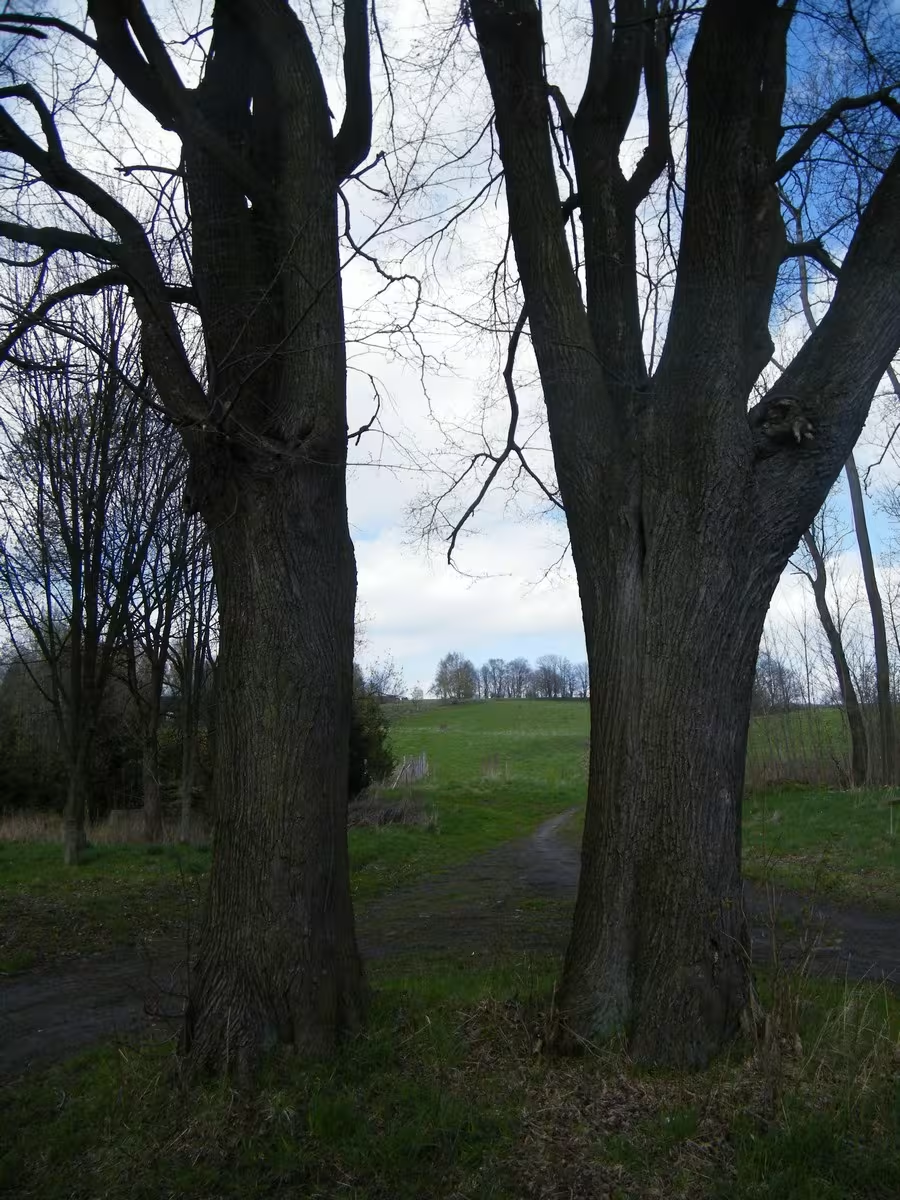
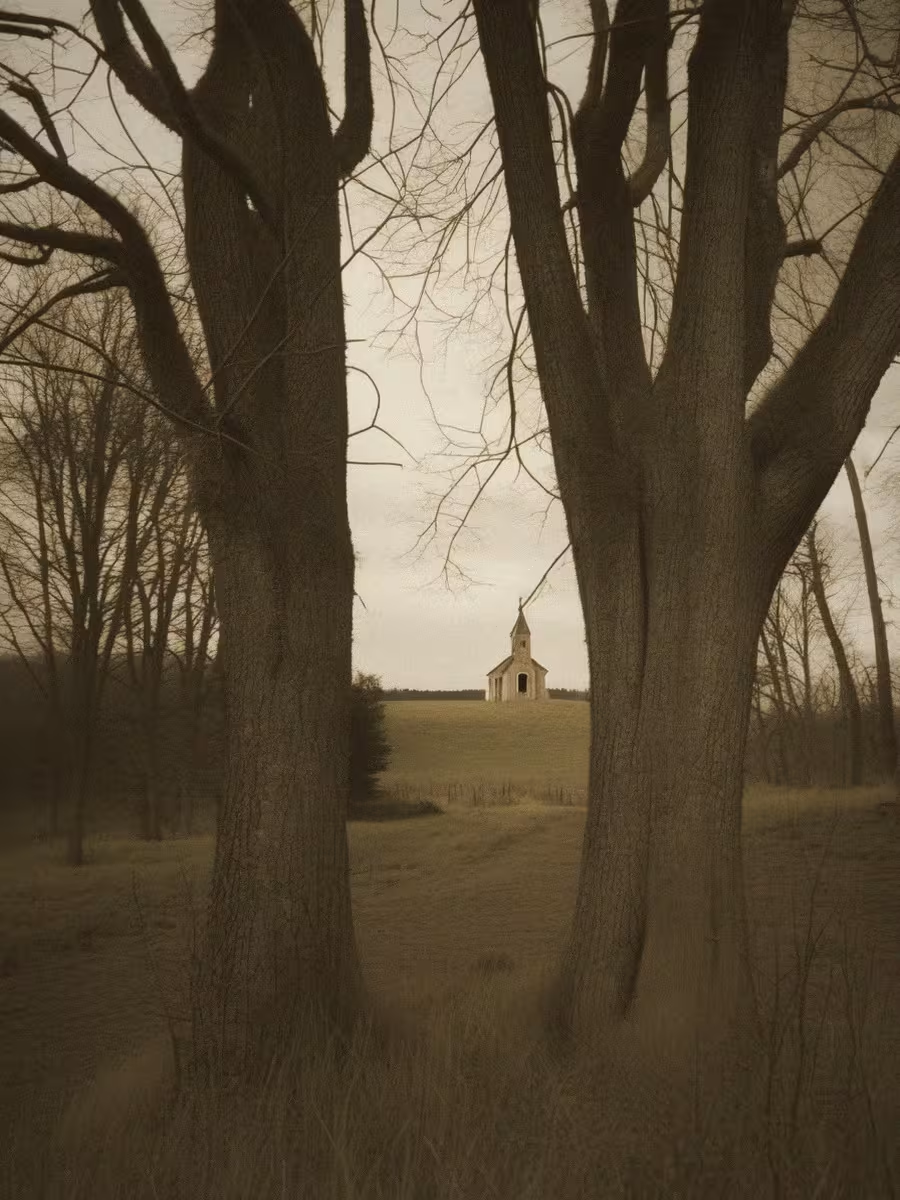
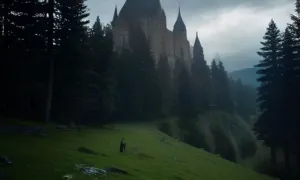
The historical appearance on the left is an AI-generated visualisation and serves as inspiration only.
Historical milestones
- 1733
- Construction of the Melchiorova kaple
- 1750
- Dissolution of the Bratrstvo Bolestné Matky Boží pod černým škapulířem fraternity
- 1945
- Demolition of the Melchiorova kaple after World War II
Architectural development
The chapel was built in 1733 using stone and had a tiled roof. It was a small, simple building with a wooden altar and a few paintings on the walls.
Historical events
Built in 1733
Demolished after World War II
Owners
Melchior Wäber, local religious fraternity, private landowner (Fischer)
Points of interest
– The Melchiorova kaple was not a significant historical monument, which led to its demolition after World War II.
– The chapel was maintained by the local Bratrstvo Bolestné Matky Boží pod černým škapulířem fraternity after Melchior Wäber's death.
– The exact reasons for the construction of the Melchiorova kaple are unclear, but it likely served the spiritual needs of the local population.
– The chapel's architecture and artistic style are not well-documented, which makes it difficult to understand its significance and importance.
– The Melchiorova kaple was demolished, and its inventory was lost, leaving behind only a small plot of land marked by two linden trees.
Guide
This guide is narrated by a synthetic voice generated by artificial intelligence.
Show guide text
This text was created by artificial intelligence and has not been editorially reviewed. It may contain inaccuracies.
Welcome in front of Melchior's Chapel, also known as Fischer's Chapel. You are standing before it and can notice its small size and simple architecture. It is a small stone building with a tiled roof and a wooden altar featuring an image of the Holy Family. The chapel was built in 1733 by Melchior Wäber, a member of the local religious brotherhood.
Let's move forward in time to say a few words about the historical context. The chapel was constructed during a period when religious activity was flourishing in this area. The Brotherhood of Our Lady of Sorrows under the Black Scapular, founded in the 18th century, played an important role in maintaining the chapel. After Melchior's death, the brotherhood became primarily responsible for its upkeep.
Notice that the chapel has a simple yet clean architecture. Its façade is unassuming but still exudes a calming impression. Now let's take a look at the altar. It is wooden and contains an image of the Holy Family, which is an excellent example of Baroque painting.
Now pay attention to the fact that the chapel was never considered a significant historical monument. This became the reason for its demolition after World War II. Many people might wonder why the chapel was deemed so insignificant as to be destroyed. The answer to this question is somewhat complicated, but it is certain that the chapel was part of local religious tradition and its disappearance was part of a larger process that changed the face of this area.
An invitation for further exploration of this historical site is open. If you are interested in more information about Melchior's Chapel and its significance, you can return to this chapel and explore it more closely. Whether or not you wish to do so, thank you for your attention and I hope that this chapel has intrigued you.
Businesses nearby
Do you run a restaurant, accommodation, shop, museum, rental, wellness or other visitor service near this monument? Show yourself directly to the people heading to it — this is how they will see you in the app and on the web:
Nearby
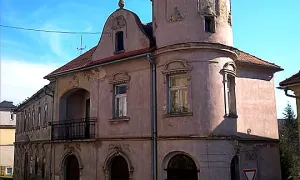
The chapel was located in the village of Mikulášovice, in the Ústecký kraj region of the Czech Republic. The surrounding landscape is rolling hills and forests.
Visualizations and artistic views


The visualisations are generated by artificial intelligence and serve as inspiration.
Photos from the area
Real photos taken near the monument

Zdroj a licence jsou uvedeny u každého snímku.
Tips from visitors
No tips yet. Be the first!
Log in and add your tip.
Sources and literature
Photos: Gumideck / CC BY-SA 4.0 — Wikimedia Commons. The author and licence also appear when you hover over the image.
Faktickým podkladem tohoto textu byl článek na Wikipedii, jehož autory jsou přispěvatelé Wikipedie. Článek je dostupný pod licencí CC BY-SA 4.0.
Location on the map



Příběhy a pověsti
Legendy, pověsti a příběhy spjaté s touto památkou
Fotografie návštěvníků
Zatím žádné fotografie. Buďte první, kdo přidá fotografii z návštěvy!
Log in a přidejte svou fotografii nebo hodnoťte.
Za ověřenou návštěvu v aplikaci získáte víc bodů — poznáme podle GPS, že jste na místě.
Reviews and comments