



Měšťanský dům (Tábor, 1000150577) House
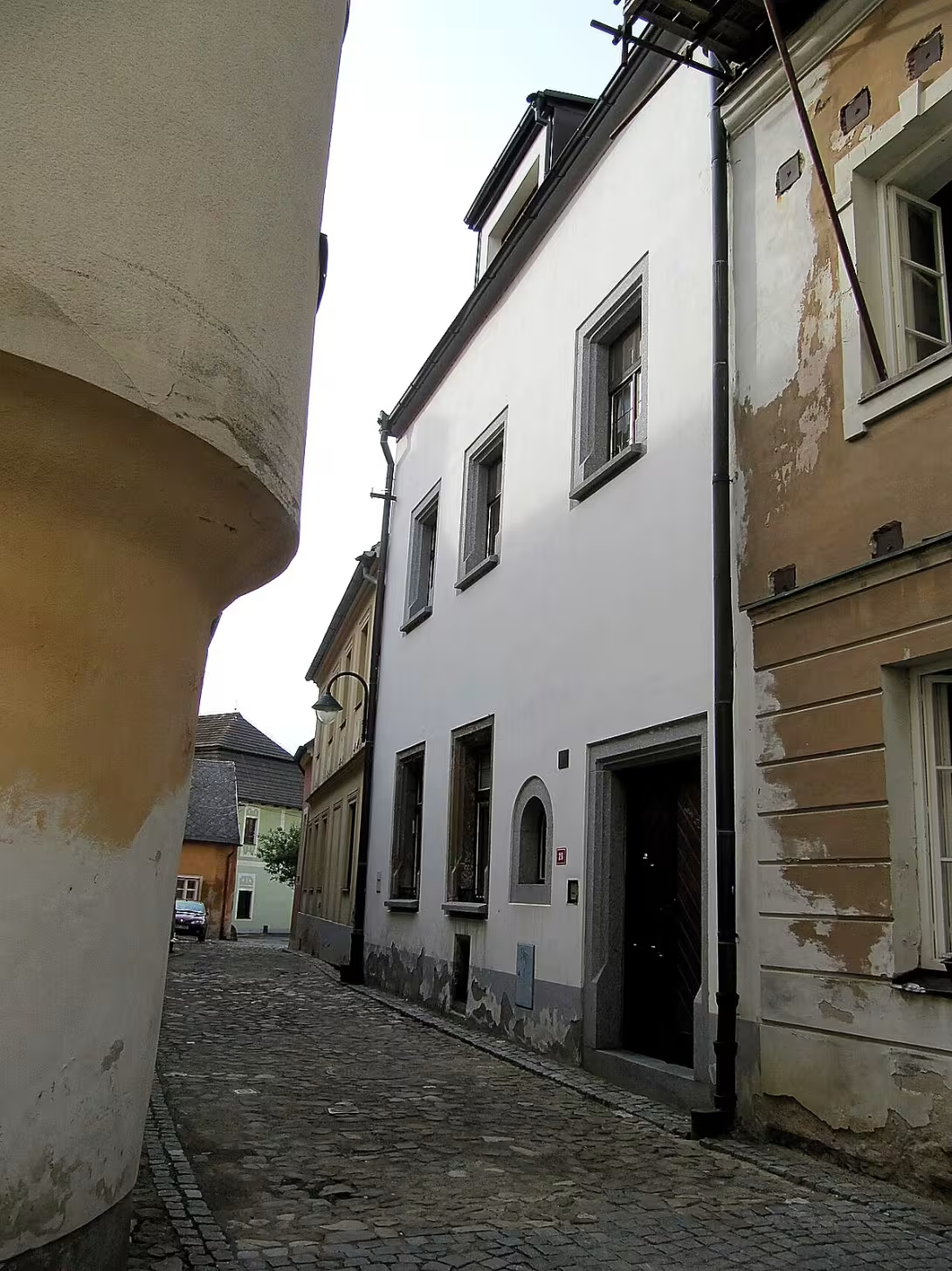
The town house no. 28 in Křížkov Street in Tábor is a valuable medieval building, which is part of the town conservation. The building stands out for preserved original layout and a number of authentic architectural details such as gothic portals and rolled vaults. It represents an important document of historical development near Zizkov Square.
The oldest history of the house was left with little concrete news, but the construction is of medieval origin. It was created at the time of the flowering of urban culture and crafts, when Tábor formed a specific urban unit with emphasis on the defence and functional layout of townhouses.
The building is a single-storey house with a main facade oriented to Crožkov Street. The south facade is three-axis, while in the courtyard is a two-story house. On the ground floor there are two windows with original Gothic lining, which make up the look, belt and gouge. The entrance portal and the next arch window are modern as well as granite replicas of gothic lining near the windows on the floor. In the attic, there is a skylight with a counter roof in the axis of the facade. The yard part of the house has smooth plaster with slightly exiting stucco champagne around the windows. The interiors have preserved the medieval layout, including the space with the vaulted vaults and the late Gothic portal at the entrance to the cellar.
The house is owned by the city of Tábora. In 1614 the building was connected to the adjacent house no. 29 but already in 1699 it was sold separately again. In the 19th century the house passed through a number of modifications within the urban regulatory plan. In 1867 the reconstruction of the rear part started, which was completed in 1869 due to the emergency condition. In 1871 the ground floor was changed into a sales space and the living room on the floor was divided. In 1907, a new shield wall was bolted due to the imminent collapse. The last extensive renewal took place in 1996, when commercial premises and apartments were set up in the northern part and in the southern part.
The basement areas of the house are part of a large camp network of underground corridors and lockers from the 15th and 16th centuries. They preserved the original medieval layout with a semi-oval stone vault, on which are visible formwork prints. On the ground floor there is a space with a Valen Vault, where a black kitchen was originally located, and a tunnel corridor leading into the rear tract.
Today the house serves as a residential building with commercial use on the ground floor. For visitors, it is an example of the sensitive care of historical heritage, since despite centuries of adjustments it has retained its medieval essence. Visiting this house in the heart of the historic Tábora offers a unique opportunity to look into authentic architecture, which co-creates the atmosphere of one of the most picturesque cities in the Czech Republic.
Historical milestones
- 1614
- Building connection with the adjacent house no. 29.
- 1699
- Separate house sale.
- 1871
- Change of ground floor to sales premises and modifications available on the floor.
- 1996
- Last extensive reconstruction of the building.
Architectural development
The originally medieval house was significantly modified in the 19th century, including the change of ground floor to sales premises in 1871 and the construction of a new shield wall in 1907. The object uses granite elements such as replicas of gothic lining and portals. The yard part of the house is two storeys and shows smooth plaster with stucco shambles.
Historical events
In 1614 the house was connected to the neighbouring No. 29, in 1699 it was sold separately again. The rear part was reconstructed in 1867, completed in 1869. The last extensive reconstruction of the building was carried out in 1996.
Owners
The house is owned by the city of Tábora.
Points of interest
- The house is a valuable medieval building that stands out for its preserved original layout and authentic architectural details such as Gothic portals and rolled vaults. - In 1614 the building was connected to the neighbouring house, but already in 1699 it was sold separately again. - The basement areas of the house are part of a large camp network of underground corridors and lockers from the 15th and 16th centuries. - On the ground floor there is a space with a well-known vault, where a black kitchen was originally located. - In 1907, a new shield wall was bolted due to an imminent collapse.
Guide
Show guide text
This text was created by artificial intelligence and has not been editorially reviewed. It may contain inaccuracies.
Welcome! You are standing in front of one of the most glorious townhouses in the historical core of Tábora. The townhouse No. 28, which stands on Crožkov Street, is an excellent example of medieval architecture and witnessed many changes that this region has undergone.
This house was created as part of the development of Tábora when the city became a key centre. Although the dates of its establishment are unknown, it is clear that it was built to serve as a residence for a local township. With age, this house has witnessed historical events and changes.
Take a look up at the facade, where you will notice authentic Gothic portals. These elements are rare reminders of the past and show how the house was built with regard to traditional building techniques. The rolled vaults of the interior also indicate the skills of builders from this time.
Let's move a little further and look at the history of this object. In 1614 this house was connected to the neighbouring house no. 29, suggesting an effort to use the space for economic purposes. This condition lasted until 1699, when the townhouse was sold separately again. In 1871, the ground floor was then converted into a sales space with a floor layout, reflecting changes in the company and economic needs of the time. The latest extensive reconstruction took place in 1996, when the house was adapted to modern requirements, while maintaining its historical character.
Now pay attention to the basement space. These spatial elements were important not only for the preservation of food and furniture, but also as a symbol of the wealth and status of their owners.
The interesting thing about this townhouse is its ability to overcome time. Despite changes in owners and modifications, the original architectural elements have been preserved, which remind us of the past and allow us to imagine life in the old days.
By inviting you to further explore Tábor, I would recommend you to look all over Křížkov Street. Every house has a story, and every alley can reveal new gems. Now, if you notice the wealth of history around you, I hope this house will leave an unforgettable impression.
Thank you for your visit and we wish you nice tours in other places Tábora!
Tips for visitors
The best time to visit is in the morning on working days when you avoid crowds of tourists and can relax to see the details of medieval architecture in Křížkov Street. Light in narrow alleys is ideal for capturing the authentic atmosphere of the old town at this time.
Transportation to the centre is possible by car and public transport. Search for current connections in traffic search engines.
For photography I recommend to use the morning clock when the sun lights the facades home. The best pictures will be taken from the opposite side of the street, where the historical character of the building will stand out. Don't forget to wear comfortable shoes because the historical center is paved with cat heads.
In the immediate vicinity, within 30 minutes walk visit Žižkov Square and the late Gothic Town Hall, which form the heart of the historical core. The whole area of Old Town offers a unique insight into medieval urban planning, which will appreciate even older children walking through the city.
For families with children, the location is suitable as an easy walk through history. I recommend having your own snacks and drinks with you, because in the historic alleys can be full in the season. I'm sure the kids will take on the crooked alleys and mysterious corners that encourage discovery.
Frequently asked questions
Can the monument be visited?
Some buildings of this kind are open for guided tours, others serve another purpose or are privately owned. We have not verified whether and when this monument is open – please ask the operator.
What are the opening hours and admission?
We have not verified the opening hours or admission. Current information is published by the operator.
Where is the monument?
Location: Tábor, Jihočeský kraj. The map on this page shows the exact spot.
Why is the monument protected?
It is listed in the Central List of Cultural Monuments of the Czech Republic as a cultural monument (register no. 1000150577).
Businesses nearby
Do you run a restaurant, accommodation, shop, museum, rental, wellness or other visitor service near this monument? Show yourself directly to the people heading to it — this is how they will see you in the app and on the web:
Nearby
Žižkovo náměstí, pozdně gotická radnice v Táboře, historické jádro Starého Města.
Accommodation nearby
Themed route
Thematic cruise route: Old Town Tábora
1. Town House - Type: Historical building - Why is it worth a visit: This architecturally interesting object is a key part of the city's history. It is a beautiful example of domestic art from when new ideas and ideals developed in Tábor.
2. Žižkov Square - Type: Historical Square - Why is it worth visiting: The square is named after Jan Žižek, an important figure of Czech history. Here you can enjoy a quiet moment and see the beautiful streets with historic houses.
3. Late Gothic Town Hall - Type: Historical building - Why is it worth a visit: This impressive building is one of the most interesting architectural monuments in Tábor. It's a testament to the city's rich history and its important role during the late Middle Ages.
4. Historical Core of Old Town - Type: Historical area - Why is it worth visiting: Walk on the streets of Old Town will lead you to other historic buildings and monuments. This part of town is full of atmosphere of past times, which you can enjoy during a comfortable walk.
This route will guide you through the most important historical places Tábora and offer a deep insight into its rich past.
Seasonal recommendations
Spring: In the spring period, the townhouse in Tábor is dazzling with sunlight, which light up the building and decorate it with freshness. The gardens around the monument flourish and radiate with natural floral breath. This time of year is ideal for visiting because the crowds are still mild. It is recommended to wear light clothes with the possibility of adding a warm layer in colder mornings or evenings. The best time for a tour is usually in the afternoon when the sun illuminates architectural details.
Summer: In summer, the townhouse in Tábor becomes a centre of attention for visitors enjoying warm sunny weather. The atmosphere is full of vitality and local markets or events attract large crowds. It is advisable to visit the memory early in the morning or later in the evening to avoid the peaks of attendance. Clothes should be light and practical, with sun protection - gloves, hat and protective creams are necessary.
Autumn: In the autumn, the townhouse in Tábor becomes melancholy charm when the leaves of falling trees colour streets and alleys. The sunny afternoons are still warm, but the evenings get cold fast. This time of year is ideal for a peaceful tour without fear of excessive crowds. It is recommended to wear laminated clothing that allows you to adapt to temperature changes during the day.
Winter: In the winter months, the townhouse in Tábor becomes magical when it is radiantly lit by evening light and the rooms expand warm atmosphere. The opening times of the monument are usually shorter due to winter conditions, so it is advisable to visit early morning or noon. Hot clothes and protective shoes are essential for a comfortable stay outside. Winter visit offers a quiet atmosphere where you can resort from cold to warm and historically decorated interiors.
Visualizations and artistic views


The visualisations are generated by artificial intelligence and serve as inspiration.
Photos from the area
Real photos taken near the monument


Zdroj a licence jsou uvedeny u každého snímku.
Tips from visitors
No tips yet. Be the first!
Log in and add your tip.
Sources and literature
Photos: Palickap / CC BY-SA 3.0 — Wikimedia Commons. The author and licence also appear when you hover over the image.
Faktickým podkladem tohoto textu byl článek na Wikipedii, jehož autory jsou přispěvatelé Wikipedie. Článek je dostupný pod licencí CC BY-SA 4.0.
Location on the map


Příběhy a pověsti
Legendy, pověsti a příběhy spjaté s touto památkou
Fotografie návštěvníků
Zatím žádné fotografie. Buďte první, kdo přidá fotografii z návštěvy!
Log in a přidejte svou fotografii nebo hodnoťte.
Za ověřenou návštěvu v aplikaci získáte víc bodů — poznáme podle GPS, že jste na místě.
Reviews and comments