



Městská spořitelna pražská v Rytířské ulici Museum building
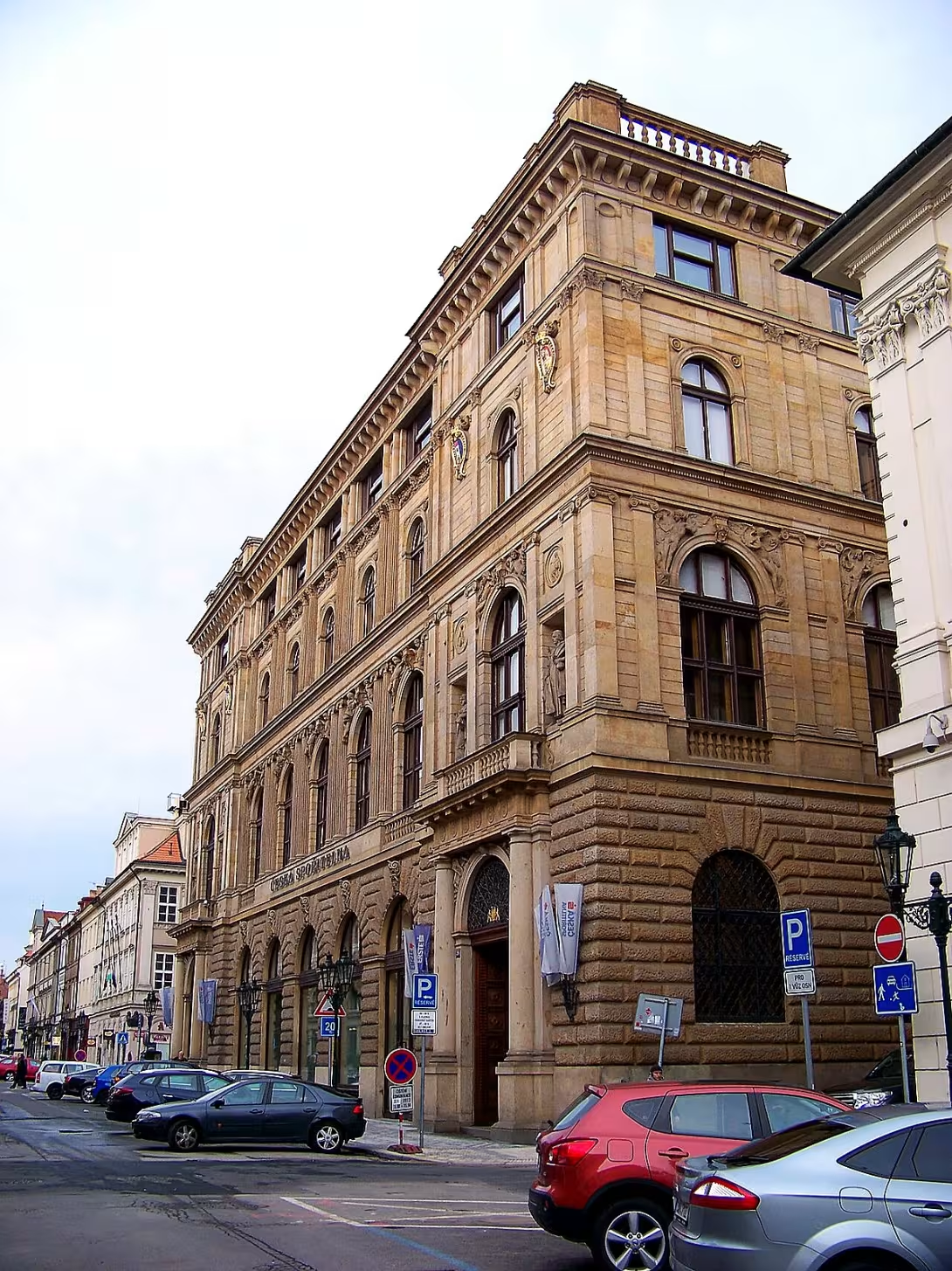
The Prague City Bank, located on the Old Town in Knights Street, is a representative Neo-Renaissance bank palace. The building was built between 1892 and 1894 according to the design of architects Antonín Wiehl and Osvald Polívka and represents an important cultural monument from the end of the 19th century. Its monumental architecture and rich art decoration from the most important Czech artists at the time attract the attention of historians and tourists.
The creation of the Prague City Savings House is closely linked to the economic situation following the financial crash on the Vienna Stock Exchange in 1873. This collapse led to the development of savings banks, which were perceived as safer institutions than other monetary institutions. Prague City Savings Bank was officially founded on 5 May 1875 in Prague. Its capital stability has made it possible to build a representative building downtown. The architectural design was developed by Wiehl and Polívka in 1891 and its implementation during two years of construction was very ambitious for the time being.
The architecture of the building is characteristic of the Neo-Renaissance style using the hořický sandstone. During the construction, this material was chosen instead of the originally planned plastered masonry, which underlined the monumental feature of the building. The two-story structure with 7 × 7 axes has a demanding decoration including sculptures and painting elements. The facade is decorated with corner risties and rich sculpture decoration in the form of niche, in which are placed sculptures of artists such as Stanislav Sucharda or František Stránský. The interiors are excellent with rich stucco decoration and using real and artificial marble, granite and other expensive materials.
The building was designed to reflect the importance of the savings bank as a financial institution. In its interior there are a number of artistic elements that contribute to the overall impression of monumentality and elegance. These include statues of young boys with dogs by Josef Mauder, symbolizing vigilance, or twelve karyatides in the courtier representing the months whose authors are Antonín Popp and others. Paintings consist of paintings by Mikolas Ales, František Ženíšek or K. Krüger.
The history of Prague City Savings House is also a testament to the technical innovations at the time. During the construction it was decided to install electrical lighting instead of originally planned gas, which was a very modern solution. Other technical elements included equipment for cleaning and cooling the air during the summer, central heaters and fans for air circulation.
Today, the Prague City Savings House is not only a cultural monument entered in the Central List of Cultural Monuments, but also a witness to the rich history of Czech architecture and art. Its monumental appearance and rich decoration attract visitors from all over the world who want to explore the history of Prague and its architectural gems. Visiting this monument offers an opportunity not only to visit the beautiful Neo-Renaissance palace, but also to understand the importance of the savings bank in the context of the history of the city.
Then and now
Drag the slider to compare how the landmark may have looked when it was built with the view today.
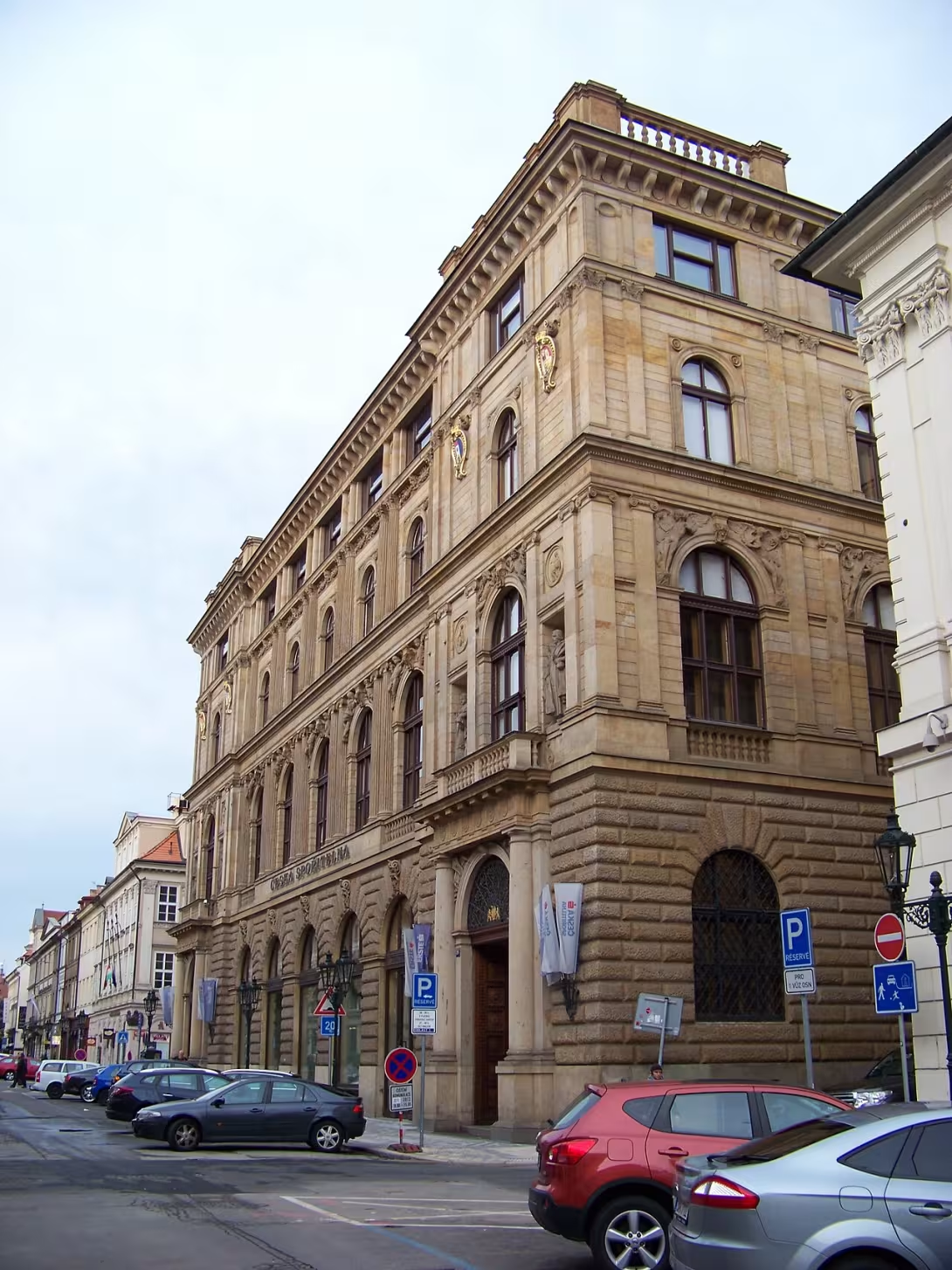
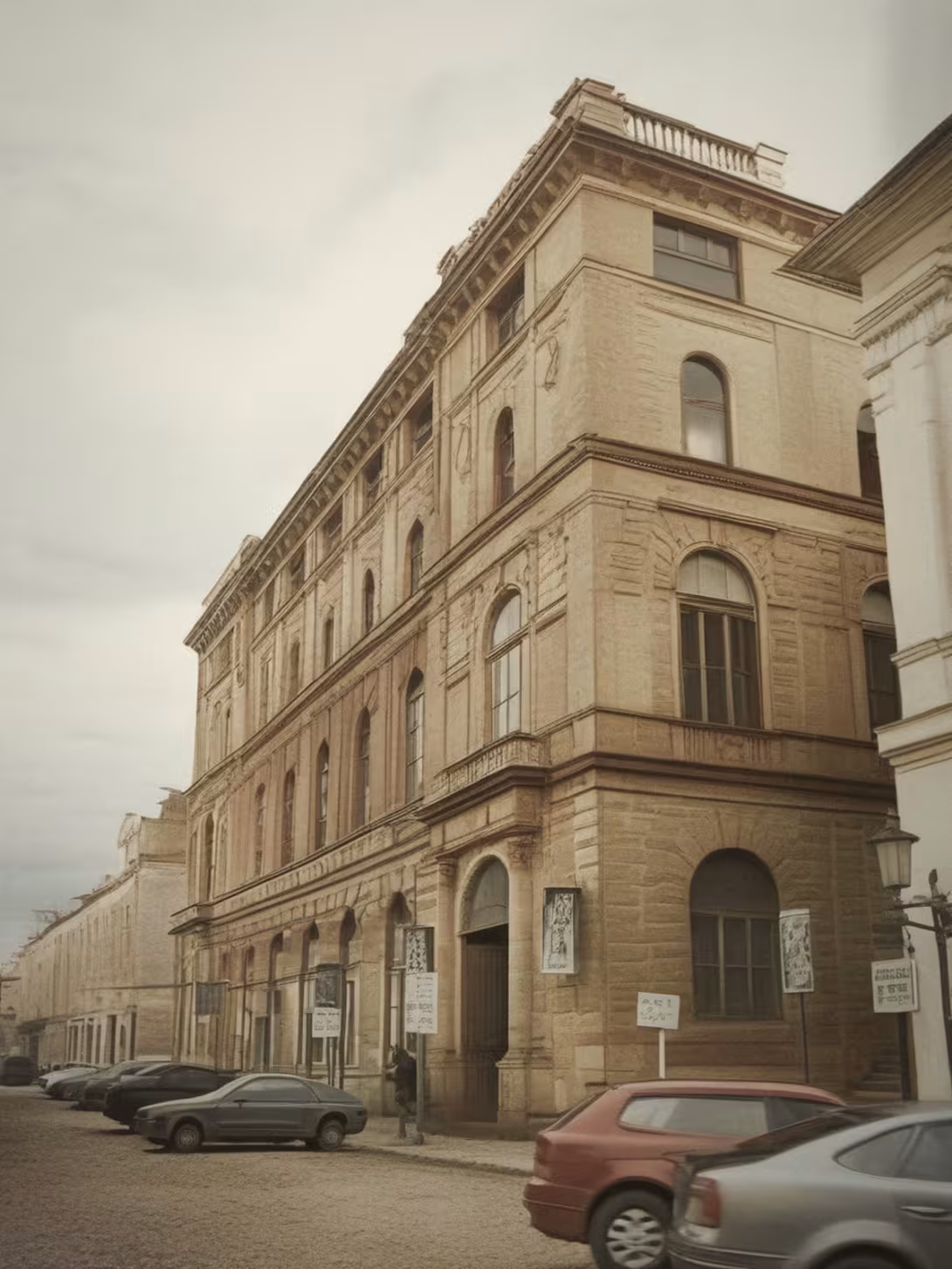
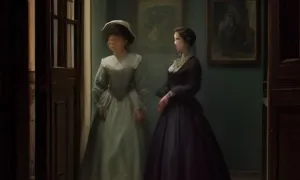
The historical appearance on the left is an AI-generated visualisation and serves as inspiration only.
Historical milestones
- 1891
- Design of the building according to Antonín Wiehl and Osvald Souvka
- 1892
- Start of construction
- 1894
- Completion of construction
Architectural development
The building was built in the style of the Italian Renaissance from the hořický sandstone, which was decided during construction instead of the originally planned masonry. Interiors use real marble, granite and rich stucco decoration. The façade is decorated with corner risties and rich sculpture decoration in nothing.
Historical events
- 1891
- Establishment of building design
- 1892
- Beginning of the construction of a bank palace
- 1894
- Completion of construction
Points of interest
- The building is a representative Neo-Renaissance bank palace built between 1892 and 1894. - The construction site of originally planned plastered masonry used architecture from the hořický sandstone. - In the interior there are twelve karyatides in the courtyard representing the months. - During construction, modern installation of electric lighting was chosen instead of originally planned gas. - The building contains technical elements such as central heating, air circulation fans and air cleaning and cooling equipment.
Guide
Show guide text
This text was created by artificial intelligence and has not been editorially reviewed. It may contain inaccuracies.
Welcome to the heart of old Prague. Right now, you're facing one of the most prominent and noble building units in this part of town. In front of your eyes is a monumental building that carries all the dignity and strength of the late nineteenth century. It is a palace of the Prague City Savings House, which immediately evokes a sense of stability and historical continuity with its presence on Knights Street. Feel the atmosphere of a place where the financial power of the then metropolis is combined with the highest artistic expression. Just by looking at the size and rich decoration of this object, you can realize how much it was entitled to the representativeness of this bank palace.
In order to understand why this building is so moving and strong, we must return to a time when Prague was turning into a modern European metropolis. The whole ambitious project began in 1891 when the first proposal was made. Behind the vision of this palace were two of the most important architects of their time, Antonín Wiehl and Osvald Polívka. Their cooperation was not random; Both architects understood how architecture could tell stories of success and endurance. The construction itself started in 1892 and after two years of intensive work, namely in 1894, the construction was completed. At the time, it was not just about building a seat for banking operations, but about creating a monumental symbol to build trust and reflect the rising position of the city.
Now pay attention to the architecture itself and to what you see right in front of you. Look at the facade and perceive its monumental nature. Note how the total composition of the building manifests itself in the Neo-Renaissance style. It's a style that looks into the past to find order and harmony in itself, but at the same time it tries to be magnificent. Unlike many other buildings at the time, where the easier route was often chosen by means of plastered masonry, there was an approach that required much more courage and funding. This whole architectural complex was realized using the hořický sandstone. This material gives the building its specific texture and a sense of resistance. Look at the rich sculpture allegories that decorate this block. These elements are not just decoration; each statue and each cut into the stone have its meaning and help define the character of the whole object. Feel how architecture connects to art to create one inseparable whole.
This palace is basically a huge gallery that is accessible to everyone. If you look at the detailed decor, you stand before the work that the greatest masters of their era participated in. It is fascinating to realize how many talented people have been involved in creating this place. In the framework of sculpture and painting decoration we meet names that belong to the golden fund of Czech art history. Feel the incredible concentration of talent stored in these walls. Artists like Bohuslav Schnirch, Stanislav Sucharda or František Stránský participated in the decoration. Other important creators, such as František Hošek, Gustav Zoula, František Hergesel, Antonín Procházka, Antonín Popp, Josef Mauder or Celda Klouček, were involved in the overall operation of the building.
Let us not forget the painting component that complements this architectural whole. Artists such as Mikoláš Aleš or František Ženíšek appear in the decoration. Even names like Karel Vítězslav Mašek, Jaroslav Věšín, Julius Mařák or Adolf Liebscher are unique in this context. This whole ensemble of artists, including the work that Bernard Otto Seeling brought to the place, created a work that is unprecedented in Prague. Each of these men contributed to making this bank palace not just a building, but a real art monument.
If you have the opportunity to enter the inner space, prepare yourself for an experience that will blow your mind. One of the greatest attractions and true hidden treasures of this palace is its two-way street. That is where there are twelve karyatides representing the months of the year. It's a fascinating combination of architecture and the symbolism of time. Imagine that scene where in the interior of the building you encounter the personification of time that surrounds you with its monumental nature. This choice of artistic expression in the courtyard perfectly complements the overall character of the building and gives it depth beyond mere aesthetics. And that choice of material that we talked about - the flaming sandstone instead of the ordinary plaster - was the key decision that made this building a permanent monument that resists time much better than any other normal building around it.
Now that you've seen this monumental palace and recognized its creator and its hidden meanings, I suggest you continue your walk around the old town. Knights street and its immediate surroundings still offer many other stories that await your discovery. I hope that this view of the history of Prague City Savings House was inspiring to you and that it helped you to better perceive the beauty and depth of Prague architecture. I wish you a wonderful journey and enjoy every moment you spend in the heart of this historic city. I'll say goodbye and wish you another pleasant discovery.
Tips for visitors
For the best experience we recommend a visit during the morning or late afternoon, when the light best highlights the neo-Renaissance details of the palace facade. In these times, there are also usually fewer people, which allows more peaceful observation of architecture.
Due to its historical location, transport by public transport is a very practical choice.
For photography we recommend focusing on detailed elements of the building directly from Knights Street, where the light best affects architecture. Don't forget to bring comfortable shoes for walking on historic streets and possibly a camera for capturing beautiful views.
Within short walks in the surroundings you can visit Havel Street or Melantrich Street, offering an authentic atmosphere. All these locations are located in the immediate vicinity of the monument.
For families with children it is ideal to walk around the Old Town, which combines viewing interesting buildings with exploring historic streets near the palace, which is a fun way to know the history of the city.
Frequently asked questions
Can the monument be visited?
Some buildings of this kind are open for guided tours, others serve another purpose or are privately owned. We have not verified whether and when this monument is open – please ask the operator.
What are the opening hours and admission?
We have not verified the opening hours or admission. Current information is published by the operator. Official website: https://iamprague.eu
Where is the monument?
Location: Staré Město, Hlavní město Praha. The map on this page shows the exact spot.
Why is the monument protected?
It is listed in the Central List of Cultural Monuments of the Czech Republic as a cultural monument (register no. 1000156891).
Businesses nearby
Do you run a restaurant, accommodation, shop, museum, rental, wellness or other visitor service near this monument? Show yourself directly to the people heading to it — this is how they will see you in the app and on the web:
Events nearby

Zdroj akcí: otevřená data měst a obcí ČR (Národní katalog otevřených dat) a kalendář akcí Národního památkového ústavu.
Nearby
Staré Město in Prague, Knights Street, Havel Street, Melantrich Street.
Accommodation nearby
Trips and activities nearby
Guided tours, tickets and activities nearby from GetYourGuide
Affiliate link: if you buy from the partner, we may receive a commission. The price for you does not change.
Search tours and activities →Themed route
1. Staré Město in Prague Type: Quarter Why: Historical center with unique atmosphere.
2. Melantrich Street Type: Street Why: Walk through the middle of the old center.
3. Havel Street Type: Street Why: Typical Prague alley in the area.
4. Knight Street Type: Street The road to the main destination.
5.Městská spořitelna pražská v Rytířské ulici Type: Palace Why: Architectural gem and top of the route.
Seasonal recommendations
Spring: In the spring season Městská spořitelna pražská v Rytířské ulici is revived by flowering trees and bushes that add colored shine to the old-fashioned environment. The sunny days give the palace a special atmosphere of lightness and a new beginning. For a visit it is advisable to go on Friday or Saturday afternoon when the crowds are joined by tourists and local people looking for escape to nature. Special weather is also here - there are often sudden rains, therefore it is recommended to carry a durable hat and waterproof shoes.
Summer: In summer, the City Savings Bank is Prague's favorite place for visitors looking to escape from unpleasant temperatures. The lighting of the evening adds magic to the Old Town architecture when the palace turns into a background for romantic walks under a full moon. The best time to visit is early afternoon or evening to avoid the peak of crowds and the heat of the day. Light clothes and hat for protection against sunlight are recommended.
Autumn: Autumn brings beautiful shiny shade of leaves to the Old Town, which creates an attractive atmosphere around the City Savings House. Sunshine days are an ideal time for walking and photography, while sudden rains require preparedness to change the weather with appropriate clothes. It is best to visit the palace on Friday or Saturday afternoon, when crowds are added to the search for the beauty of the autumn Old Town.
Winter: During winter, Prague City Savings House is surrounded by an atmosphere of advent and Christmas lighting, which add magic to the old-town space. Hot clothes are essential for comfort during the visit, especially due to shorter opening times and freezing conditions outside. The best time to visit is on Sunday afternoon, when crowds are added families and tourists looking for a place to relax and sweeten the soul during cold days.
Visualizations and artistic views


The visualisations are generated by artificial intelligence and serve as inspiration.
Photos from the area
Real photos taken near the monument

Zdroj a licence jsou uvedeny u každého snímku.
Tips from visitors
No tips yet. Be the first!
Log in and add your tip.
Sources and literature
Photos: ŠJů (cs:ŠJů) / CC BY-SA 3.0 — Wikimedia Commons. The author and licence also appear when you hover over the image.
Faktickým podkladem tohoto textu byl článek na Wikipedii, jehož autory jsou přispěvatelé Wikipedie. Článek je dostupný pod licencí CC BY-SA 4.0.
Location on the map

Příběhy a pověsti
Legendy, pověsti a příběhy spjaté s touto památkou
Fotografie návštěvníků
Zatím žádné fotografie. Buďte první, kdo přidá fotografii z návštěvy!
Log in a přidejte svou fotografii nebo hodnoťte.
Za ověřenou návštěvu v aplikaci získáte víc bodů — poznáme podle GPS, že jste na místě.
Reviews and comments