






Milkov Settlement
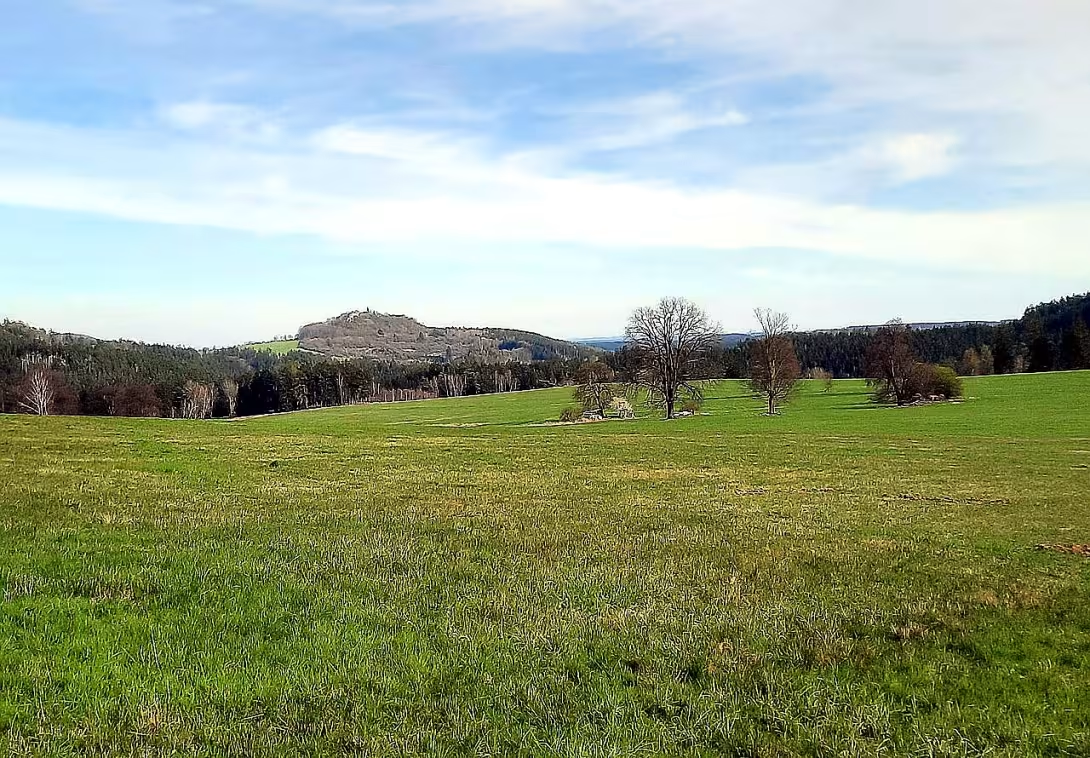
Milkov, in German Milikau, was located in the area of today's Tachova in the Pilsen Region, within the administrative territory of the municipality of Lestkov. The first written mention of the settlement dates back to 1115, when the so-called Kladrub False presents it as the property of the Kladrub monastery. This recognition thus puts Milkov in a number of important medieval sites of the region.
In the period between world wars Milkov was a living village. It had seven buildings and approximately fifty inhabitants, which placed it among small but vital communities. Odada didn't have her own church; along with Zadob and Lomy was so-called "fated" to the nearby Domaslavi, which meant that it was managed by a local clergy and still preserved in the Domaslav cemetery by the tombstones of the Milkovsk people. But the whole region, where the German-speaking population prevailed, could not be saved from the great historical changes that were to come.
The second half of the twentieth century has brought a major break. After World War II, the region faced the post-war expulsion of Czech Germans, which dramatically changed the composition of the local population. Although Milkov had twenty inhabitants in 1960, in the 1970s the village was already considered extinct. Around 1980 there was still a demolished building on the site, but over time the settlement is settled into the countryside.
Milkov is now known mainly by a group of trees that survived its demolition. Only small remnants of human activity can be found from the original village, which only a attentive pilgrim notices. From Lestkov, the valley of Hadovka or the valley of the Podhajská creek lead to this place of the field roads which still copy the paths of historic roads. At the beginning of the 21st century, the area was completely desolate, although after around 2020, the new owner built a tiny house, thus regaining some of his habitability.
In nature, Milkov was located on the upper plateau defined by the Hadovka and the Podhajská creek, approximately half the distance between the municipalities of Domaslav and Vrbice near Bezdružice. A castle of the same name was located just above the confluence of the two streams, which today resembles the dramatic nature of these landscapes.
Historical milestones
- 1115
- The first written mention of the settlement as property of the Kladrub monastery.
- between world wars
- The population is at maximum (48 inhabitants).
- 1960
- Last population recorded - 20 people.
- 70th years of the 20th century
- The destruction of the settlement and the demise of most of the buildings.
Historical events
- 1115
- The first written mention of the Milkov settlement as property of the Kladrub monastery in the so-called Kladrub false.
- between world wars
- The orchard has reached the largest population, over 48 people in seven houses.
- 70th years of the 20th century
- Official recognition of the disappearance of the Milkov settlement.
Points of interest
- The first written mention of Milkov dates back to 1115, where it is listed as property of the Kladrub monastery.
- The village had seven buildings and about fifty inhabitants in the interwar period.
- Milkov was added to the Domaslavi, and the tombstones of milkovsky inhabitants are still preserved in its cemetery.
- After World War II, the population decreased to 20 in 1960, but in the 1970s the village was already considered extinct.
- At the beginning of the 21st century, a tiny house was created here, which restored the minimum occupancy of the place.
Guide
This guide is narrated by a synthetic voice generated by artificial intelligence.
Show guide text
This text was created by artificial intelligence and has not been editorially reviewed. It may contain inaccuracies.
Welcome to the place where time stopped and where nature slowly but relentlessly takes back what once belonged to man. You're standing on a plateau between two deep valleys. If you look around now, you will see a landscape that is peaceful and unshakable. Underneath your feet, the slopes that hold the streams of the Snake and the Podhajs extend. There's something special about the silence, isn't there? You may feel that this place is empty, but in fact, it's simple, full of invisible traces left by generations of people. What you're seeing in front of you right now is not just an ordinary piece of earth. You're standing at a place called Milkov.
Let's go back deep into the past together to understand why this place is so special. The history of Milkova is not short, because it dates back to the deep Middle Ages. The first written clues that tell us about this department dates back to one thousand and fifteen. Already at that time Milkov was registered as property of a major Kladrub monastery. Imagine the era when the monastery brotherhood determined the rhythm of life in the landscape, when the soil was the foundation of everything, and when each settlement had a clear purpose within the wider world. Milkov was then part of this extensive monastery estate, a place where it worked with the ground and where the basic stone existence was built.
Now pay attention to what was happening here at a very close time, which may be remembered by the elderly. Milkov was not always just a quiet platform. In the period between world wars, the settlement experienced its greatest boom. It was the time when life was pulsing most intensely here. The village had at that time seven buildings and about fifty inhabitants lived here. Imagine the little houses that once stood in these places, the smoke of the stones and the daily effort of the people who sought their safety and livelihood here. Most of the population spoke German, which was typical of this area and shaped the character of the local community. It was a closed but tight community that lived in the rhythm of the agricultural year.
If you look around now, you probably won't find any ruins of houses or walls. The Milkova architecture is now intangible. It's an absence architecture. Instead of buildings, you will see a group of trees standing here as the only living monument. These trees are like silent guardians of the past who survived the people leaving. Note also the minor inequalities in the field, the tiny traces of human activity that nature tries to hide, but are still visible. These footprints are all we have left after the seven houses that once formed the heart of this settlement.
Milkova's journey to extinction was gradual and sad. After the First World War, the settlement held, but fate was already relentless. In the year of a thousand nine hundred sixty, a few decades ago, there were only twenty remaining inhabitants. This was no longer a village, but rather the last remnants of a community that tried to keep tradition in an empty world. The whole process of extinction culminated in the 1970s, when the village was officially considered extinct and most of its buildings were finally removed from the landscape. Milkov has thus become part of history, a place that exists more in documents and in landscape memory than in material form.
But there is one interesting and melancholy thing that connects Milkov to the outside world. Even though the settlement itself disappeared, her people didn't disappear completely. Milkov has always been firmly connected to the nearby Domaslavi. This bond was so strong that even after the demise of the settlement itself, the milky people remained part of that community. If you go to the cemetery in Domaslavi, you can still see the tombstones of the people who once lived here, on this platform, under your feet. It's a fascinating connection between a dead place and a living monument in a neighboring village.
You may now ask why this place was so easily erased from the map. There's a certain mystery about how such a living place, which had such a long history, could suddenly almost completely disappear. It is a reminder of the fragility of human existence and how easily nature can take over the space that we once claimed. Milkov today is not a monument to buildings, but a monument to the presence of people who loved, worked and eventually left.
Now I'd like to ask you to continue this quiet walk. Let yourself drift through the atmosphere of this place, feel the wind coming from the valley of Hadovka and Podhajská, and look at the landscape not only with your eyes, but also with your heart. Every tree and every tiny trace here has a story. Thank you for joining me on this journey through time. I wish you a peaceful and inspiring walk in the footsteps of history. Goodbye.
Frequently asked questions
Is Milkov open to the public?
Yes, Milkov is open to the public. The tour is suitable for all people interested in history and natural beauty.
How do I get to the place by car / public transport?
You can get by car or public transport to the village of Lestkov where Milkov is located. Parking is possible near the sights.
How much is the entrance fee and is it paid on the spot?
Entry fee for Milkova tour is not charged. The tour is free.
Is the tour suitable for children and seniors?
Yes, Milkova is suitable for all age groups. There are several exposes in the field that are also accessible to persons with movement problems.
How long does the tour take?
The Milkova tour takes approximately 1 hour. You can, however, extend the tour if you want to get to know the surroundings more.
What are the opening times and booking is required?
The Milkov Memorial is open all year round, but the best time to visit is from April to October. Reservation is not required, you can get to the place at any time.
What's interesting in the immediate vicinity?
In the immediate vicinity we find the Forest, which is a nature reserve with rich flora and fauna. You can take a nice walk here.
For kids
Imagine going back to the past, when the woods were full of wild animals and people lived in small settlements. This is Milkov, a extinct settlement that stood in the administrative territory of Lestkov. It's like it's like a game where all the rocks and trees start to move.
There lived a people who fed on farming and livestock farming. They were people who tried to survive in a strict climate and hard ground. In Milkov there were many ponds and rivers that were full of fish and other wealth. People lived here in harmony with nature and loved their homes.
Businesses nearby
Do you run a restaurant, accommodation, shop, museum, rental, wellness or other visitor service near this monument? Show yourself directly to the people heading to it — this is how they will see you in the app and on the web:
Nearby
- The ruins of the castle are located near the confluence of Hadovka and Podhajská streams, approximately 1 km from the extinct settlement Milkov.
- Neighborhood with church and cemetery, where the inhabitants of the extinct settlement Milkov are buried.
- The plateau with natural character between the valleys of the river Hadovka and Podhajská, which provides picturesque views and a natural environment.
Accommodation nearby
Themed route
Thematic cruise route: Remains of the extinct settlement and castle history
1. Castle Milkov - The ruin of the castle at the confluence of the streams of Hadovka and Podhajská. It is a unique example of medieval architecture in picturesque nature, which offers a view of the extinct settlement and surrounding landscape. Walk through the ruins will reveal its strategic position and history.
2. Domaslav - Neighborhood with church and cemetery where the inhabitants of the extinct Milkov are buried. The church is small, but historically significant, and the cemetery resembles the fate of extinct homes. An ideal place to relax and reflect on the past.
3. The plateau between the valleys - Natural formations between the streams of Hadovka and Podhajská. This platform offers peaceful nature with views of the surrounding landscape, ideal for a short walk or rest. It reminds us of life in degraded villages and their connection to nature.
The route is designed to combine historical and natural elements in the most compact space. It is recommended to start at Castle Milkov, continue to Domaslav and finish on the plateau. The total distance between points is minimal, so the trip can be completed in a few hours.
Seasonal recommendations
Spring: In the spring period, the surroundings of the former Milkov office in Domaslav are particularly charming when forests and field flowers open in their most beautiful colours. The sun's rays penetrate the leafy trees, creating a vivid image of a shining spring. At this time it is advisable to visit a monument at the beginning of the day or evening to avoid possible crowds of tourists and enjoy a peaceful walk. It is recommended to wear clothes suitable for mild temperatures, prepared for morning cold and noon heat.
Summer: Summer in Domaslav offers ideal conditions to explore historical sites and surrounding nature. The sunny day shines on a landscape that is fully developed, with flowering bushes and green fields. This season it is best to visit the memory in the early afternoon when the temperature is pleasant and the crowds can be smaller. Make sure you wear the right sun protection, you must not forget your hat and goggles.
Autumn: In autumn, forests in the vicinity of the former Milkov are of special beauty when tree leaves turn into hot colors. Sunshine days and cooler evenings create an atmosphere of calm and relief from summer heat. At this time it is advisable to visit a monument at the end of the day when a beautiful sunset may appear. It is recommended to wear laminated clothing that allows you to adapt to temperature changes during the day.
Winter: Winter brings peace and quiet to where Milkov once stood. Ice views and frozen forests provide a unique atmosphere to visit the sights. At this time it is advisable to visit the place early in the morning when clear ice air may appear and the open door is still accessible. It is recommended to wear warm clothes with protective elements against cold, such as fur or blanket, and suitable shoes for freezing conditions.
Visualizations and artistic views


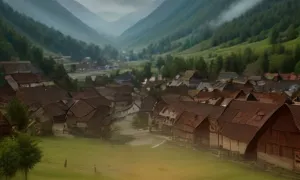
The visualisations are generated by artificial intelligence and serve as inspiration.
Atmosphere of the place
This atmospheric visualisation of the place and period was generated by artificial intelligence. It is not real footage of the location.
Tips from visitors
No tips yet. Be the first!
Log in and add your tip.
Sources and literature
Fotografie: M.for8 / CC BY-SA 4.0 — Wikimedia Commons. The author and licence also appear when you hover over the image.
Faktickým podkladem tohoto textu byl článek na Wikipedii, jehož autory jsou přispěvatelé Wikipedie. Článek je dostupný pod licencí CC BY-SA 4.0.
Location on the map

Příběhy a pověsti
Legendy, pověsti a příběhy spjaté s touto památkou
Fotografie návštěvníků
Zatím žádné fotografie. Buďte první, kdo přidá fotografii z návštěvy!
Přihlaste se a přidejte svou fotografii nebo hodnoťte.
Za ověřenou návštěvu v aplikaci získáte víc bodů — poznáme podle GPS, že jste na místě.
Reviews and comments