






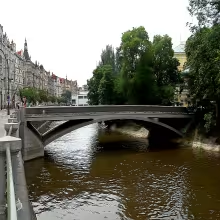
The Most na Slovanský ostrov, a steel arch bridge connecting Masarykovo nábřeží with the island of Žofín in Prague, is a notable monument in the city's history. Built between 1947 and 1948, it replaced a temporary wooden bridge damaged in the 1940 flood. The bridge's unique design and historical significance make it a worthwhile visit for those interested in Prague's post-war history.
The Most na Slovanský ostrov was built during a period of significant change and reconstruction in Czechoslovakia. The country was undergoing a major transformation after World War II, and the bridge's construction was part of this broader effort to rebuild and modernize the city. Ing. Dr. Jan Fischer and arch. Vlastislav Hofman played a crucial role in shaping the city's infrastructure during this time.
The bridge's architecture features a single steel arch with a span of 27.48 meters and a width of 12.60 meters. Its design reflects the modernist style prevalent in Czechoslovakia during the post-war period. The bridge's use of steel and concrete marked a significant shift towards more modern and efficient building techniques.
The Most na Slovanský ostrov has undergone several changes since its construction. The original wooden bridge was damaged in the 1940 flood and replaced by a temporary wooden bridge. The current steel arch bridge was built to replace this temporary structure and has since become a permanent fixture in the city's landscape.
Today, the Most na Slovanský ostrov remains an essential part of Prague's infrastructure. It continues to connect Masarykovo nábřeží with the island of Žofín, providing a vital link between the city's main thoroughfares. Visitors can still see the bridge in operation, and it remains a testament to the city's ability to adapt and evolve over time.
The Most na Slovanský ostrov is a significant monument in Prague's history, and its unique design and historical significance make it a worthwhile visit for those interested in the city's post-war history. Its construction marked a significant shift towards more modern and efficient building techniques, and it remains an important part of the city's infrastructure to this day. Visitors can still see the bridge in operation, and it continues to serve as a vital link between the city's main thoroughfares.
Historical milestones
- 1940
- The bridge was damaged in the 1940 flood.
- 1947
- The bridge was built between 1947 and 1948.
- 1875
- The original wooden bridge was replaced by a steel lattice bridge in 1875.
Architectural development
The bridge was built between 1947 and 1948 using steel and concrete. It has a single steel arch with a span of 27.48 meters. The original wooden bridge was replaced by a steel lattice bridge in 1875.
Historical events
- 1940
- The bridge was damaged in the 1940 flood.
- 1947
- The bridge was built between 1947 and 1948.
- 1875
- The original wooden bridge was replaced by a steel lattice bridge in 1875.
Points of interest
– The Most na Slovanský ostrov was constructed using a unique technique, where the steel arch was built on-site rather than prefabricated in a factory. This approach allowed for greater flexibility and precision during construction.
– During its construction, the Most na Slovanský ostrov was the first bridge in Czechoslovakia to use a steel arch design, which was a significant innovation at the time. This design choice enabled more efficient material use and a stronger structure.
Guide
Show guide text
Welcome in front of the bridge to Slovanský ostrov! You are standing before a unique historical monument that connects Masarykovo nábřeží with Žofín Island. Look up and observe the single steel arch of the bridge, which spans 27.48 meters. The width of the bridge is 12.60 meters.
Let's delve into history. This bridge was constructed between 1947 and 1948. Before this bridge stood here, there was a wooden bridge that was replaced by a steel truss bridge in 1875. However, it was damaged in a flood in 1940 and replaced with a temporary wooden bridge.
Notice that the bridge was built using only a single steel arch constructed directly on site, not in a factory. This was possible due to greater flexibility and precision during construction.
Now pay attention to the architects who were involved in its construction: Ing. Dr. Jan Fischer and architect Vlastislav Hofman.
The bridge to Slovanský ostrov has a unique history, and there are many interesting features here. Take a look at the façade of the bridge and experience the atmosphere of this place.
Tips for visitors
The best time to visit the bridge on Slovanský ostrov is during the spring and summer months when the weather is pleasant and the Vltava River is at its peak.
The bridge is easily accessible by public transportation, including buses and trams. You can also drive to the location and park in the nearby parking lots.
It's recommended to bring a camera and binoculars to capture the best views of the bridge and the Vltava River.
The best spots for photography are from the Masarykovo nábřeží side and from the Žofín island side, where you can capture the bridge's steel arch and the river's flow.
Nearby attractions include the National Museum, the Wallenstein Garden, and the Prague Zoo, all within a 30-minute walk or bike ride from the bridge.
Businesses nearby
Nearby
The bridge is located on Slovanský ostrov in Prague, which is a small island in the Vltava River.
Accommodation nearby
Trips and activities nearby
Guided tours, tickets and activities nearby from GetYourGuide
Search tours and activities →Themed route
Trasa: Slovanský ostrov a okolí
1. Slovanský ostrov - ostrov, historie a architektura Slovanský ostrov je malý ostrov v řece Vltavě, na kterém se nachází most, který je hlavním cílem naší trasy. Ostrov je známý svou historié a architekturou, včetně krásných parků a zahrad.
2. Most na Slovanský ostrov - most, architektura Hlavní cílem naší trasy je most na Slovanský ostrov, který spojuje ostrov s pevninou. Most je známý svou krásnou architekturou a je jedním z nejkrásnějších mostů v Praze.
3. Křižovatka Vltavy - vodní doprava, historie Křižovatka Vltavy je místo, kde se řeky Vltava a Černá Vltava spojují. Je to důležité místo pro vodní dopravu a nabízí krásný výhled na město.
4. Náplavka - vodní doprava, rekreace Náplavka je místo podél řeky Vltavy, kde se nachází mnoho lodí a člunů. Je to ideální místo pro rekreaci a nabízí krásný výhled na město.
5. Smetanovo nábřeží - architektura, historie Smetanovo nábřeží je místo podél řeky Vltavy, kde se nachází mnoho krásných budov a architektonických památek. Je to ideální místo pro procházku a objevování historie města.
Seasonal recommendations
Jaro
In the spring season, the bridge on Slovanský Island is surrounded by blooming trees and flowers, creating a pleasant atmosphere. A specific feature of this time is also the mild weather, which allows for strolls across the bridge without needing protection from rain or cold. Practical tips: during the main spring season, larger crowds of tourists are expected, so it's best to visit the bridge early in the morning or late afternoon. Remember to dress warmly, as it can still be chilly.
Léto
In the summer season, the bridge on Slovanský Island is full of life and energy. A specific feature here is the evening lighting that creates a pleasant atmosphere. Practical tips: due to large crowds of tourists, it's best to visit the bridge early in the morning or before the afternoon to avoid crowded streets. Don't forget to bring plenty of water and snacks, as you may have to wait for entry onto the bridge.
Podzim
In the autumn season, the bridge on Slovanský Island is surrounded by beautiful colors of falling leaves, creating a breathtaking atmosphere. A specific feature is the mostly mild and sunny weather. Practical tips: during the main autumn season, smaller crowds of tourists are expected, so you can visit the bridge at any time during the day. Remember to dress warmly, as it can still be chilly.
Zima
In the winter season, the bridge on Slovanský Island is protected from frost and snow, allowing for safe strolls across the bridge. A specific feature is the local lighting that creates a pleasant atmosphere. Practical tips: due to shorter opening hours, it's best to visit the bridge during the day to avoid closing times. Remember to dress warmly and protect yourself from the wind.
Visualizations and artistic views

Vizualizace jsou generovány umělou inteligencí a slouží jako inspirace.


Tips from visitors
No tips yet. Be the first!
Log in and add your tip.


Reviews and comments