



Mradice Castle
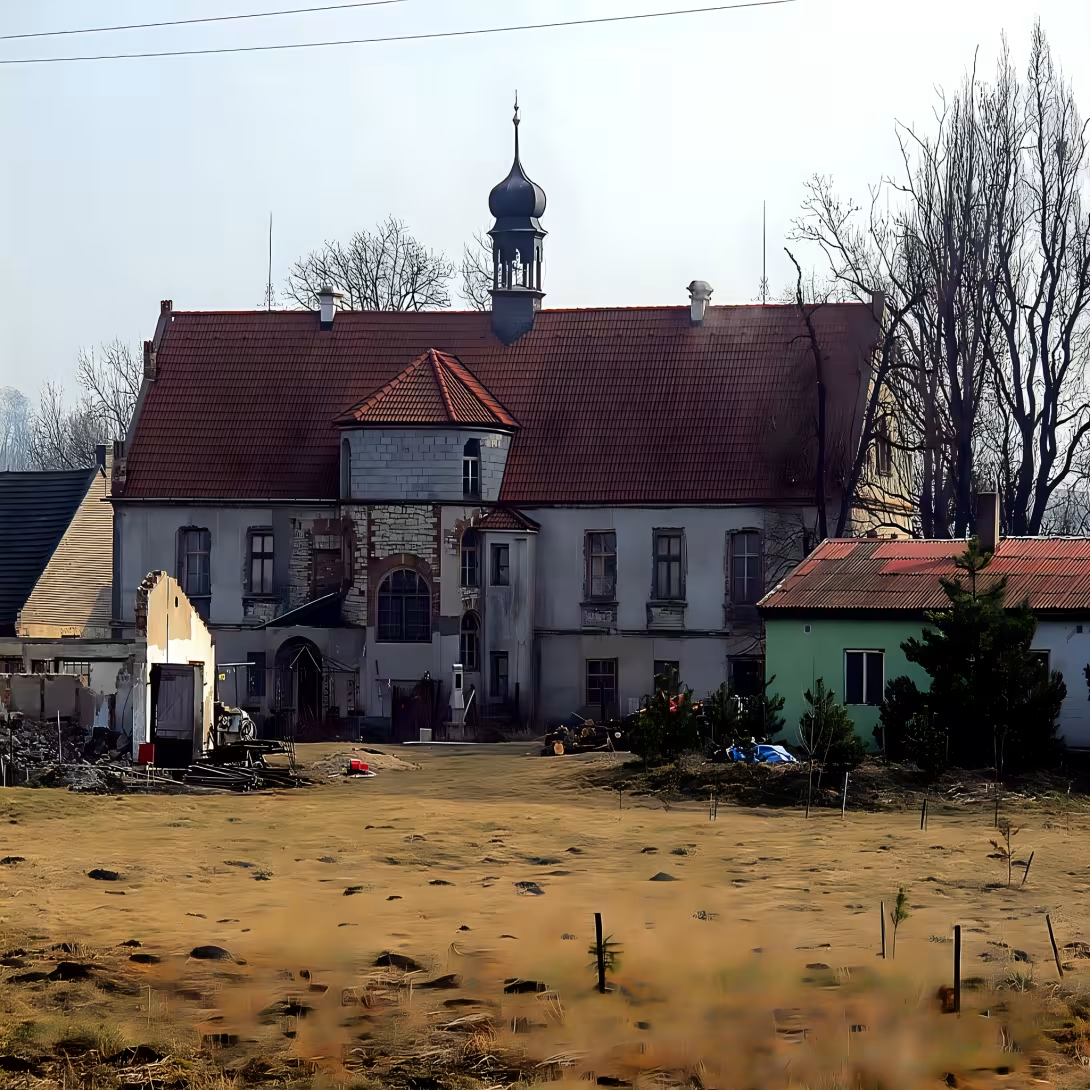
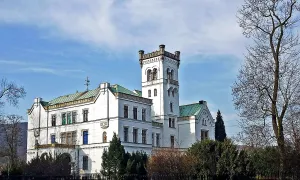
The castle is located on the west edge of Mradic, about three and a half kilometres southwest of Postoloprt in the Lounia district. Since 1964 it has been protected as a cultural monument of the Czech Republic. The main castle building and part of the park are preserved from the original premises; Economic objects - stables, barn and granary - were demolished during the 1980s.
First of all, the paradox of the castle is: it is not known when it was created. Older topography of the landscape from the first half of the nineteenth century, including maps of Ponfiklov (1828) and Sommer (1846), do not mention it at all. In fact, Sommer's country science speaks only of the "Economic Court." Similarly, the chateau was not written in the Extensive Vlastiscience of Žatecký county (1904- 1908), which devotes considerable space to Mradice. Even the academic inventory of Czech monuments from the 1970s does not know of any castle in Mradic.
Only since January 1964, when the entire premises of the Economic Court were placed under the protection of the State, the residential building received the designation "castle." It is assumed to come from the turn of the eighteenth and nineteenth centuries, although this duration is based only on the assumption. The commemorative catalogue allegedly dates the construction to 1802 and attaches a neo-gothic character to it, but even this date is not supported by any written document - and the existing facade has nothing to do with neo-gothic. The first reliable written mention dates back to 1833.
According to Paul Vlček, the building could have been built in the late eighteenth century, when Mradice was part of the estate Steknik and belonged to Count Jan Kullánek of Klaudenštejn. The key reconstruction took place after 1878 when the castle belonged to the Langs family. It was at that time that the building was assigned a neo-gothic facade, which so far significantly determines its appearance. During the first Czechoslovak Republic, the object underwent a number of other changes that radically transformed its character. Since the beginning of the twentieth century, a gradual reconstruction of the building has taken place.
The visitor here comes across a rarity story: a building that the old chroniclers basically didn't see until the state named it "the castle." The origin of his transformation remains in the silent unknown - the history of Mradic has learned to read this object as a cultural footprint. The visit offers not only a view of an architecturally interesting building with neo-gothic elements, but also an opportunity to think about how the landscape reads its own memory.
Then and now
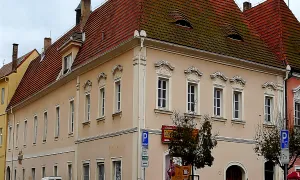
Drag the slider to compare how the landmark may have looked when it was built with the view today.
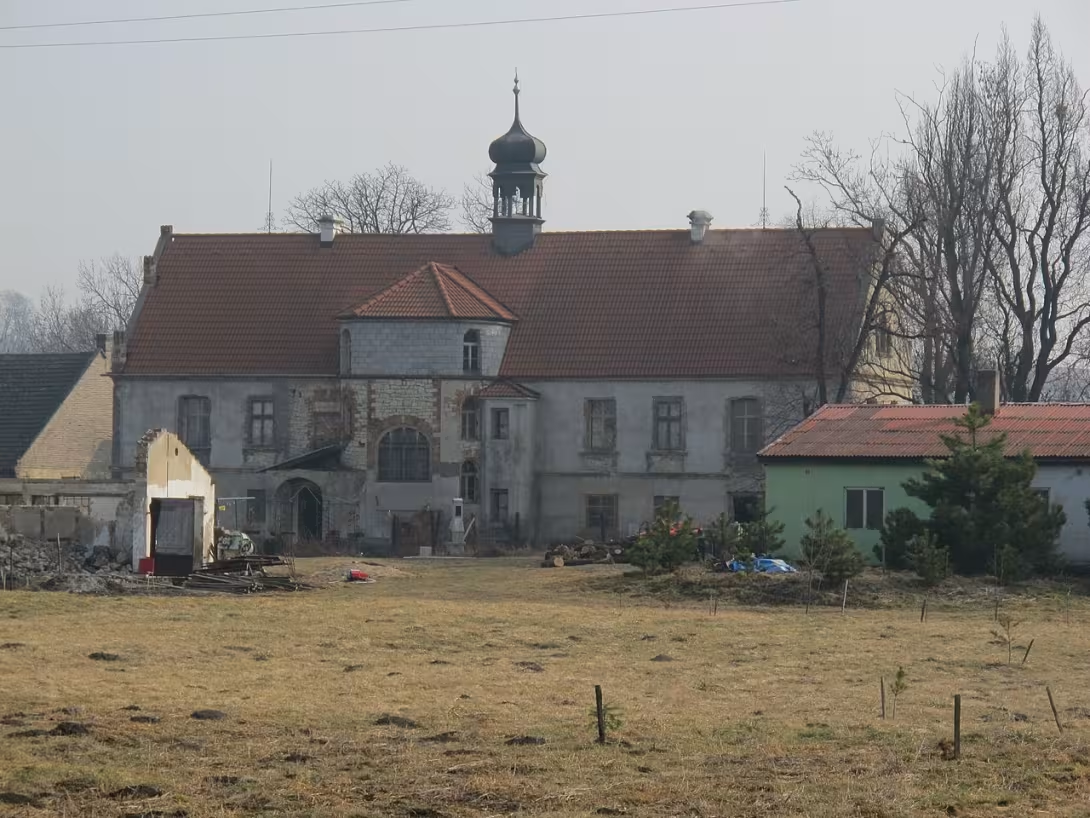
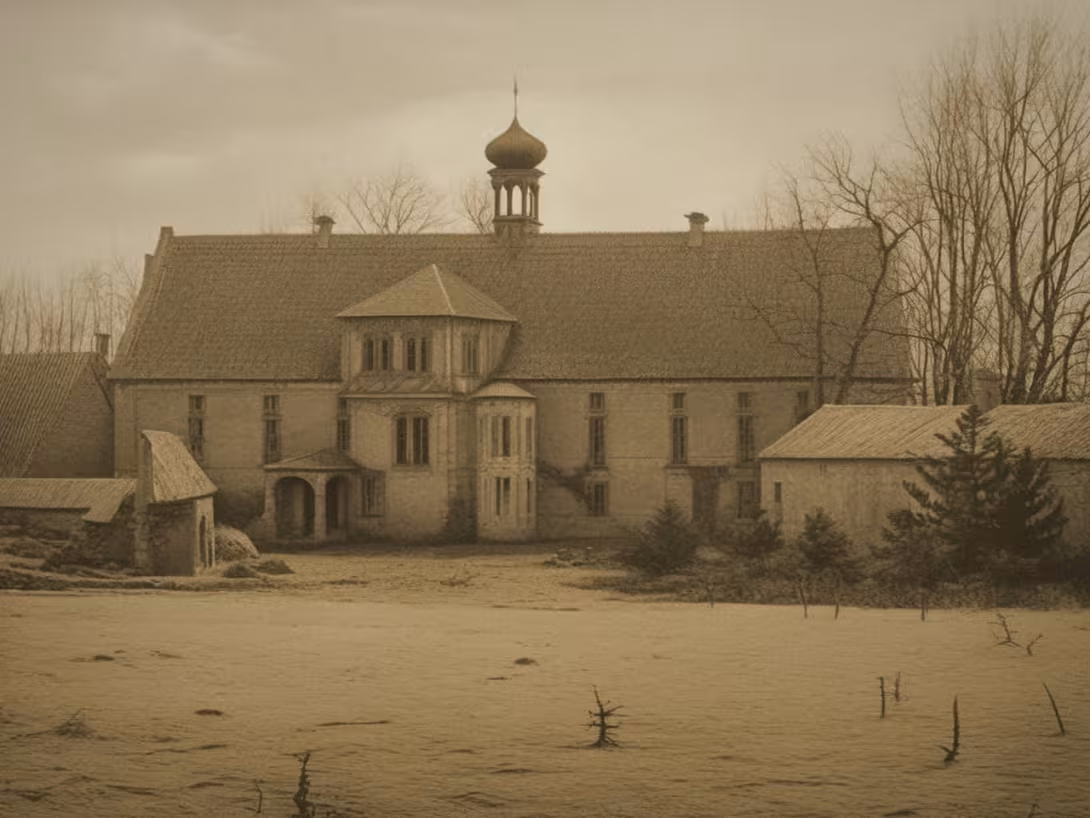
The historical appearance on the left is an AI-generated visualisation and serves as inspiration only.
Historical milestones
- 1964
- The castle was registered as a cultural monument of the Czech Republic.
Architectural development
The original building probably dates from the turn of the 18th and 19th centuries, with the possibility of being built in the late 1980s. In 1878 the facade was equipped with a neo-gothic style. The reconstruction took place during the first republic, which radically transformed the appearance of the building.
Historical events
- 1833
- First written mention of the castle.
- 1878
- The chateau became the property of the Lange family who provided him with a neo-gothic facade.
Owners
It is probably from the turn of the 18th and 19th centuries, when Mradice was part of the Stecnik estate and belonged to Count Jan Kullánek of Klaudenštejn. After 1878, the castle belonged to the Lange family.
Points of interest
- The castle has been protected as a cultural monument of the Czech Republic since 1964.
- The main castle building and part of the park have been preserved from the original premises; Economic objects were demolished during the 1980s.
The castle is paradoxical because it is not known when it was created. Older topography and historical sources do not mention it.
- The first reliable written mention of the castle dates back to 1833, although it is usually dated to 1802 without written proof.
According to Paul Vlček, the building could have been built in the late eighteenth century and a key reconstruction took place after 1878 when the building was assigned a neo-gothic facade.
Guide
This guide is narrated by a synthetic voice generated by artificial intelligence.
Show guide text
This text was created by artificial intelligence and has not been editorially reviewed. It may contain inaccuracies.
On the western edge of the village of Mradice, about three and a half kilometers southwest of Postoloprt in the Louny district, stands a small château with an unusual fate. For a long time, nobody considered it to be a château at all. It did not serve an administrative or residential function and was simply a residential building of an agricultural farm.
This is evident from old descriptions of the region. Ponfikel's topography from 1828 and Sommer's from 1846 do not mention the château in Mradice. Sommer mentions only the agricultural farm. The Local History of the Žatec District from 1904 to 1908 is also silent, despite devoting considerable space to Mradice. And the academic inventory of Czech monuments from the 1970s knew nothing of the château either.
The turning point came in January 1964. At that time, the entire agricultural farm complex was declared a cultural monument, and the residential building within it was designated as a château. The monument catalogue states that it dates from 1802 and has a neo-Gothic character. Neither claim holds up. The date is not supported by any written evidence, and today's façade has nothing to do with neo-Gothic style.
The time of construction therefore remains unclear. It is most likely from the turn of the eighteenth and nineteenth centuries. The first written mention of the château is not until 1833. Art historian Pavel Vlček, however, suggests that the building could have been erected as early as the late 1880s of the eighteenth century. Mradice at that time belonged to the Stekník estate and was owned by Count Jan Kulhánek of Klaudenštejn.
The château did indeed have a neo-Gothic façade, but only later. It acquired this after 1878, when it belonged to the Lang family. Reconstructions during the First Republic then fundamentally changed its appearance, which is why no trace of the neo-Gothic style remains today.
From the entire complex, only the main château building and part of the park have survived. The agricultural buildings, namely the stables, barn, and granary, were demolished in the 1980s.
Tips for visitors
The best time to visit the castle in Mradic is the autumn period, when the forest surroundings and the castle are covered with living colours of leaves. This time of year offers a peaceful atmosphere and pleasant temperatures for walking.
When you visit, wear a suitable suit because the weather can be variable. In addition, it is good to bring sunglasses and protective ties or hats for sun protection.
For shooting the castle in Mradic are ideal morning hours when light is softer and shadow effects add depth to the pictures. The best places for photos can be found on the west side of the castle, where the views open to the surrounding area.
In the vicinity of the castle you can visit the small village Mradice and its historical building. For families with children it is advisable to explore the natural environment around where children can play in the open spaces.
Frequently asked questions
Can the monument be visited?
Some buildings of this kind are open for guided tours, others serve another purpose or are privately owned. We have not verified whether and when this monument is open – please ask the operator.
What are the opening hours and admission?
We have not verified the opening hours or admission. Current information is published by the operator.
Where is the monument?
Location: Mradice č.p. 14, Postoloprty, Ústecký kraj. The map on this page shows the exact spot.
Why is the monument protected?
It is listed in the Central List of Cultural Monuments of the Czech Republic as a cultural monument (register no. 43078/5-1276).
For kids
Imagine going back to the past and finding yourself in a little village called Mradice. The village lies near the town of Postoloprty, but today there is something special. There is a castle that has many secrets and mysticism.
How did it look here? There were people here who lived for a living in agriculture and animal husbandry. They were poor people who had little money, but much love. The village was full of life, music and dancing. And then there was a lock that stood like a secret hiding.
Businesses nearby
Do you run a restaurant, accommodation, shop, museum, rental, wellness or other visitor service near this monument? Show yourself directly to the people heading to it — this is how they will see you in the app and on the web:
Events nearby

Zdroj akcí: otevřená data měst a obcí ČR (Národní katalog otevřených dat) a kalendář akcí Národního památkového ústavu.
Nearby
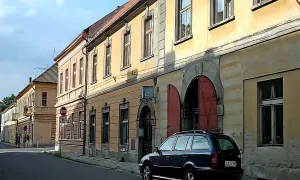
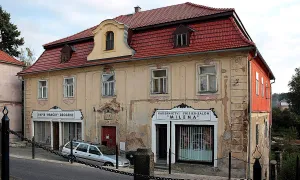
Ambient landscape, village Mradice
Accommodation nearby
Themed route
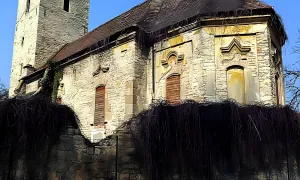
Route: Mradice - extinct farmhouse and church in Hřivčany - Hřivčany
1. City of Hřivčany - local part of the village Mradice, type: historical village, worth visiting for preserved architecture and atmosphere of the original village. 2. Church of St. Nicholas - church in Hřevčany, type: sacral building, worth visiting for its historical value and architectural attractions. 3. Castle Mradice - the main destination, type: castle, is worth visiting for its history and architectural value.
Seasonal recommendations
Spring: In the spring season, frost is surrounded by flowers and trees that wake from winter sleep. A tour of the castle is recommended early in the morning to avoid crowds of tourists. We recommend to combine the siege of the castle with a walk of surrounding nature.
Summer: In the main summer season, frost is a very popular tourist destination. We recommend arriving before 9:00 to avoid crowds of tourists.
Autumn: In autumn the frost is surrounded by beautiful nature, which is colored red and yellow. We recommend to combine the tour of the castle with a walk of surrounding nature and admire the beauty of nature.
Winter: In winter, frost is closed due to bad weather. We recommend planning a tour of the castle for better weather and surrounding the castle in combination with skiing or downhill skiing in the nearby ski area.
Visualizations and artistic views


The visualisations are generated by artificial intelligence and serve as inspiration.
Photos from the area
Real photos taken near the monument


Zdroj a licence jsou uvedeny u každého snímku.
Atmosphere of the place
This atmospheric visualisation of the place and period was generated by artificial intelligence. It is not real footage of the location.
Tips from visitors
No tips yet. Be the first!
Log in and add your tip.
Sources and literature
Photos: Gortyna / CC BY-SA 3.0, rozlišení zvýšeno umělou inteligencí — Wikimedia Commons. The author and licence also appear when you hover over the image.
Faktickým podkladem tohoto textu byl článek na Wikipedii, jehož autory jsou přispěvatelé Wikipedie. Článek je dostupný pod licencí CC BY-SA 4.0.
Location on the map

Příběhy a pověsti
Legendy, pověsti a příběhy spjaté s touto památkou
Fotografie návštěvníků
Zatím žádné fotografie. Buďte první, kdo přidá fotografii z návštěvy!
Log in a přidejte svou fotografii nebo hodnoťte.
Za ověřenou návštěvu v aplikaci získáte víc bodů — poznáme podle GPS, že jste na místě.
Reviews and comments