






Myšák Gallery Building
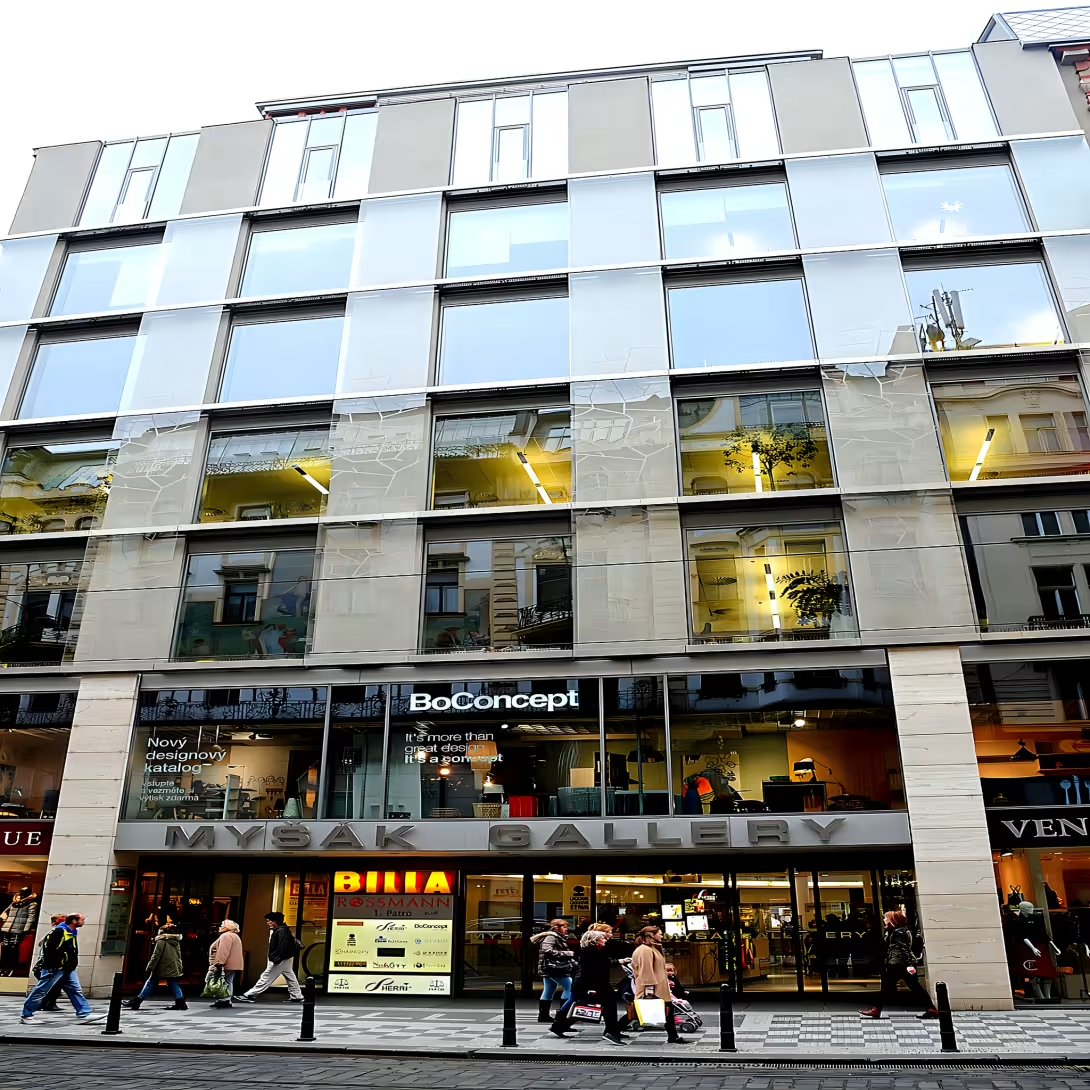
Myšák Gallery is a modern business center in Prague's Vodickov Street, opened in 2007. The building combines a historic Neo-Renaissance house from 1883 with a new building. The complex connects Vodičková Street with the Franciscan Garden and was famous mainly thanks to the traditional confectioner František Mysák.
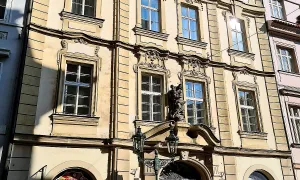
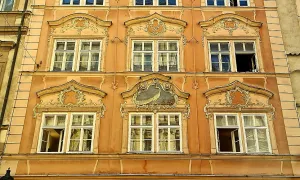
The history of the site began in 1883 by building the original Neo-Renaissance house according to the design of architect Otto Ehlen. In 1922, the building underwent a rondocubist reconstruction, by the builder Josef Čapek. This facade is valued for its expression, which was probably consulted with the important architect Josef Gočár. In 1996, neighbouring houses No.712 and 713 were demolished. A new building was completed in 2007, which was designed by the architectural studios Casua and Omicron K.
The development of ownership relationships was dynamic. In 1995, Gallery MYŠÁK became the owner of the project. On 14 October 2004, CEE Property Development Portfolio was the sole owner of the company, which paid EUR 10.8 million for the shares. Since 2016, Koh-i-noor has held a 70% stake in the house, which plans to set up its representative shop in the premises.
The key element of the building remains the confectionery factory František Mysák, which has historically been linked to this place for many decades. In 2019 the offer of the centre expanded with the Museum of Fantastic Illusions, founded by the magician Pavel Kožíšek. The exhibition offers visitors more than 150 interactive exhibits focused on optical deceptions and large format tricks.
Today the object serves as a commercial and administrative space. Due to its location near Wenceslas Square and the Church of Our Lady of Snow, it represents an important point in the centre of Prague. The connection of historical rondocubistic architecture with modern new building and cultural use makes Myšák Gallery an interesting destination for visitors who want to know the changes of Prague building. Visiting this place offers a unique opportunity to combine a tour of architecture with a rest in a traditional confectioner or interactive entertainment in a museum.
Historical milestones
- 1883
- Construction of the original Neo-Renaissance house.
- 1922
- Rondocubist reconstruction of the house according to Josef Čapek.
- 2007
- Opening a new business center.
- 2019
- The opening of the Museum of Fantastic Illusions.
Architectural development
The original Neo-Renaissance house from 1883 was rebuilt in 1922 in a rondocubistic style according to the design of Josef Čapek. A demolition of neighbouring buildings took place in 1996, where a new building grew in 2007. The facade of the historical part is valued for its rondocubist expression inspired by the creation of Josef Gočár.
Historical events
Demolition of original houses No 712 and 713 in 1996. Opening of the shopping centre in 2007. Opening of the Museum of Fantastic Illusions in 2019.
Owners
Gallery MYŠÁK (since 1995), CEE Property Development Portfolio (since 2004), Koh- i-noor (70% share since 2016).
Points of interest
- The building combines a historic Neo-Renaissance house from 1883 with a new building. - In 1922, the building underwent a rondocubist reconstruction, the author of which was the builder Josef Čapek. - The complex connects Vodickov Street to the Franciscan Garden. - In 2019 the offer of the centre was extended by the Museum of Fantastic Illusions, founded by the magician Pavel Kožíšek. - The museum exhibition offers more than 150 interactive exhibits focused on optical deceptions and large format tricks.
Guide
Show guide text
This text was created by artificial intelligence and has not been editorially reviewed. It may contain inaccuracies.
Welcome to the very heart of Prague, one of its most lively streets, in Vodičkov. Stop for a moment, take a deep breath and look in front of you. You're standing in front of a building that can act as a modern business space at first sight, but it's actually a fascinating layered story from several different centuries. It is a place where the old craft tradition meets the brave avant-garde and where the history of the city intersects with modern architecture. Feel the atmosphere of this place where urban tourism meets with the promise of sweet rest and artistic experience.
Now let's go back in time together to understand how this complex evolved. It all started in 1883. Imagine the Prague of the late nineteenth century, the era of flowering and building. It was this year that the original house was built here in a Neo-Renaissance style, the architect of which was Otto Ehlen. At the time, the Neo-Renaissance was a symbol of stability and elegance, followed by the nobility of the Renaissance and brought order and aesthetics to the streets of Prague, which should have radiated prosperity. This house served as a foundation on which other layers of history were later built.
But only after a century, in 1922, the building went through a fundamental transformation that gave it its unique character. At that time, in the Czech environment, a fascinating architectural direction, called Rondocubism, arose. It was an attempt to create a national style that combined the square of cubism with finer, round shapes. It was this reconstruction led by a talented builder and artist Josef Čapek. If you look at the facade now, feel this contrast. Rondocubism brought dynamism and playfulness into the building, which was very modern and courageous for the time being. It's an architecture that doesn't just look into the past, but can look into the future.
But time did not stand and the building had to adapt to the new needs of the modern city. There was another big change in 2007 when a new business complex was opened, which we now know as the Mouse Gallery. This modern section was designed by study Casua and Omicron K. The architects have faced a challenging task here to link the historical heritage of neo-Renaissance and rondocubism to the demands of the 1920s. The result is a combination that allows visitors to pass smoothly from historical context to modern comfort. Notice how these different epochs complement each other and form one whole.
Now that we know the framework of the building, pay attention to the people who breathed life into this place. When it's called Mouse, most Pražanis immediately recall the smell of fresh candy and traditional period cakes. The key character here is František Myšák, founder of the famous confectionery shop, which has been operating in this place for decades. The mouse's candy store is not just a business, it's part of the Prague identity. Imagine those generations of people coming here for their favorite candy, meeting friends and families, creating an invisible map of memories associated with this address. The history of this place is also associated with Pavel Kožíšek, which helped shape the current form and development of this space.
Now, if you look around, you might think of all the things that this complex has in it besides shopping and candy. Here comes one of the most interesting properties of this place. The building does not only function as a closed commercial space, but as an important urban link. If you enter and pass through the complex, you will find that the building connects the busy Vodickov Street to the quiet Franciscan Garden. It's a secret passageway that takes you from the noisy city center to the oasis of silence and green within seconds. It is a fascinating contrast, which reminds us how unexpectedly different worlds can intersect in Prague.
Another element that enriched the centre's offer in 2019 is the Museum of Fantastic Illusions. It is a place where reality bends and visitors can win with perception of space and optical deception. This element perfectly complements the spirit of Josef Čapek and his playful approach to architecture. While the house from 1883 represented order, and the rondocubism from 1922 experimented with the form, the museum of illusions in 2019 brought to the complex an element of pure fantasy.
So you're standing in front of a building that is basically a living museum of architecture and social life. From Neo-Renaissance tranquility to rondocubist energy to modern functionality and playfulness of illusions. It's a place where history isn't stored in the archives, but it still lives and serves people.
Now I invite you to explore this place on your own. I suggest you enter and perceive the strange transition between old and new. You may be tempted by the smell of traditional confectionery from František Moušák, or by the desire to deceive your senses in the Museum of Fantastic Illusions. And if you feel the need for peace, don't forget to use the connection and let it take you all the way to the Franciscan Garden, where you can quietly think about how many stories have happened in these walls over the last hundred and forty years.
Thank you for coming through the history and architecture of the Mouse Gallery. Enjoy your next Prague survey and be surprised by the other hidden treasures this city offers. Goodbye.
Tips for visitors
To visit Myšák Gallery we recommend the morning hours during the working week when you avoid the biggest load of buyers and enjoy a quieter atmosphere of historical space. The place is perfectly accessible by public transport in the centre of Prague, parking in the area is limited, therefore we recommend to use a parking lot or public transport. Take only the basic things with you, the space is designed as a business center where movement is comfortable. It is ideal for photography to use natural light in a passage that beautifully highlights the combination of neo-Renaissance elements and modern architecture. In the immediate vicinity within 30 minutes walk you can visit the Franciscan Garden, Wenceslas Square or the Church of Our Lady of Snow, which are ideal goals for families with children looking for rest in green or historical inspiration.
Businesses nearby
Do you run a restaurant, accommodation, shop, museum, rental, wellness or other visitor service near this monument? Show yourself directly to the people heading to it — this is how they will see you in the app and on the web:
Events nearby

Zdroj akcí: otevřená data měst a obcí ČR (Národní katalog otevřených dat) a kalendář akcí Národního památkového ústavu.
Nearby
Franciscan Garden, Wenceslas Square, Church of the Virgin Mary Snow.
Accommodation nearby
Trips and activities nearby
Guided tours, tickets and activities nearby from GetYourGuide
Affiliate link: if you buy from the partner, we may receive a commission. The price for you does not change.
Search tours and activities →Themed route
1. Wenceslas Square (Square): The central point of the city where history meets modern life. 2. Church of the Virgin Mary of the Snow (Church): An impressive temple with unique architecture and spiritual atmosphere. 3. Myšák Gallery (gallery): The main destination of the trip, which offers an inspiring artistic exhibition. 4. Franciscan Garden (Garden): An oasis of peace and green, ideal for relaxation after an art tour.
Seasonal recommendations
Spring brings soft, brightening light to the gallery, which thanks to the awakening nature of the surroundings provides the interior fresh and optimistic atmosphere. In this period there is pleasant weather in Prague 1, therefore it is recommended to choose light laminated clothes that can be easily modified. The best time to visit is in the morning, when crowds of tourists are still in small numbers and the space is very quiet.
In the summer months there is a strong and dynamic atmosphere in the gallery, influenced by intense sunlight and rust in the city centre. Due to the high summer season, there are a significant number of people in the area, which is why it is best to arrive right after opening to ensure a more peaceful experience. Dress very lightly and comfortably, and if you plan to walk around, don't forget enough fluids.
Autumn offers golden lighting and a calmer, nostalgic mood that perfectly matches the artistic environment. Color transformation of surrounding gardens and streets creates beautiful sets for your tours. We recommend a visit in the afternoon when light creates the most attractive shadows. Prepare a warmer garment for your journey, such as a coat or scarf, so that the colder air does not delay you.
Zimą the atmosphere turns to cosy and focused, allowing deeper perception of exposed works in contrast to the cold outside. The light is weaker and gray in this period, which is why the interior is an ideal haven. In advent time and during freezing days we recommend wearing very warm clothes and planning a visit around noon. Count on fewer people in the winter months than in the summer.
Visualizations and artistic views

The visualisations are generated by artificial intelligence and serve as inspiration.
Photos from the area
Real photos taken near the monument

Zdroj a licence jsou uvedeny u každého snímku.
Tips from visitors
No tips yet. Be the first!
Log in and add your tip.
Sources and literature
Fotografie: David Sedlecký / CC BY-SA 4.0, rozlišení zvýšeno umělou inteligencí — Wikimedia Commons. The author and licence also appear when you hover over the image.
Faktickým podkladem tohoto textu byl článek na Wikipedii, jehož autory jsou přispěvatelé Wikipedie. Článek je dostupný pod licencí CC BY-SA 4.0.
Location on the map
More monuments – Praha 1
Show all in the municipality

Příběhy a pověsti
Legendy, pověsti a příběhy spjaté s touto památkou
Fotografie návštěvníků
Zatím žádné fotografie. Buďte první, kdo přidá fotografii z návštěvy!
Přihlaste se a přidejte svou fotografii nebo hodnoťte.
Za ověřenou návštěvu v aplikaci získáte víc bodů — poznáme podle GPS, že jste na místě.
Reviews and comments