






Na Václavce Street
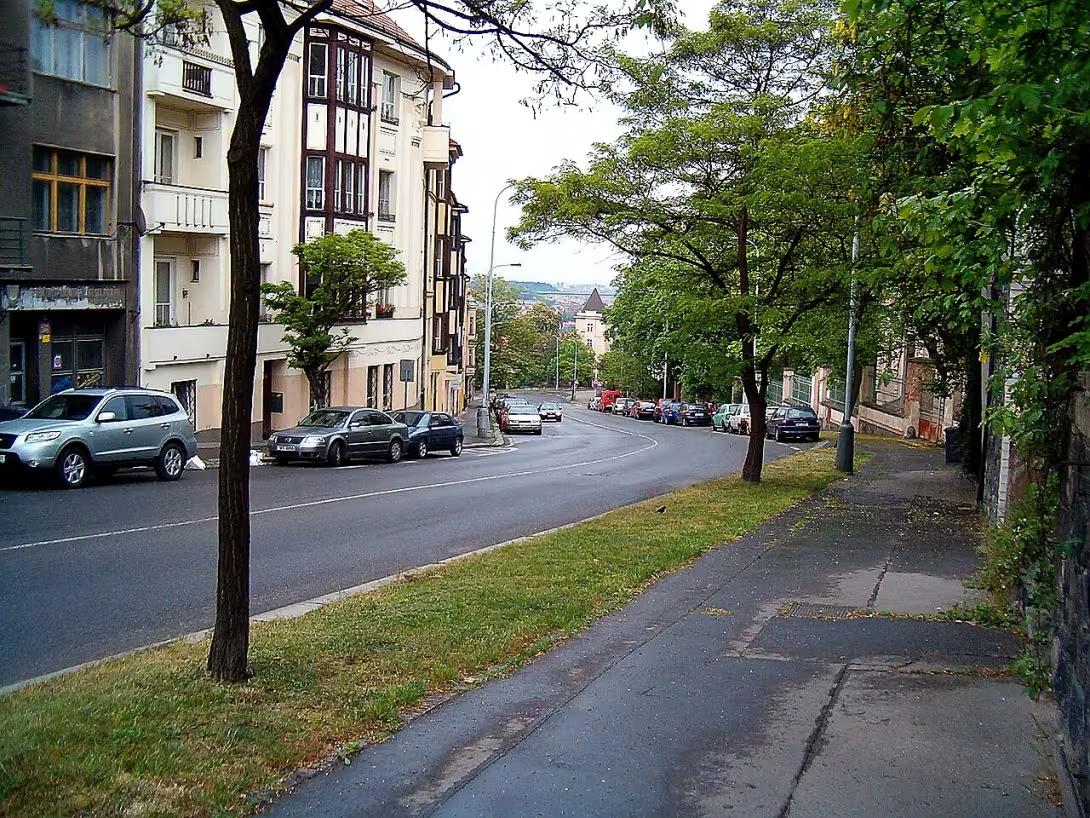
Na Václavce is a street in Prague 5, Smíchov, named after the villa Václavka, no.1079 / 32. It connects with Santoška street at Santoška gate and intersects with Malvazinka street at Malvazinka bus stop. The street rises sharply up the hill and ends in the Vesny area, a small settlement with six grouping streets, near the Malvazinka stop. The street is served by bus lines from the terminal Na Books to Jinonice, including daily link137 and night501.
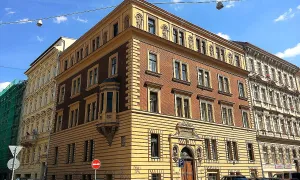
This street is remarkable for its collection of remarkable buildings, including the Husova Choir, a large white concrete church from 1933, and the Secessionist Villa Villa Helenka and Villa Václavka. Street architecture reflects the rapid growth and urbanization of Prague in the early 20th century with the construction of new streets and buildings.
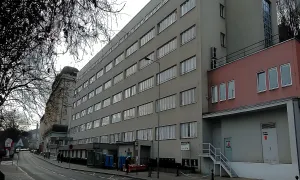
Husova Choir, the church of the Czechoslovak Hussite Church, founded Dr. Karel Farský on January 8, 1920 on Smíchov. The church is a remarkable example of modernist architecture designed by architects E. Sobotka and S. Vachata. The church has a large white concrete structure and colomarium. The memorial plate at the entrance resembles the founding of the church.
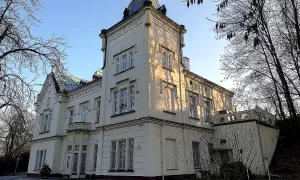
The secessionist villas Villa Helenka and Villa Václavka are also remarkable monuments on the street. Villa Helenka, designed by architect Alois Kordou, was completed in 1903 and has a distinctive Secessionist style. The villa was declared a protected monument on 3 May 1958. Villa Václavka, also designed by Kordou, is a Secessionist villa with a restaurant and is a popular place for Prague Baroni.
The street is surrounded by Smíchov Hills and the cemetery Smíchov, providing a unique and scenic background on the street architecture. Today the street remains a charming and historic part of Prague's urban landscape, which is worth visiting for its unique architecture and cultural importance.
Visitors of Na Václavce can explore major street buildings, including the Husova Corps and Secessionist villas. From the picturesque location and historical importance of the street is a valuable place for anyone interested in Prague architecture and history.
Historical milestones
- 1920
- Czechoslovak Hussite Church was founded on 8th January 1920 on Smíchov by Dr. Karel Farský.
- 1903
- The secessionist villa Villa Helenka was completed by architect Alois Korda.
- 1958
- Villa Helena was declared a protected monument on 3 May 1958.
Points of interest
- The street Na Václavce is named after the villa Václavka, which was built in 1903 and is now a protected monument.
- Church of Hus Choir, a remarkable example of modernist architecture, founded by Dr. Karel Farský on January 8, 1920 and has a large white concrete structure and colomarium.
- Street architecture reflects the rapid growth and urbanization of Prague in the early 20th century by building new streets and buildings such as the Secessionist villas Villa Helenka and Villa Václavka.
- Smíchov Hills and the cemetery Smíchov surround the street, providing a unique and picturesque background on the street architecture.
- Prague Baroni, a group of Prague intellectuals, has a restaurant in Villa Václavka, a Secesionist villa with a distinctive architecture.
Guide
This guide is narrated by a synthetic voice generated by artificial intelligence.
Show guide text
This text was created by artificial intelligence and has not been editorially reviewed. It may contain inaccuracies.
Welcome! You are standing in front of the historical landmark Na Václavce. Look up and notice how the street narrows and climbs the hill. On the one hand, you see the modernist building of the Hus Corps, which was founded in 1920. It is impressive that such a beautiful building was built so far from the centre of Prague.
Let's move on to the historical context. Na Václavce is located in Prague 5, in the Smíchov district. The street is named after the villa Václavka, which was built in 1903. The villa Helenka, which is part of this villa, is now a protected monument. It was completed in 1903 and declared a protected monument in 1958.
Notice the architectural details of this villa. It's a beautiful example of secession, which was very fashionable at the time. Look at the facade and notice how architecture adapts to the shape of the street. It's pretty impressive.
There are many interesting stories and personalities associated with this place. In 1920 the Husova choir was founded here, which became an important cultural institution in Prague. Dr. Karel Farsky, founder of the Hus Choir, was a great supporter of modern architecture and art. His work still inspires visitors to Prague.
There are also many interesting points worth mentioning. For example, Art Nouveau villas were very popular in Prague in the 19th century, but later became less popular. At Na Václavce, however, it is still clear that the separation was very significant.
An invitation to further explore this historical monument. There are many other things worth seeing and experiencing. Look inside Hus's choir and admire his beautiful interiors. And don't forget to stop by Villa Vaclav to see her beautiful facade.
Frequently asked questions
Can the monument be visited?
This is a structure in a public space that can usually be seen from outside free of charge. We have not verified that this particular one is freely accessible.
Where is the monument?
Location: Smíchov, Hlavní město Praha. The map on this page shows the exact spot.
Businesses nearby
Do you run a restaurant, accommodation, shop, museum, rental, wellness or other visitor service near this monument? Show yourself directly to the people heading to it — this is how they will see you in the app and on the web:
Events nearby

Zdroj akcí: otevřená data měst a obcí ČR (Národní katalog otevřených dat) a kalendář akcí Národního památkového ústavu.
Nearby
The street is surrounded by Smíchov Hills and the cemetery Smíchov.
Accommodation nearby
Trips and activities nearby
Guided tours, tickets and activities nearby from GetYourGuide
Affiliate link: if you buy from the partner, we may receive a commission. The price for you does not change.
Search tours and activities →Themed route
Route: Smíchov cruise route
1. Na Václavce: The main part of the route, the historic building from the 18th century, which was exhibited on the basis of average consumption. There is an exhibition about the history of Smíchova and exhibitions of some products.
2. Mixed Order: I will surround myself in Wenceslas, won the city. The place is well known for its own hilly terrain and is popular between tourists and cyclists.
3. Smichovský hrytov: Located not far from Na Václavce and offers quiet prods and an opportunity to postpone. It is possible to obtain more information on the wall that could lead to capitalisation and improvement.
Tour Route: Smíchov Excursion Path
1. Na Václavce: The main destination of the trail, a historic 18th century building built on the site of the original fortress. Here you can find exhibitions about the history of Smíchova and exhibitions of local artists.
2. Smichov Square: Surrounding the building Na Václavce, which offers a view of the city. The area is famous for its hilly terrain and is popular between tourists and cyclists.
3. Smíchov øbitov: Located close to Na Václavce, offers peaceful walks and opportunities to relax. Many important characters are buried here, including writers and artists.
Seasonal recommendations
Spring
In spring Na Václavce is beautifully green and full of life. The atmosphere is relaxed and overflowing with optimism. The light is soft and warm, creating a pleasant feeling. We recommend visiting Na Václavce in spring to enjoy fresh air and beautiful nature. Practical tips: the best time to visit Na Václavce is in the morning or late afternoon when there are fewer crowds, allowing you to walk more comfortably.
Summer
In the summer season Na Václavce is full of life and energy. The atmosphere is relaxed and full of fun. Light is light and warm, creating a pleasant feeling. We recommend visiting Na Václavce in summer to enjoy warm weather and beautiful nature. Practical tips: the best time to visit Na Václavce is early in the morning to avoid the crowd and have a quieter walk.
Autumn
In autumn season Na Václavce is beautifully colored and full of life. The atmosphere is relaxed and full of melancholy. The light is soft and warm, creating a pleasant feeling. We recommend visiting Na Václavce in autumn to enjoy beautiful nature and quiet atmosphere. Practical tips: the best time to visit Na Václavce is in the morning or late afternoon when there are fewer crowds, allowing you to walk more comfortably.
Winter
In winter season Na Václavce is quiet and quiet. The atmosphere is relaxed and full of snow. Light is light and warm, creating a pleasant feeling. We recommend visiting Na Václavce in winter to enjoy a quiet atmosphere and beautiful snowy landscapes. Practical tips: the best time to visit Na Václavce is in the morning or late afternoon when there are fewer crowds, allowing you to walk more comfortably. Don't forget to wear warm clothes because it's cold.
Visualizations and artistic views


The visualisations are generated by artificial intelligence and serve as inspiration.
Photos from the area
Real photos taken near the monument


Zdroj a licence jsou uvedeny u každého snímku.
Tips from visitors
No tips yet. Be the first!
Log in and add your tip.
Sources and literature
Photos: Jan Záruba / CC BY-SA 3.0 — Wikimedia Commons. The author and licence also appear when you hover over the image.
Faktickým podkladem tohoto textu byl článek na Wikipedii, jehož autory jsou přispěvatelé Wikipedie. Článek je dostupný pod licencí CC BY-SA 4.0.
Location on the map
Příběhy a pověsti
Legendy, pověsti a příběhy spjaté s touto památkou
Fotografie návštěvníků
Zatím žádné fotografie. Buďte první, kdo přidá fotografii z návštěvy!
Log in a přidejte svou fotografii nebo hodnoťte.
Za ověřenou návštěvu v aplikaci získáte víc bodů — poznáme podle GPS, že jste na místě.
Reviews and comments