






Náměstí Republiky 21 House
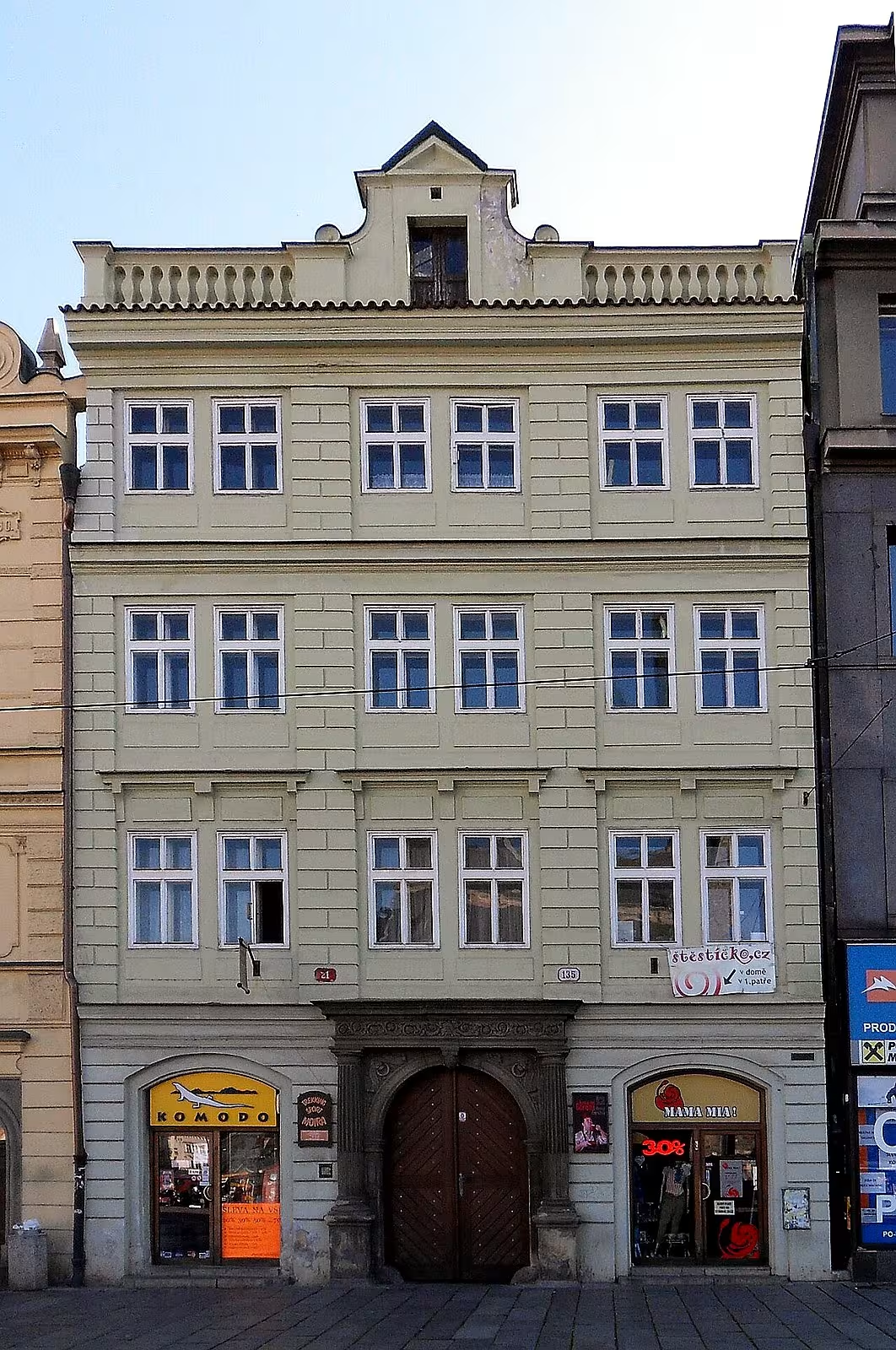
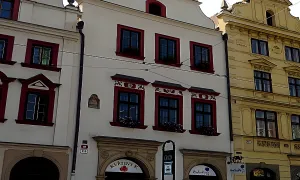
The house at Náměstí Republiky 21 in Pilsen is an urban townhouse with a rich history, which is reflected in a mixture of Renaissance and luisése architectural elements. It is located in the southern part of the square and is remarkable by its historical value, which dates back to the 16th century. His Renaissance modifications were carried out under the leadership of Italian construction master Jan Merlian, which brought important elements that still characterise his appearance. From 1551 to 1594 he acquired a distinctive Renaissance face, typical of the Czech cities of that time.
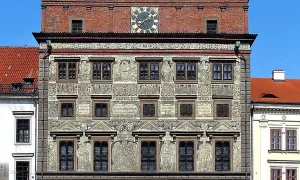
Around 1800, a new form was added thanks to the Pilsen architect Simon Michal Schell, who increased it by another floor and modified it in a lush style. This modification changed its function to an apartment building. Architecturally, the domus is remarkable by its combination of renaissance and luisézého elements, especially the six-axis facade with a distinctive editorial portal decorated with stone-like heads. The ground floor is divided by the shackling and floors of barefoot Lizzy Belts, which adds the impression of grandeur.
The house had several owners during its history. The oldest known ones are the printer of books Jan Fencl and Zigmund Plzák z Divokého Dolu, whose periods of ownership reflect the dynamics of urban companies. Key events in the history of the house include its Renaissance reconstruction, conversion to a tenement house and addition of a new court wing in 1866. These changes reflect architectural trends as well as social and economic transformations.
Since 1958 the house has been protected as a cultural monument, which underlines its importance to the city of Pilsen. Visiting this house offers a view of the past and allows itself to appreciate the historical value that Pilsen keeps. The house on Náměstí Republiky 21 is therefore not only a monument, but also an inspiration for a deeper understanding of local cultural heritage and architectural development.
Historical milestones
- 1520
- Owning of Jan Fencl's books
- 1551
- The beginning of the fundamental Renaissance adaptation by Jan Merlian
- 1800
- The beginning of the rebuilding into a tenement house in the Luisého style
- 1958
- Protection as a cultural monument
Architectural development
Originally a Renaissance building that underwent a major adjustment in 1551-1594. Around 1800, the building was raised to four floors and adapted to the luisése style. In 1866 the house was extended by a new wing.
Historical events
1551-1594: Essential Renaissance treatment of the house; 1800- 1810: Rebuilding to a four-storey tenement house in a luisého style; 1866: Construction of new wing; 1958: Announcement of a cultural monument.
Owners
Jan Fencl (1520-1544), Zigmund Plzák z Divokého Dolu (1551-1594)
Points of interest
- The house has a rich history with renaissance and luisse architectural elements.
- His Renaissance modifications were carried out under the leadership of Italian construction master Jan Merlian between 1551 and 1594.
- In the years around 1800, a new form was added thanks to Pilsen architect Simon Michal Schell, who increased it by another floor and modified it in a lush style.
The house has been protected as a cultural monument since 1958.
Guide
Show guide text
This text was created by artificial intelligence and has not been editorially reviewed. It may contain inaccuracies.
Welcome to Náměstí Republiky 21, one of many historical monuments that make up the beautiful architectural tapestry of Pilsen. You are standing in front of a townhouse whose facade will immediately address you with the wealth of detail and history that lies there. This city house is part of the southern front of buildings on Republic Square, where every stone has its own story.
Let's dive into his history. In 1520, this house belonged to the printer of Jan Fencl's books, which was a fateful moment for the future of this place. Between 1551 and 1594, there was a fundamental renaissance under the leadership of Italian construction master Jan Merlian, who brought important changes to architecture. His artistic hand is visible even today when you look at a distinctive Renaissance editorial portal with lion heads, which are his real work. During the 19th century, namely around 1800, a new form was added thanks to the Pilsen architect Simon Michal Schell, who added elements of the luisézého style.
Look up at the portal and notice the finesse of the details. These Renaissance elements are combined with later modifications, giving the building a unique character. The internal structure was adapted to the time and served originally as a family house, and later as an apartment building.
Key personalities associated with this monument include, of course, Jan Fencl, who as a book printer had an impact on the cultural life of that time. Zigmund Plzák z Divokého Dolu is another person whose name is associated with the history of this place.
The interesting thing is that the house not only testifies to architectural changes, but also to cultural and social transformations in Pilsen. Since 1958 it has been protected as a cultural monument, which underlines its importance to the city.
We will now invite you to further explore the Square of the Republic and its surrounding monuments. Every alley, every house has its stories waiting to be discovered. I hope this guide has inspired you to explore other historical hides of Pilsen. Thank you for your attention and have a nice day.
Tips for visitors
The best time to visit is early morning or evening when the sun illuminates architectural elements of the building in ideal conditions. This time also offers a quieter environment for exploring the history and beauty of the house.
You can find parking in nearby streets, but it is advisable to check the current parking options online or on site. Public transport offers a comfortable connection to the centre of Pilsen, where there is a monument.
When visiting, take with you suitable footwear and clothing according to the weather. The house is a historical object, so visiting can be the most pitiful on the feet or in the shoes.
For photography there are ideal places around the house where sunlight is projected directly on the facade. The renaissance elements and the luisése treatments are particularly significant, which are best visible at noon.
In the vicinity of the Republic Square there are other historical places such as the Republic Square itself with its architectural monuments. For families with children it can be interesting to visit a nearby park or museum that offers interactive exhibitions.
Businesses nearby
Do you run a restaurant, accommodation, shop, museum, rental, wellness or other visitor service near this monument? Show yourself directly to the people heading to it — this is how they will see you in the app and on the web:
Events nearby

Zdroj akcí: otevřená data měst a obcí ČR (Národní katalog otevřených dat) a kalendář akcí Národního památkového ústavu.
Nearby
Náměstí Republiky v Plzni
Accommodation nearby
Trips and activities nearby
Guided tours, tickets and activities nearby from GetYourGuide
Affiliate link: if you buy from the partner, we may receive a commission. The price for you does not change.
Search tours and activities →Themed route
Thematic cruise route from Náměstí Republiky 21
1. Square of the Republic - public space, central square This is the heart of the city of Pilsen and its largest square. It is known for its history and architectural beauty. Here is a statue of Jan Žižka, which attracts attention by its distinctive position on the top. The square is also a place for various cultural events and markets.
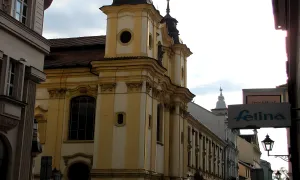
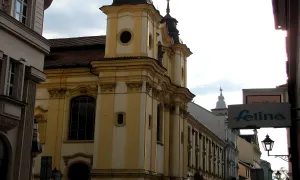
2. Church of the Holy Trinity - sacral construction Located in the south square of the Republic and is one of the most important spiritual centres in Pilsen. Its Baroque architecture and rich interior equipment are attractive elements for visitors who are interested in the spiritual history of the city.
3. Town Hall - Administrative Building This historic building is located on the north side of the Republic Square. She's known for her baroque appearance and served as city authorities for centuries. In its interior there are historical halls that are open to the public.
4. Hotel International - hotel Located on the south side of Republic Square, it is one of the oldest and most famous buildings in Pilsen. He is known for his history and architectural beauty. The hotel served as an important place for many cultural events and meetings.
5. School house - educational facility This historical complex is located on the west side of the Republic Square. He is known for his architectural beauty and long history as an educational institution. The house is open to the public, where visitors can enjoy its attractive space.
This route offers a view of the most prominent historical and architectural elements Republic Square in Pilsen, which is perfect for those who want to know the city from within.
Seasonal recommendations
Spring brings gradual revival and soft light to the inner city that match the awakening greenery of the surrounding trees. The atmosphere is refreshed and quieter than in hot months, allowing detailed observation of architectural elements and a peaceful walk on the pavement. Practical advice for this period includes layered clothing because temperatures can change rapidly from cold morning to warmer afternoon. It is recommended to visit a place on Tuesday or Wednesday when traffic is the smallest, and avoid weekends when they begin to accumulate the first groups of tourists. The footwear should be comfortable and resistant to any mud from the solution that may appear in lower areas of the square.
Summer offers the longest days and bright sunlight that highlights the colours of facades and details of statues. The atmosphere is lively and full of energy, often accompanied by sounds of nearby cafes and street life. The main challenge, however, are large crowds and high temperatures, which may be challenging for a longer stay in the sun. For a comfortable visit it is ideal to come early in the morning, even before the opening of most shops, or late in the evening when temperatures are slightly reduced and the city turns into night space. Clothes should be light, breathable and of natural materials, remember the hat and plenty of drinking mode. Avoid the noon hours when the sun is most intense and the shadows are minimal.
Autumn brings the city in warm shades of gold and red, which perfectly contradict stone architecture. The air is colder and cleaner, which creates a specific, slightly melancholic but very photogenic atmosphere. Leaf on the ground gives the square softness and reduces sounds, which contributes to a more intimate sense of space. Practical advice includes a warm jacket, a scarf and perhaps even a light umbrella kit because autumn weather is changing and rainy. The best time to visit is late afternoon when light becomes softer and longer shadows create dramatic compositions. Avoid Friday nights when the city fills up with people headed for evening events.
Winter turns the square into a quiet, white scene, where the snow cover changes surfaces and reduces noise. The atmosphere is quiet, respectful and often lit with warm light from windows and street lamps that are reflected in snow. Shorter days and cold require thorough preparation for outdoor stay. Clothes must be multi-layered, with an emphasis on thermal insulation, warm gloves and shoes with anti-slip soles, because wet snow and ice can be slippery. It is best to visit the place in lunch hours when the heat is highest and the light brightest. In winter, the operation is generally lower, allowing for a more private experience, but watch the opening times of the surrounding services, which can be shortened.
Visualizations and artistic views

The visualisations are generated by artificial intelligence and serve as inspiration.
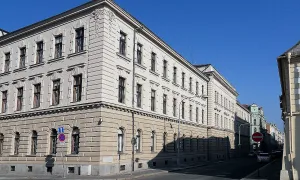
Photos from the area
Real photos taken near the monument


Zdroj a licence jsou uvedeny u každého snímku.
Tips from visitors
No tips yet. Be the first!
Log in and add your tip.
Sources and literature
Photos: Jik jik / CC BY-SA 3.0 — Wikimedia Commons. The author and licence also appear when you hover over the image.
Faktickým podkladem tohoto textu byl článek na Wikipedii, jehož autory jsou přispěvatelé Wikipedie. Článek je dostupný pod licencí CC BY-SA 4.0.
Location on the map
Příběhy a pověsti
Legendy, pověsti a příběhy spjaté s touto památkou
Fotografie návštěvníků
Zatím žádné fotografie. Buďte první, kdo přidá fotografii z návštěvy!
Log in a přidejte svou fotografii nebo hodnoťte.
Za ověřenou návštěvu v aplikaci získáte víc bodů — poznáme podle GPS, že jste na místě.
Reviews and comments