






Niederleho pavilon Hospital building
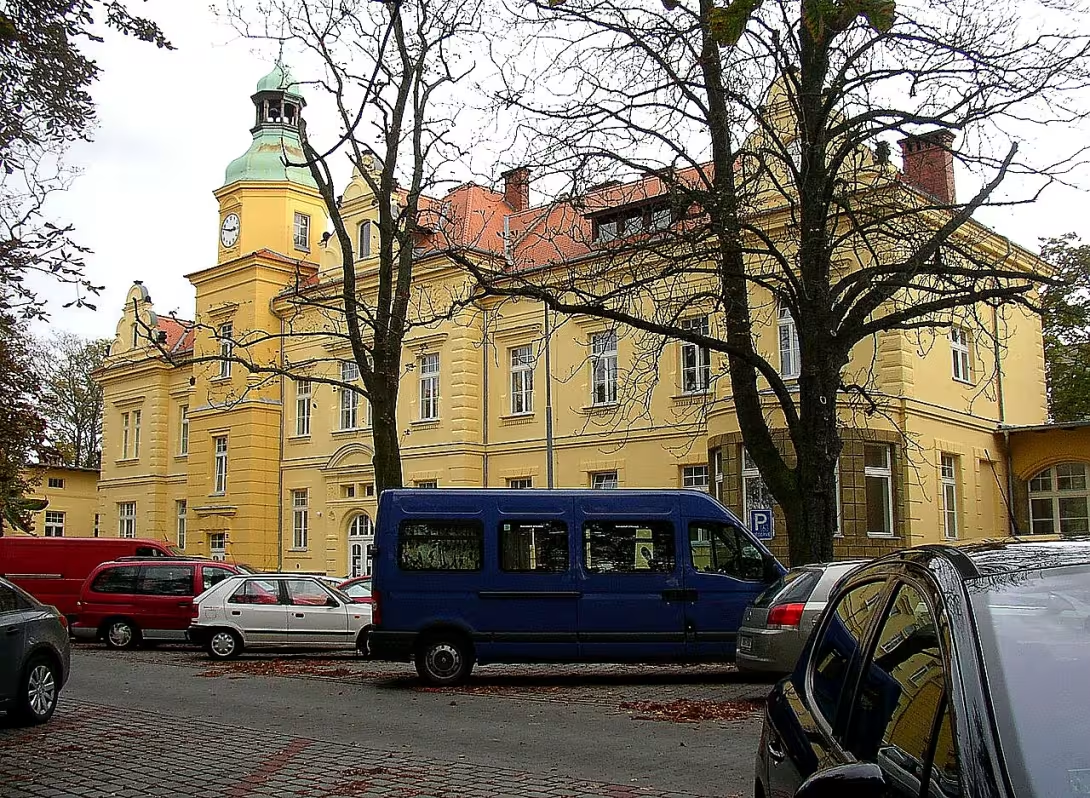
Niederleho pavilon in Kladno represents the oldest preserved part of the current Regional Hospital Kladno as well as one of the most important historical buildings in the region. It was created in 1902- 1903 in non-Renaissance style with Art Nouveau elements and originally served as a general general general public hospital of emperor Franz Joseph I. This building was one of the first modern medical facilities in the region and reflected the ambitions of the then medicine and urban development of Kladno, which was an industrial centre in the early 20th century.
Today, the pavilion is a monument-protected building where the hospital headquarters is located. It reminds of the importance of personalities such as MUDr. Bohuslav Niederle, the founder of the hospital and an important surgeon, or MUDr. Jaroslav Hruška, then Mayor of Kladna, who was involved in the construction.
The construction is related to the development of health care in Kladno at the turn of the 19th and 20th centuries. The city was then a major industrial centre with many miners and workers, which required modern medical facilities. The initiator of the construction was MUDr. Jaroslav Hruška, a former doctor of the Brotra Mining Treasures, a company associated with the local hardware industry. The project of the hospital was created as part of the celebration of the 50-year reign of Emperor Franz Joseph I., which is evidenced by the commemorative plaque on the facade with the inscription: * "The hospital was founded on the welfare of the public Summer of the PEN 1902 to celebrate the fifty-year reign of His Apostolic Majesty Emperor and King Franz Joseph I." * The building was completed in 1903, and its first director became MUDr. Bohuslav Niederle, the key figure of the Clauden Health.
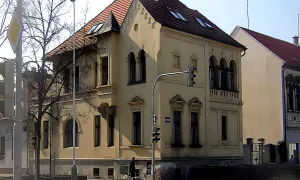
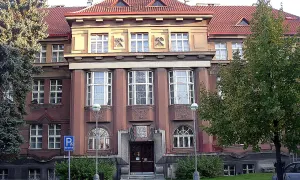
Architecturally, the pavilion is a typical example of non-Renaissance Art Nouveau architecture, popular for public buildings at the time. The authors of the project were architects Alois Zázvorka and Alfred Ludwig, built by Josef Picek. The one-storey building has a rugged facade with risalite in the middle, where the main entrance was located, originally oriented to the street of the Czechoslovak army. The complex included pavilions for men and women, an infectious pavilion and an autopsy room with the Chapel of the Holy Cross, supplemented by clocks in the tower. The chapel served not only religious purposes, but also as a place of last farewell to the deceased patients. The total capacity of the hospital was 60 beds, which was a significant number for the latter. The interior corresponded to the standards at the time, while Niederle emphasized hygiene and modern treatment methods.
The first administrators of the hospital were MUDr. Bohuslav Niederle and the merciful sisters of St. Karl Boromei, who have been active since the foundation. Niederle, a graduate of the Faculty of Medicine in Prague, became Chief of Medicine in 1903 and later Director. His work was vital for the development of health care in the region - he introduced modern surgical procedures which he studied in Berlin, and he promoted X-ray genology. During the First World War he volunteered to join the Balkan and Serbian front, where he gained experience later in hospital practice. On his return to Kladno he founded a surgical department and maintained contacts with Prague's 1st surgical clinic. In 1933, the hospital was officially named in his honor - Niederle Hospital. His legacy remained in his villa in Czech Modern, built near Kladen Gymnasium, where he also had a medical practice decorated with trophies from the Balkan War.
Another important event connected to the pavilion was the operation of the Sisters of St. Karl Boromei, in particular Sister Cyril Mack, who was awarded the Golden Cross for her dedication during the war. In the years 1920-1930 there was an eye department, one of the first specialized workplaces of its kind in the region. In 2002, the pavilion underwent reconstruction, which preserved its historical nature, but adapted it to current needs. Today it serves as the headquarters of the Regional Hospital Kladno, with the original entrance from the Czechoslovak Army street today covered by trees, which gives the place a mysterious impression.
Niederleho pavilon is not only a functionalist building, but also an important monument that documents the development of health care in the region. Its architecture and historical importance make it an interesting goal for visitors who are interested in the history of medicine and urban planning. There are other monuments such as Niederle's villa, St. Bartholomew's Church or Museum Kladno, which offer additional possibilities for sightseeing. Although the interiors are not open to the public, it is worth stopping by the facade and looking at commemorative records that remind you of the history and important personalities associated with the Kladno medical industry.
This construction is not only a technical and historical document but also a symbol of progress and human care. It shows how far we are from the conditions at the time, but also that health care has always been a key element of social development. For lovers of the history of Kladno or medicine, visiting this place is not only educational, but also inspiring.
Then and now
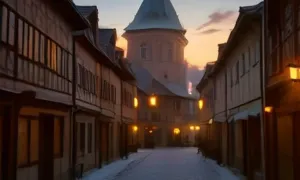
Drag the slider to compare how the landmark may have looked when it was built with the view today.
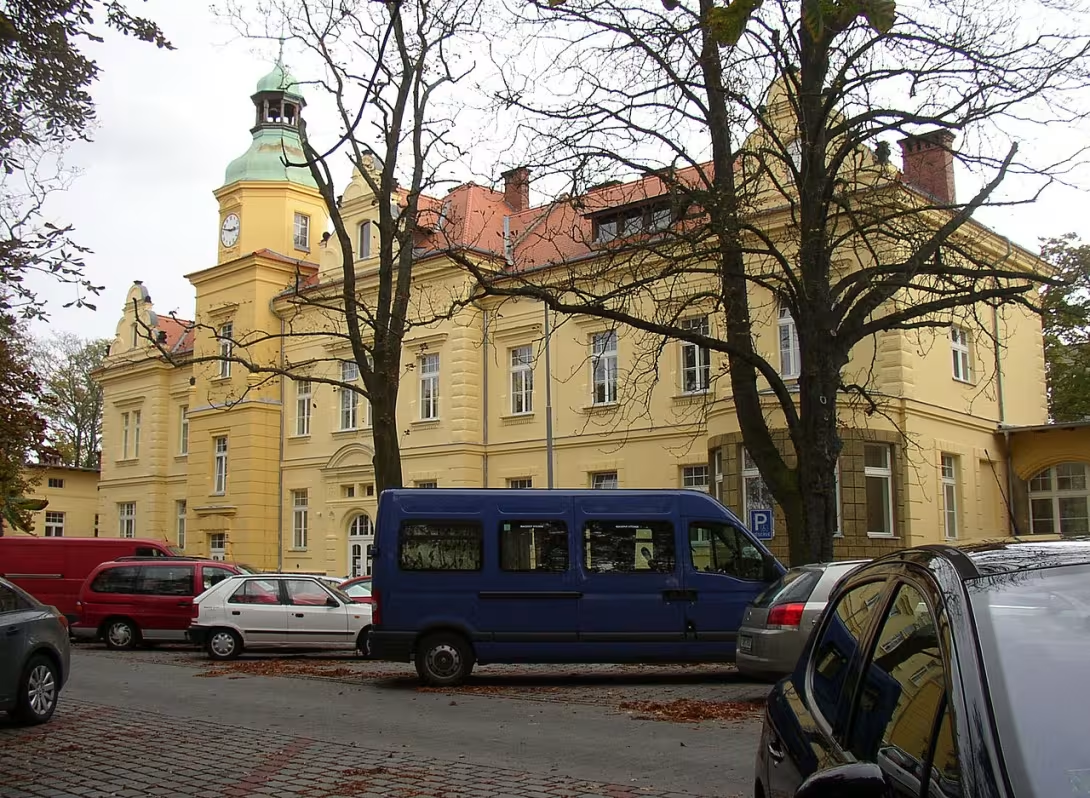
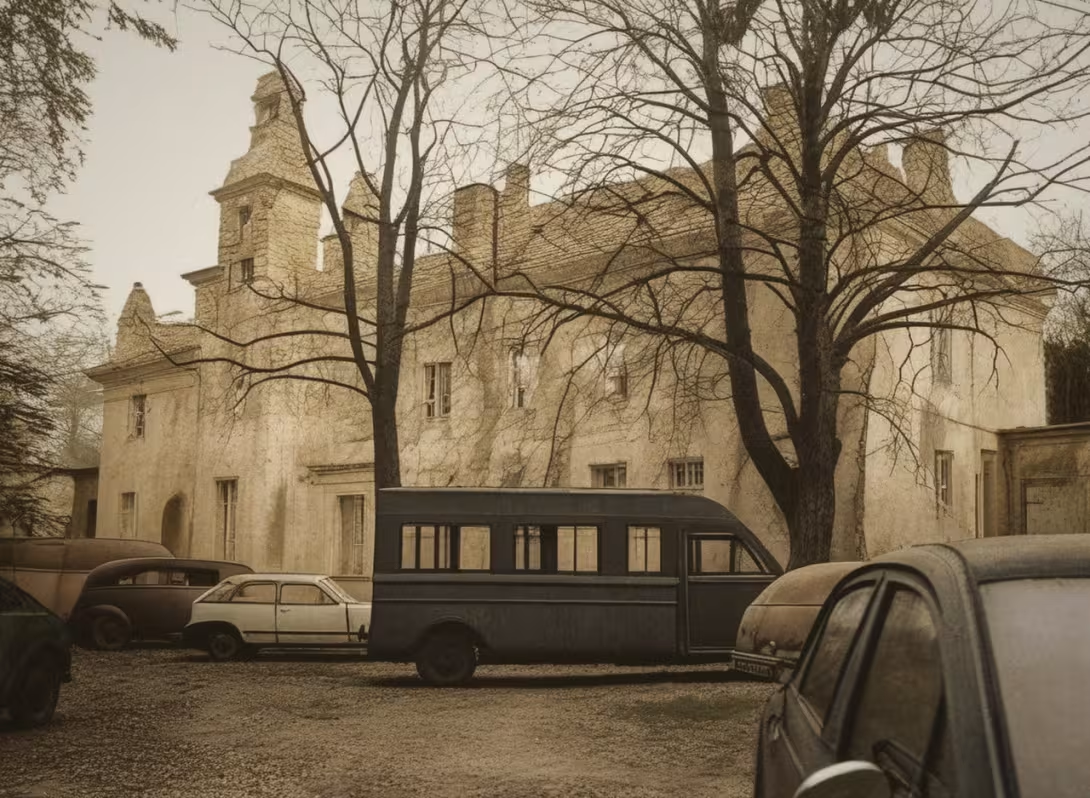
The historical appearance on the left is an AI-generated visualisation and serves as inspiration only.
Historical milestones
- 1902
- Opening of the building of the hospital to celebrate 50 years of reign of emperor Franz Joseph I.
- 1903
- Setting up the hospital with a capacity of 60 beds and appointing Bohuslav Niederle as its primary.
- 1912
- Dr. Niederle volunteered for the Balkan War.
- 1933
- The hospital was named Niederle Hospital.
- 2002
- Reconstruction of the pavilion, followed by the hospital headquarters.
Architectural development
The building was built in 1902- 1903 according to the design of architects Alois Zázvorka and Alfred Ludwig, the construction was carried out by Josef Picek. The complex originally included a central part with a male and female pavilion, an infectious pavilion and an autopsy with a chapel of the Holy Cross and clock in the tower. The entrance was originally from the street of the Czechoslovak Army, where trees grow today. In 2002 the pavilion underwent reconstruction, which preserved its historical nature while adapting to modern needs.
Historical events
- 1902
- The establishment of a general general public hospital of emperor Franz Joseph I. at the initiative of Mayor MUDr. Jaroslav Hruška.
- 1903
- Opening the hospital under the guidance of Dr. Bohuslav Niederle, who became its first director.
- 1933
- The hospital was officially named Niederle Hospital in honor of its founder.
- 2002
- Reconstruction of the pavilion, followed by the headquarters of the Regional Hospital Kladno.
Points of interest
- The building was created as part of the celebrations of the 50-year reign of emperor Franz Joseph I., which is evidenced by a commemorative plaque on the facade with an indication of the year of foundation 1902.
- Niederleho pavilon was one of the first modern health facilities in the area, designed in a non-Renaissance style with Art Nouveau elements.
The hospital belonged to the chapel of the Holy Cross with clocks in the tower, which served religious purposes and as a place of last farewell to the dead.
- The first director of the hospital was MUDr. Bohuslav Niederle, who introduced modern surgical procedures and X-rays, studied them in Berlin.
- The construction was initiated by MUDr. Jaroslav Hruška, a former doctor of the Brotra Mining Treasures, and the project was created in response to the need for health care for miners and workers in industrial Kladno.
Guide
Show guide text
This text was created by artificial intelligence and has not been editorially reviewed. It may contain inaccuracies.
Welcome to Niederleho pavilon in Kladno!
You are standing in front of one of the most important historical buildings of our city - a pavilion that has become the foundation of today's Regional Hospital. In front of you is a one-storey building with a richly divided facade that reflects the style of neoRenaissance enriched with fine Art Nouveau elements. Feel its harmony as it waves along the window axes and as it is highlighted by symmetry. The pavilion reminds you of the importance of health in the last century, when it was built as a gift for the 50th anniversary of the reign of Emperor Franz Joseph I.
Let's look at the history of this place. The building was built between 1902 and 1903 as a general general public hospital of emperor Franz Joseph I. With a capacity of 60 beds, she was a modern medical facility. The pavilion included an infectious section and an autopsy room with a small chapel. Cross - places that prove that the hospital was designed not only as a treatment facility but also as a space for spiritual support of patients. In 1903 he settled here as Chief of Staff Bohuslav Niederle, who became not only the founder of the hospital, but also a major surgeon and X-ray scientist. His name became a symbol of this place.
Now pay attention to the facade. Look upstairs and look for the facade of the memorial plate. There you will find 1902, which marks the beginning of construction. The board recalls that the building was part of the celebration of the 50-year reign of emperor. Note also the layout of the facade - pilasters, ledge and window frames that create a rhythmic pattern. This detail reveals the care of the architects Alois Závorky and Alfred Ludwig, who tried to combine classical forms with modern functionality.
But it's not just the beauty of the stone. Behind this facade are the stories of the people who worked and treated here. Bohuslav Niederle was not only a doctor but also a soldier. In 1912 he voluntarily participated in the Balkan War, and later fought also in the First World War. His efforts to modernise medicine - the introduction of surgical departments and new treatment methods - affected the whole area. Dr. Jaroslav Hruška, Mayor of Kladna and the original doctor of the Brotra Mining Treasurer, who was responsible for the actual construction of the hospital, worked not far from him. His efforts were an important step towards making Kladno a place where people could get quality health care.
But stories aren't just about men. Sister Cyril Mack, the representative of the merciful sisters of St. Charles Boromei, was responsible for the care of the wounded. She was decorated with a gold cross for her dedication. Its example was hundreds of nurses who worked here and helped in difficult times.
The interesting thing is that Niederleho pavilon was one of the first modern health facilities in the area. His architecture, combining the neoRenaissance tradition with fine Art Nouveau elements, was very progressive for its time. The building was not only a function, but also a symbol of the importance of health to society. Today, after the 2002 reconstruction, the hospital headquarters is based here, but its historical core is preserved.
If you want to learn more about other parts of the hospital or about the stories of people who have been treated here, you can continue your search. Niederleho pavilon is just the beginning. Kladno has many other places that can tell you about their past. But for now, stay for a while and feel the atmosphere of this place - a monument that connects history with everyday life. Thank you for your visit.
Tips for visitors
Best time to visit
The best time to visit Niederleho pavilon is in the morning when the light is favourable to photography and the surrounding area is quieter. During the summer months, avoid the midday hours, because the sun may be too strong on the facade of the hospital. The monument is also interesting in winter, when its architecture manifests itself in a different light.
Parking and transport
The pavilion is located in the centre of Kladno, so it is easily accessible by car or public transport. If you arrive by car, we recommend you use the parking lot near the square or paid parking nearby. The place is well served by public transport, check the current connection in the mobile application or on the official website of the transport company.
What to take with you
When visiting a historical building, it is advisable to have comfortable shoes because the pavement in the centre can be uneven. It is also recommended to take water and a light snack, because there may not always be enough food stands around. If you are planning photography, take a camera or a phone with a good lens - some facade details are very interesting.
Photography - best places and light
The most beautiful views of the pavilion offer its facade from Edvard Beneš Square, where Art Nouveau elements are best displayed. The ideal light for photography is in the morning or late afternoon hours when shadows highlight the details of architecture. If you are interested in the interior, ask the staff if it is possible to photograph inside - some parts may be protected.
What to visit nearby (within 30 minutes walk)
Niederle's villa
It is located approximately a kilometre from the pavilion and is built in Czech modern. The villa is interesting with its interior and surroundings where Niederle was active as a doctor. Suitable for lovers of architecture and history.
Church of St. Bartholomew
Baroque church from the eighteenth century, which dominates the city. Suitable for visiting from an architectural and historical point of view. It's about a mile from the pavilion.
Tips for families with children
Niederleho pavilon is not intended for children, but for families with small children it may be interesting to look around. Children can enjoy walking around the square and observing historical buildings. If you have children older, you can explain the history of the pavilion and its importance to the city. There are also parks nearby where children can relax.
Businesses nearby
Do you run a restaurant, accommodation, shop, museum, rental, wellness or other visitor service near this monument? Show yourself directly to the people heading to it — this is how they will see you in the app and on the web:
Nearby
Niederleho vila
vila
přibližně 1 km
Vila v české moderně postavená Bohuslavem Niederlem, kde měl ordinaci a bydlel. Nachází se na rohu Náměstí Edvarda Beneše a ulice Cyrila Boudy.
Kostel sv. Bartoloměje
kostel
přibližně 1,5 km
Barokní kostel z 18. století, dominantní sakrální stavba Kladna.
Muzeum Kladno
muzeum
přibližně 2 km
Muzeum zaměřené na historii Kladna a okolí, včetně průmyslové a kulturní historie.
Kladenský rybník
přibližně 3 km
Přírodní rezervace s bohatou faunou a flórou, vhodná pro turistiku a pozorování ptáků.
Accommodation nearby
Trips and activities nearby
Guided tours, tickets and activities nearby from GetYourGuide
Affiliate link: if you buy from the partner, we may receive a commission. The price for you does not change.
Search tours and activities →Themed route
Thematic cruise route: Bohuslav Niederle and his Kladen work
1. Niederle's villa Modernist villa from the beginning of the 20th century where a significant Czech doctor and archaeologist lived and worked. It is a model of Czech modern architecture and also a monument to its scientific activities. Here you can see his original apartment and practice.
2. Niederleho pavilon (Hospital) The main destination of the trip - the building Niederle designed for the Kladen hospital. It's an example of his medical and architectural approach. It currently serves as part of a medical facility, but its historical significance is unforgettable.
3. Church of St. Bartholomew Baroque church from the 18th century, which dominates the Kladno panorama. Its interior with rich decoration and historical elements complements the city's atmosphere. It's an important sacral monument with a long tradition.
4. Muzeum Kladno Přibližně 2 km od centra nabízí přehled o historii města, od středověku až po průmyslovou revoluci. Zde se dozvíte více o kladenském regionu a jeho vývoji, včetně vlivu Niederleho a dalších významných osobností.
Seasonal recommendations
Niederleho pavilon in Kladno - seasonal visit
Spring Spring offers a subtle change of nature - spring flowers, especially tulips and daffodils, bloom around the pavilion, lighting the terrain with light shades. The atmosphere is light, with a slight warm-up of the air, which can be unpredictable - the sun's rays take turns with sudden rain showers. The sun shines at a lower angle, creating long shadows and soft light effects on historical facades. The ideal time to visit is in the morning or after lunch when there are fewer crowds. Light clothing with a raincoat is recommended because temperatures are around 10-18 ° C. If you want to escape crowds, avoid Fridays and Saturdays - these days the pavilion is often visited by families and tourists.
Summer The summer brings hot days with temperatures often over 25 ° C, which can be unpleasant when walking through a historic building. Specific is strong sunlight that illuminates the stone details of the pavilion with intensely yellow light, while shadows are short and sharp. The atmosphere is usually dry, with minimal humidity, which can cause light dust. The best time to visit is early in the morning when temperatures are not yet extreme, or in the evening when the sun starts to set. It is recommended light, airy clothes, hat or sunglasses and plenty of water. In the main summer season (July-August), you should expect bigger crowds, so you should book time for your tour.
Autumn Autumn brings a unique atmosphere - the leaves on the trees around the pavilion are colored in yellow, orange and red shades, creating contrast with stone architecture. The lighting is softer, the sun shines at a low angle, and the afternoon falls fast. The temperatures fall, they move around 5-15 ° C, and the air is often cold, but dry. There is also silence - after the summer crowds there is peace, only occasionally disturbed by the rustling of leaves. The ideal time for visiting is the afternoon when the sun lights the facades with golden light. Warmer clothes are recommended - a sweater or a long-sleeved sweater, because evenings are usually cold. Avoid rainy days when the terrain can be slippery.
Winter Winter here creates a quiet, mysterious atmosphere - around the pavilion lies a thin layer of snow or ice that reflects light and gives the place a magical touch. Lighting is specific - the sun shines very low, creating long, dramatic shadows, while artificial lighting (if on) provides a warm, golden shade. The temperatures are low, often below freezing, and the air is clean, dust-free. The best time to visit is in the afternoon when the light is the most pleasant, but opening times are shorter than in warmer months. It is recommended to wear warm clothes - jackets, gloves and tight shoes, as walking along icy roads can be slippery. There is peace in advent time, but if you want to escape the crowds, avoid the holidays.
Visualizations and artistic views


The visualisations are generated by artificial intelligence and serve as inspiration.
Photos from the area
Real photos taken near the monument


Zdroj a licence jsou uvedeny u každého snímku.
Tips from visitors
No tips yet. Be the first!
Log in and add your tip.
Sources and literature
Photos: Miaow Miaow / Public domain — Wikimedia Commons. The author and licence also appear when you hover over the image.
Faktickým podkladem tohoto textu byl článek na Wikipedii, jehož autory jsou přispěvatelé Wikipedie. Článek je dostupný pod licencí CC BY-SA 4.0.
Location on the map
Příběhy a pověsti
Legendy, pověsti a příběhy spjaté s touto památkou
Fotografie návštěvníků
Zatím žádné fotografie. Buďte první, kdo přidá fotografii z návštěvy!
Log in a přidejte svou fotografii nebo hodnoťte.
Za ověřenou návštěvu v aplikaci získáte víc bodů — poznáme podle GPS, že jste na místě.
Reviews and comments