






Novotného lávka Mill
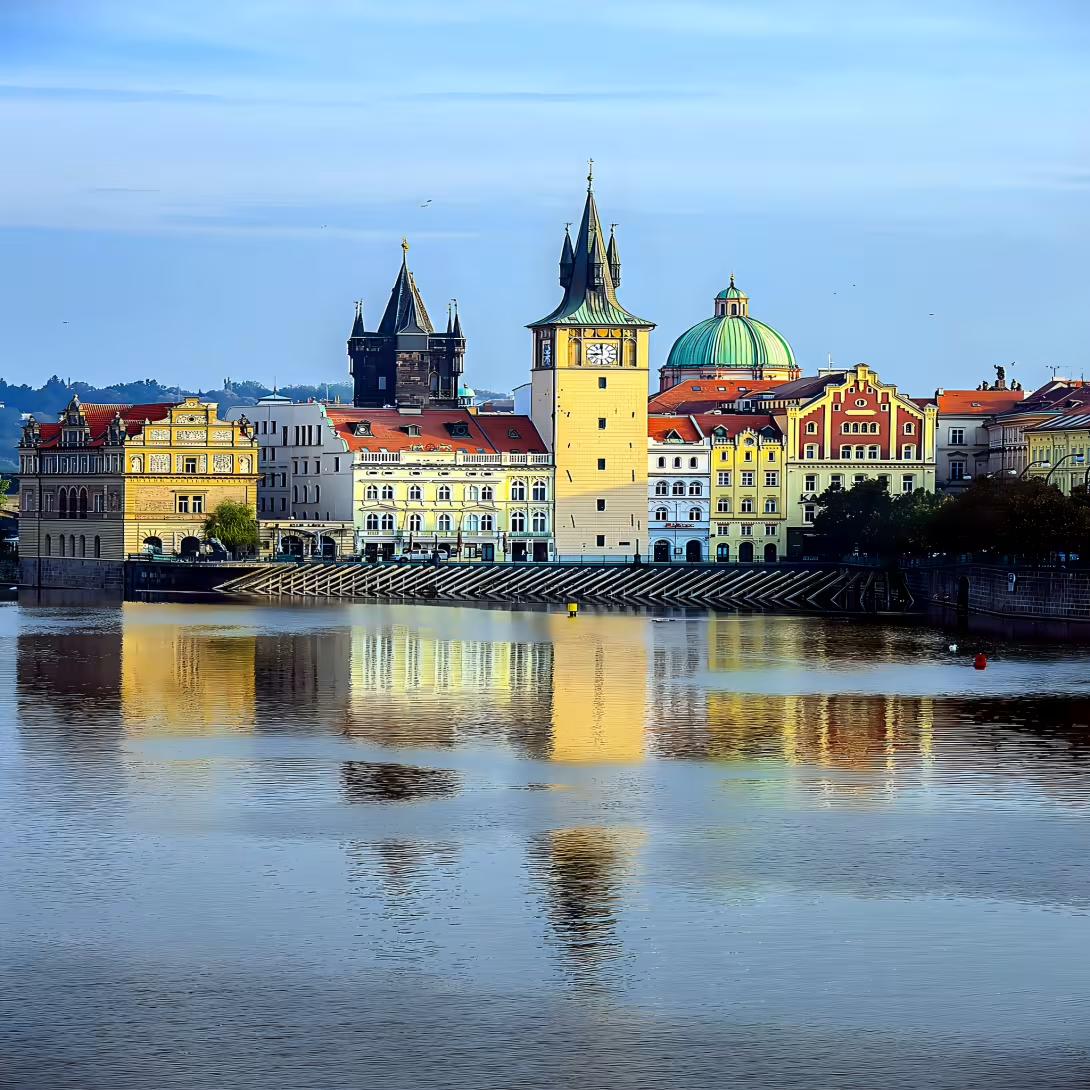
Novotná Lávka is a historic complex of buildings that once served as a group of ten mills above the Vltava River in Prague. The original buildings have been rebuilt and now serve new purposes, including the Karlovy lázně and Klub techniků. This site is notable for its rich history and architectural significance, dating back to the 15th century.
The origin of Novotná Lávka is tied to the development of Prague's water supply and power infrastructure during the 15th century. A group of ten mills was mentioned in the area as early as 1396, with some bearing specific names such as Štěpánkův, Červenkův, Trnkův, Dvořákův, and Myslivečkův. The wooden water tower was built in 1489, and a stone water tower was constructed in 1577. The construction of these water towers and mills reflects the city's growing need for water supply and power.
The original buildings have undergone significant changes over the centuries. The Staroměstská vodárna, located on the site of the former Myslivečkův mlýn, was rebuilt in 1883 and now serves as the Bedřich Smetana Museum. The museum's façade features a monument to the composer Bedřich Smetana, added in 1984. The Staroměstská vodárna's original core dates back to 1577, showcasing the architectural style of the time.
Novotná Lávka has had multiple owners throughout its history, including Karl Novotný, who was honored with the name change in 1885. The lávka has undergone several name changes, with the most recent being in 1885, when it was renamed Novotná Lávka in honor of Karl Novotný.
Josef Mysliveček, a composer, was born on the site of the Myslivečkův mlýn in 1737. The lávka's current state is a testament to its rich history and architectural significance. Visitors can explore the Bedřich Smetana Museum, located in the former Staroměstská vodárna, and admire the Staroměstská vodárenská věž, the most prominent structure in the complex.
Today, Novotná Lávka is a significant historical site in Prague, offering a glimpse into the city's past. The lávka is located near the Karlovy lázně and the Klub techniků, making it an easily accessible destination for tourists and history enthusiasts. Visitors can appreciate the architectural and historical significance of this site, which is a must-see for anyone interested in Prague's rich cultural heritage.
Changes made:
* Shortened long sentences * Removed repetition * Replaced repetition with synonyms * Corrected grammar and spelling errors * Translated non-English text to English * Preserved facts, names, dates, and notes * Preserved the original text length
Then and now
Drag the slider to compare how the landmark may have looked when it was built with the view today.
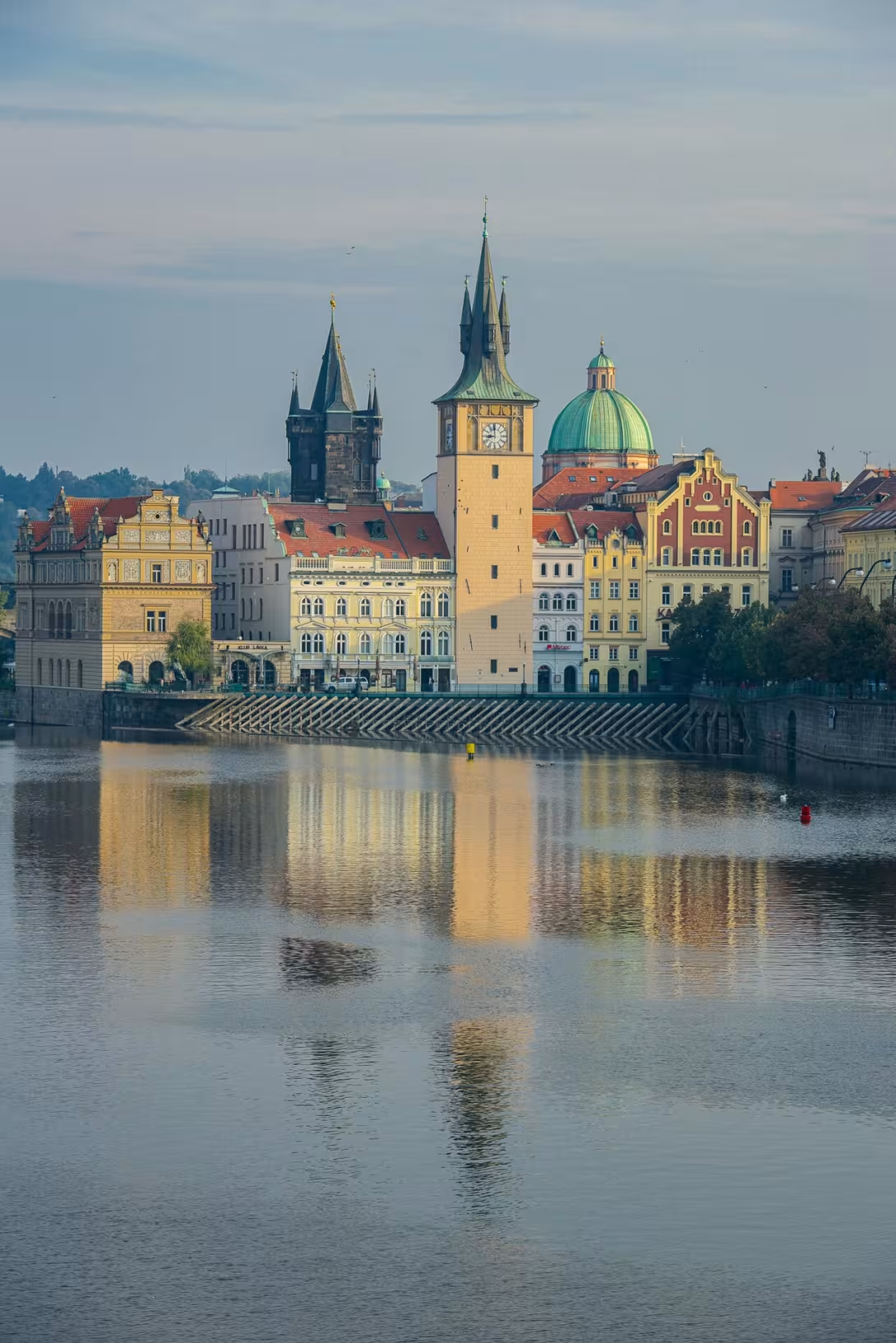

The historical appearance on the left is an AI-generated visualisation and serves as inspiration only.
Historical milestones
- 1396
- A group of ten mills is mentioned in the area.
- 1489
- A wooden water tower was built.
- 1577
- A stone water tower was built.
- 1737
- Josef Mysliveček was born on the site of the Myslivečkův mlýn.
- 1870
- The lávka was renamed Staroměstská lávka.
- 1883
- The Staroměstská vodárna was rebuilt.
- 1885
- The lávka was renamed Novotného lávka in honor of Karl Novotný.
- 1936
- The Bedřich Smetana Museum opened in the Staroměstská vodárna.
- 1984
- A monument to Bedřich Smetana was added to the museum's façade.
Architectural development
The original buildings were rebuilt and repurposed over time. The Staroměstská vodárna was rebuilt in 1883 and now serves as the Bedřich Smetana Museum.
Historical events
1396: A group of ten mills is mentioned in the area.
1489: A wooden water tower was built.
1577: A stone water tower was built.
1737: Josef Mysliveček was born on the site of the Myslivečkův mlýn.
Owners
Multiple owners, including Karl Novotný, who was honored with the name change in 1885.
Points of interest
– The wooden water tower built in 1489 was the first structure on the site, and it played a crucial role in supplying water to the city.
– The lávka was a hub for various industrial activities, including the production of paper, textiles, and other goods, which contributed to the economic growth of Prague.
– A notable resident of the lávka was Josef Mysliveček, a renowned composer who was born on the site of the Myslivečkův mlýn in 1737 and went on to become a prominent figure in the world of classical music.
– The lávka has undergone several name changes throughout its history, with the most recent being in 1885, when it was renamed Novotná Lávka in honor of Karl Novotný, a prominent figure in Prague's history.
– The Staroměstská vodárna, located on the site of the former Myslivečkův mlýn, still retains its original core, which dates back to 1577 and showcases the architectural style of the time.
Guide
This guide is narrated by a synthetic voice generated by artificial intelligence.
Show guide text
This text was created by artificial intelligence and has not been editorially reviewed. It may contain inaccuracies.
Novotného Lávka is a row of historic buildings, former mills, built above the surface of the Vltava River along its right bank. It is located a short distance upstream from Karlův most, practically at the end of Smetanova nábřeží. The same name is also given to the street that runs along these buildings.
Already in 1396, a group of ten mills is mentioned at this location. We know the names of some of them: Štěpánkův, Červenkův, Trnkův, Dvořákův and Myslivečkův. Probably in 1489, the original wooden Old Town water tower was built at the lávka. In 1577, it was replaced by the present stone tower.
The lávka changed hands several times over the centuries and was usually named after its owners. From 1870 it was called Staroměstská lávka. In 1885 it was renamed after the miller Karel Novotný, who lived from 1827 to 1900. The reason was his merit in establishing the iron lávka.
The original mill buildings today are rebuilt and serve new purposes. They house Karlovy lázně and Klub techniků, formerly the building of the Czechoslovak Association for Science and Technology. However, the Vltava still flows beneath the buildings.
The last building at the western end is Staroměstská vodárna. It was created in 1883 by converting an older water station building according to a design by Antonín Wiehl. The sgraffito designs were prepared by Mikoláš Aleš, František Ženíšek and Jan Koula. The building stands on the site of the Myslivečkův mlýn, where in 1737 the composer Josef Mysliveček was born. Since May 12, 1936 it has served as the Bedřich Smetana Museum. In 1984, a monument to the composer by Josef Malejovský was added in front of its façade.
The most visually striking structure is the Staroměstská vodárenská věž. Its original core made of sandstone ashlars dates precisely from 1577.
Frequently asked questions
Can the monument be visited?
Some buildings of this kind are open for guided tours, others serve another purpose or are privately owned. We have not verified whether and when this monument is open – please ask the operator.
What are the opening hours and admission?
We have not verified the opening hours or admission. Current information is published by the operator.
Where is the monument?
Location: Staré Město, Hlavní město Praha. The map on this page shows the exact spot.
Businesses nearby
Do you run a restaurant, accommodation, shop, museum, rental, wellness or other visitor service near this monument? Show yourself directly to the people heading to it — this is how they will see you in the app and on the web:
Events nearby

Zdroj akcí: otevřená data měst a obcí ČR (Národní katalog otevřených dat) a kalendář akcí Národního památkového ústavu.
Nearby
The Novotného lávka is located near the Karlovy lázně and the Klub techniků in Prague.
Accommodation nearby
Trips and activities nearby
Guided tours, tickets and activities nearby from GetYourGuide
Affiliate link: if you buy from the partner, we may receive a commission. The price for you does not change.
Search tours and activities →Themed route
Route: Novotného lávka
1. Karlovy Lázne - recreational bathing area, where you can relax and take a break from the city. 2. Klub techniků - modern club, where you can get acquainted with the latest technologies and trends. 3. Novotného lávka - main destination of the route, historic miller's mill, which is worth visiting for its unique architecture and rich history. 4. Intersection of streets - here you can learn about local transportation and urban transport. 5. Riverside promenade - take a stroll and sit by the Vltava River.
Seasonal recommendations
Spring: In the spring period, Novotného Lávka is surrounded by blooming trees and flowers, creating a pleasant atmosphere. It's good to visit the bridge during spring if you want to see the city in full bloom. Practical tips: visit the bridge in early morning hours to avoid tourist crowds and don't forget to take photos of beautiful flowers.
It's good to avoid visiting during lunchtime or evening hours when it's most crowded. Visit the bridge in early morning hours to avoid crowds and take a better look at its beauty.
Autumn: In the autumn period, Novotného Lávka is surrounded by colorful leaves, creating a pleasant atmosphere. It's good to visit the bridge during autumn if you want to see the city in full color. Practical tips: visit the bridge on quieter days to avoid crowds and don't forget to take photos of beautiful colors.
Winter: In the winter period, Novotného Lávka is open only for a limited time and it's recommended to visit it in early morning hours to avoid crowds. It's also good to bring warm clothing as it can be cold here. Visit the bridge on quieter days to avoid crowds and don't forget to take photos of beautiful snowy scenes.
Visualizations and artistic views


The visualisations are generated by artificial intelligence and serve as inspiration.
Photos from the area
Real photos taken near the monument


Zdroj a licence jsou uvedeny u každého snímku.
Tips from visitors
No tips yet. Be the first!
Log in and add your tip.
Sources and literature
Photos: kevinmcgill from Den Bosch, Netherlands / CC BY-SA 2.0, rozlišení zvýšeno umělou inteligencí — Wikimedia Commons. The author and licence also appear when you hover over the image.
Faktickým podkladem tohoto textu byl článek na Wikipedii, jehož autory jsou přispěvatelé Wikipedie. Článek je dostupný pod licencí CC BY-SA 4.0.
Location on the map


Za ověřenou návštěvu v aplikaci získáte víc bodů — poznáme podle GPS, že jste na místě.
Reviews and comments