



ocelový silniční most přes Labe v Kuksu Road bridge
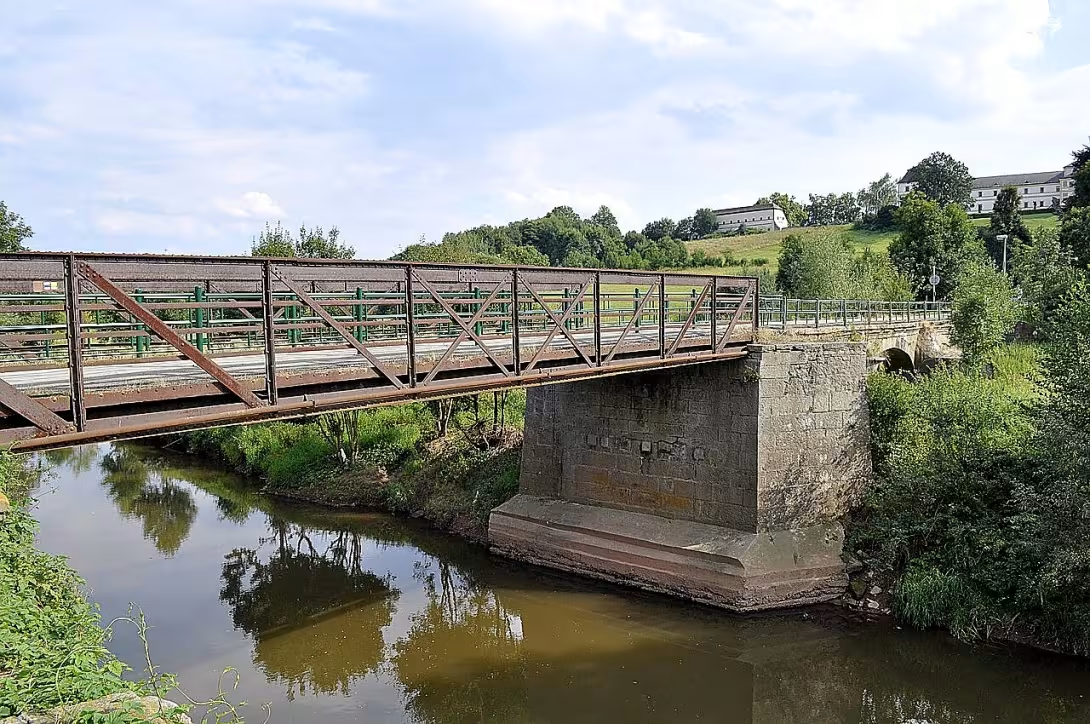
The steel road bridge over the Elbe on the cadastral territory of the village Kuks in Trutnov district is a cultural monument of the Czech Republic. It is part of the Kuks Monument Reservation and connected with the inundation bridge. It was declared a cultural monument in 2015. Its history dates back to the nineteenth century, when it replaced the original wooden construction with a steel lattice structure from the holesovice company L. G. Bondy and sons. The bridge is architecturally interesting and closely connected with the surrounding complex of the hospital and sculptures in Bethlehem.
The history of the bridge is linked to the development of the Baroque complex Kuks, which between 1692 and 1724 built František Antonín Špork. The connection between the two banks of the Elbe was originally provided by a wooden bridge with a tower-oracle structure. In the 1880s, it was replaced by a steel lattice bridge. This change modernised transport links and represented an important step in the development of the region's infrastructure.
The architectural bridge is an open riveted lattice structure made of welder steel. This is based on two coastal pillars from a treated sandstone block. The original bridge was replaced by wooden elements during the reconstruction in 2017 carried out by Eurovia. CS for 5.9 million crowns. The correction also included the strengthening of construction and the use of traditional riveting techniques, thus increasing load capacity to 26 tonnes.
Over the years, the bridge had different owners. The reconstruction of 2017 was financially supported by the Králové Hradec Region, which confirms the regional importance of the construction. During repairs the bridge served visitors of the Baroque complex Kuks as a temporary bridge.
Key events include the declaration for cultural monument in 2015 and the opening ceremony after reconstruction in 2018. The common pillar with the inundation bridge is a national cultural monument, which underlines the historical value of the complex.
Today, the steel road bridge in Kuks is safely accessible and serves as a witness to the historical and cultural wealth of the region. Thanks to the location in the monument reservation it attracts many interested in architecture and history.
Visiting the bridge offers an opportunity to explore the building itself and its surroundings full of other monuments. The construction is an important part of the cultural landscape and inspiration for all lovers of history.
Historical milestones
- 2015
- Declaration of the bridge for cultural monument of the Czech Republic
- 2017
- Implementation of the bridge reconstruction by Eurovia
- 2018
- Festive opening of the repaired bridge
Architectural development
The original wooden bridge was replaced in the 19th century by a steel lattice structure by L. G. Bondy and sons. After the reconstruction in 2017, the ocelconcrete bridge was removed and replaced by beech and oak elements. The structure is now riveted and reinforced.
Historical events
In the 1880s, the wooden bridge was replaced by a steel structure. In 2015 the bridge was declared a cultural monument of the Czech Republic. A large reconstruction of the bridge took place in 2017.
Points of interest
- The steel road bridge over the Elbe is a cultural landmark of the Czech Republic. - The bridge was declared a cultural monument in 2015 and is part of the Kuks Heritage Reserve. - Its history dates back to the nineteenth century, when it replaced the original wooden construction with a steel lattice building from the holesovice company L. G. Bondy and sons. - Reconstruction of the bridge in 2017 included riveting techniques, thus increasing the load capacity to 26 tonnes. - The bridge is architecturally interesting and closely connected to the surrounding complex of the hospital and sculpture in Bethlehem.
Guide
Show guide text
This text was created by artificial intelligence and has not been editorially reviewed. It may contain inaccuracies.
Welcome to Kuks. Right now, when you listen to these words, you're facing one of the most important points of this beautiful landscape. Your eyes are probably clinging to a massive steel structure that is standing above the surface of the Elbe River. Feel the atmosphere, feel the contrast between running water and a solid, stationary structure that brightens the way through it. This steel road bridge is not just a simple technical object that serves to cross the river, but is an important part of the whole cultural landscape that you are admiring. You're facing something that has its own soul and its own history that goes back deep into the past.
Now let's look together at how this bridge came into being and why it looks just like this. To understand its essence, we must go back in time until the 1880s. At that time, the two banks of the Elbe River needed to be combined in a way that would be more resilient and more reliable than what was here before. Before this steel structure there was the original wooden structure. While wood was natural and common at the time, it was no longer a sufficient solution with increasing demands for transport and stability. This is why it was decided to replace the wooden bridge with a steel lattice bridge. This was a major technological shift in the period at the time and brought a new level of stability and durability to this area. This change from wood to steel was a symbol of the age when people began to rely more on the strength of metal materials to better control their way through the countryside.
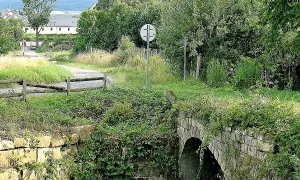
Now pay attention to what you see right in front of you if you look at the bridge at close range. This architecture is fascinating. Note how the different parts of the steel structure intertwine and form a solid net. This lattice structure is designed to withstand weight and movement while remaining stable. If you look at the individual connections, notice the rivets. These riveted connections are a key element that gives the bridge its historical character. The recent reconstruction was dedicated to these details in order to be restored and so that the bridge could serve other generations in its original beauty. Look also down, where the bridge firmly stands in the river bed. See those massive pillars? They are made of sandstone, which is a natural material that has dominated here for centuries. This sandstone creates a solid foundation and also perfectly matches the surrounding natural environment. And if you look at the path itself, that is, what you drive on, you see wooden elements. These elements were inserted into the bridge in a recent renewal to replace the old bridge and add a whole natural and human dimension. The whole, from steel to rivets to sandstone and wood, was designed to form a harmonious whole. The architect Jan Chaloupský is behind this work, who has put not only technical skill but also understanding for the local environment.
Now, when you look around, you realize that you're not just in technical space, but in a place that formed great personalities. Kuks is a space where history intersects with nature, and this bridge is an integral element of it. Although the steel bridge was created much later than the era of large figures such as František Antonín Špork or Leon Gottlieb Bondy, its existence is deeply rooted in this cultural landscape, which these people helped build and shape. It's part of the world they created and part of the world you're discovering today.
You may now wonder how this steel jewel is being taken care of these days. It's very important, because this bridge is not just an ordinary building. In 2015, this building was officially declared a cultural monument to the Czech Republic. This is a huge recognition of its historical and aesthetic value. In order not to lose this monument and remain in good condition, a thorough reconstruction was carried out between 2017 and 2018. The work on this important building was led by Eurovia. The aim was not only to repair what was damaged, but above all to restore the original details such as riveted joints, and to replace the old parts with new wooden elements. The ceremonial opening of the repaired bridge took place in 2018, closing the chapter of its renewal and opening the chapter of its continued duration as a protected heritage.
There's something in this place that can make you think. It's the invisible link between nature and human technology. How does steel, such a hard and stationary element, fit so perfectly into the landscape of flowing water and sandstone rocks? This harmony between what man has created and what nature has created is what makes this bridge so special. It is proof that technology may not be contrary to the beauty of the surroundings, but may even underline it.
But now I will not take you too long. I hope that this view of the steel bridge over the Elbe brought you new insight and that you could imagine the times when the wooden structure stood here instead of steel. Please continue to explore this wonderful area. Kuks has many more secrets and beauty for you to discover. I wish you a pleasant walk and enjoy every moment in this historic landscape. Goodbye.
Tips for visitors
The best time to visit the steel bridge through the Elbe in Kuks is in the spring or autumn season when vegetation is best visible and light is not too strong. This time of year also offers mild weather for a comfortable walk.
It is possible to travel by car or public transport for the availability of transport.
When visiting, take with you suitable shoe items for walking along the road or road, especially if you plan to explore the area. Photos can be interesting, so it's a good idea to bring a camera.
For photography is the best place from a position that allows you to see a bridge in the context of the Elbe River and the surrounding region. The best conditions are for photography in the morning or in the evening when light is less intense.
The cultural landscape of Kuks and the hospital complex can be visited in the vicinity of the monument. These places offer interesting historical and architectural details that can be particularly attractive to visitors interested in the history of the region.
Frequently asked questions
Can the monument be visited?
This is a structure in a public space that can usually be seen from outside free of charge. We have not verified that this particular one is freely accessible.
Where is the monument?
Location: Kuks. The map on this page shows the exact spot.
Why is the monument protected?
It is listed in the Central List of Cultural Monuments of the Czech Republic as a cultural monument (register no. 1000004136).
Businesses nearby
Do you run a restaurant, accommodation, shop, museum, rental, wellness or other visitor service near this monument? Show yourself directly to the people heading to it — this is how they will see you in the app and on the web:
Events nearby
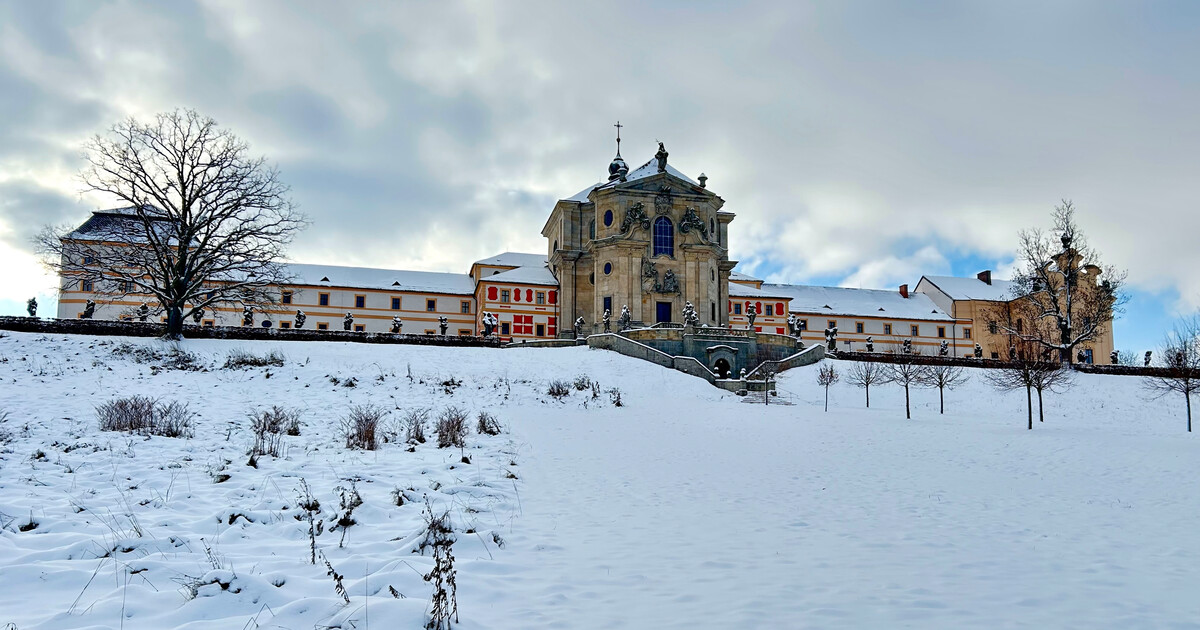
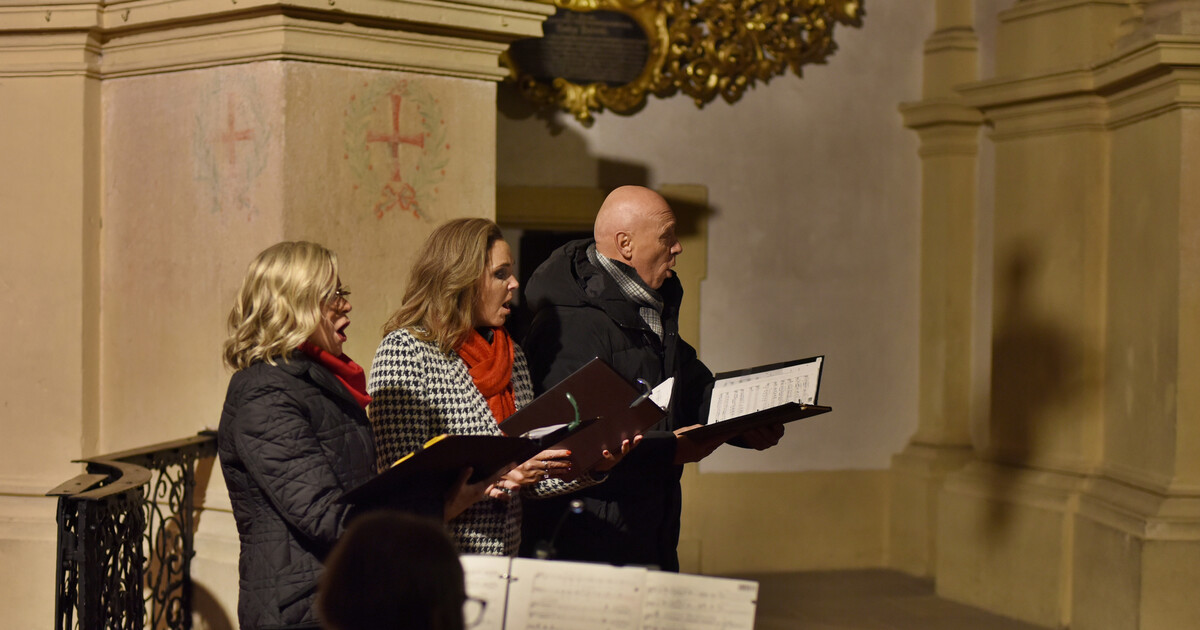
Zdroj akcí: otevřená data měst a obcí ČR (Národní katalog otevřených dat) a kalendář akcí Národního památkového ústavu.
Nearby
Kulturní krajina Kuks, komplex hospitálu, soubor plastik v Betlémě a řeka Labe.
Accommodation nearby
Themed route
Thematic cruise route Kuks
1. Steel road bridge over the Elbe - Type: Bridge - Why is it worth a visit: This bridge is a technical monument that connects both banks of the Elbe River and offers a beautiful view of the surrounding countryside. It's a unique example of a 20th century steel structure.
2. Cultural Landscape Kuks - Type: Landscape monument - Why is it worth visiting: Cultural landscape Kuks is an important historical location with a rich past. Includes a castle, park and other architectural elements that reflect the Baroque style.
3. Hospital Complex - Type: Historical Complex - Why is it worth visiting: Hospital in Kuks is one of the most important architectural monuments of the Baroque in Central Europe. Its interiors and artistic elements are fascinating for every visitor.
4. Plastic Set in Bethlehem - Type: Art file - Why is it worth visiting: This file is a unique collection of sculptures which represent the biblical scenes. It is located in a garden environment and offers a comfortable view of the Elbe River.
5. River Elbe - Type: Natural element - Why it is worth a visit: The Elbe is the longest river in the Czech Republic and brings beautiful views, especially from the bridge or set of plastics. It is an ideal place to relax and understand the historical and natural context of Kuks.
This route offers a combination of technical, cultural and natural experiences in one small place.
Seasonal recommendations
Spring: In the spring season ocelový silniční most přes Labe v Kuksu is decorated with flowers and young leaves of trees that appear on the banks of the river. The sunny light joins the bridge and its structure, while the mild temperature brings comfort for viewing. This time of year is ideal for visiting without excessive crowds, which allows a peaceful exploration of the landscape. We recommend to wear light clothes with the possibility of a close coat because temperatures can be variable.
Summer: During the summer months the bridge over the Elbe in Kuks is surrounded by green trees and flowering bushes, creating a lively atmosphere. The sunny days provide ideal conditions for the photograph of the bridge in bright colours. In the main summer season, the visitor's place can be visited multiple times, so it is advisable to visit in the morning or late afternoon to avoid a sunburn. Good clothes for warm days and sun protection such as a hat and sunglasses are recommended.
Autumn: In autumn, the colors on the Elbe banks swell, creating a beautiful background for the bridge. The sun becomes less intense and the sunlight creates long shadows that give the landscape an image of melancholy beauty. This time of year is suitable for visiting due to colder temperatures and smaller frequency of tourists. It is recommended to wear warmer clothes such as fur coats or long gloves, and suitable shoes for dry and wet surfaces.
Winter: Winter bridge over the Elbe in Kuks offers a unique atmosphere with the possibility to see ice shapes on the river. The sunlight shines on ice and steel, creating a dazzling effect. This time of year is particularly calm because many people prefer other activities. It is important to be dressed well with a warm shirt, hat and protective legs against cold and possible snow conditions to make the visit comfortable.
Visualizations and artistic views

The visualisations are generated by artificial intelligence and serve as inspiration.
Photos from the area
Real photos taken near the monument


Zdroj a licence jsou uvedeny u každého snímku.
Tips from visitors
No tips yet. Be the first!
Log in and add your tip.
Sources and literature
Photos: Jirka Dl / CC BY-SA 3.0 — Wikimedia Commons. The author and licence also appear when you hover over the image.
Faktickým podkladem tohoto textu byl článek na Wikipedii, jehož autory jsou přispěvatelé Wikipedie. Článek je dostupný pod licencí CC BY-SA 4.0.
Location on the map

Příběhy a pověsti
Legendy, pověsti a příběhy spjaté s touto památkou

Fotografie návštěvníků
Zatím žádné fotografie. Buďte první, kdo přidá fotografii z návštěvy!
Log in a přidejte svou fotografii nebo hodnoťte.
Za ověřenou návštěvu v aplikaci získáte víc bodů — poznáme podle GPS, že jste na místě.
Reviews and comments