






Okresní dům ve Slaném Town hall
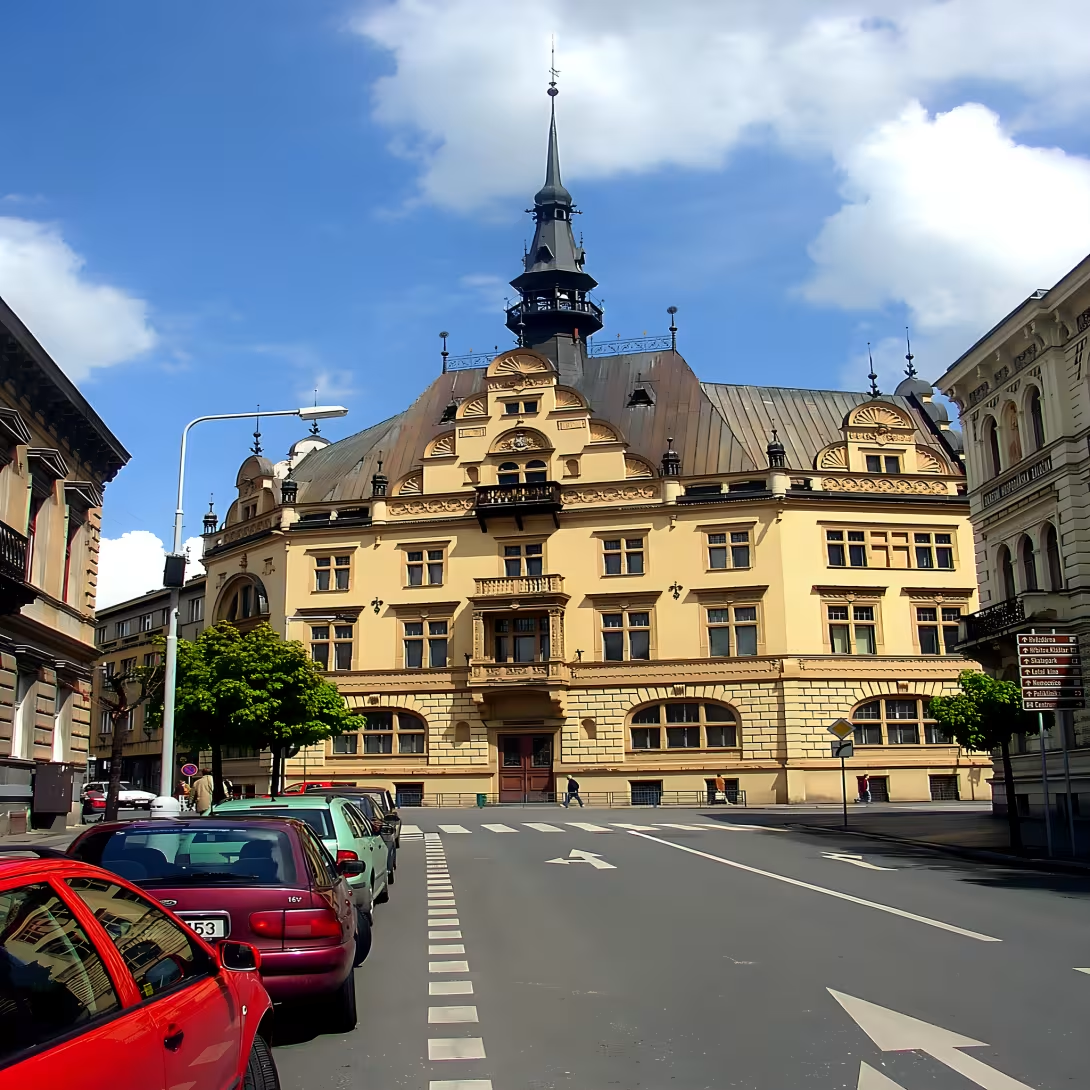
The district house is a Neo-Renaissance two-storey corner building on the street of Dr. Edvard Beneš on the intersection with the streets of Wilson, Shepherd and Shulty. This building is protected as a real-estate cultural monument and is among the most famous buildings of local architecture.
The construction was created according to the design of architect Jan Vejhěk. The builder Václav Havránek of Sláná managed the construction, in which the sculptor Antonín Popp participated in the interior decoration. Construction began on 6 July 1900 and the building was completed on 20 June 1902. Immediately afterwards, the District Office moved here and there was an opening meeting of the district council here less than fifty days later, on 7 August 1902. Until 1918, the building served as the headquarters of the District Government of Slaný. After the creation of Czechoslovakia, the District Office of the political district Slaný was located here and later the same name office of the administrative district. The building was rented by Czech Post and Česká spořitelna at the end of the twentieth century during its reconstruction.
The District House is an architectural building. The two-storey building features a high steep saddle roof and a slender needle tower richly decorated with decorated railing on the stand. The floor plan of the building is irregular trapezoidal, the central part with a shield facing west is located at the head of the bevelled corner. The building is 25,5 metres high up the roof ridge, with the tower reaching fifty-two metres. The roof was originally covered with shale, later with fibre cement plates, currently the slaughter is replaced by copper sheet. The most striking decorative element is the rich relief over the main entrance under the balcony, representing the granting of rights by František Josef I. to four states. The model of relief was created by sculptor Antonín Popp, carved in stone by sculptor Adolf Havel.
The interior of the building was very representative in its time. On the ground floor there was a hall with a capacity of 100 seats, a large room of the museum and apartment of the janitor. On the first floor were located spacious offices, office of mayor, so-called office room and meeting hall of the district council equipped with a high gallery for the public. The second floor served as a private apartment of the Secretary of the Office. All the rooms were decorated with imitation wooden linings and the ceilings were unloaded with wood with colorful plant motifs made by oil colours. The carpentry work was carried out by the craftsman Antonín Beránek, the painting was carried out by Josef Zahradka. The building was the first building in a city that had its own water pipeline.
Currently, the District House has a minimum use for several areas. The owner of the building is the city Slaný, which takes care of one of the most important buildings of the local architecture.
Then and now
Drag the slider to compare how the landmark may have looked when it was built with the view today.
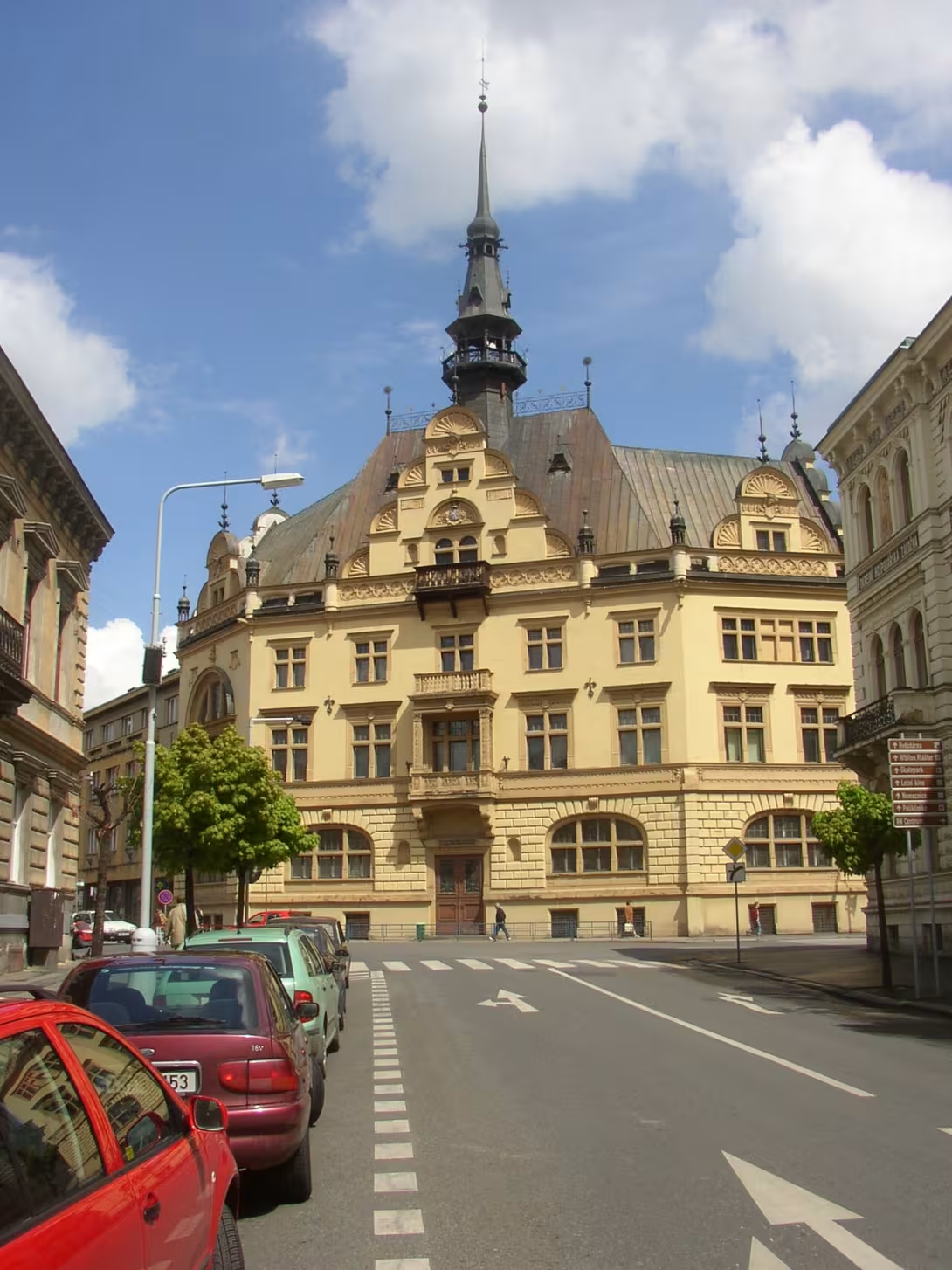

The historical appearance on the left is an AI-generated visualisation and serves as inspiration only.
Historical milestones
- 1902
- Commencing council meeting.
Architectural development
The district house has an irregular trapezoidal plan with a high steep roof and a richly decorated tower. Originally, the building was covered with shale, later fibre cement plates, now copper sheet. The interior is decorated with imitation of wooden linings and colorful plant motifs.
Historical events
- 1900
- Construction started.
- 1902
- Completion of construction and relocation of the District Office.
- 1918
- The seat of the District Government of Slaný.
Owners
City of Slaný
Points of interest
The building was the first building in the city that had its own water pipeline. The height of the tower building is 50 meters. - There is a relief above the main entrance showing the granting of rights by František Josef I. to four states. - The ceilings in the rooms were unloaded with wood with colorful vegetable motifs made by oil colours. - The construction was built according to the design of architect Jan Vejhěk and was completed on 20 June 1902.
Guide
This guide is narrated by a synthetic voice generated by artificial intelligence.
Show guide text
This text was created by artificial intelligence and has not been editorially reviewed. It may contain inaccuracies.
Welcome to Salty. You're standing in front of one of the most important and impressive building units in this city. In front of your eyes is the monumental District House, which now serves as City Hall and represents an irreplaceable pillar of local administration. Just by looking at its corner position and the dominant tower, you will realize how essential this building has played and played for the whole area. Feel the atmosphere of stability, power and historical dignity that this object radiates. It's a building that doesn't just belong to the city, but is a symbol of its expansion and ambition.
Let us now return together to the time when the foundations of this house were cut down into the ground. It was the end of the nineteenth century, a period of great social change and technological expansion. It was at this very important moment that a proposal was born that would change the face of the city forever. The architect Jan Vejrych was behind this ambitious project. It was a man who could combine the functionality of an office building with high aesthetic value. The building was completed in 1902, which was the year that in the history of the local administration meant a new beginning. It was this year that the first historical meeting of the district council took place here, which laid the foundations for the future decision-making and development of the entire district. For over a century, this building has served as a seat of the administration and each room has witnessed important political and administrative processes. Today, this building is protected as a cultural monument, which reminds us of its immense value for future generations.
Now pay attention to the architecture itself that you are currently observing. The building is built in a Neo-Renaissance style, which is a style which at the time gave the impression of order, culture and connection with classical traditions. Look at that massive tower that rises high above the roofs of the surrounding houses. It's a really impressive view. This tower is not just a decorative element, it is the dominant point of the entire area, which measures over 50 meters. If we were absolutely accurate, its height is exactly 50 meters, which makes it one of the most significant points in the entire region of Salsa. Feel how this tower is trying to touch the sky and how its height rules the entire area. The building is designed as a two-story corner object, which gives it volume and stability. Its architecture is designed to act with dignity, but at the same time harmonically fit into the urban environment.
Now, if you look directly above the main entrance, you will encounter a detail that requires your full attention and a more attentive view. There is a relief, a work of art that carries deep historical significance. This relief shows the granting of rights to four states by emperor Franz Joseph I. It is a reminder of a time when it was too closely linked to monarchy and when the rule of law was formed in these very areas. This detail is proof that even the smallest parts of the building were to be used to express the importance of the office that was based here.
Although you are now outside, imagine what awaits you when you decide to enter the interior of this building. The architect Jan Vejrych did not spare even interior decoration to match the grandeur of the exterior appearance. In the rooms you can meet breathtaking ceilings that have been unloaded with wood. However, these wooden structures are not ordinary; It is decorated with a varied number of plant motifs that provide the interior with an organic and rich look. This detail shows how much the architect put in place to make the inner spaces harmonically and aesthetically pleasant for everyone who came here to deal with their affairs.
We have another interesting thing for you, which may surprise you and which shows how modern this building was at the time of its creation. This construction was not only a symbol of political power, but also of technological progress. At the time of its creation, the District House was the first building in the city to have its own water pipeline. Imagine the revolution in hygiene and comfort that it brought to the people and officials back then. While other buildings still had to rely on older ways to supply water, this house was already in 1902 walking into a new century with technological advancement. It's a fascinating fact that tells us that Slaný has become a place that is not afraid of innovation.
I hope that this brief view of the history of the District House in Sala inspired you and that thanks to it you could imagine life in this city over a century ago. This building is not just a wall and a roof, it is a living witness to history that still stands firmly in the ground and reminds us of our roots. Continue to walk through the city, perceive its atmosphere and let yourself be carried away by other stories that the surroundings offer. Thank you for your attention and read what other attractions the surroundings will offer. We wish you a pleasant continuation of the tour.
Tips for visitors
The best time to visit the District House in Salná is in the early afternoons, when the sun lights the building from the side and creates ideal conditions for photography. This time also brings fewer visitors, which allows a better tour.
Parking can be found near the sights, but due to limited capacity we recommend using public transport. You can verify the current connection using an online search engine or mobile travel app.
When visiting the sights take with you suitable clothes, especially in the winter months when it can be cold. Fill your inventory with an umbrella or parapels for any weather.
For photography is the best place in the square in front of the building, where the distinctive tower and architecture provide impressive shots. Sunlight in the early afternoon gives a picture of life.
It is possible to visit the historical brewery in the vicinity of the monument, which is within walking distance. This attractive program for families with children offers not only a fun tour but also an opportunity to explore local traditions.
Frequently asked questions
Is Okresní dům ve Slaném open to the public?
Yes, he's open to the public. The tour can be completed on working days from 9: 00 to 17: 00.
How do I get to the place by car / public transport?
The car can be parked in front of the building or nearby. The public transport is available via line number 521, which stops directly at the monument.
How much is the entrance fee and is it paid on the spot?
Payment takes place at the point of entry into the building.
Is the tour suitable for children and seniors?
Yes, the tour is suitable for all ages. The tours are adapted to the needs of all visitors.
How long does the tour take?
The tour takes approximately 30 minutes.
What are the opening times and booking is required?
Opening hours: 9: 00 - 17: 00. Reservation is not required, but we recommend to contact the monument manager in advance.
What's interesting in the immediate vicinity?
The Church of the Assumption of the Virgin Mary and other historical buildings are located in the immediate vicinity. There are also forests and agricultural land nearby.
For kids
Imagine going back 124 years to when Slaný was called Týnek. It was a city full of life and work where people lived in wooden cottages and worked in fields. Imagine what the square looked like, where markets took place, and people were meeting to talk.
Today you will find in this place a beautiful building of the district house, which was built in 1902. It's like the game "Old Town" - more specifically, it's a historic architecture, which means it looks like an old town from the time of our ancestors.
Businesses nearby
Do you run a restaurant, accommodation, shop, museum, rental, wellness or other visitor service near this monument? Show yourself directly to the people heading to it — this is how they will see you in the app and on the web:
Nearby
The surrounding landscape is composed of agricultural land and forests. There are other historical monuments nearby such as the Church of the Assumption of the Virgin Mary.
Accommodation nearby
Trips and activities nearby
Guided tours, tickets and activities nearby from GetYourGuide
Affiliate link: if you buy from the partner, we may receive a commission. The price for you does not change.
Search tours and activities →Themed route
Thematic trip route from the district house in Salná
1. District House (City Hall) * Type: * Historical building * Why is it worth visiting: * Okresní dům ve Slaném is an important architectural monument that represents the history of the city. His Baroque facade and rich interiors are an excellent example of 18th century building art.
2. Church of St. Anne * Type: * Religious construction * Why is it worth a visit: * This church is one of the oldest sacral buildings in Salna, whose gothic appearance and history are fascinating for every traveler. It is located near the district house and offers a view of the rich spiritual tradition of the city.
3. The Old Town Village * Type: * Historical Square * Why is it worth a visit: * The Old Town is the heart of the Salty and offers a view of the ancient architecture. It's a place where you can relax and look at historical houses and modern art elements.
4. City Library * Type: * Cultural institutions * Why is it worth a visit: * The City Library is not only a place for readers, but also hosts various cultural events and exhibitions. It is advisable to visit for the knowledge of local culture and history.
5. XZ Brewery 0ZX * Type: * Brewery traditional production * Why is it worth a visit: * This brewery is known for its long tradition of making sweet and tasty beer. It offers tours where you can learn more about the technology and history of brewing in Salna.
This route offers a comprehensive view of the cultural and historical aspects of the city of Slaný.
Seasonal recommendations
Spring: In the spring period, the district house in Sláňa is transformed into an invitation to explore the blooming nature around it, where green meadows and first flowers provide a lively atmosphere to the town hall. At this time the lighting is soft and sunny, creating ideal conditions for photographing historical architectural details. Visitors should arrive early in the morning or late in the afternoon to avoid midday temperatures and possible crowds. The good idea is to wear clothes with layers because spring weather can be irregular.
Summer: Summer brings full sun and warm atmosphere, making a visit to the district house in the Salty Exciting Experience. Long days allow you to explore the memory even in the late hours when the sun is above the horizon and illuminates the historical interior with beautiful rays of light. A larger number of tourists can be expected this season, so we recommend arriving as soon as possible from morning. Remember to protect against the sun and extremely warm air - wear light clothes and plenty of drinking water.
Autumn: Autumn offers a district house in the Salty Melancholic, but a beautiful atmosphere with colorful leaves and temperate temperatures. This season is ideal for quiet walks around the town hall without the noise of the summer crowd. The sunny morning may still be pleasant, but the evening cold increases rapidly, so it is good to prepare warmer clothes for later time. Visit the memory in the early hours so you can enjoy the quiet and mild autumn glow.
Winter: Winter visit to the district house in Sláňa offers a unique view of historical buildings in covering snow and glacier conditions. The atmosphere is quiet and quiet, which allows you to enjoy architecture without disturbing crowds. The lighting of the evening can be particularly dramatic, when light is reflected through the ice crown on the facades. Visitors are advised to wear warm clothes and the entry time can be limited due to winter conditions, so it is advisable to come early.
Visualizations and artistic views


The visualisations are generated by artificial intelligence and serve as inspiration.
Photos from the area
Real photos taken near the monument


Zdroj a licence jsou uvedeny u každého snímku.
Tips from visitors
No tips yet. Be the first!
Log in and add your tip.
Sources and literature
Fotografie: User:Miaow Miaow / Public domain, rozlišení zvýšeno umělou inteligencí — Wikimedia Commons. The author and licence also appear when you hover over the image.
Faktickým podkladem tohoto textu byl článek na Wikipedii, jehož autory jsou přispěvatelé Wikipedie. Článek je dostupný pod licencí CC BY-SA 4.0.
Location on the map



Příběhy a pověsti
Legendy, pověsti a příběhy spjaté s touto památkou

Fotografie návštěvníků
Zatím žádné fotografie. Buďte první, kdo přidá fotografii z návštěvy!
Přihlaste se a přidejte svou fotografii nebo hodnoťte.
Za ověřenou návštěvu v aplikaci získáte víc bodů — poznáme podle GPS, že jste na místě.
Reviews and comments