






Kostel svatého Jakuba Většího (Otruby) Church
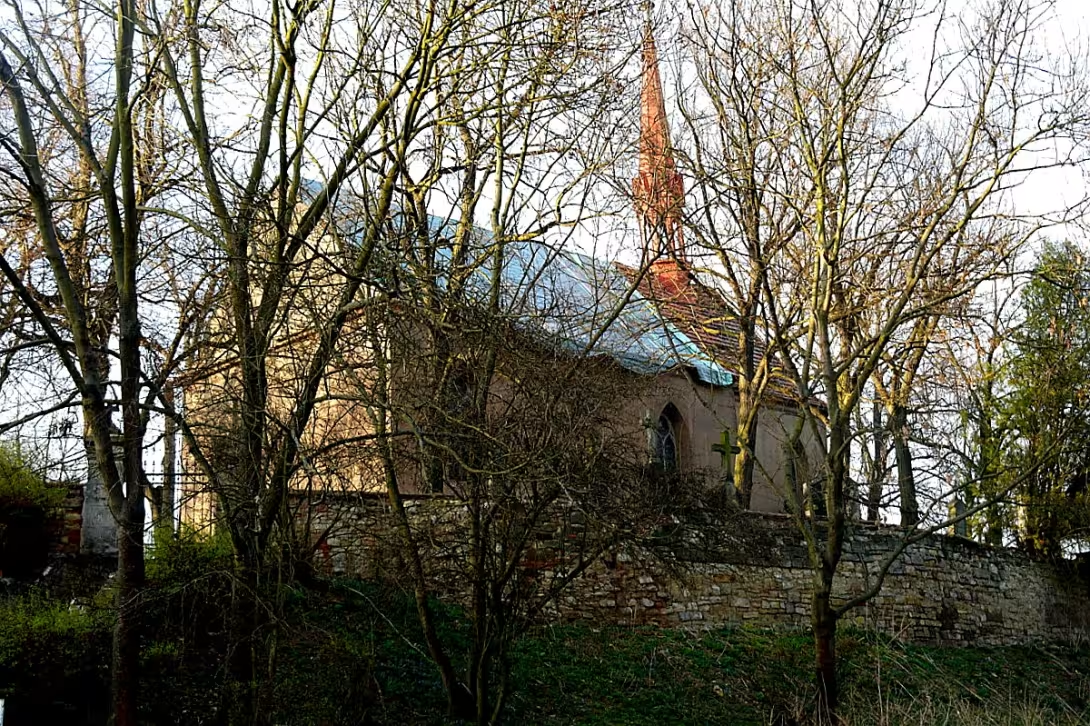
The church of St. Jacob the Greater is a neo-gothic style sacral building in Lidice near the Otrub, the local part of the Salty. Originally a Gothic object, first documented in writing in 1352, underwent a Baroque reconstruction in the 18th century and a regotization at the end of the 19th century. Today the monument is protected as a cultural heritage of the Czech Republic. The church stands on the top in the middle of the cemetery and represents a valuable proof of the building development of rural church architecture.
The first mention of the local plebania dates back to 1352, when the church in the papal tithes register was mentioned under the initiation of St. Wenceslas. During the Hussite wars the villages and the sanctuaries died, but the yard and the building itself were restored. Over the centuries, the patrocinium has changed several times. After the restoration, the church was dedicated to St. Andrew, which lasted approximately until 1835 when it was transferred to St. Jacob the Greater.
Architecturally, it is a simple single-boat structure with a polygonal priesthood and rectangular sacristy on the north side. The original Gothic form was significantly influenced by the Baroque style of 1780. In 1880, regotization was carried out according to the design of architect Achill Wolf. At that time the windows were modified in Gothic style, the roof above the presbytery was supplemented with a sandtuce and added to the sacristy. In the northwest corner of the cemetery there was a wooden bell tower with a stone suspect, but in 1843 it disappeared.
Owners have changed in history. In the 16th century, the city of Slaný was the patron of the city, after the period of the post-white mountain period, the church went under the administration of the town. The interior keeps the main altar from the 18th century with statues of St. Peter, St. Paul and the Holy Trinity. The altar painting of St. James was created in 1880 by painter František Sequens. Part of the neo-gothic modifications was the installation of a pulpit designed by Achilles Wolf, to which the picture of Fourteen Holy Helpers was then transferred. This work, originally originating from the repealed chapel near Salná, is now part of the exhibition of the Salan Museum.
There is a gradual restoration of the monument under the auspices of Wotrubia. Concerts are held on the premises of the church, whose proceeds are financed by rescue work.
The church of St. Jacob the Greater represents an important historical element in the location of the Lidice Court. Thanks to its variable building history, it shows the development of church administration and architectural styles in the region. Visiting this place offers the opportunity to get acquainted with a monument whose rescue is the result of efforts by local enthusiasts and interested in history.
Historical milestones
- 1352
- The first written mention of the church in the Papal tithes register.
- 1780
- Modification of the church to the Baroque form.
- 1880
- The church is renovated according to the design of architect Achill Wolf.
Architectural development
The original Gothic church was modified in 1780 by a Baroque. In 1880, a regotization took place in which the sacristy was added, the windows were modified and the sanctiser was supplemented. The construction is a single boat with a polygonal priesthood.
Historical events
1352: First written mention of the local plebania. 1843: The demise of the wooden bell tower in the corner of the cemetery. 1880: New Gothic reconstruction according to the design of Achilles Wolf.
Owners
In the 16th century, the city of Slaný, after the period of the Poblo Mountain estate Smečno.
Points of interest
- The church was first documented in writing in 1352 in the papal tithes register, then under the initiation of St. Wenceslas. - Over the centuries, the patrocinium of the church changed, while the initiation to St. Andrew took about 1835. - There was a wooden bell tower in the northwest corner of the cemetery with a stone suspect, which died in 1843. - The interior of the church keeps the main altar from the 18th century with the statues of St. Peter, St. Paul and the Holy Trinity. - The painting of the Fourteen Holy Helpers, which was part of the neo-gothic modifications, comes from an abandoned chapel near Salty and is today in the museum.
Guide
Show guide text
This text was created by artificial intelligence and has not been editorially reviewed. It may contain inaccuracies.
Welcome to the Lidice of the Trumpet. You are standing in a place that carries deep peace and constant movement of time. Look around you. The church of St. Jacob the Greater rises in the middle of the cemetery on the top, as if from the ages he would watch over the sleeping and the living in this part of the Salt. Feel this atmosphere - the silence of this place, which is interrupted only by the noise of the surrounding nature, and the feeling that you are walking through centuries. In front of you is a building that, although it seems to be united, is in fact a fascinating palimpssem, a layered variety of times, styles and human intentions.
To understand what you're seeing right now, we need to go back deep into the past, to the beginnings of this place. Imagine 1352. This is the moment when the church first appears in writing in history, in the papal tithes register itself. But at the time, this place didn't look the way you see it today. At that time it was not dedicated to Saint James, but to Saint Wenceslas, patron of the Czech country. Imagine the original Gothic structure that was the foundation of everything that followed. It was a period when faith and church administration were firmly linked to every piece of the country. At that time, the church was part of a wider spiritual order and its existence was confirmed by the Papal Office itself, which shows its importance at the time.
But now try to think about how the world and human preferences change. The church wasn't unchanging. As it progressed for centuries, so did his face. In the eighteenth century, namely around 1780, the construction had undergone a fundamental transformation. At that time people returned to the baroque style, which brought new dynamics and richness to churches. So the church became baroque. Perhaps right now, looking at his walls or looking inside him, you can imagine the era of light, motion and religious excitement that baroque has always brought. Even if the church presents itself in a different way today, the trail of this time remains. If you enter, your eyes could count on history, especially at the main altar, which dates back to this eighteenth century and represents one of the key elements of the interior.
Over time, however, preferences have changed again. At the end of the nineteenth century, a new interest in medieval roots developed in architecture. This led to a major step - regotization. In 1880 the church was rebuilt to regain its Gothic character, but already in a neo-gothic concept. The important architect Achill Wolf was behind this transformation. It is with his vision and expertise that the church is as you see it today. Wolf did not only construct from stone and mortar, he reconstructed a quite history, tried to return the construction of its nobility and style, which corresponded to the time of searching for spiritual purity in historical forms. Thanks to it, the church is today declared a cultural monument of the Czech Republic because we see in it the perfect synthesis of various epoch.
Looking at the church, you can ask yourself how his spiritual identities could have changed. History reveals to us that the names of the saints to whom the church is dedicated are not immutable. After the original dedication to St. Wenceslas followed the period when the church was dedicated to St. Andrew. This era lasted quite a long time, until about 1835. Only then did he become the church of St. Jacob the Greater, as you know him today. These changes in patronage are not just dry data; reflect the changing needs of the local community, its new traditions and spiritual direction over hundreds of years.
You would also pay attention to the characters associated with this place. There are names in the history of the church that have left a trail, such as František Sequens. Although they may not be written about in every textbook, their existence here gives history a human dimension. The church was not only an empty building, but a place where people experienced their greatest joy and deepest sadness, where they prayed, where they met and where their lives were tangled with the fate of this country.
Now if you look towards the northwest corner of the cemetery, you can try to imagine something that doesn't exist here anymore. In the past, there was a wooden bell tower. You may find it strange that we're talking about something you can't see, but imagine the sound of it. Imagine the sound of the bell spreading across the surrounding fields and hills, calling people to prayer, or announcing important events in the Lidice part of the Salt. Today, it is a monument to our imagination, but its absence reminds us that even the strongest places are subject to constant changes.
Now, I'd like to invite you to stop by just looking at the outer walls. Look at the church from different angles, perceive its silhouette against the sky and try to find in its details traces of those different periods - goth, baroque and neo-gothic. Every stone and every line on his facade tells the story of the people who worked here, the architects who dreamed here and the believers who sought solace.
Thank you for spending this moment with us and for trying to look into the depth of the history of St. Jacob's Church. We hope this place has left a lasting impression on you. Continue to walk and enjoy the beauty of the surroundings. Goodbye.
Tips for visitors
The best time to visit is during sunny morning hours, when the neo-gothic elements of the facade best stand out in natural light. Due to the ongoing reconstruction, we recommend that you monitor the current accessibility status on the official website in order to avoid disappointment from the enclosed areas of the complex. Use your own car or regional transport to travel to the church, and parking is possible in the vicinity of the village. Due to the outdoor nature of the monument, take with you comfortable shoes and, in case of changing weather, suitable protection against rain. Photographers are advised to focus on detailed architectural elements of the exterior, which are very photogenic thanks to historical developments from goth to neo-gothic. In the immediate vicinity you can visit the city Slaný itself with its historical centre or location Lidický courtyard, which offer pleasant facilities for families with children looking for quieter walks in nature or beyond history.
Businesses nearby
Do you run a restaurant, accommodation, shop, museum, rental, wellness or other visitor service near this monument? Show yourself directly to the people heading to it — this is how they will see you in the app and on the web:
Nearby
City Slaný, locality Lidický dvěr.
Accommodation nearby
Themed route
Historical route
1. City Slaný (Type: Urban development) - Great place to start your trip and tour the neighborhood. 2. locality Lidický dvoda (Type: Historical site) - This stop offers a unique view of the history of the territory. 3. Kostel svatého Jakuba Většího (Otruby) (Type: Sacral monument) - The main destination of the journey, which captures you with its architecture and spiritual significance.
Seasonal recommendations
Spring: In the spring season, the church of St. James the Greater in the Trumpet may appear in a strange atmosphere of flowering nature, where trees begin to leave their winter clothes and the fields are colored with different flowers. The sunny days create ideal conditions for visiting the monument when the sun is already high enough to illuminate the architectural details of the church. Despite the reconstruction, it can feel calm and a new life, which brings spring. It is recommended to visit the memory in the early afternoon time when the temperature is the hottest and the crowds are usually less.
Summer: Summer brings long sunny days that are ideal for exploring St. Jacob's Church. The sun illuminates not only the interior of the monument, but also the surrounding green areas where you can relax and enjoy the natural beauty. However, a higher number of visitors are expected in the main summer season, so it is recommended to arrive as early as possible in the morning to enjoy the memory without excessive crowds. Remember to protect against the sun - hat and protective sunglasses are necessary as well as sufficient amount of drinking water.
Autumn: Autumn offers the church of St. James the greater unique atmosphere when tree leaves are colored in golden and red shades. The sunny days are warm, but it can cool quickly at night, which is ideal for taking pictures in a specific light. In this period the openness of the monument is often longer than in the winter months, so you can enjoy long tours until late afternoon. It is recommended to visit the church on dry days when nature is in its most beautiful autumn dress.
Winter: Winter visit to St. Jacob's Church offers a completely different atmosphere. The sun rises late and sets early, which means shorter times for sightseeing. However, winter light can add a romantic and mysterious look to the church, especially when snow settles on the surrounding landscape. The monument is often open during winter with limited period service, so it is recommended to visit it as soon as possible in the day. Don't forget the warm clothes and protection from rain conditions - comfortable shoes are crucial for safe movement along possible freezing roads.
Visualizations and artistic views

The visualisations are generated by artificial intelligence and serve as inspiration.
Photos from the area
Real photos taken near the monument

Zdroj a licence jsou uvedeny u každého snímku.
Tips from visitors
No tips yet. Be the first!
Log in and add your tip.
Sources and literature
Photos: Horakvlado / CC BY-SA 4.0 — Wikimedia Commons. The author and licence also appear when you hover over the image.
Faktickým podkladem tohoto textu byl článek na Wikipedii, jehož autory jsou přispěvatelé Wikipedie. Článek je dostupný pod licencí CC BY-SA 4.0.
Location on the map


Příběhy a pověsti
Legendy, pověsti a příběhy spjaté s touto památkou
Fotografie návštěvníků
Zatím žádné fotografie. Buďte první, kdo přidá fotografii z návštěvy!
Přihlaste se a přidejte svou fotografii nebo hodnoťte.
Za ověřenou návštěvu v aplikaci získáte víc bodů — poznáme podle GPS, že jste na místě.
Reviews and comments