



palác Fénix (České Budějovice) House
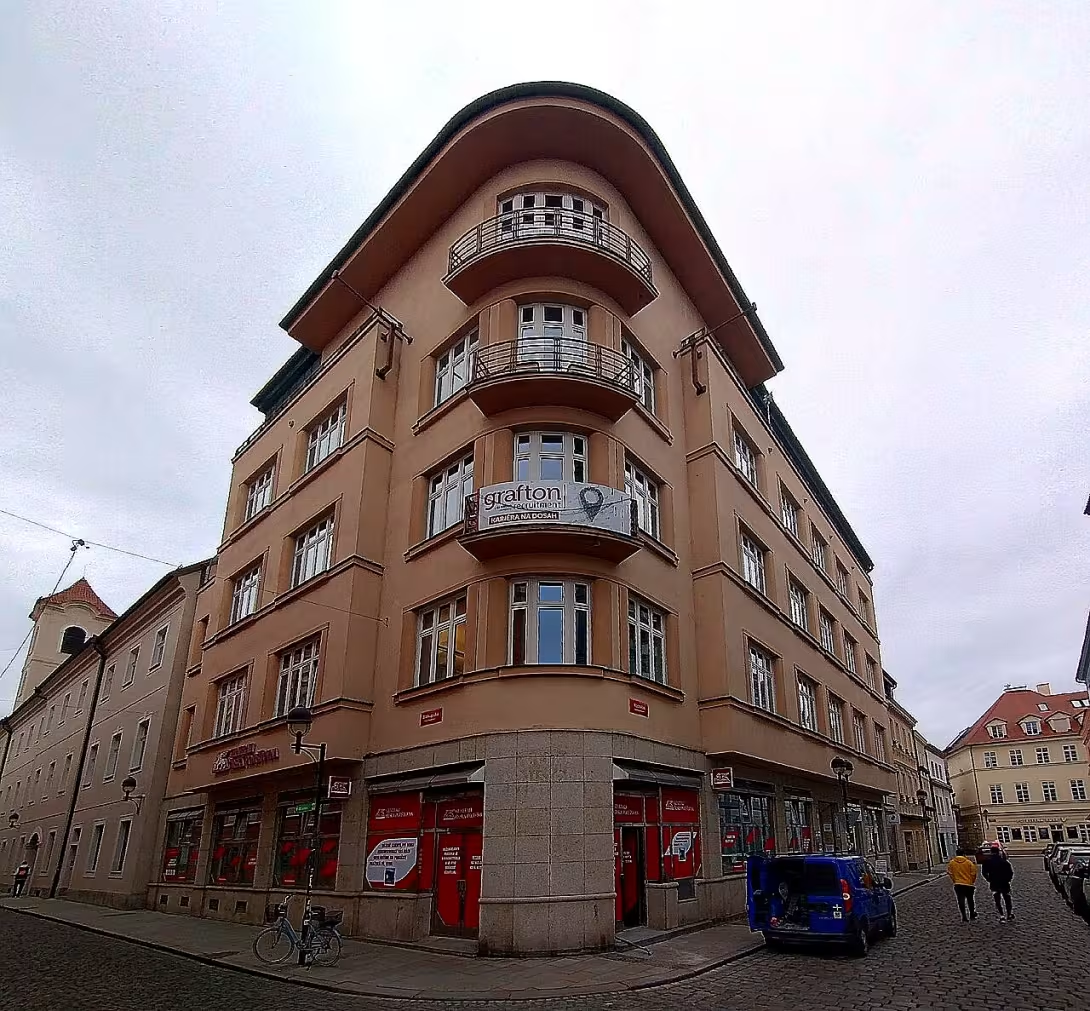
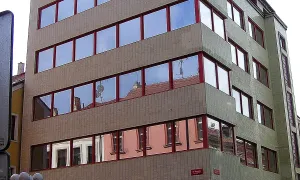
The Fénix Palace is a functionalist building on the corner of Radník and Bishop Street in České Budějovice, in close proximity to Přemysla Otakar II. The building was built between 1928 and 1929. It represents an important example of Purist architecture with art deco elements, which illustrates the building development of the city during the period of the first republic.
The history of the place goes deep into the past. Before 1556 there was a pub with a war law, which the municipality sold and repurchased several times. In the second half of the 18th century the house was destroyed during the planned construction of a piarist seminar, from which only the object of today's bishop was realized. In the 19th century, an empty plot served as an area of city firefighters. They were in close contact with a prisoner from the nearby Black Tower who warned them about the fires in the area.
In 1928 the city sold the land to the Vienna Insurance Company Phoenix. Although it was originally assumed that the project would be prepared by architect Josef Gočár, the construction was eventually realized by builder Josef Hauptvogel according to his own design. Experts evaluate the architectural representation of the building as a valuable example of purism in the region. Some researchers in her style also identify the influences of art deco and functionalism.
After the completion of the construction in 1929, the palace served mainly the needs of the insurance company, but its premises also hosted a number of commercial entities. On the ground floor there was a shop for RUPA confectionery, ice cream shops, goldsmiths and fire extinguishers. There were medical offices upstairs. After 1945, the building was renamed Star Palace, but this name ceased to be used after 1948. In the 1950s, it was considered to set up the first city convenience store in these premises, but this did not happen.
Today, the Phoenix Palace continues its administrative and commercial function. It has an insurance company, legal offices and other services. The building remains an important element of urban development, which reflects the economic prosperity and modernisation efforts of the first republic by its architecture. For visitors to České Budějovice it is an interesting goal, which shows in the context of the historical centre the transformation of architecture towards modern purist forms.
Then and now
Drag the slider to compare how the landmark may have looked when it was built with the view today.
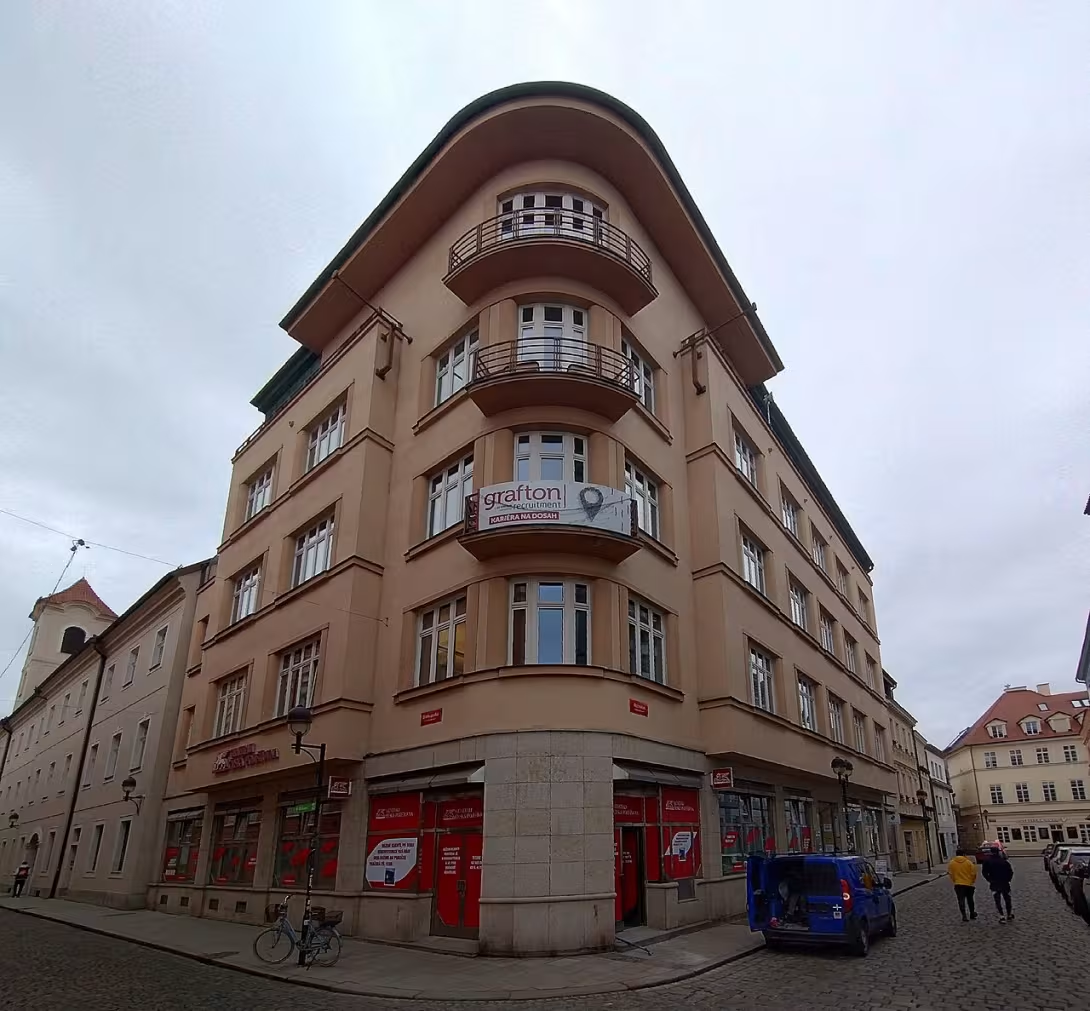

The historical appearance on the left is an AI-generated visualisation and serves as inspiration only.
Historical milestones
- 1928
- The city sold the land to the Vienna Insurance Company Phoenix.
- 1929
- Building completion.
- 1945
- Change the name of the building to Star Palace.
Architectural development
The building was built on an empty parcel of former city firefighters. The architecture of the building is considered a valuable example of the purist style in the region. Construction was realized by builder Josef Hauptvogel according to his own design.
Historical events
1928: Sale of land to Phoenix. 1929: Completion of palace construction. 1945: Renaming the building to Star Palace.
Owners
Municipality of České Budějovice (until 1928), insurance company Fénix (since 1928).
Points of interest
- The building was built between 1928 and 1929 in a place where there was a pub with a war law and later a complex of city firemen. - The construction was carried out by builder Josef Hauptvogel according to his own design, although it was originally assumed that the project would be prepared by architect Josef Gočár. - On the ground floor of the building, there was a candy store, an ice cream shop, a jewelry store or a fire department shop. - After 1945, the building was renamed Star Palace, but this name stopped being used after 1948. - In the 1950s, it was considered to set up the first city convenience store in these premises, but this did not happen.
Guide
Show guide text
This text was created by artificial intelligence and has not been editorially reviewed. It may contain inaccuracies.
Welcome to the heart of our city streets. Right now, when you're standing in this strategic place, where two important arteries of the city, Radník Street and Bishop Street meet, you have a building in front of you that immediately captures your view with its presence. You're standing outside the Phoenix Palace. Feel the weight, the stability, and the security this building emits. It is an object that is not just an ordinary house, but a monument, which, in its form and location, clearly says that something extraordinary has been created here. Look at its corner position, how it adapts to the rhythm of the city and how it dominates this whole intersection.
To understand why this building is standing right here and why it looks what it looks like, we have to go back in time together. Imagine the year one thousand nine hundred twenty-eight. The city was then in a process of great transformation, looking for its modern face, and this particular land was then sold to a major Viennese insurance company called Phoenix. You know, at that time, Vienna was the center of everything important, the center of money, culture and stability. The arrival of such a company in České Budějovice was not just a business transaction, it was a symbolic step forward, meant modernization and growth of our city. This palace was supposed to be a visual expression of the security the insurance company offered its clients. It was supposed to be solid, dignified and modern.
Now pay attention to the very form of the building that is surrounding you. When you look at her facade, notice how different directions of architecture are mixed in. It is not just one uniform style, but a fascinating set of several approaches that constantly conduct dialogue in this building. Here you will see elements of purism that place great emphasis on purity, order and clear lines. This approach gives the building its unmistakable structure and peace. At the same time, however, in its details, you will feel the influence of the style of decorative art, which gives the whole some elegance, whimper and richness, without being excessive. And finally, in the overall logic and use of space, you perceive the powerful influence of functionalism. It focuses on making the building not only beautiful, but above all useful and logical. This blend of styles was quite typical of the turn of the 1920s and 1930s, and it is thanks to it that the Phoenix Palace does not seem obsolete, but has a constant dynamic.
And who really was behind all this? Here lies one of the most interesting stories that ties to this place. When this palace was built, everyone in the area expected the name of the great architect Josef Gočár. This was the name which at that time meant the absolute peak of modern thinking and the highest quality throughout the state. People were counting on him to build the project. But fate was different. This whole building was realized by Josef Hauptvogel. And that's not easy. Hauptvegel was not just someone who oversaw the construction, he was the person who developed the project himself, according to his own vision. He created a work that was the result of his personal artistic perception of the world. It is a fascinating idea that instead of the expected big name, we have here a monument created by a man who has decided to go his own way and create something that would be his own signature in the history of the city.
Now let's look at what happened here before these massive walls began to build. If you could go back a few decades in time, you wouldn't see this elegant horn, but instead you would find a completely different world here. This place used to be a pub that had the right to brew its own beer. Imagine the sounds, the smells, the people who have been here all day and all night. It was a place of community life, simple and popular. Later this area became the seat of the city firefighters. It was an area full of work, constant movement and readiness to intervene. It is on this huge contrast between the old, community life of pubs and the firehouse and the new, representative world of insurance that is worth the whole meaning of this place. The Phoenix Palace is like a new chapter written on the old pages.
But time passes, and with it the world around us changes. These buildings, too, are undergoing transformations. In the year one thousand nine hundred forty-five there was one significant change which concerned the name of this object. The building that has been linked to Phoenix insurance for years has acquired a new name - Star Palace. This change came at a time when both the world and our countries were in huge shocks and looking for new identities. Although the name changed, the very essence of the building as an important point of the city remained.
Perhaps now you're being told what has happened in these premises over the decades. The ground floor of the building has always served various shops and services, making it a vibrant and constantly vibrant body of the city. People came here not only for insurance, but also for everyday needs, for shopping or for services offered by the city. So the palace was never just a closed fortress for the chosen, but it was part of the daily rhythm of the people who passed by, who stopped here and who lived their lives in its shadow.
Now, I beg you, don't let yourself be stopped just by this view. The Phoenix Palace is just one of the many beautiful pages our city offers. It's just one of many stories that are told here through stones and lines. Continue your journey, walk these streets and look around you. Every horn, every facade, and every building you come across can have its own hidden story, just waiting to be discovered. I wish you a beautiful and inspiring walk around our city.
Tips for visitors
The best time for a tour is in the morning on working days, when it is calmer in the city centre and light highlights functionalist details of the palace facade on the street corner.
The palace is located in the historical heart of the city, where the entrance is restricted.
Take comfortable shoes for walking on historic tiles and camera to visit the exterior. If you are planning a longer stay, do not forget the sun or rain protection, as the tour takes place in an open area.
The best pictures are taken from the opposite side of the street, where the total mass of the building stands out. Ideal lighting conditions for the capture of architectural elements occur during the golden watch when the sun falls directly on the facade.
In the immediate vicinity you can visit Přemysl Otakar II Square, the Black Tower, St. Nicholas Cathedral or the Bishop. For families with children, the area is ideal for walking with a pram due to flat terrain and proximity to the main square.
Frequently asked questions
Can the monument be visited?
This is a residential or farm building, not a museum with opening hours. Please view it from public space and respect the owners' privacy. We have no information about access to the interior.
Where is the monument?
Location: České Budějovice 1, Jihočeský kraj. The map on this page shows the exact spot.
Why is the monument protected?
It is listed in the Central List of Cultural Monuments of the Czech Republic as a cultural monument (register no. 1000017343).
Businesses nearby
Do you run a restaurant, accommodation, shop, museum, rental, wellness or other visitor service near this monument? Show yourself directly to the people heading to it — this is how they will see you in the app and on the web:
Events nearby
Zdroj akcí: otevřená data měst a obcí ČR (Národní katalog otevřených dat) a kalendář akcí Národního památkového ústavu.
Nearby
Náměstí Přemysla Otakara II., Černá věž, katedrála svatého Mikuláše, biskupství.
Accommodation nearby
Trips and activities nearby
Guided tours, tickets and activities nearby from GetYourGuide
Affiliate link: if you buy from the partner, we may receive a commission. The price for you does not change.
Search tours and activities →Themed route
Thematic cruise route: Palace of Phoenix and surroundings
1. The Square of Mohysl Otakar II. We will start at the central square of the city, named after the Czech king Přemysl Otakar II. It is the lively heart of Czech Budejovice, where history and modernity meet. The square is famous for its beautiful buildings and here you can start a walk by exploring the architecture and atmosphere of the city.
2. Black Tower (Tower) From the square we move towards the Black Tower, one of the oldest buildings in the city. The tower is part of the former castle and today it serves as a monument to history. It's the perfect place to look at the whole city and see its past.
3. St. Nicholas Cathedral (church) The next step is to visit the cathedral, which stands as a prominent example of Gothic architecture. The Cathedral of St. Nicholas is not only the spiritual centre of the city but also the location of rich works of art and historical monuments.
4. Bishopric (Bishop Palace) The best way to get to know the cathedral more or less in general is to walk the bishop. The Bishop Palace is part of the complex and offers a view of the history of church administration in the city. It's a place full of culture and history that complements the total visit.
5. Palace Phoenix (Palace) Finally, we will reach the main destination of our route - the Phoenix Palace. This modern architectural treasure is a symbol of courage and innovation in the city. The Palace serves as a cultural centre, hosting various events and exhibitions.
This route offers a view of the history and modernity of České Budějovice, connecting ancient monuments with new architectural parts.
Seasonal recommendations
Spring: In spring, the Phoenix Palace in České Budějovice will turn into a magnificent flowering garden park, where flowers and trees will bloom. The sunny days offer ideal conditions for a tour with natural lighting, which emphasizes the beauty of architecture and green. This season you can meet with a milder crowd of visitors compared to the summer season. We recommend wearing clothes suitable for mild temperatures, perhaps even a coat for a cooler winter morning. The best time to visit is the early spring when nature begins to awaken.
Summer: Summer brings long sunny days and high temperatures, making a visit to the Phoenix Palace an ideal experience for people seeking rest in the shadows. This season the park is full of blooming plants and it is the best time for photographs in natural light. Expect higher attendance, especially on Wednesday, so we recommend arriving at the palace early in the morning or later in the afternoon. Wearing light clothes and keeping yourself hydrated is the key to comfort in warm weather.
Autumn: In autumn, the Phoenix Palace offers a unique atmosphere when tree leaves go into vivid colors and the sun sets early. This season is ideal for visiting in quiet days without a large crowd. Lighting changes with longer evenings, which brings a romantic view of the palace and its surroundings. We recommend wearing clothes suitable for colder weather and possibly a warm shirt or plaid, especially in the evening. The best time to visit is usually in the early autumn period when temperatures are still pleasant.
Winter: Winter season offers Phoenix Palace in a completely different light. Short days and cold weather may limit traffic, but they also add magic and calmness to the tour. The architectural elements of the palace are highlighted by light and snow can give a special character to the surrounding environment. We recommend wearing warm clothes, including hat and gloves, especially if the weather is snowy or freezing. The best time for experience is the early sunrise, when the atmosphere is calm and cold light gives the palace a mystical view.
Visualizations and artistic views


The visualisations are generated by artificial intelligence and serve as inspiration.
Photos from the area
Real photos taken near the monument

Zdroj a licence jsou uvedeny u každého snímku.
Tips from visitors
No tips yet. Be the first!
Log in and add your tip.
Sources and literature
Photos: JAn Dudík / CC BY-SA 4.0 — Wikimedia Commons. The author and licence also appear when you hover over the image.
Faktickým podkladem tohoto textu byl článek na Wikipedii, jehož autory jsou přispěvatelé Wikipedie. Článek je dostupný pod licencí CC BY-SA 4.0.
Location on the map
More monuments – České Budějovice 1
Show all in the municipality
Příběhy a pověsti
Legendy, pověsti a příběhy spjaté s touto památkou
Fotografie návštěvníků
Zatím žádné fotografie. Buďte první, kdo přidá fotografii z návštěvy!
Log in a přidejte svou fotografii nebo hodnoťte.
Za ověřenou návštěvu v aplikaci získáte víc bodů — poznáme podle GPS, že jste na místě.
Reviews and comments