






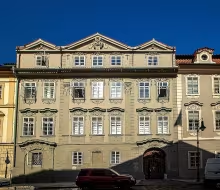
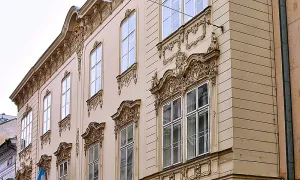
Palác Lažanských ve Sněmovní is a baroque palace located in Prague's Malá Strana district. Originally constructed as a Renaissance house in the mid-16th century, it stands at Sněmovní 175/5 and reflects Prague's architectural evolution over several centuries. The three-winged structure encloses a courtyard with notable features like edicule portals and shields above the main entrance.
The site was once vacant after a fire in 1541 destroyed a Gothic house. A Renaissance house was built there in the mid-16th century, undergoing significant transformations by the early 18th century to acquire its baroque form. The palace's architectural journey began with Jaroslav Loubský z Lub in the early 17th century and continued through various ownerships.
The style transitioned from Renaissance to Baroque, mirroring broader European artistic trends. Initially a single-story structure, it was transformed into its current baroque form in the early 18th century. Architectural modifications were made under J. J. Gelnhausen between 1735 and 1739, with further enhancements by Otakar Materna for Jan Karel Lažanský in the late 19th century. The main entrance features three shields, with a larger central one.
Ownership has seen several notable figures. After Jaroslav Loubský z Lub's tenure, the Černín family acquired it in 1670. František Josef Valdštejn purchased it in 1712, followed by J. J. Gelnhausen who commissioned baroque renovations. Jan Hennet became the owner in 1741, and later, in 1899, Jan Karel Lažanský acquired the palace, leading to further modifications. In 1945, Terezie Lažanská had her property confiscated along with the palace.
Today, Palác Lažanských is privately owned, housing offices and apartments. Its historical significance and architectural beauty make it a noteworthy site for visitors exploring Prague's Malá Strana district. The area includes other historical architecture like Černínský palác, narrow streets, and typical gardens of this historic part of Prague.
Palác Lažanských ve Sněmovní stands as a testament to the rich cultural and architectural history of Prague. Its transformation from a Renaissance house to a baroque palace mirrors broader historical changes in Bohemia under Habsburg rule and the European Baroque movement. Visitors are invited to explore this remarkable monument, appreciating its historical layers and architectural elegance.
Historical milestones
- 1541
- The site remained vacant after a fire destroyed a Gothic house.
- 1670
- The Černín family acquired the palace.
- 1712
- František Josef Valdštejn purchased the palace.
- 1735
- Baroque renovations were commissioned by J. J. Gelnhausen.
- 1899
- Jan Karel Lažanský acquired and modified the palace.
Architectural development
Palác Lažanských began as a Renaissance structure, later transformed into its current baroque form in the early 18th century. Architectural modifications were made under J. J. Gelnhausen between 1735 and 1739, with further enhancements by Otakar Materna for Jan Karel Lažanský in the late 19th century.
Historical events
In the mid-16th century, a Renaissance house was built on the site after it remained vacant following a fire in 1541.
The palace underwent baroque transformation during the first half of the 18th century.
Owners
Initially owned by Jaroslav Loubský z Lub in the early 17th century, the palace was acquired by the Černín family in 1670. In 1712, František Josef Valdštejn purchased it, followed by ownership under J. J. Gelnhausen who commissioned baroque renovations between 1735 and 1739. Jan Hennet became the owner in 1741, and later, in 1899, Jan Karel Lažanský acquired the palace, leading to further modifications.
Points of interest
- The palace's architectural evolution began after a fire in 1541 destroyed the original Gothic structure on the site, marking an early instance of urban renewal in Prague.
- In its baroque transformation period between 1735 and 1739 under J. J. Gelnhausen, Palác Lažanských ve Sněmovní was not only modified architecturally but also became a reflection of the European Baroque movement's influence on Bohemian architecture.
Guide
Show guide text
Welcome to the historic Palác Lažanských ve Sněmovní, nestled in the heart of Prague's Malá Strana district. As you stand here, take a moment to soak in the grandeur before you—a three-winged baroque palace that encloses an inviting courtyard. The intricate architectural details beckon your attention; notice how they capture the essence of its storied past.
Let's delve into the origins and historical context of this magnificent site. In 1541, after a devastating fire destroyed a Gothic house on this location, the land lay vacant for decades—a poignant reminder of Prague's resilience and renewal. It wasn't until 1670 that the Černín family acquired the property, marking the beginning of its transformation. By 1712, František Josef Valdštejn had taken ownership, setting the stage for a significant architectural metamorphosis.
The palace underwent extensive baroque renovations between 1735 and 1739 under the vision of J. J. Gelnhausen. These changes transformed it into the splendid structure you see today. While specific architects remain unknown, their work is evident in the detailed edicule porta and other elements that define its character.
Throughout its history, Palác Lažanských ve Sněmovní has been home to many influential figures. Jan Karel Lažanský, who acquired it in 1899, left his mark with further modifications, ensuring its legacy continued into the modern era. Each of these individuals contributed to the palace's rich tapestry of stories and significance.
Now, let your imagination wander as you consider a fascinating aspect of this place: its architectural evolution began after a fire that cleared the way for renewal. This event is not just a footnote in history but a testament to the enduring spirit of Prague's urban landscape.
As we conclude our brief exploration, I invite you to continue discovering more about Palác Lažanských ve Sněmovní and its surroundings. Each corner holds a story waiting to be uncovered, each stone echoing tales from centuries past. Thank you for joining me on this journey through time, and may your curiosity lead you to even greater discoveries in Prague's enchanting streets.
Tips for visitors
The best time to visit Palác Lažanských ve Sněmovní is during the late spring or early autumn months, when the weather is mild and pleasant for exploring the outdoor gardens and narrow streets of Malá Strana. These seasons offer a comfortable climate that enhances your experience as you stroll through this historic area, avoiding the peak tourist crowds typically seen in summer. Additionally, visiting on weekdays can provide a more tranquil atmosphere compared to weekends.
For transportation, Palác Lažanských is easily accessible by both public transport and car. The palace is located within walking distance from several tram stops and bus lines that serve Malá Strana. If you're driving, there are parking options available in the vicinity, although spaces can be limited due to the area's popularity. It's advisable to check current transportation routes and parking availability online before your visit.
When planning your visit, consider bringing comfortable walking shoes as you'll likely explore on foot through the charming streets of Malá Strana. A camera is recommended to capture the stunning architecture and vibrant gardens surrounding Palác Lažanských. For photography enthusiasts, the best light for capturing the palace's baroque details is during the golden hours—early morning or late afternoon when the sunlight casts a warm glow on the building.
Nearby attractions within a 30-minute walk include Černínský palác and other historical sites that showcase Prague's rich architectural heritage. For families with children, Malá Strana offers various interactive experiences such as exploring the nearby gardens or visiting local museums that provide engaging exhibits for younger audiences. These activities can make your visit more enjoyable and educational for all ages.
Businesses nearby
Nearby
Located in Prague's Malá Strana district, Palác Lažanských is near Černínský palác and surrounded by historical architecture. The area includes narrow streets and gardens typical of this historic part of Prague.
Accommodation nearby
Trips and activities nearby
Guided tours, tickets and activities nearby from GetYourGuide
Search tours and activities →Themed route
Thematic Walking Tour: The Lažanský Palace and Its Historic Surroundings
1. Palác Lažanských ve Sněmovní - Type: Baroque Palace - Why Visit: This exquisite palace, with its elegant façade and rich history, offers a glimpse into the opulent lifestyle of 18th-century nobility in Prague. Originally built for Count František Antonín Špork, it later became the residence of the Lažanský family. Visitors can admire the stunning architecture and explore the palace's interior, which showcases period furnishings and art.
2. Černínský Palác - Type: Baroque Palace - Why Visit: Located just a short walk from Palác Lažanských, Černínský Palác is renowned for its beautiful gardens and the impressive statue of St. John Nepomuk by Matthias Braun. The palace's history as a residence of the influential Černín family adds to its allure, making it a must-see for those interested in Prague's aristocratic past.
3. Malá Strana District - Type: Historic Neighborhood - Why Visit: Stroll through the charming streets of Malá Strana, where narrow lanes and picturesque gardens create an enchanting atmosphere. This area is filled with historical architecture that reflects its rich cultural heritage. As you wander, take in the views of Prague Castle across the Vltava River and enjoy the vibrant local cafes and shops.
4. Church of St. Nicholas - Type: Baroque Church - Why Visit: Situated near Palác Lažanských, this church is a fine example of Baroque architecture with its ornate interior and beautiful frescoes. The church's history as the burial site for many members of the Lažanský family adds an intriguing layer to your visit, offering insight into the region's historical significance.
This tour provides a comprehensive exploration of Palác Lažanských and its immediate surroundings, immersing visitors in the rich tapestry of Prague's history and architecture.
Seasonal recommendations
Spring: Visiting Palác Lažanských ve Sněmovní during spring offers a unique experience as the city of Prague awakens with vibrant colors and blooming flora. The gentle warmth and longer daylight hours create an inviting atmosphere, perfect for exploring historical sites at a leisurely pace. Spring light enhances the architectural details of the palace, casting soft shadows that highlight its intricate designs. Visitors should be prepared for occasional rain showers, so carrying a light waterproof jacket is advisable. While the crowds are generally moderate, arriving early in the morning can provide a more tranquil experience before the day's visitors arrive.
Summer: The summer months bring an energetic buzz to Palác Lažanských ve Sněmovní as Prague thrives under sunny skies and warm temperatures. This period sees increased foot traffic, particularly during peak tourist season when international visitors flock to explore the city's rich history. To avoid large crowds, it is recommended to visit early in the morning or later in the afternoon. Comfortable walking shoes and light clothing are essential due to the heat, and staying hydrated throughout your visit will ensure a pleasant experience. The palace gardens can be particularly enjoyable during this time, offering a serene escape from the city's hustle.
Autumn: Autumn at Palác Lažanských ve Sněmovní is characterized by a stunning display of fall foliage that transforms the surrounding landscape into a picturesque scene. The cooler temperatures and crisp air create an ideal setting for exploring the palace without the summer crowds, making it a favorite time for locals to visit. As daylight hours shorten, planning your visit in the morning allows you to make the most of natural lighting. Layered clothing is recommended to accommodate fluctuating temperatures throughout the day, ensuring comfort as you admire the seasonal beauty.
Winter: Winter offers a magical atmosphere at Palác Lažanských ve Sněmovní, with Prague's historic architecture beautifully illuminated against the backdrop of snowy landscapes and festive lights. The shorter days mean that visiting in the morning is advisable to fully appreciate the palace before it closes earlier than other seasons. Visitors should dress warmly in layers to combat the cold and ensure a comfortable experience. Despite potentially lower visitor numbers compared to summer, checking for any seasonal closures or reduced hours is wise to avoid disappointment.
```Visualizations and artistic views

Vizualizace jsou generovány umělou inteligencí a slouží jako inspirace.

Tips from visitors
No tips yet. Be the first!
Log in and add your tip.
Location on the map


Příběhy a pověsti
Legendy, pověsti a příběhy spjaté s touto památkou
Reviews and comments