



Palác Razumovských City palace
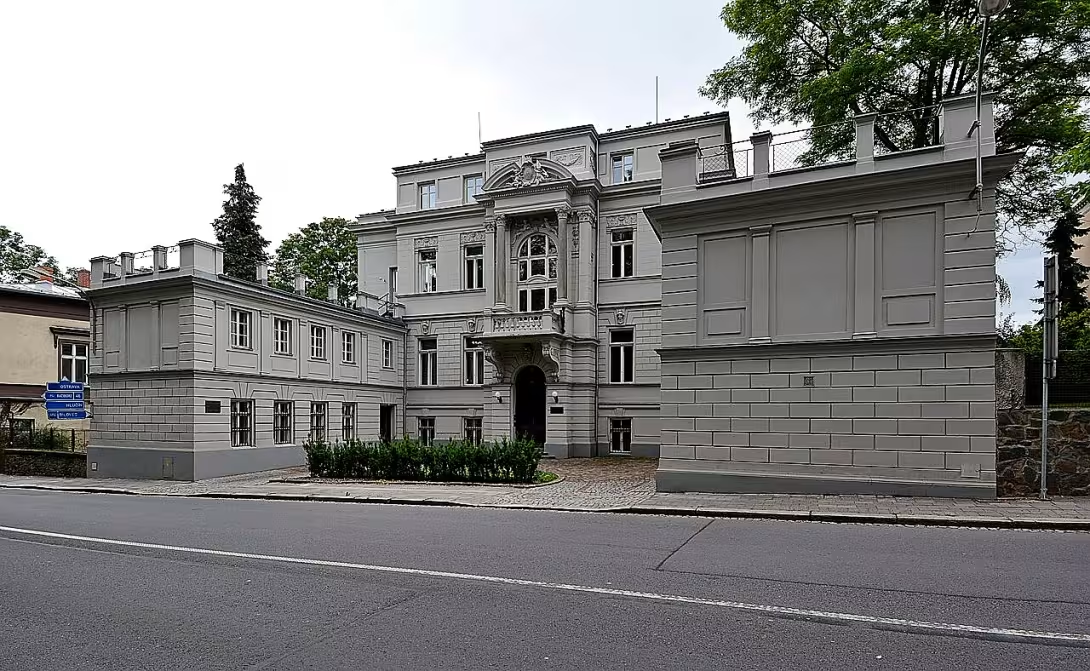
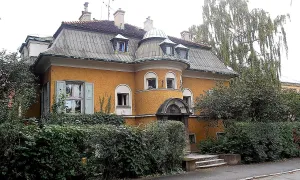
Palác Razumovských is a representative historical building with an honorary court located on the Railway Station in Opava. The building was built between 1891 and 1893. It represents an important example of the noble architecture of the late 19th century and has since 1958 been registered as a cultural monument.
The construction took place during the period of economic boom of Austria-Hungary, when historical styles were promoted in Czech countries. These buildings were supposed to demonstrate the social status of the then nobility and the rich township. The initiator of the establishment was the noble family of Razumovský, who owned the estates of Melč and Lower Life in the vicinity of Opava.
The architectural design was developed by the Vienna creator Ludwig Tischler. The building is designed as a new building with an honorary court, with the author of the project placing considerable emphasis on the rich sculpture decoration of the exterior. The author of these elements on the facade was Johann Müller.
The Razumovsky family owned the palace since its completion in 1893. After 1945, the building became state owned. In 1946, the premises became the headquarters of the Silesian Institute, which worked here for several decades. Since 2010, the building serves as the headquarters of the Silesian Museum.
Palác Razumovských is a valuable proof of the representative architecture of its time and is part of the wider historical context of Opava thanks to its location on the Railway circuit. Visitors can find other institutions in the immediate vicinity, such as the Silesian Museum, or use the location of the building to search the historic city centre. This monument is an important reminder of the region's noble history and its visit offers insight into the construction development of Opava in the late 19th century.
Then and now
Drag the slider to compare how the landmark may have looked when it was built with the view today.
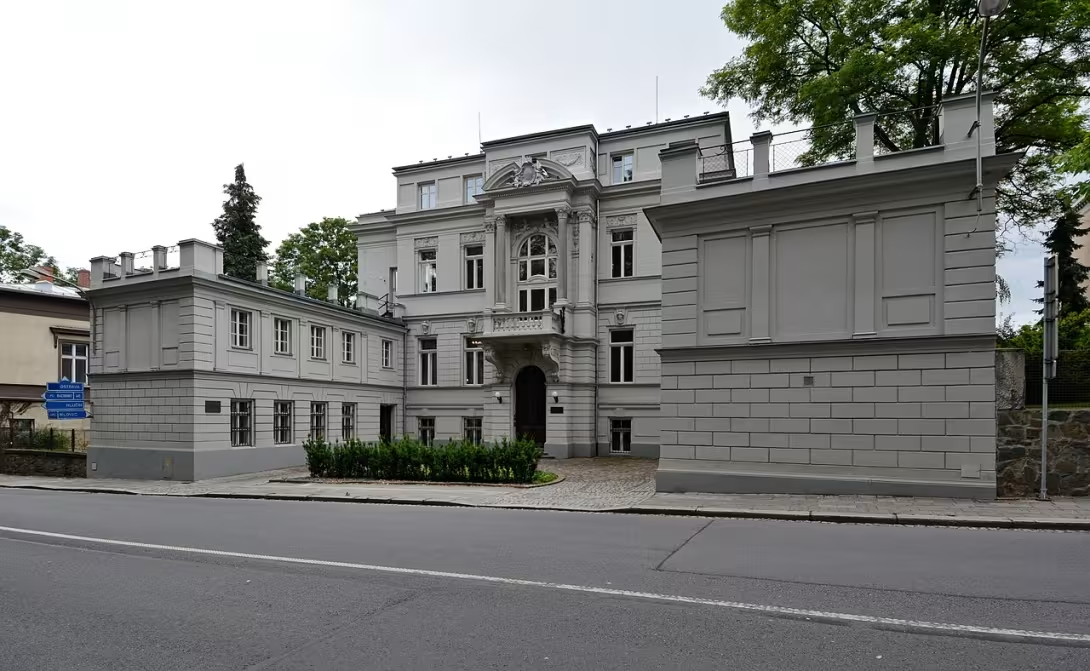
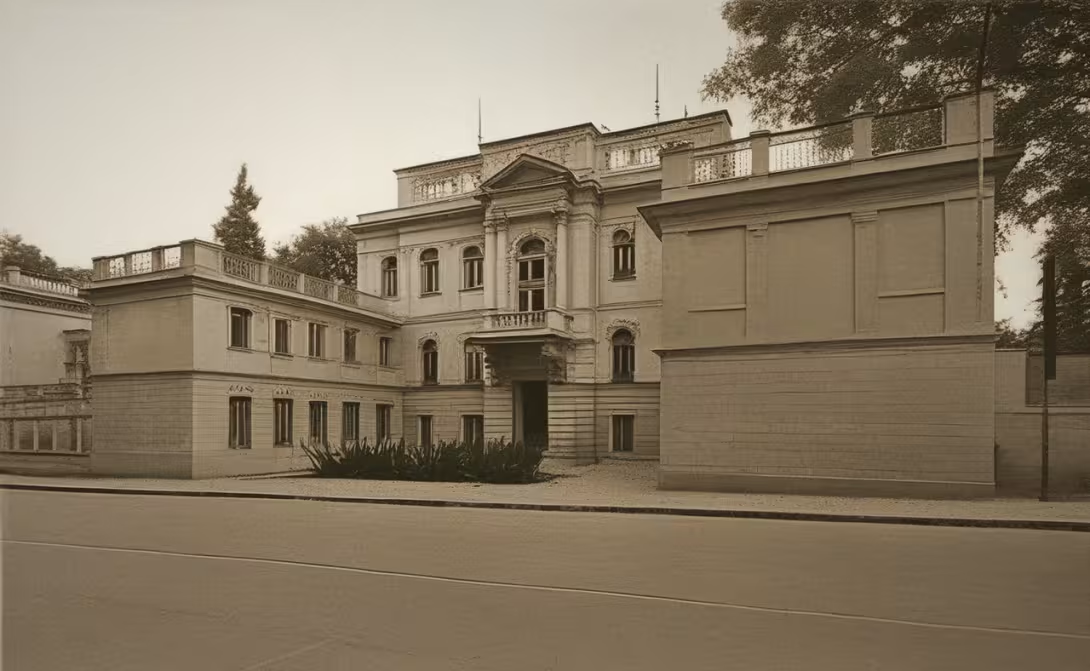
The historical appearance on the left is an AI-generated visualisation and serves as inspiration only.
Historical milestones
- 1891
- Opening of the palace for the Razumovsky family.
- 1946
- The Silesian Institute began to reside in the palace.
- 1958
- The building was declared a cultural monument.
- 2010
- The headquarters of the Silesian Museum moved into the palace.
Architectural development
The palace was built in the spirit of history as a new building with an honorable court. The architectural design was developed by Ludwig Tischler, the emphasis being placed on rich sculpture decoration of exterior.
Historical events
1891-1893: Palace construction. 1946: Opening of Silesian Institute in the building. 2010: Resettlement of the headquarters of the Silesian Museum to the palace.
Owners
Family of Razumovsky (since 1891), state (after 1945).
Points of interest
- The construction was built between 1891 and 1893 and has been registered since 1958 as a cultural monument. - The initiator of the establishment was the noble family of Razumovský, who owned the estates of Melč and Lower Life in the area of Opava. - The architectural design was developed by the Vienna creator Ludwig Tischler and the sculpture decoration of the facade was created by Johann Müller. - After 1945 the building became state owned and since 1946 the Silesian Institute has been located there. - Since 2010, the building serves as the headquarters of the Silesian Museum.
Guide
Show guide text
This text was created by artificial intelligence and has not been editorially reviewed. It may contain inaccuracies.
Welcome to Opava, where history meets the present at every turn. Right now, you're facing one of the most important buildings in this part of town. The Palác Razumovských stands in front of you, a representative building that, both in size and appearance, immediately attracts the attention of everyone who passes through the Railway Circuit. Feel this atmosphere and the first impression the building gives you. It is a place that radiates dignity and talks about the times when Opava was the centre of social and political events. Notice how the building dominates space and how it separates street noise from the inner calm of its space. Let us now return together in time more than a hundred and thirty years back, to the end of the nineteenth century. Imagine Opava at that time, during the flowering and construction period. It was between 1891 and 1893 that this palace was built here. However, it was not an ordinary house, but an ambitious project of the noble family of Razumovsky. This family was not a novice in the region, because it owned significant assets in Melč and in Lower Lives. So they needed a seat in the city itself that corresponded to their social position, their wealth and influence. The palace was to be a calling card for their power and taste, a place to meet the elite and the symbol of their presence in the heart of Silesia. Now pay attention to the architecture itself. If you look at the overall design of the building, you see the result of the work of a Viennese creator named Ludwig Tischler. The fact that the project was entrusted to a Viennese architect is not an accident. Vienna was at that time the capital of the empire, center of fashion, art and state-of-the-art building trends. Tischler brought this great urban spirit to Opava, which makes the palace so representative. Please look up on the facade. Notice the details that decorate the facade. Here you see the trail of another master, sculptor Johann Müller, who created sculptures. These elements are not just an ornament, but they add depth and character to the building. Try to imagine how much work and precision required carving these details in stone so that today they could testify to their time. In addition to the facade itself, notice the layout of the building. The palace has an honorable court. Stop for a moment and think about what function this space was doing. The honor court wasn't just an empty place outside. It was a transition area, a zone that separated the public space of the city from the private world of the noble family. It was the guests' carriages that were coming in, the visitors were coming in, and it was this space that was supposed to inspire a sense of respect and admiration before a person entered. It's an architectural element that underlines the exclusivity of the entire mansion. But the history of the palace is much richer than the period of its first owners. As time went by, the role of this building changed, which is a fascinating story about the transformation from an aristocratic home to an institution serving the public and science. During the twentieth century the palace had undergone major changes. The year of the break was 1946. At this time, Silesian Institute began to reside in the palace. Imagine the contrast. The places that were designed for the privacy and luxury of one family suddenly became the center of study, archives and scientific work. The discussion of experts and the rustling of papers started here instead of the rustling of the shading clothes. This change in function saved the building and kept it at the heart of social interest. In 1958, the palace was officially declared a cultural monument. This was an important moment, because it recognised that the construction was of irreplaceable value not only for Opava but for the whole country. Protection as a monument meant that the building will be protected from neglect and its unique appearance, including the work of Ludwig Tischler and Johann Müller, will be preserved for future generations. If we move even closer to the present, we will reach 2010. This year, the headquarters of the Silesian Museum moved into the palace. It is very symbolic that a building that was created as a symbol of noble wealth is today serving as the administrative heart of an institution that takes care of the history and monuments of all Silesia. That's how the circle closed. Palác Razumovských is no longer a closed world of one family, but it is part of a system that stores the memory of the entire region. If you're standing in front of this construction today, you might find one interesting thing. Try to realize how closely rodina Razumovských was connected to the landscape around Opava. Their ownership of the estates in Melch and Lower Lives means that this palace was not just an isolated city house, but was part of a wider network of their influence in the landscape. The palace was like an urban hub that connected their country houses to the political and social center of the city. It is a reminder of the time when nobility shaped the face of our cities and landscapes with its activities and investments in architecture. Take one last look at the overall composition of the building. Feel her stability and elegance. Palác Razumovských is living proof of how architecture can adapt to new times. From the nineteenth century Vienna project to the Science Institute to the Museum Directorate. Each of these layers left a mark in the building, even though her face remained basically the same from the outside. Now that you know the story of this place, I suggest you recover the past time and look at the facade details from different angles. Notice how light hits the sculptures and how the building changes depending on where you're looking at it. It's a great moment for a brief reflection on how fast time passes and how important it is to protect the jewels we have left behind. Thank you for accompanying me to this brief interpretation of the Palace of Razumovsky. I hope this journey in time helped you see more than just walls and windows, and that you felt the spirit of the old Opava. We now invite you to explore the city again. Continue your journey, discover other hidden corners and be inspired by the history surrounding you. I wish you a pleasant rest of the day and many new experiences in discovering the beauty of Silesia. Goodbye.
Tips for visitors
The best time to visit is in the morning or late afternoon, when the sun creates interesting shadows in the facade and an honest courtyard, which underlines the historical architecture of the building.
It is ideal to use a wide-angle lens to capture the entire representative building from the street. The best lighting conditions for detailed pictures of the decorative elements are at slightly below the cloud when the light is evenly dispersed.
In the immediate vicinity of the palace is located the historic center of Opava, which encourages you to walk. For history lovers is within reach of the Silesian Museum, which complements knowledge of the region.
This area is suitable for easy walks with children.
Frequently asked questions
Can the monument be visited?
Some buildings of this kind are open for guided tours, others serve another purpose or are privately owned. We have not verified whether and when this monument is open – please ask the operator.
What are the opening hours and admission?
We have not verified the opening hours or admission. Current information is published by the operator.
Where is the monument?
Location: Předměstí. The map on this page shows the exact spot.
Why is the monument protected?
It is listed in the Central List of Cultural Monuments of the Czech Republic as a cultural monument (register no. 1000146602).
Businesses nearby
Do you run a restaurant, accommodation, shop, museum, rental, wellness or other visitor service near this monument? Show yourself directly to the people heading to it — this is how they will see you in the app and on the web:
Events nearby
Zdroj akcí: otevřená data měst a obcí ČR (Národní katalog otevřených dat) a kalendář akcí Národního památkového ústavu.
Nearby
Slezské zemské muzeum, historické centrum města Opavy, řeka Opava.
Accommodation nearby
Themed route
1. The historical center of Opava (city core) - Walk between old houses and explore the city's atmosphere. 2. Silesian Museum (Museum) - A trip to the history of the region through interesting exhibitions. 3. Opava River (Water Flow) - A relaxing walk along the shore that connects the center with the surrounding area. 4. Palác Razumovských (Palace) - The main destination of the journey, which will amaze its beauty and history.
Seasonal recommendations
Spring: In the spring season Palác Razumovských is decorated with flowers that create an attractive and colorful character around the object. Sun rays illuminate trees and green grass, providing a comfortable environment for walking. During this time it is recommended to wear light clothes with the possibility to add another piece to a cooler clock, as temperatures may become milder in the morning and evening. Preferably visit the palace at noon, when the sun is most noticeable and nature offers full colors.
Summer: Summer brings long days and warm nights, which means that Palác Razumovských can be visited later. The sun lights the roofs and niche of the palace, thus highlighting architectural details. This season it is advisable to wear light clothes that keep comfort at warm temperatures, and you must not forget the protective sun cream and helmet against strong sun. The best time to visit is in the morning or in the evening when the intensity of sunlight is reduced and temperatures are more pleasant.
Autumn: In autumn, the trees have a colorful appearance, which increases the aesthetic value of the palace surroundings. The sunlight is less intense and long shadows add a mystical touch to the architecture of the object. At this time it is recommended to wear more layers of clothing because temperatures may be colder in the morning and evening. Preferably visit the palace later in the day or early in the morning when the atmosphere is calm and nature offers beautiful experiences.
Winter: Winter brings a cold and often snow landscape around the Palace of Razumovsky, which can create views of calm. The sunlight is weaker and long shadows contribute to the quiet breath of the surrounding area. It is necessary to wear warm clothes, including leather shoes and moisture protection. The best time to visit is noon, when the light illuminates the palace best and temperatures are slightly higher compared to the rest of the day.
Visualizations and artistic views


The visualisations are generated by artificial intelligence and serve as inspiration.
Photos from the area
Real photos taken near the monument


Zdroj a licence jsou uvedeny u každého snímku.
Tips from visitors
No tips yet. Be the first!
Log in and add your tip.
Sources and literature
Photos: Gampe / CC BY-SA 3.0 — Wikimedia Commons. The author and licence also appear when you hover over the image.
Faktickým podkladem tohoto textu byl článek na Wikipedii, jehož autory jsou přispěvatelé Wikipedie. Článek je dostupný pod licencí CC BY-SA 4.0.
Location on the map


Příběhy a pověsti
Legendy, pověsti a příběhy spjaté s touto památkou
Fotografie návštěvníků
Zatím žádné fotografie. Buďte první, kdo přidá fotografii z návštěvy!
Log in a přidejte svou fotografii nebo hodnoťte.
Za ověřenou návštěvu v aplikaci získáte víc bodů — poznáme podle GPS, že jste na místě.
Reviews and comments