



Památník Jana Žižky u Sudoměře Memorial
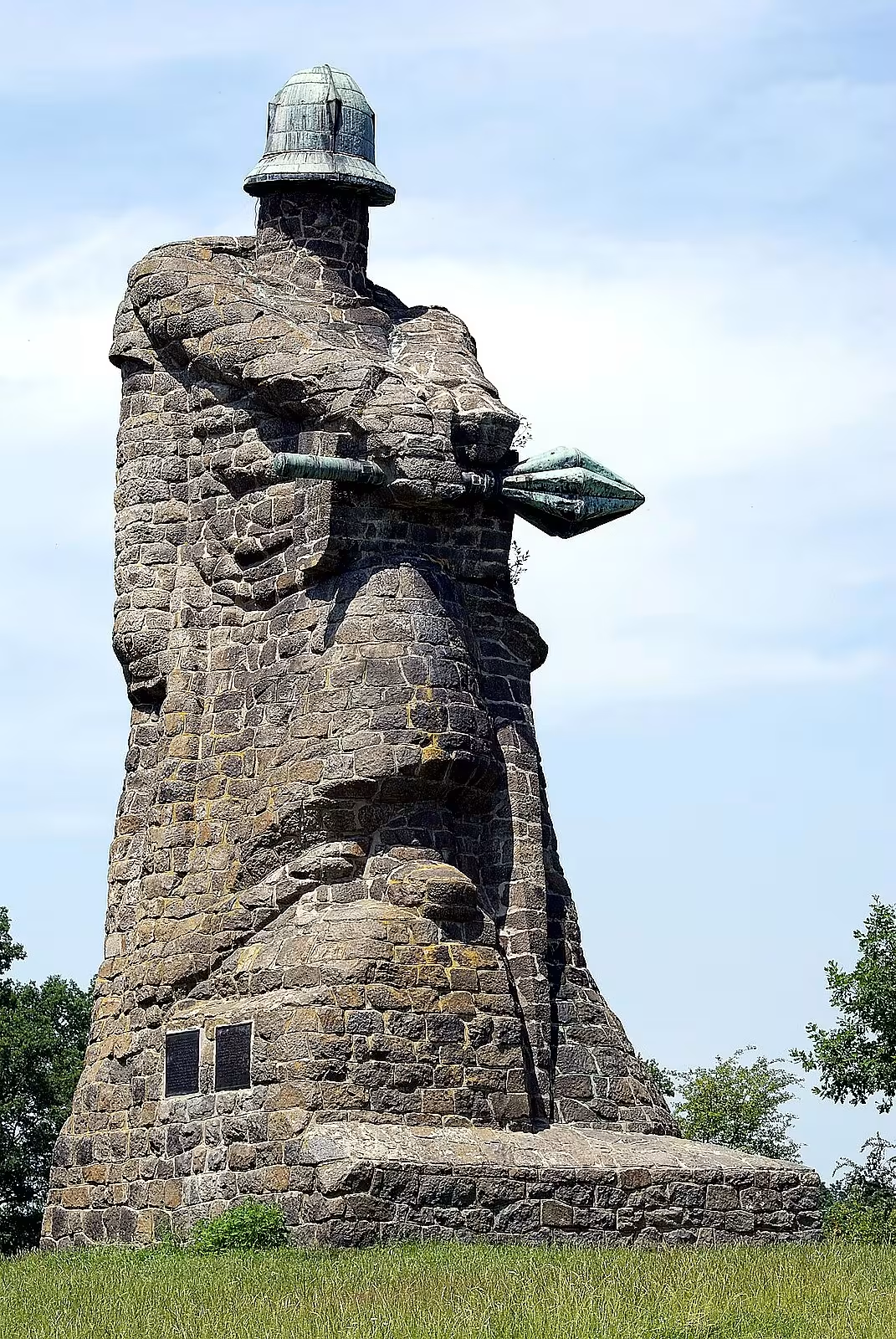
Památník Jana Žižky u Sudoměře is a monumental statue of a warlord who commemorates his victory in the Battle of the Sudomére. It is located between the ponds of Markovec and Škaredým, not far from the South Bohemian village of Sudometery. The statue is made of stone blocks and reaches a height of 16 meters. It was created for the fifth anniversary of the Battle of 1920, its author was the academic sculptor Emanuel Kodet.
The memorial serves as a reminder of the first major battle of the Hussite wars won by the Hussites under the leadership of Jan Žižka. This battle took place in 1420 and was a key moment to defend the Hussite against the Royal Army. In 1920, when it was five hundred years from this historic event, an idea appeared to build a memorial in this place. The aim was to honor the heroism and strategic talent of Jan Žižka, who contributed to defending the Hussite ideals.
The architecture of the memorial is the work of academic sculptor Emmanuel Kodeto. The construction was carried out with the support of building knowledge of František Kulíř, which ensured a robust and durable appearance of the monument. Built from stone blocks, it expresses the integrity and courage of the Hussite movement.
The monument is located on the cadastral territory of Mladejovice in Strakonice district. In the neighbourhood, a pair of memorable oak trees grow the Princess Hedvika Twins, which gives the place a historic atmosphere and a reminder of the past. There is a green and blue tourist brand around the monument that allows visitors to explore the surrounding landscape.
Today Památník Jana Žižky u Sudoměře is available for visit and attracts interested people about the history of Hussite wars. Its importance as a monument to the military achievements of Jan Žižka and the Hussite movement is undeniable. Visit this place offers an opportunity to explore history, honor the memory and appreciate the beautiful natural location.
Památník Jana Žižky u Sudoměře is not only a monument to important historical events, but also a place where history and nature meet. His visit offers a unique view of the past and inspiration for the future.
Then and now
Drag the slider to compare how the landmark may have looked when it was built with the view today.
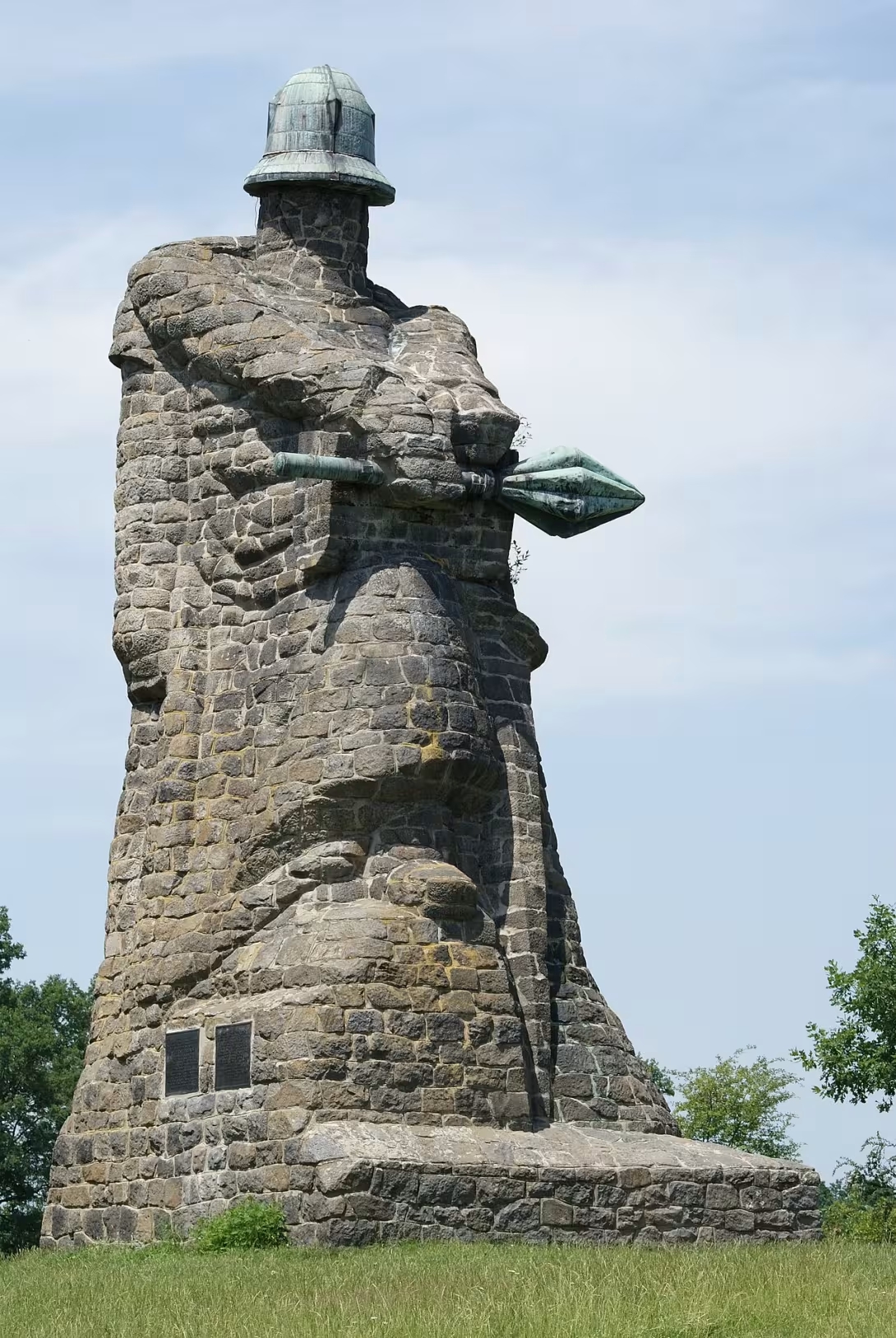
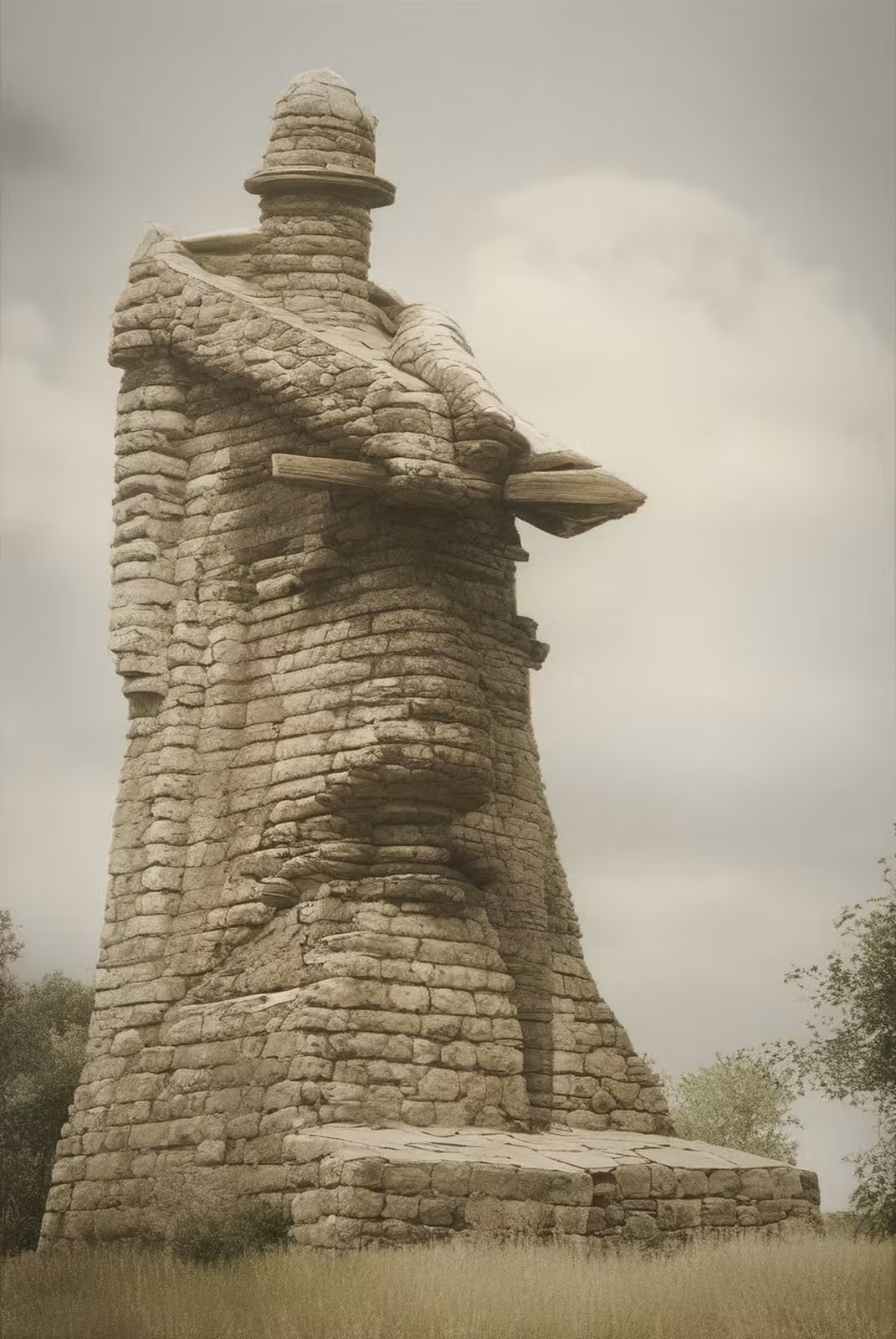
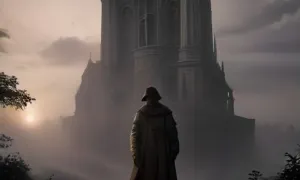
The historical appearance on the left is an AI-generated visualisation and serves as inspiration only.
Historical milestones
- 1420
- The Battle of Sudoměří - the first great battle of the Hussite wars, in which the Hussites won under the leadership of Jan Žižka.
- 1920
- The fifth anniversary of the Battle of Sudoměří, which inspired the design of the statue of Jan Žižka.
- 1925
- The creation of the monument of Jan Žižka near Sudoměří, author is sculptor Emanuel Kodet.
Architectural development
The monument was designed by the academic sculptor Emanuel Kodet and built with support of building knowledge of Franz Kulír. It's made of stone blocks, which gives it a robust look.
Historical events
- 1420
- The Battle of Sudoměř, the first major battle of the Hussite Wars.
- 1920
- The idea of building a memorial for the 500 anniversary of the battle.
Points of interest
- Památník Jana Žižky u Sudoměře is a monumental statue of a warlord. - It is located between Markovec and Škaredým ponds, near the South Bohemian village of Sudomeøí. - The statue is made of stone blocks and reaches a height of 16 meters. - It was created for the fifth anniversary of the Battle of 1920, its author was the academic sculptor Emanuel Kodet. - The memorial serves as a reminder of the first great battle of the Hussite wars won by the Hussites under the leadership of Jan Žižka.
Guide
Show guide text
This text was created by artificial intelligence and has not been editorially reviewed. It may contain inaccuracies.
Welcome, distinguished visitors. Please stop for a moment, take a breath and fully see the space you are in. You stand before one of the most striking and impressive monuments of our region. In front of you stands the monumental figure of the warlord Jan Žižka, who dominates the whole area with its size and expression. Look up. What you see is not just an ordinary statue, but a powerful symbol of courage, strategic thinking and national confidence. This figure, which is so proudly hovering over the southern landscape, has the purpose of commemorating events that took place here, in this space, centuries ago.
If you look at the whole building like that, you might wonder why it was built here and at what time it was built. To understand that, we have to go deep into history in our minds, namely in the year one thousand four hundred twenty. It was this year that there was a battle at the Sudomér. For many of us, it's just data in textbooks, but for the history of our countries, it was a crucial moment. It was the first great battle of the Hussite wars, in which the Hussite under the leadership of Jan Žižka achieved a significant victory. Žížka proved his genius military talent here and proved that even in a numerical less favoured party can win thanks to proper tactics and use of the terrain. It is this winning energy and pride from that time that radiates from the monument that you are now facing.
But time passed, and the centuries took turns. Five hundred years later, in the year one thousand nine hundred twenty, was the 500 anniversary of this glorious triumph. This significant stunts inspired the then generation to create a work that would preserve this memory for future generations in a form that would be irresistible and unforgettable. This is how the intention was to build a monument that would not only reflect the historical figure, but also the spirit of the entire nation. The realization itself then lasted several years and until its final appearance the monument was completed in the year one thousand nine hundred twenty-five.
Now pay attention to the architecture itself and the design of the statue. Notice what the monument is made of. The whole construction is made of massive stone blocks. These large, treated stone blocks add to the work a sense of stability, indignation and eternity. It is a material that resists time, just as it resisted the will of the warlord John Zizka. Look at the dimensions of this building. The statue reaches a height of 16 meters. Imagine how much work and effort it took to lift such a massive stone structure to such height in times when modern machines we know today were not used.
Two important names are behind the creation of this magnificent work. The author of the statue was the academic sculptor Emanuel Kodet, who was able to melt a hard stone into a monumental picture of the warlord. The architect František Kulíř worked with him on the project, which ensured that the monument would be harnessed with the surrounding terrain and at the same time stand out significantly. Together they created a work which is not just a demonstration of craft art, but above all a profound expression of respect for history.
Now let's think about the personality that's being respected here. Jan Žižka was not only a soldier, he was a visionary and leader who could unite people around a common goal. His name is inextricably linked to Husiness and the struggle for truth and freedom. When you stand at the heel of this 16-meter painting, try to imagine the atmosphere of the year one thousand four hundred twenty. Imagine the dust, the noise of battle, the tension and the subsequent joy of victory. It was here, in this country, that history was written that affected Central Europe.
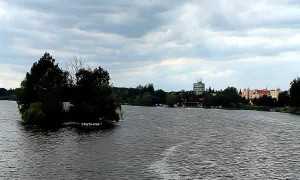
Note also exactly where the monument is located. If you look around, you'll see it's in a very specific place. It is located between two ponds that bear the names Markovzec and Skaredý. This position is not random. Water ponds and surrounding greenery create a natural frame for stone giant Jan Žížka. The contrast between a calm water level and a rough, massive monument stone creates a special tension that forces the visitor to think. This landscape, near the South Bohemian village of Sudometer, remains a living witness to the past.
You might find one interesting thing that makes this place special. The whole monument is designed to act monumentally from whatever angle you come from. Its size is not only a matter of aesthetics, but it is meant to create a sense of respect and humility in man. When you look at these stone blocks, you realize that every part of this building has been carefully thought out to express strength and persistence. It's a place where art, architecture, and history combine into one inseparable whole.
While you're circling the monument, see how perspective changes. You can see the details of the worked stone up close, but as soon as you get far away, the entire silhouette of the warlord will begin to draw before you, which seems to guard the surrounding landscape and ponds of Markovzec and Skaredý. It's a fascinating feeling when one feels small before the size of history, but at the same time proud to be a part of this heritage.
This area in Čejetice is more than just a tourist destination. It's a place of reflection. It's a place where we can think about what it means to be a leader, what it means to fight for our beliefs, and how important it is not to forget the roots we grew from. Emanuel Kodet and František Kulíř have left us a memory, which can still fascinate and inspire us after almost 100 years of its creation.
Now that you've learned about the origin, the architecture, and the history of this place, I suggest you just walk around for a while. Let your thoughts float freely, observe the game of light on stone blocks and suck the calm of South Bohemian nature. Try to imagine what this space would look like in a thousand four hundred twenty and how it became a thousand nine hundred twenty-five symbol that you see today.
Thank you for spending these moments with us at the Jan Žižka Memorial at Sudoměř. We hope you are interested in this trip to history and that you are leaving with new impressions and knowledge. We now invite you to explore the surroundings and discover other hidden corners of this beautiful landscape. I wish you the rest of the day and a good journey to further your findings. Goodbye.
Tips for visitors
The best time to visit the Jan Žížka monument near Sudoměří is in the spring or autumn period, when vegetation is best coloured and the light of the sun is ideal for photography. This time of year also offers a quieter atmosphere without large crowds of tourists.
When visiting the monument, we recommend taking a sun protection coat or clothes to protect against rain. In addition, it is good to have a map of the area and water with you, especially if you are planning an extended walk around the ponds.
For photography is the best place on the monument itself, where you can capture a panoramic view of the surrounding landscape. The best way to go is to take a picture in the morning or in the evening, when the light is fine and shading friendly to the details of the statue.
In the vicinity of the monument, you can visit a pair of memorable oaks, Princess Hedvika's Twins, which are a beautiful natural miracle. These ancient trees offer a quiet place to relax and enjoy nature.
Frequently asked questions
Can the monument be visited?
This is a structure in a public space that can usually be seen from outside free of charge. We have not verified that this particular one is freely accessible.
Where is the monument?
Location: Čejetice, Jihočeský kraj. The map on this page shows the exact spot.
Why is the monument protected?
It is listed in the Central List of Cultural Monuments of the Czech Republic as a cultural monument (register no. 1000134306).
Businesses nearby
Do you run a restaurant, accommodation, shop, museum, rental, wellness or other visitor service near this monument? Show yourself directly to the people heading to it — this is how they will see you in the app and on the web:
Nearby
Mezi rybníky Markovcem a Škaredým, nedaleko obce Sudoměř.
V okolí se nachází dvojice památných dubů Dvojčata princezny Hedviky.
Accommodation nearby
Themed route
Thematic cruise route to the memory of Jan Zizka near Sudoměří
1.Památník Jana Žižky u Sudoměře (memorial) Type: Historical monument Why is it worth a visit: This monumental monument celebrates the victory of Hussite's warlord Jan Žižka over the chivalry army at Sudoměř. It is a place where historical significance and architectural beauty can be appreciated.
2. April twins of Princess Hedvika Type: Memorial trees Why is it worth a visit: These two large-leaved oak trees are not only a natural wonder but also of historical significance. They are named after Princess Hedvige, and their antiquities attract visitors' attention.
3. Markovec pond Type: Pond Why is it worth visiting: This pond is part of the stupid region around the monument and offers a quiet surroundings for relaxation. It is an ideal place to relax after exploring historical sites.
4. Pond Type: Pond Why is worth a visit: Like Markovec pond, this pond contributes to a beautiful and peaceful environment. It is suitable for picnic or exploring local aquatic species.
5. Municipality of Čejetice Type: Urban surroundings Why it is worth a visit: Despite its small nature, the municipality of Čejetice offers an opportunity to explore local culture and atmosphere. It's a place where life can be recognized in the vicinity of the monument.
This route offers a combination of historical and natural experiences, making it ideal for visitors who want to know the region around Jan Žižka's memory near Sudoměř.
Seasonal recommendations
Spring: In the spring period, Jan Žižek's memorial near Sudoměří is particularly charming thanks to flowering bushes and trees that create a lively and colorful landscape. Sun rays illuminate the monument in a beautiful light, which contributes to a harmonious atmosphere. Visitors are advised to come in early days of the week or Sunday morning to enjoy a mild crowd. It is advisable to wear light clothes with the possibility to add a layer for cooler morning or evening hours.
Summer: In the summer, the surroundings of the monument are full of life, where flowering gardens and forests offer an ideal background for photography. The sunny day illuminates the monument in bright light, highlighting its historical details. Because of the popularity of this time, it is advisable to come earlier at the beginning of the day to avoid large crowds. Visitors should wear summer service clothes and not forget the sun protection.
Autumn: In the autumn period, the surroundings of the monument turn into golden and red shine, providing a beautiful opportunity for photography. The sunlight joins the monument in a fine western light, which adds romantic breaths to the atmosphere. Visitors should wear a thermal layer of clothing because of the colder autumn day and the trip is best planned in clear conditions.
Winter: In winter Jan Žižka Memorial offers a cozy atmosphere near Sudoměří, where snow covering the landscape creates an idyllic environment. The sunlight shines on the monument and illuminates the snow areas, creating a unique atmosphere. Visitors are advised to wear warm clothes with protection from the cold wind and visit the memory during shorter but clear winter days when they are open.
Visualizations and artistic views


The visualisations are generated by artificial intelligence and serve as inspiration.
Photos from the area
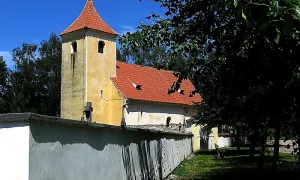
Real photos taken near the monument


Zdroj a licence jsou uvedeny u každého snímku.
Tips from visitors
No tips yet. Be the first!
Log in and add your tip.
Sources and literature
Photos: Feťour / Public domain — Wikimedia Commons. The author and licence also appear when you hover over the image.
Faktickým podkladem tohoto textu byl článek na Wikipedii, jehož autory jsou přispěvatelé Wikipedie. Článek je dostupný pod licencí CC BY-SA 4.0.
Location on the map



Příběhy a pověsti
Legendy, pověsti a příběhy spjaté s touto památkou
Fotografie návštěvníků
Zatím žádné fotografie. Buďte první, kdo přidá fotografii z návštěvy!
Log in a přidejte svou fotografii nebo hodnoťte.
Za ověřenou návštěvu v aplikaci získáte víc bodů — poznáme podle GPS, že jste na místě.
Reviews and comments