



papírna Slovany Paper mill
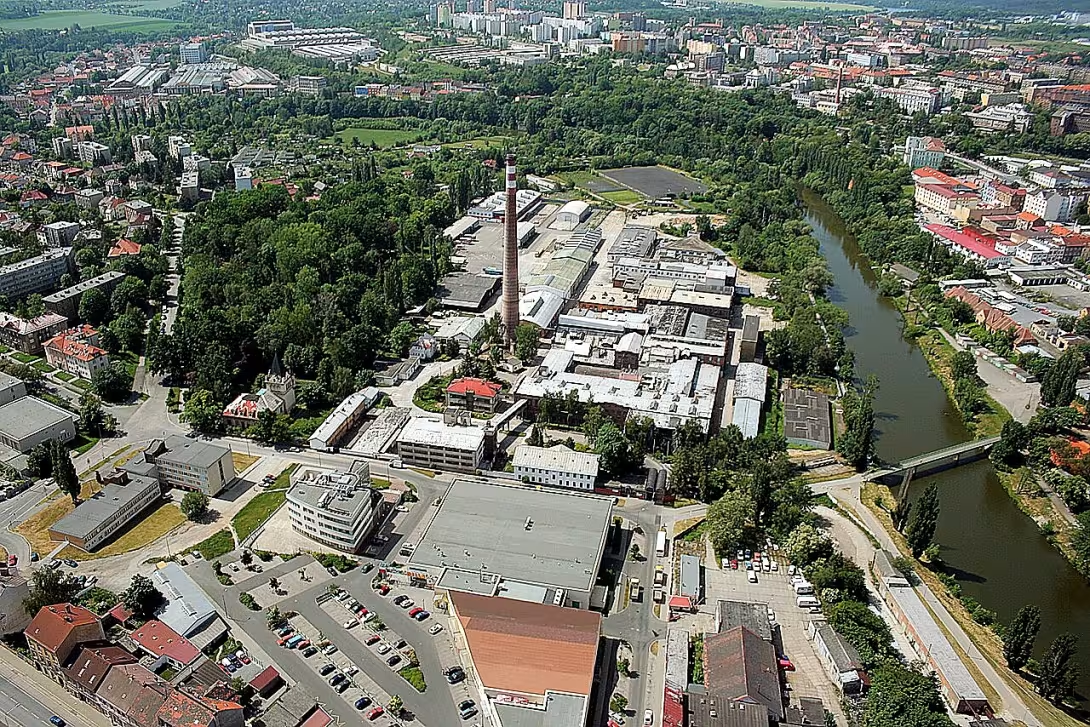
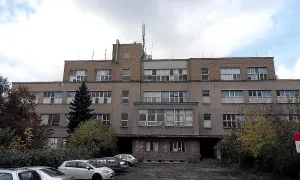
Slavany Paper is an industrial site in Pilsen. It originated in the second half of the 19th century and was used to produce papers and envelopes. The building in the Garden Street in the Pilsen part of Slovakia is remarkable by its red-brick architecture and the history of global exports.
The first small production buildings, the official tract, horticulture and shed have been here since 1870. The foundation of the monument fits into the period of industrial revolution in Austria-Hungary. At that time in the Czech Republic there was a massive development of urbanization, railways and industry.
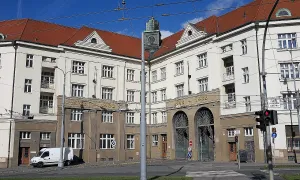
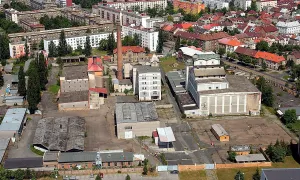
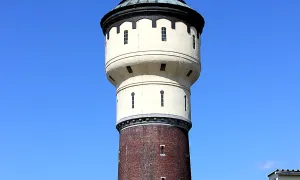
The original buildings from 1870 were carried out in late classical style. Later, the complex was expanded with a generous two-storey building made of red bricks and a three-storey warehouse in the spirit of functionalism. The dominance of the complex was a 50-metre paper tower. The park and the so-called Paper Villa were also one of the areas which had an area of 11 hectares at the time of flowering.
In the 1880s, the company bought the Prague company Piette. The operation was modernised; The power was controlled by František Křižík and the machines were supplied by Škoda and the Swiss company Wyss. In 1912 the company was incorporated into the Neusiedelská a.s. Group, which was renamed "Neusiedelská a.s. 'in 1923. In 1926, the majority ownership of the Prague company was taken over by Petschek Bank House and Associates. After 1945, a nationalisation took place and a national company of the West Bohemian paper mill was established with its registered office in Pilsen.
The production was focused on spruce fibre paper and later on cellulose and special paper. The company achieved considerable success and exported its products to India, Japan and the USA. From 1929 to 1933, in response to the Great Depression, total modernization and electrification took place, including the construction of an expedition warehouse. Since 1936, the fourth paper machine was added and the fifth machine was installed between 1950 and 1952. At the time of the highest activity, the factory produced about 300 million envelopes a year. In 1975, production was more oriented towards the printing industry. Before 1989, the company employed 600 people and produced 24,000 tons of paper a year. Interestingly, underground corridors built on the premises during World War II, whose exact purpose remains unknown.
Production in the paper mill decreased gradually and was completely discontinued in 2004 / 2005. After 2000, a number of buildings were demolished, including those with historical value. Since 2012, however, the Cultural Centre Paperna has been established in part of the complex. In the preserved brick factory today there is a gallery of contemporary art, hall for concerts and corporate events, dance hall, photo and video studios and Café Paper. Part of the space uses the UnlockTheDoor escape game and other objects serve as warehouses. In 2015 the construction of a house for seniors started in the area.
The area is available from the centre Piles approximately 15 minutes walking against the river Radbuza. The combination of industrial architecture and contemporary cultural use makes it an interesting destination for visitors. It is a place where you can see the transformation of industrial space into a centre of creative expression.
Then and now
Drag the slider to compare how the landmark may have looked when it was built with the view today.
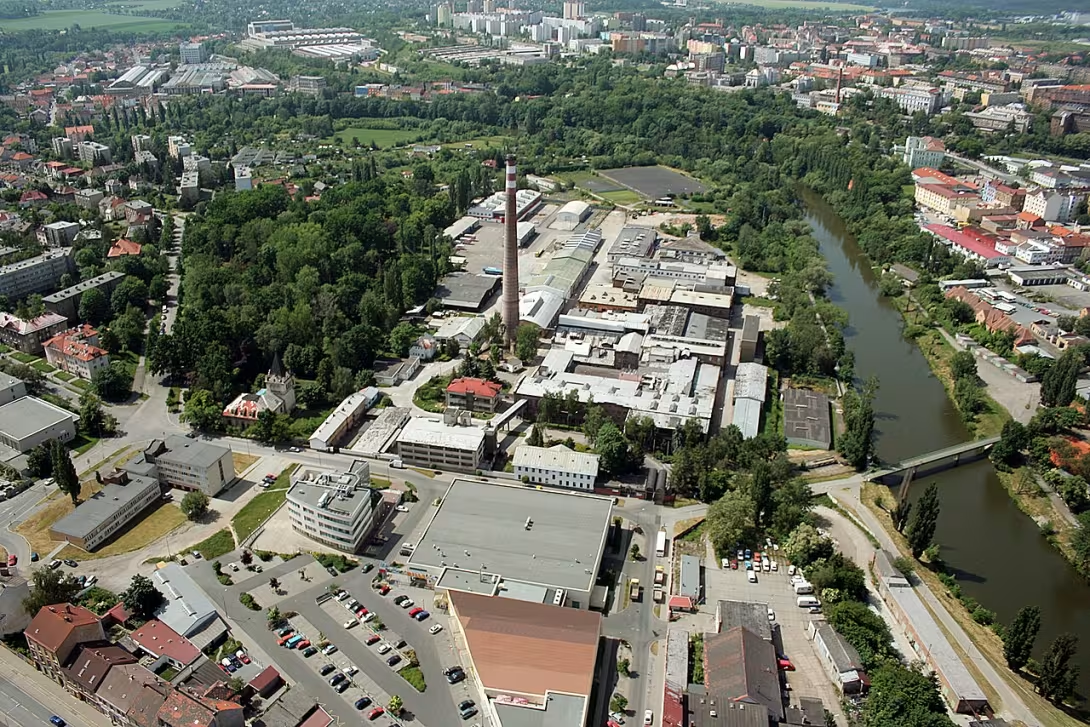
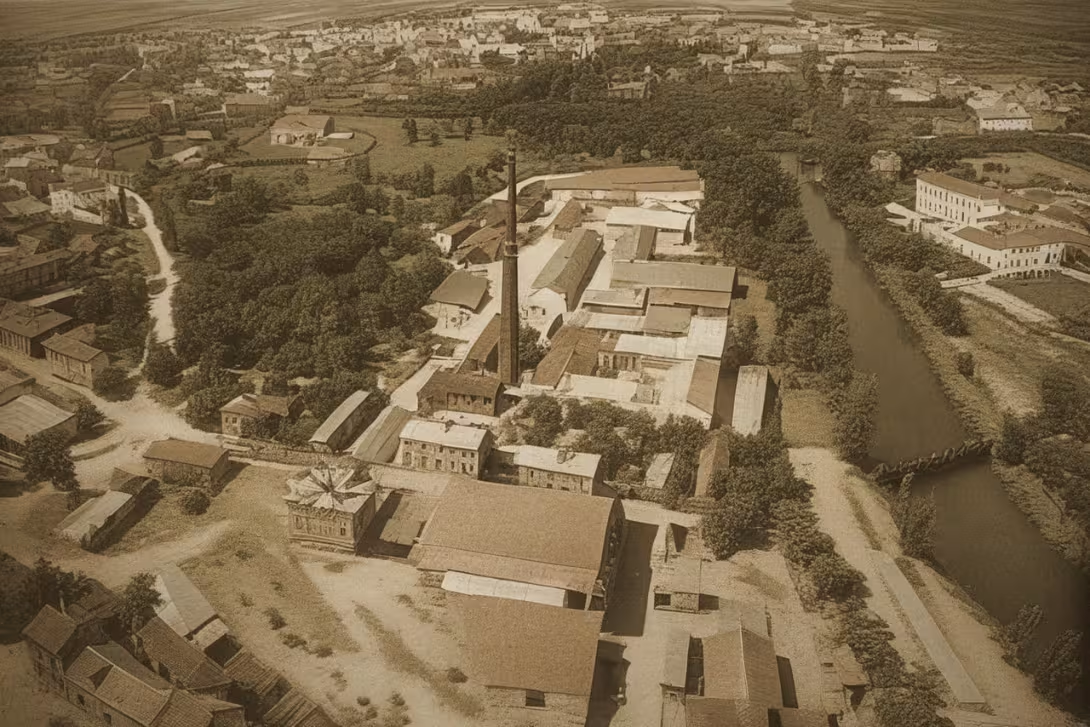
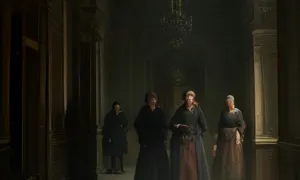
The historical appearance on the left is an AI-generated visualisation and serves as inspiration only.
Historical milestones
- 1870
- the creation of a small production building, official buildings, horsemen and knees
- 1929
- launching an overall modernisation of the plant in response to the economic crisis
- 1936
- start production on the fourth paper machine
- 2012
- creation of the Culture Centre Paper shop
Architectural development
The original objects from 1870 were in late classical style. Later, a generous two-story building was built from red bricks and a functionalist three-story warehouse. There was a 50-metre paper tower and underground corridors.
Historical events
1912 integrated into Neusiedel a.s., 1945 nationalization of the company, 2004 complete abolition of paper production.
Owners
public limited liability company in Prague, Piett Paper Works (since the 1980s), Neusiedelské a. s. (1912), Prague Neusiedelská a.s. (1923), Bank House Petschek a spol. (1926), State / National Company of the West Bohemian Paperworks (after 1945)
Points of interest
- The area is remarkable by its reddish architecture and the history of global exports. - A 50-meter paper tower was the dominant of the complex. - The company exported its products to India, Japan and the USA. At the time of the highest activity, the factory produced about 300 million envelopes a year. - Underground corridors with unknown purpose were built in the area during World War II.
Guide
Show guide text
This text was created by artificial intelligence and has not been editorially reviewed. It may contain inaccuracies.
Welcome to Pilsen, Part Východní Předměstí. You're standing outside the old paper mill in Slovany. Now, if you look around you, you will see a vast industrial complex that will take you deep with its size and atmosphere when this space was the heart of local production and the noisy center of human labor. Feel the strange feeling that radiates from these buildings. It's a place where the old world of heavy industry meets a new age of culture and art.
Let's stop at the beginning of this place together. It all began in the second half of the nineteenth century, precisely in the year one thousand eight hundred seventy. At that time a relatively small production building was created here. Imagine the scene at that time: next to the main paper building, there were official buildings, horsemen and bicycles. It was a time of great change when craft production began to turn into a modern industry. It was here that spruce wood, from which fibre was produced, started to be used as a base building stone for paper formation. Over time, however, the business grew and its ambitions grew along with it.
Now pay attention to the very appearance of this place. Notice the typical red-brick architecture that is so characteristic of the factory sites at the time. These red walls are not just decoration, but they show the functionality and resistance that the builders at the time required. Look at the facade of the buildings and feel the rhythm of the windows and lines that form this complex. The whole complex was dominated by a 50-metre paper tower, which from far away indicated where this centre of the Pilsen industry was located. Even though the campus has been changing over the years, the red brick still tells the story of thousands of hours of work and the people who spent their time here every day.
When we think about the people who were involved in this place, we can't ignore the personalities who left a trail in technical development. The name František Křižík, who was one of the most important Czech inventors and technicians, is connected to the complex. Imagine how the presence of such a person must have affected the technological process in the paper mill. The industry at the time was not just about the machines, but about finding new ways to be more efficient and modern.
Let us now look at how the enterprise has evolved over the years. The world was constantly changing, and so was the paper mill. In the year of a thousand nine hundred twenty-nine, when the world was shaken by the economic crisis, the company's management decided, paradoxically, to launch a complete modernization of the factory during this difficult period. It was a bold decision that paid off. Several years later, in the year one thousand nine hundred thirty-six, the fourth stationery kit started to operate, which meant a further increase in capacity and possibilities.
And now we come to the part that may surprise you the most. If we went back to the time of the greatest boom, we would find that this Pilsen paper mill was not just a local enterprise. It's fascinating to realize that goods traveled thousands of miles from here across oceans and continents. Products from this factory were exported to India, Japan and the United States of America. Imagine the paths that the paper from Pilsen verbs traveled to end up in the hands of people on the other side of the world. As far as the figures are concerned, at the time of its highest activity, the factory produced approximately 300 million envelopes a year. It is an unimaginable amount of paper that has come out of this area.
But all these achievements ended in the end. Production in the paper mill was definitively cancelled in the year two thousand and four. Many of these sites could end up as empty boxes or be completely demolished. But something beautiful happened here. Part of the compound has turned into a space for people and culture. In the year two thousand and twelve, the Cultural Center was founded Paper factory.
Now look at the space around you with a new perspective. Where machines used to roar and paper dust flew through the air, creativity today. There is a gallery today where you can admire art, dance hall, where people move in the rhythm of music, and studios where artists create their new works. It's a fascinating contrast between hard industrial origin and the finesse of contemporary art.
So this area is much more than just a set of red buildings. It is a monument to Pilsen's workmanship, courage to invest even in times of crisis and ability to adapt to new times. From spruce fiber and millions of envelopes sent to India to dance steps and canvas in galleries.
Now we invite you to slowly move on and explore the rest of this space. Feel the silence that today replaced the noise of machines, and try to imagine the thousands of people who used to come here to work. Go through the surrounding buildings, perceive the texture of bricks and enjoy a moment of peace in this place where history still breathes. Thank you for spending this short trip in time with us. Enjoy your next stay in Pilsen and we return with our farewell to the silence of this beautiful area.
Tips for visitors
The best time to visit is late spring or autumn, when the colors of the surrounding nature are in contrast to the industrial architecture of the complex. Transport to the Slovak district is possible by car and public connections; Check the specific routes and connections in the maps.
We recommend that you take an extension suitable for walking around the old industrial terrain and plenty of water. Since it is a historical area, we recommend to be careful when moving around buildings.
For the best photos look for light shortly before sunset, when golden rays highlight the details of brick walls. The most interesting pictures offer views of the remnants of the production halls and details of the facades from the second half of the nineteenth century.
In addition to the site of the former paper factory, we recommend a short walk along the Radbuzy River or in the surroundings of the Garden Street, which forms the natural environment of this part of Pilsen.
Families with children can use a visit to talk about how they used to make spruce paper and how old factories worked, which can be an interesting educational experience while walking.
Frequently asked questions
Can the monument be visited?
We have not verified whether this monument is accessible. Please ask the owner or operator, or the local municipal office.
Where is the monument?
Location: Východní Předměstí. The map on this page shows the exact spot.
Why is the monument protected?
It is listed in the Central List of Cultural Monuments of the Czech Republic as a cultural monument (register no. 1091189209).
Businesses nearby
Do you run a restaurant, accommodation, shop, museum, rental, wellness or other visitor service near this monument? Show yourself directly to the people heading to it — this is how they will see you in the app and on the web:
Events nearby

Zdroj akcí: otevřená data měst a obcí ČR (Národní katalog otevřených dat) a kalendář akcí Národního památkového ústavu.
Nearby
Řeka Radbuza, Zahradní ulice, plzeňská čtvrť Slovany.
Accommodation nearby
Trips and activities nearby
Guided tours, tickets and activities nearby from GetYourGuide
Affiliate link: if you buy from the partner, we may receive a commission. The price for you does not change.
Search tours and activities →Themed route
Here is the design of the thematic route:
1. Plzeň district of Slovakia (area) - The starting point of the road where you can feel the atmosphere of the local environment. 2. Garden street (street) - Walk in a quiet way, leading towards the main goal. 3. Paper factory Slavany (monument) - Main stop where you can get acquainted with the history of paper production. 4. Radbuza River (Water Flow) - Relaxing end of a trip near the paper mill near the water bank.
Seasonal recommendations
In the spring, the surroundings wake to life and the young greenery accompany a walk to the grounds. The light is soft and pleasant, which helps to perceive the details of the construction. We recommend shoes suitable for wet terrain and visit in the morning when the air is the cleanest.
In the summer months dominates intense sun and hot air, which can highlight the old character of the place. Nature is in full bloom and the shadow of the leaves provides relief. It is advisable to choose light, breathable clothes and set off in early morning or late evening to avoid heat.
Autumn brings golden colors of leaves and fog, which give the memory a mysterious atmosphere. The lighting is rich and warm, which creates a melancholy pattern. It is practical to take with you a waterproof jacket and plan the journey until mid-October when the colors of the landscape are the most distinctive.
Zimą is a space surrounded by silence and freeze, which underlines the raw nature of the building. The landscape is usually grey or snowy and the light is short and weak. For comfortable movement is necessary warm clothes and firm soles against slipping, while the best is to visit the place at noon when there is most light.
Visualizations and artistic views


The visualisations are generated by artificial intelligence and serve as inspiration.
Photos from the area
Real photos taken near the monument

Zdroj a licence jsou uvedeny u každého snímku.
Tips from visitors
No tips yet. Be the first!
Log in and add your tip.
Sources and literature
Photos: IvetaUMO2 / CC BY-SA 3.0 — Wikimedia Commons. The author and licence also appear when you hover over the image.
Faktickým podkladem tohoto textu byl článek na Wikipedii, jehož autory jsou přispěvatelé Wikipedie. Článek je dostupný pod licencí CC BY-SA 4.0.
Location on the map


Příběhy a pověsti
Legendy, pověsti a příběhy spjaté s touto památkou
Fotografie návštěvníků
Zatím žádné fotografie. Buďte první, kdo přidá fotografii z návštěvy!
Log in a přidejte svou fotografii nebo hodnoťte.
Za ověřenou návštěvu v aplikaci získáte víc bodů — poznáme podle GPS, že jste na místě.
Reviews and comments