



Parní vodárna Střekov Waterworks
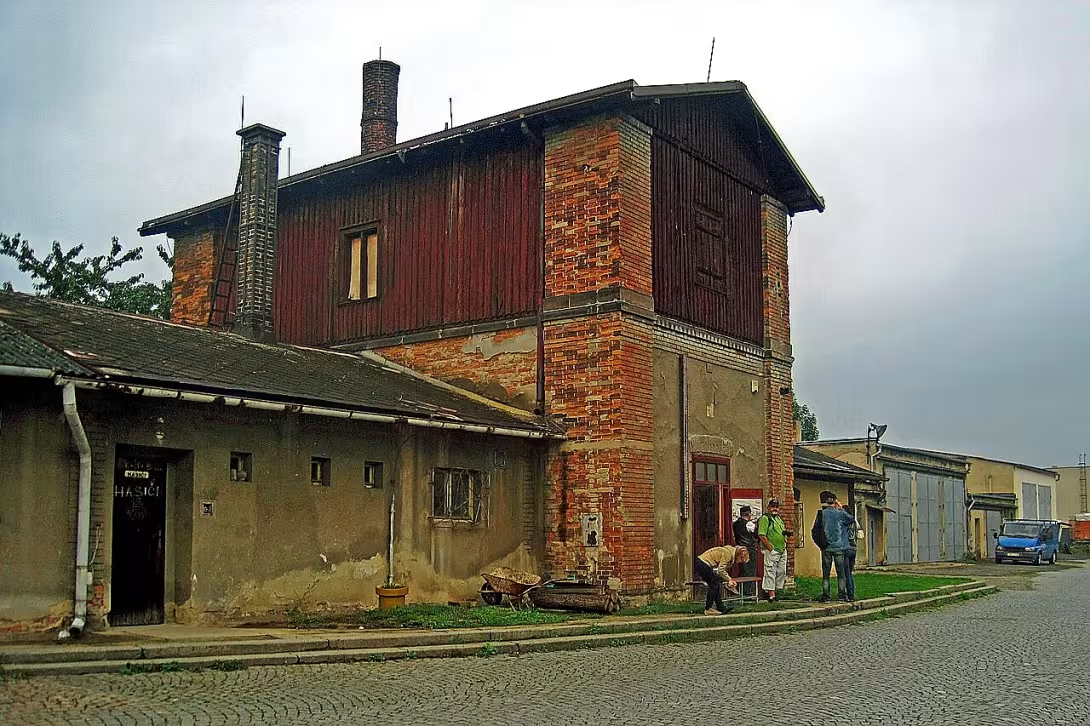
Steam water station at the station Ústí nad Labem-Střekov is a technical monument from 1874, which was used to supply steam locomotives with water. It is exceptional with its fully preserved and functional technological equipment, including steam engine and boiler, and represents a valuable demonstration of the Austrian Northwest's industrial heritage.
The construction was created as part of the operational background of the line from Lysé nad Labem to Děčín, whose investor was Austrian Northwest Railway. In the 1970s, when Austria-Hungary was in a period of turbulent development of the railway network, building such objects was necessary to ensure operation on key transport arteries. The water plant project was developed by the Vienna architect Carl Schlimp.
The building is carried out in a spirit of industrial neoclassicism as a brick building with a saddle roof covered by bags. It consists of a central tower track with a floor plan of 6 times 8 meters and a height of 17 meters, in which there is a machinery room and on the floor by water. On the sides there are mirror symmetrical ground-floor ports which originally served as apartments for staff and background.
The water was pumped into the water plant from a 20-metre deep well, which was connected by a dimple to the Elbe River. The pumping was provided by a dual-activity pump powered by a stable steam engine from 1873, manufactured in the Adamov machinery plants. The water was pushed out into two riveted tanks with a total volume of 100 cubic metres and from there it was self-propelled to the water cranes in the station. The original steam boiler was replaced in 1911 by a new machine from the Vienna company Josef Paukert and son.
The water plant was open until the 1960s. At the end of the steam traction, the facility was still used to supply vehicles for transporting live fish. Since 1979, the water plant has been out of operation and officially cancelled in 1983. The property of the building was gradually changed from the Austrian Northwest Railway through České dráhy to the town of Ústí nad Labem.
The rediscovery of the building was initiated in 2002 by members of the Zubrnický museální railway association, who acquired the water plant and started its security. The restaurant works started in 2009 and in 2011 the steam engine and boiler were operational. Since July 2024 there is a monument in the administration of the Museum of Ústí nad Labem.
Today, the waterworks are open to the public within regular periods or after prior arrangement. Visitors can see a unique functional unit here, which faithfully documents the technical demands of railway transport in the steam season. This monument is an important proof of industrial history and its visit offers a unique insight into the operation of period technology.
Then and now
Drag the slider to compare how the landmark may have looked when it was built with the view today.
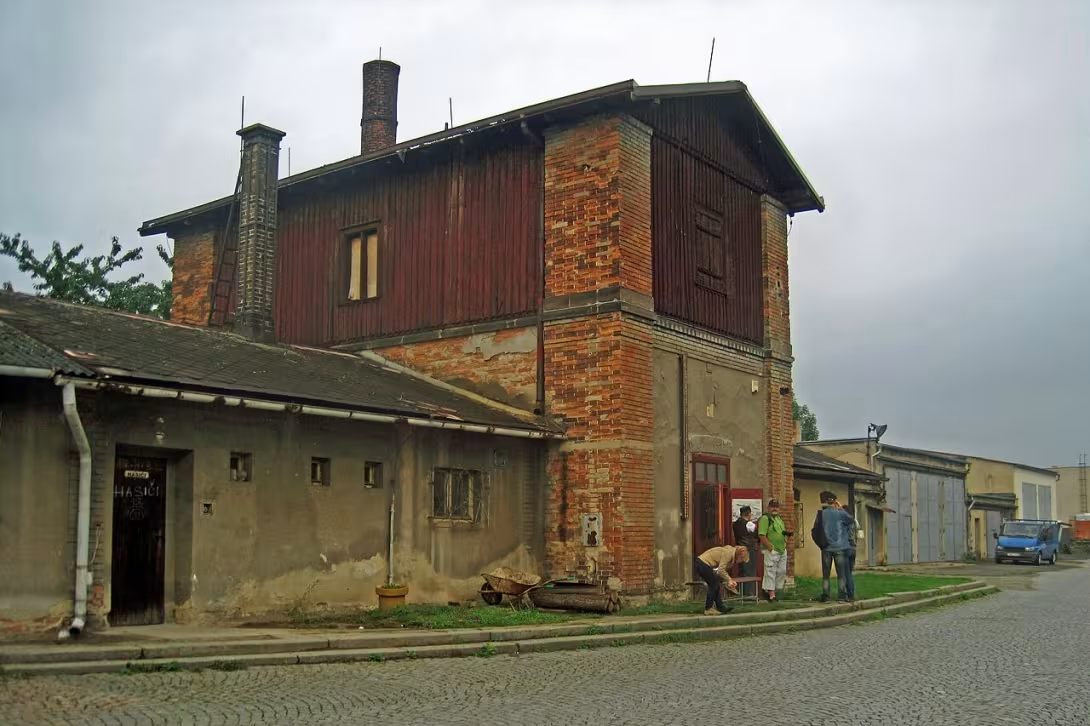

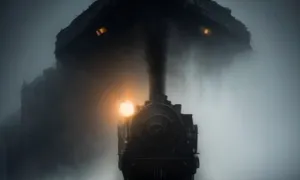
The historical appearance on the left is an AI-generated visualisation and serves as inspiration only.
Historical milestones
- 1873
- Production of steam machinery in Adamov engineering plants.
- 1874
- Setting up the water plant when the line is opened.
- 1911
- Installation of new steam boiler from Josef Paukert and son.
- 2011
- Activation of the historical steam engine and boiler after restoration.
Architectural development
The construction is brick with saddle roof in industrial neoclassical style. It consists of a central tower wing with a machine and waterjet and two symmetrical ground ports for staff. Over the years it has been supplemented with modern additions and technical modifications such as installation of Sigma electric pumps.
Historical events
1874: Establishment of a water plant. 1983: Official cancellation of the water facility. 2002: Rediscovery of the building members of the Zubrnická musealrailway.
Owners
Austrian Northwest Railway, ČD, city Ústí nad Labem
Points of interest
- This technical monument from 1874 was used to supply steam locomotives with water. It is exceptional with its fully preserved and functional technological equipment, which includes both steam engine and boiler.
- The construction is carried out in the spirit of industrial neoclassicism as a brick object with a saddle roof. It consists of a central tower track with a height of seventeen metres and two symmetrical attachments.
- The water was pumped from a 20-metre-deep well, which was connected to the Elbe. A dual-activity pump powered by a stable steam engine from 1873 was used for pumping.
- After the completion of the steam traction in the 1960s, the facility was still used to supply vehicles for transporting live fish. Since 1979, the water plant has been out of operation and officially cancelled in 1983.
- In 2011, both the steam engine and the boiler were operational. Since July 2024 there is a monument in the administration of the Museum of Ústí nad Labem.
Guide
Show guide text
This text was created by artificial intelligence and has not been editorially reviewed. It may contain inaccuracies.
Welcome to one of the most important technical monuments of our region. Stop for a moment, take a breath and look ahead. You are standing in front of the steam water station Střekov, which is a silent but proud witness to the golden age of the railway. The first thing you're probably interested in is her distinctive appearance. You see a solid brick structure that emits stability and order. It is an object that has not only been designed for practical purposes, but also with regard to the aesthetics of its time. Note its saddle roof and overall balanced appearance, which combines the rigour of industrial operations with a certain amount of elegance.
Let us now return together in time more than 150 years back to the second half of the nineteenth century. Imagine the atmosphere at that time, the noise of locomotives, the rumbling of wheels on tracks and the dense smoke filling the sky. In 1874, just at the time this line was opened, the waterworks began to fulfil their essential role. It was not just an ordinary building, but a key part of the Austrian Northwest's operational background. At that time, the railways were the arteries of the modern world and steam locomotives were their heart. But in order for these hearts to beat and drag heavy loads even passengers across hills and valleys, they needed huge amounts of water. And right here at Ústí nad Labem-Střekov, this need has been solved. The water plant drew water from nearby Elbe, cleaned it and supplied it with greedy boilers of steam machines. Without this place, smooth operation on this important route would be virtually impossible.
Now pay attention to the architecture itself. The building you see was designed by an architect named Carl Schlimp. If you look closely at the details of the facade and the overall composition, you will notice that the construction is done in the spirit of industrial neoclassicism. What does that even mean? It means that even in such a practical, technical object they tried to preserve the principles of classical beauty, symmetry and dignity. The brick wall is not only a functional layer, but it creates a rhythm and structure that gives a monumental character to the building. Take a look at the roof lines and the way the building enters the area. It's an architecture designed to express the strength, progress and reliability of engineering back then. It's fascinating how powerful and firm this building still works after so many decades.
When we think about the history of this place, we can't ignore the technical details that are hidden inside these walls. The history of the water plant is basically the history of the machines that worked in it. It started in 1873, when the first parts of the steam engine were made in the adamic engineering plants. This machine was then put into operation in 1874 and became the main driving force of the whole work. Imagine the noise, the vibration under your feet and the hot steam filling the space. The locomotives stopped here to replenish their tanks, and the machine in this building was constantly working to get the water ready in sufficient quantity and pressure.
However, times have changed and performance demands have increased. In 1911, shortly before the outbreak of the First World War, modernization took place. A new steam boiler was installed, which was supplied by Josef Paukert and his son. This change made it possible to serve the railway more effectively in the new century. The water plant thus performed its function until the 1960s, when steam locomotives began to be gradually replaced by diesel and electric machines. With the end of the era of steam came the end of the primary purpose of this building, but its value did not disappear.
Here comes the most interesting part of our story. Unfortunately, many similar technical constructions from that time died or were rebuilt in such a way that there was almost nothing left of the original character. However, Parní vodárna Střekov is an exception. It's an exceptionally well-preserved technical unit. What makes it truly unique is not just the brick building itself, but the fact that it has completely preserved and functional technological equipment. Yes, you heard right. The steam engine and the boiler are still here.
The highlight of this place's modern history was 2011. Just then, after a meticulous and demanding restaurant, the historic steam engine and boiler were restored. Imagine the patient work of the experts who returned the life of the iron that has been silent for decades. Thanks to this, today this water plant is not just a dead museum or an empty shell, but a living witness to your human genius from the nineteenth century. It's a place where you can feel a tangible connection to the past and see how machines that basically built the modern industrial world worked.
If you stand before this monument today, you may ask why it is so important to keep such a building. The answer lies in her authenticity. In times of digital technology and invisible processes, the steam water works remind us of the time when the technique was mechanical, tangible and understandable. You can see the gears, the pistons, the pipes, and feel the heat of the boiler. It's a lesson in history that you can't read in any book, but you have to experience in person.
Notice how this building differs from modern buildings around. It has a sense of craftsmanship, which is often lacking. Every brick, every connection and every detail were designed to last generations. And they really lasted. This water plant survived two world wars, changes in political regimes and a technological transition from steam to electricity. Today it is protected as a technical monument, which means that the state recognises its invaluable contribution to our cultural and technical heritage.
We now invite you to take a closer look at the building. Take a walk around her perimeter, perceive the texture of bricks, and imagine how huge black locomotives came in a century ago, the geysers of steam escaping from the trees. Try to imagine the faces of the people who worked here, their work clothes smeared with Mazutem and their pride in keeping a machine running that drives traffic throughout the region.
Parní vodárna Střekov is not just about water and steam. It's a story about human ambition, the desire to possess the elements of nature and the ability to create things that will last for centuries. It's a place where engineering meets art and history still breathes.
We hope that you are interested in this short journey over time and that you have been able to imagine how important this water plant once was and what value it represents today. Now it's time for you. Explore the surroundings, perceive the atmosphere of this unique place and let yourself be carried away by memories of a time when the world was fueling steam.
Thank you for spending time with us at the steam water station Střekov. We wish you a pleasant further exploration and a beautiful day spent discovering the secrets of our history. Goodbye.
Tips for visitors
The best time for a visit is the spring or autumn period, when the surrounding landscape around the Elbe River is coloured and the light is softer, which better stands out for the historical architecture of the water plant.
We recommend to take fixed shoes to move around the technical monument and the camera as the industrial details of the building are very photogenic. The best light for images is in the morning.
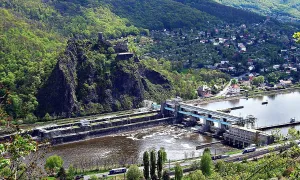
In the immediate vicinity you can visit the majestic castle Střekov, which rises above the river, or take a walk along the bank of the Elbe, from where the waterworks and the castle have a beautiful view.
Frequently asked questions
Can the monument be visited?
Some buildings of this kind are open for guided tours, others serve another purpose or are privately owned. We have not verified whether and when this monument is open – please ask the operator.
What are the opening hours and admission?
We have not verified the opening hours or admission. Current information is published by the operator. Official website: https://www.zubrnickazeleznice.cz/vodarna
Where is the monument?
Location: Střekov, Ústecký kraj. The map on this page shows the exact spot.
Why is the monument protected?
It is listed in the Central List of Cultural Monuments of the Czech Republic as a cultural monument (register no. 1392533734).
Businesses nearby
Do you run a restaurant, accommodation, shop, museum, rental, wellness or other visitor service near this monument? Show yourself directly to the people heading to it — this is how they will see you in the app and on the web:
Events nearby


Zdroj akcí: otevřená data měst a obcí ČR (Národní katalog otevřených dat) a kalendář akcí Národního památkového ústavu.
Nearby
Hrad Střekov, řeka Labe, železniční uzel Ústí nad Labem.
Accommodation nearby
Trips and activities nearby
Guided tours, tickets and activities nearby from GetYourGuide
Affiliate link: if you buy from the partner, we may receive a commission. The price for you does not change.
Search tours and activities →Themed route
Thematic cruise route around the steam water station Střekov
1. Parní vodárna Střekov (Water Works) This technical monument is one of the largest and best preserved steam water plants in the world. Built in the late 19th century, it was used to supply water to a local railway junction. Its historical appearance and technical solutions attract lovers of industrial history.
2. River Elbe After visiting the water plant, you will look at the Elbe River, which running near the steam water plant represents a key element of regional geography. It is an ideal place for relaxation and beautiful views of the local landscape.
3. Castle Střekov The castle Střekov, a historical fortress with a rich past, is approximately 1 km from the water station. Visit him for a view of panoramic views and explore his history associated with local legends.
4. Railway Node Ústí nad Labem A visit to the railway junction in Ústí nad Labem is an appropriate conclusion of the route where you can explore the history and current function of this important transport node. It is an ideal place to understand the importance of a steam water plant in the development of regional infrastructure.
This route offers a combination of technical and historical attractions, each location contributing to understanding the cultural and industrial development of the area.
Seasonal recommendations
Spring: In the spring season the steam water plant Střekov is revived by flowers and young leaves of trees, which adds a fresh colour to its historical character. Sunny clarity creates ideal conditions for shooting architectural details in beautiful lighting. Although visitors are increasing, it is advisable to come at the beginning of the day to enjoy peace and quiet. Enough warm clothes will be suitable for colder spring weather.
Summer: In summer, the steam water station Střekov is a popular destination for visitors looking for a shelter before the sunny slouch. Green vegetation and calm river flow bring comfort in warm weather. The best time to visit is early morning or late afternoon, when they try to avoid crowds. The carriers can prepare short shoes and a umbrella to enjoy a full visit.
Autumn: In autumn days the steam water plant Střekov melancholic charm takes place when the leaves of the trees turn colour and fall to the surface of the water. The sunny days are ideal for exploring historic rooms with pleasant temperatures. Visiting is usually mild, which ensures a calm atmosphere. The important thing is to wear warm clothes and maybe even an umbrella for any rain.
Winter: During the winter season the steam water plant Střekov takes a romantic look under the cover of snow, which provides a unique view of this historical work. Hot clothes, including wide gloves and hat, are essential for a comfortable stay on site.
Visualizations and artistic views


The visualisations are generated by artificial intelligence and serve as inspiration.
Photos from the area
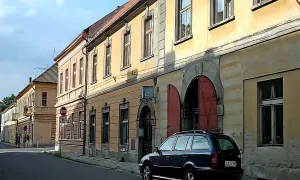
Real photos taken near the monument


Zdroj a licence jsou uvedeny u každého snímku.
Tips from visitors
No tips yet. Be the first!
Log in and add your tip.
Sources and literature
Photos: MartinVeselka / CC BY-SA 4.0 — Wikimedia Commons. The author and licence also appear when you hover over the image.
Faktickým podkladem tohoto textu byl článek na Wikipedii, jehož autory jsou přispěvatelé Wikipedie. Článek je dostupný pod licencí CC BY-SA 4.0.
Location on the map
Příběhy a pověsti
Legendy, pověsti a příběhy spjaté s touto památkou
Fotografie návštěvníků
Zatím žádné fotografie. Buďte první, kdo přidá fotografii z návštěvy!
Log in a přidejte svou fotografii nebo hodnoťte.
Za ověřenou návštěvu v aplikaci získáte víc bodů — poznáme podle GPS, že jste na místě.
Reviews and comments