



Zdymadlo Střekov Technical monument
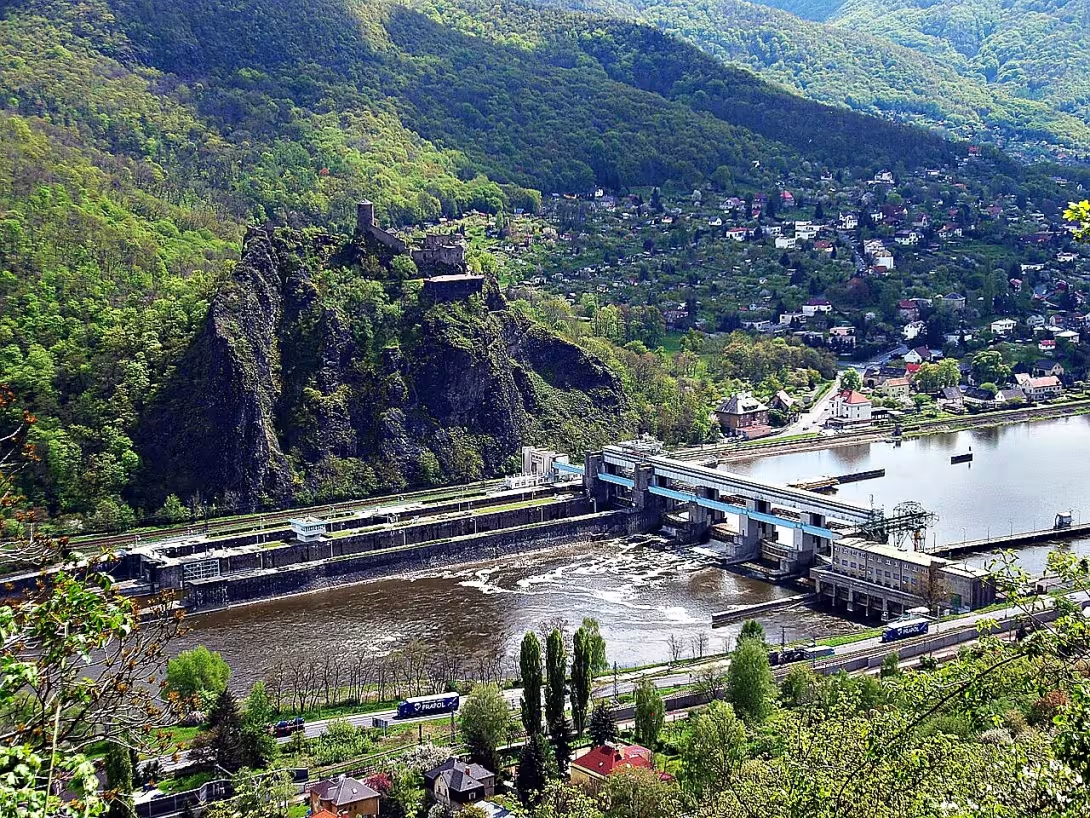
Zdymadlo Střekov, also known as Masaryk's lock or T. G. Masaryka's, is a significant water work on the Elbe located in Ústí nad Labem. It is located under the castle Střekov and is a key part of the infrastructure from the period of the first republic, when it was a strong objective of developing national waterways. Between 1924 and 1936, the built wall mainly served the purpose of navigating the Elbe River in the area of the shovels' rapids, which were originally often impassable. At the time of its creation, it was among the largest walls in the Republic and the most modern in Europe. Today, the object is protected as a cultural monument.
Zdymadlo Střekov was built during the period of the first Republic, where the development of infrastructure and the provision of navigability of major waterways for economic needs became a priority. The construction took place between 1924 and 1936, which was a period of intensive development of state infrastructure in Czechoslovakia. The importance of this project consisted not only in technical innovation, but also in economic and logistical improvement of the region.
Architectural lock is characterized by two lock chambers of different dimensions. A small chamber has dimensions of 2 × 82,5 m × 13 m and a large chamber of 170 m × 24 m These chambers allow for effective water level control and labe navigability in the area of shellfish rapids. Within the lock is also integrated hydropower plant, which has three vertical Kaplan turbines with a total output of 19.5 MW. This plant is interesting because it is permanently used to generate energy, which is different from many similar works, which are usually only used during peak energy. Thanks to its total output of 15 MW it is the largest power plant in the Elbe basin.
An interesting feature is also the fish transition, which was modernised in 2002. The reconstruction involved reducing the fall and increasing the number of chambers, which makes it easier to move fish across the wall. The fish crossing is equipped with "luring water" and glass observable, allowing visitors to track the fish during their migration.
Today the Střekov lock is not only a technical part of high importance, but also a cultural and historical place. Its presence under the castle Střekov adds another historical depth. Currently the lock is open for visitors, which allows you to get a better understanding of its function and meaning. Exploring this object offers a unique view of the technical innovations of the past and their impact on the current infrastructure.
Zdymadlo Střekov is a reminder of the time when water was a key element in the development of the region. Its existence not only ensures the navigability of the Elbe, but also provides energy and promotes biodiversity through a modernised fish transition. Visiting this building is an undisputed experience for anyone interested in the technical history and cultural monuments of the Czech Republic.
Then and now
Drag the slider to compare how the landmark may have looked when it was built with the view today.
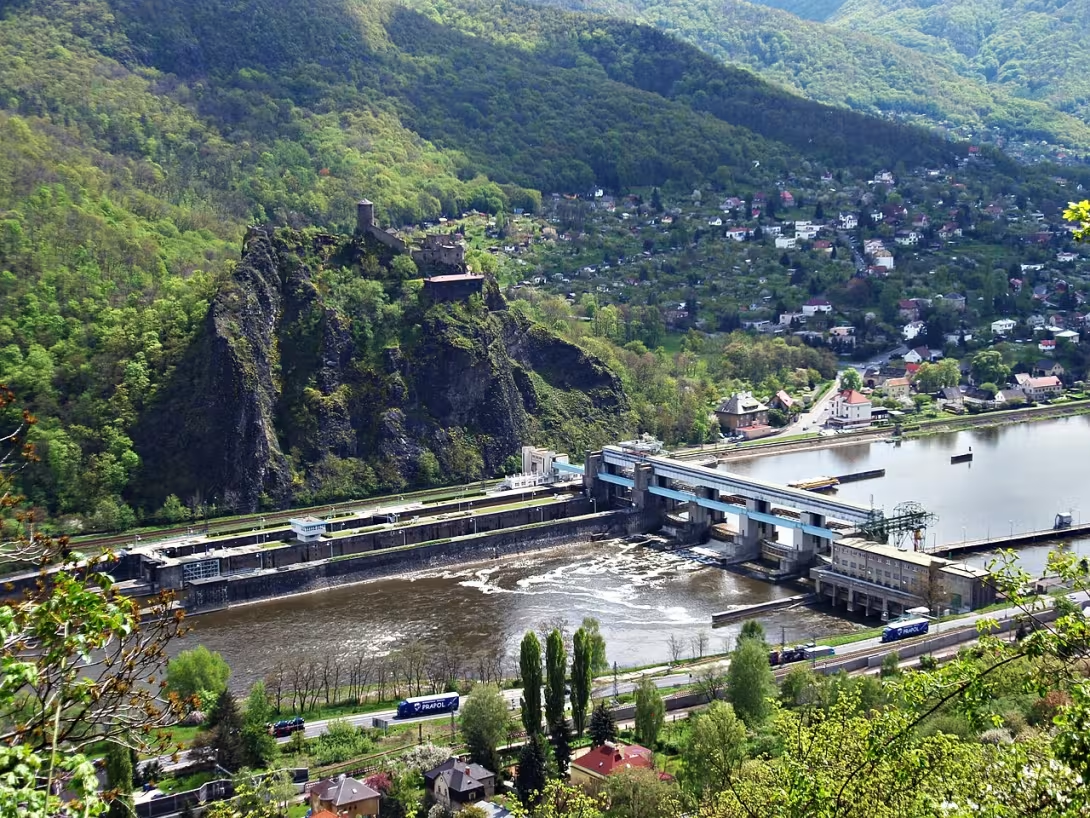

The historical appearance on the left is an AI-generated visualisation and serves as inspiration only.
Historical milestones
- 1924
- start construction of the lock
- 1936
- completion of lock construction
- 2002
- rebuilding the fish crossing
Architectural development
The water work consists of two lock chambers of different dimensions and an integrated hydropower plant with Kaplan turbines. In 2002, a modernisation of the fish transition was carried out, with a reduction in the decline and an increase in the number of chambers.
Historical events
1924- 1936: construction of a lock; 2002: rebuilding the fish crossing.
Points of interest
- Zdymadlo Střekov is also known as the Masaryk lock or the T. G. Masaryka lock. - It is located under the castle Střekov and is a key part of the infrastructure from the period of the first republic. - The construction took place between 1924 and 1936, which was a period of intensive development of state infrastructure in Czechoslovakia. - Architecturally, the lock is characterized by two lock chambers of different dimensions and an integrated hydroelectric power plant with a total output of 19.5 MW. - The fish transition was modernised in 2002 to improve the movement of fish across the wall.
Guide
Show guide text
This text was created by artificial intelligence and has not been editorially reviewed. It may contain inaccuracies.
Welcome to the Elbe shore, a place where the power of flowing water and the incredible courage of the human spirit join. You're standing in front of one of the most important water structures in our country. Before we take a deeper look, just stop for a moment and feel the surroundings. Look at the flowing river that's trying to push through this massive work. Above you are the rocky cliffs and castle Střekov, which as an eternal guard oversees this water passage. Feel the atmosphere of a place where nature tries to control human work with its power, but at the same time it is beautifully directed. There is a sense of peace, but also a constant movement and strength that never sleeps in this country.
Let's go back in time together and understand why this place looks just like this. More than a century ago, this part of the Elbe River was a very challenging place for anyone who moved around. In the place where you are now standing, there were rapids that were often impenetrable to ships. The water here was wild, unpredictable and dangerous. This meant a huge obstacle to trade and to ordinary transport, which hampered the development of the whole region. It was clear that if our country is to grow and prosper, we must tame this river. This is where one of the largest construction works of the time began.
The whole process of building this lock lasted many years. The work began in 1924 and lasted until 1936. Imagine the enormous perseverance and effort of hundreds of people who have worked here for 12 years to create a path for ships. This time when there was a lock was a time when our country was young, full of energy and efforts to build a modern state. This construction was not just about concrete and technology, it was part of building our new identity and economic strength. It was a work designed to connect our regions and allow goods and people to move freely across the river.
Now pay attention to what's right in front of you. Although it seems to be only a technical structure used to control water, feel its true size and importance. At the time of its inception, this lock was one of the absolute tip of Europe. It was one of the most modern solutions that people could invent and build back then. Notice how this work is integrated into the landscape, even though it's so massive. It's a perfect combination of functionality and extensive engineering. Although this is not a building with decorative facades, this whole construction itself emits the strength and stability that the work of the first republic carries. It is a monumental witness to a time when unrestricted progress was believed to be able to overcome even the greatest obstacles of nature through reason and work.
When you look at this place, you can't miss the connection to the most important figure in our history. This work is very closely linked to the name of President Thomas Garrigue Masaryk. That's why this place is often called the Masaryk's lock. For the company at the time, this building was not only a technical solution, but a symbol of the success of our new republic. Masaryk and his era represented confidence in the modern world, in the development of infrastructure, and in the fact that the state must be strong and connected. This lock is therefore seen as one of the pillars of the time, as proof that we are able to build things that survive generations and change the world around us.
You may now wonder if this place has remained the same for decades. It's interesting, because even though the foundation of the building is old, there are still changes that match today's times. While in 1936 it was mainly about allowing ships to move safely along the river, today we must think of something else. There was an important reconstruction in 2002 concerning the fish transition. It is a fascinating fact that this human work, which was originally built to control the river, must learn to work with nature again in modern times. This new element allows fish to move along the river without the obstacles that previously caused them. It is a beautiful example of how our understanding of the world is changing - from the pursuit of absolute control of nature to the pursuit of respect and protection.
So you are standing in a place where three different worlds collide: the wild power of the Elbe, human striving for progress and modern responsibility for nature. It is a place that gives you many reasons to think about how far we have come from the years of the first republic and what traces we leave behind today.
I hope this short journey has helped you better understand the importance of this wonderful water work. Now you know you don't just see concrete and water, but you see a piece of the history of our nation and its constant movement forward. Please continue to explore the surrounding area, enjoy the beauty of this place and be inspired by the strength that continues to flow in every wave of Elbe. Thank you for being with us.
Tips for visitors
Best time to visit The Střekov is in the spring or autumn season when you can enjoy mild weather and beautiful light. This time of year offers ideal conditions for shooting with natural colour effects in the surrounding landscape.
Check the current connection before departure.
When visiting, bring suitable clothes according to weather and shoes for walking on irregular surfaces. Photographers should consider bringing tripod, especially if they plan to photograph in the morning or evening light.
For photographers is the best place to capture the wall Střekov from castle Střekov. We recommend looking from the side where the sun appears in the early morning or evening, providing the most beautiful lighting conditions.
In the vicinity of the wall Střekov you can visit the castle Střekov, which is located directly above the wall. The castle offers historical interest and a beautiful view of the water works and surrounding landscape. For families with children the castle is an ideal place to learn about the history of the region.
Frequently asked questions
Can the monument be visited?
This is a technical monument. Some are open as exhibitions, others are out of use or on private land. We have not verified whether this one is accessible.
What are the opening hours and admission?
We have not verified the opening hours or admission. Current information is published by the operator.
Where is the monument?
Location: Střekov. The map on this page shows the exact spot.
Why is the monument protected?
It is listed in the Central List of Cultural Monuments of the Czech Republic as a cultural monument (register no. 1000155668).
Businesses nearby
Do you run a restaurant, accommodation, shop, museum, rental, wellness or other visitor service near this monument? Show yourself directly to the people heading to it — this is how they will see you in the app and on the web:
Events nearby
Zdroj akcí: otevřená data měst a obcí ČR (Národní katalog otevřených dat) a kalendář akcí Národního památkového ústavu.
Nearby
Bezprostředně nad zdymadlem se nachází hrad Střekov.
Accommodation nearby
Trips and activities nearby
Guided tours, tickets and activities nearby from GetYourGuide
Affiliate link: if you buy from the partner, we may receive a commission. The price for you does not change.
Search tours and activities →Themed route
Thematic cruise route around the wall Střekov
1. Zdymadlo Střekov (Water Works) Type: Water construction Why is it worth a visit: The main objective is this water work that was built in the early 20th century to provide water energy and protect against floods. It's a technical monument that shows the history of the use of water resources in the region.
2. Castle Střekov Type: Historical castle Why is it worth a visit: The castle is located directly above the wall and offers not only historical monuments, but also views of the surrounding countryside. It's a place with a rich history that you can explore and enjoy a beautiful view from his tower.
3. Castle tank Střekov Type: Historical area Why is it worth a visit: The reservoir is part of a castle complex where you can walk around and enjoy the atmosphere of old glories. It's a place that allows you to feel the history and architecture of past times.
4. Park zone around the castle Type: Green space Why is it worth a visit: The park area offers a quiet nature walk where you can relax and enjoy the beauty of the surrounding region. It is an ideal place to relax after exploring historical monuments.
5. Exposure of castle Střekov Type: Historical exposure Why is it worth visiting: The exhibition presents the history and architecture of the castle as well as the lifestyle of its former inhabitants. It's a valuable place to know the cultural heritage of the region.
This route offers you a combination of technical and historical experience where you can enjoy both the natural beauty and rich history of the area.
Seasonal recommendations
Spring:
In the spring season Zdymadlo Střekov appears in beautiful green clothes when flowers and trees begin to bloom. The sun illuminates the landscape with its warm light, contributing to a wonderful atmosphere full of hope and renewal. Nature is particularly alive at this time; you can enjoy the view of the various birds returning from their winter shelters. Visitors recommend clothes suitable for mild temperature, because weather can be variable with cold wounds and warmer afternoons. The best time to visit is during the sunny weather, when nature is particularly nice to show.
Summer:
During the summer season, Zdymadlo Střekov receives a atmosphere full of heat and light. Long sunny days allow a long walk around the water work, while the hot air is often filled with fragrant fragrance of blooming nature. When visiting, it is recommended to wear clothes suitable for warm weather, such as light clothes and ties or wide hats to protect against the sun. The best times for visiting are morning or evening to avoid the heaviest valley of temperature.
Autumn:
In autumn Zdymadlo Střekov is of a colour and changing character. The leaves of the trees are colored in golden, red and yellow shades, creating beautiful landscaping images. The sun illuminates the landscape with its finer light, which contributes to a melancholy but beautiful atmosphere. Visitors should be dressed in warm clothes because the weather can cool quickly and the rainy season begins. The best times for visiting are in sunny weather when you can enjoy a view of colored leaves.
Winter:
During the winter Zdymadlo Střekov receives a local atmosphere characterized by cold air and shorter days. Sun rays illuminate the landscape with their weaker light, creating a calm and quiet atmosphere. When visiting, it is recommended to wear clothes suitable for cold weather such as warm jackets and wide hats to protect against the wind. The best times for walking around the sights are in sunny weather, allowing you to enjoy milder temperatures and a view of the snowy landscape.
Visualizations and artistic views


The visualisations are generated by artificial intelligence and serve as inspiration.
Photos from the area
Real photos taken near the monument


Zdroj a licence jsou uvedeny u každého snímku.
Tips from visitors
No tips yet. Be the first!
Log in and add your tip.
Sources and literature
Photos: Hanzs / CC BY-SA 3.0 — Wikimedia Commons. The author and licence also appear when you hover over the image.
Faktickým podkladem tohoto textu byl článek na Wikipedii, jehož autory jsou přispěvatelé Wikipedie. Článek je dostupný pod licencí CC BY-SA 4.0.
Location on the map
Příběhy a pověsti
Legendy, pověsti a příběhy spjaté s touto památkou
Fotografie návštěvníků
Zatím žádné fotografie. Buďte první, kdo přidá fotografii z návštěvy!
Log in a přidejte svou fotografii nebo hodnoťte.
Za ověřenou návštěvu v aplikaci získáte víc bodů — poznáme podle GPS, že jste na místě.
Reviews and comments