



Pasovary Fortress
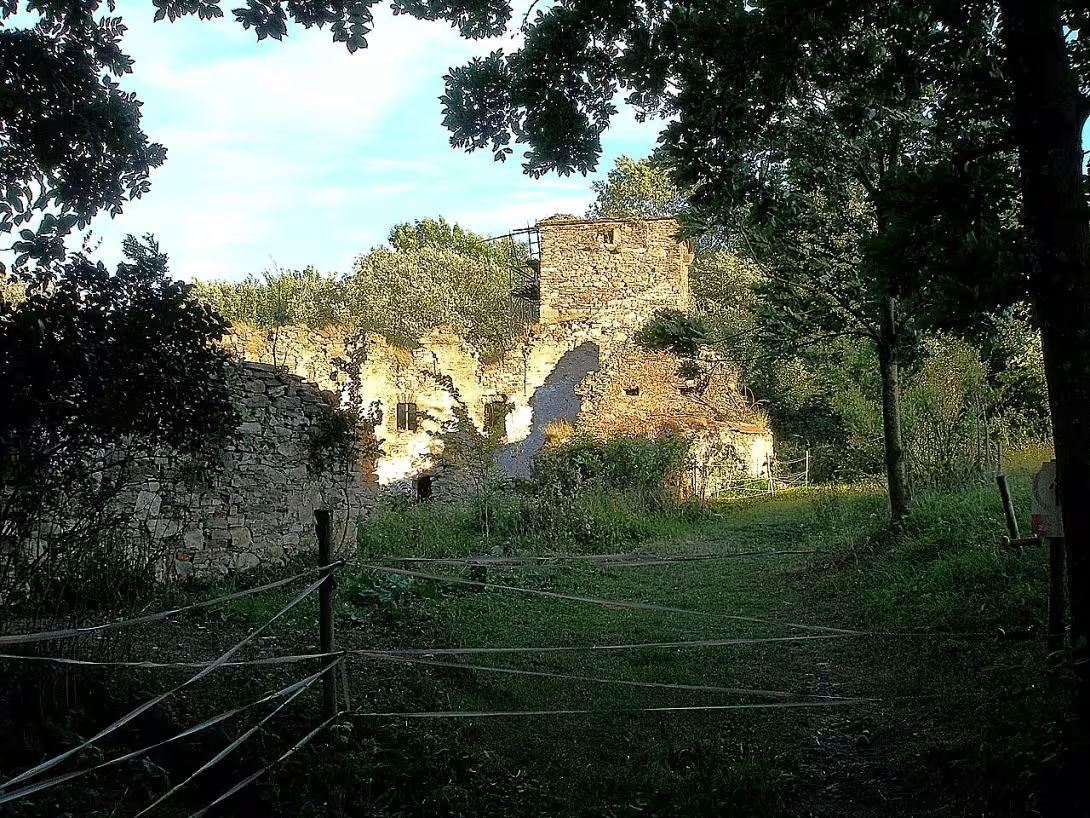
Pasovary represents the ruin of the Gothic fortress, which lies in the district of Český Krumlov on the site of the extinct village. The building was created in the second half of the 14th century and is a significant architectural change - from the original defence function to later economic use.
The first historical mention of the site dates back to 1278. The existence of the village Pasovary, which belonged to the flags of Zipin and Pasovar, was then recorded. However, the preserved fortress itself was created only in the second half of the 14th century.
The original fortress had a polygonal plan and the whole area was surrounded by a moat. The dominant element was the free-standing three-storey tower, which was entered through the portal on the drawbridge. Part of it is an aristocratic Prior. It is assumed that there was another construction in the southeast corner at the time of the original construction. During the late Gothic period, there was an extensive reconstruction, where the palace was created. Subsequently another palace was built along the outside of the perimeter wall on the north side, thus expanding the original whole. A passable gate object was set up in the southwest. The younger buildings were only economic in nature. A new wing was built in the west, which led to the transfer of entry back to the east side. The last construction work on the building took place in 1887.
After the death of the last member of the family, Janko Lovík of Pasovar, the fort passed into the hands of Emperor Zikmund as death. From him it was acquired by Matěj Višně z Větřní, in whose family it remained until the Thirty Years War. In 1623, Jan Větří's fortress was confiscated for participation in the construction uprising and subsequently bought by the city of Český Krumlov.
The town used the fort area only for economic purposes. In 1907, the building was destroyed by a fire. Further damage to the building occurred after World War II, when the ruins were badly damaged by the Czechoslovak army.
Since 1958 the fortress has been protected as a cultural monument and is currently being cared for by the association of Pasovar. The facility is accessible two kilometres northeast of the village Světlík on a blue marked tourist route. From the crossroads of Pasovary leads to the remains of the fortress unmarked field path.
The ruin represents an important witness to medieval architecture and complicated history of the region. It is a suitable destination for visitors seeking authentic historical monuments.
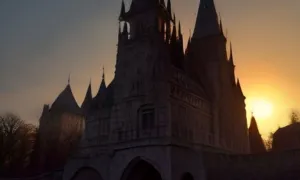
Then and now
Drag the slider to compare how the landmark may have looked when it was built with the view today.
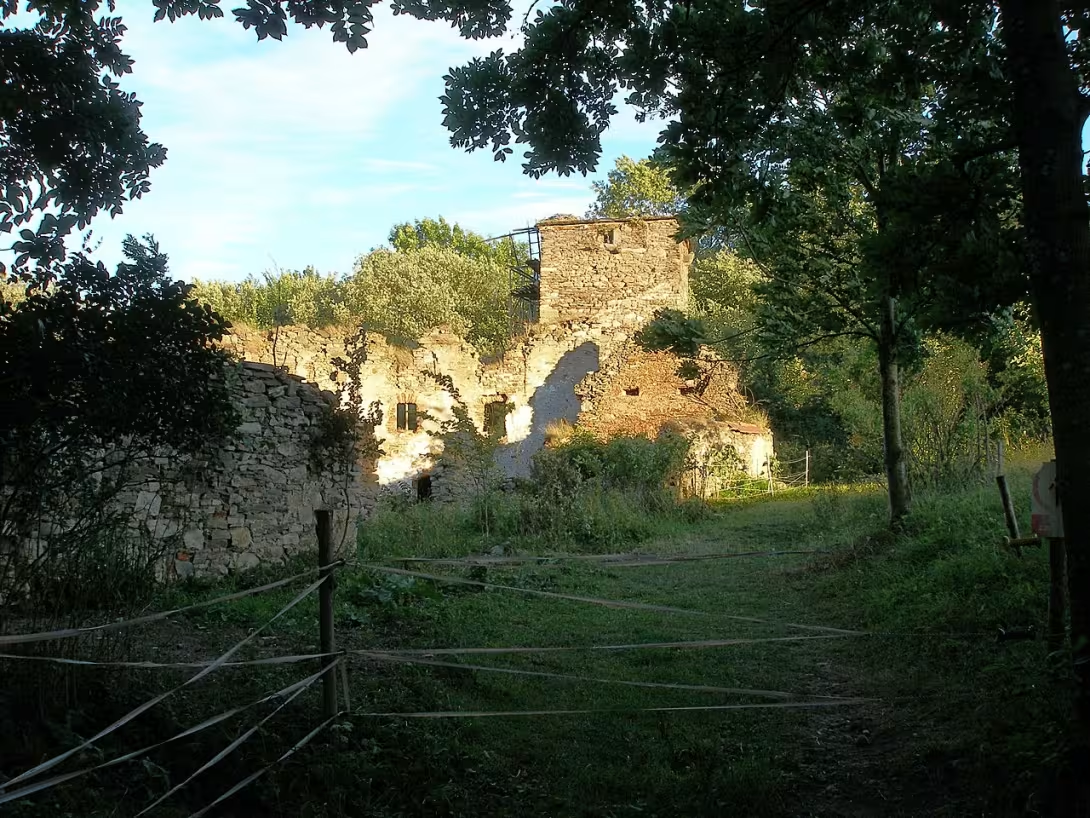
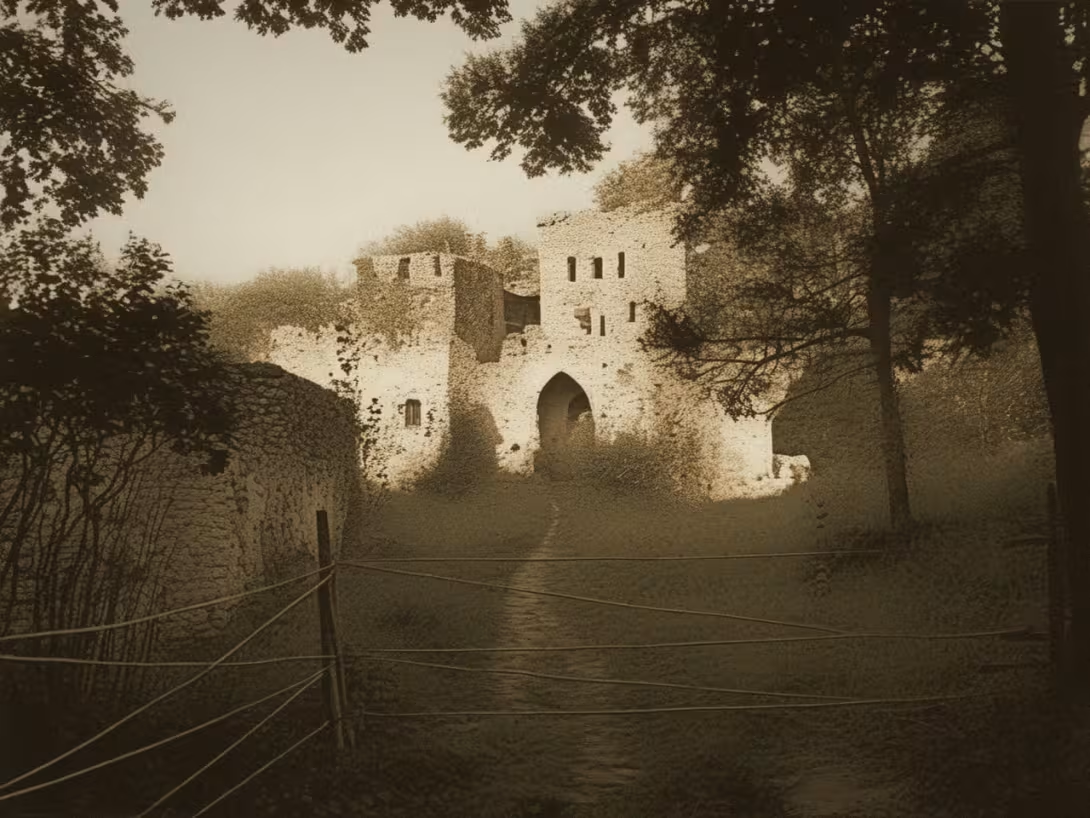
The historical appearance on the left is an AI-generated visualisation and serves as inspiration only.
Historical milestones
- 1278
- First mention of village Pasovary.
- 1437
- The takeover by Emperor Zikmund after the death of the last member of the family.
- 1623
- Confiscation of the manor to John Cherry of the Winery for participation in the state uprising.
- 1907
- A fortress fire.
- 1887
- Last construction work on the building.
Architectural development
The original Gothic fortress had a polygonal plan and a three-story tower. During the late Gothic period, new palaces were created in the southeast and north corners. The later buildings were only economic in nature and the last interventions took place in 1887.
Historical events
1437: Taking over the fortress by Emperor Zikmund as death. 1623: Confiscation of the estate to John Cherry of the Wind. 1907: Building fire. After World War II: Damage to the building by the Czechoslovak army.
Owners
Vladyková z Zipina a Pasovar (1278), emperor Zikmund (1437), family Vishních z Větění, town Český Krumlov (after 1623).
Points of interest
- The building was created in the second half of the 14th century and has undergone a change from defence function to economic use. - The dominant element was a free-standing three-storey tower, which was entered through a portal on the drawbridge. - In 1623, Jan Větří's fortress was confiscated and subsequently bought by the city of Český Krumlov. - In 1907, the building was destroyed by a fire and, after World War II, the Czechoslovak army was unscrupulous. - The building is accessible two kilometres northeast of the village Světlík on a blue marked tourist route.
Guide
Show guide text
This text was created by artificial intelligence and has not been editorially reviewed. It may contain inaccuracies.
Welcome to the place where time stopped and where the stone remains are told stories long ago up to the years. You are standing in front of the ruins of the Pasovary fortress, which stands above the surrounding area as a silent witness to history. If you look around now, you may feel a strange calm, but know that this peace is just a mask for a stormy past. Under your feet and in the surroundings that you are now observing, a desolate village once spread out. What you see today is just fragments of something that once was full of life, noise and movement of people. This ruin is not just a pile of stone, it's a memory of a place called Světlík that tries to survive despite the relentless passage of centuries.
Let's go back together to when the first foundations of this place began to be trapped in the ground. Although the fortress seems to be a dominant landscape, its roots go even deeper. Already in the year one thousand two hundred seventy eight, the first mention of the village Pasovary appears in historical records. Imagine the settlement that once existed here before it was completely consumed by time and fate. It was only in the second half of the 14th century that the hardness that you now see was created. It was built not only as a common dwelling, but as a fortified point to protect and control the surroundings. Its creation was an answer to the needs of the time when safety and the ability to repel the enemy was a fundamental condition of existence.
Now pay attention to the very structure of the object you are currently observing. If you try to draw the original form of this structure in spirit, notice its unusual geometry. The fortress was built with a polygonal floor plan, which means that its walls were not just straight, but formed complex angles that increased its defence. Feel the power these walls once radiated. The main point of the entire complex, which should immediately capture your vision, was an impressive, free-standing three-story tower. Even if you only see her remains today, try to imagine her ascending line. This tower was the true heart of hard. Entrance was not easy for friends or enemies. The entrance was protected by a portal, and it had to get through the drawbridge itself. Imagine the tension when the bridge rose and cut off the road for anyone who wasn't invited. This architecture was not meant for beauty, but for survival. At a later time, especially during late Gothic times, she went through the hardness of other reconstructions that changed her face, but her basic character remained unwavering.
But to understand why these walls are so lonely today, we need to look at the people who were masters here. The history of Pasovar is linked to the fates of prominent personalities whose names have been embedded in the memory of this place over the centuries. We can talk here, for example, about Janko Lovík of Pasovar, a figure that is linked to this site in its early stages. Observe these ruins and think of the decision that the man who lived here had to make and control this territory. Later, in the year one thousand four hundred thirty-seven, fate had changed dramatically. After the death of the last member of the original family, it was taken over by Emperor Zikmund himself. Imagine the weight of power when this place became directly part of the imperial reign. The fortress was no longer just a local seat, but part of the wider political game of the most powerful man in Europe.
But the era of stability was interrupted by the stormy times of political upheaval. In the year one thousand six hundred twenty-three there was an event that fundamentally changed the owners of this estate. As a result of the participation in the state insurrection, it was harshly confiscated by Jan Víšnov of the Winery. It is a fascinating and tragic story at the same time about how political ambitions and conflicts between the powerful can destroy the lives and property of entire families in an instant. Jan Vishni and his family were drawn into history through this conflict that left deep traces. This confiscation meant the end of one era and the beginning of a new one, when the hardships began to change gradually. It's a fascinating transformation where an impenetrable defensive fortress became an object for economic purposes. A place where the cries of soldiers once sounded began to sound of work and agricultural life. The fortress has become part of the economic order, has ceased to be a threat and has become a tool for the management of the surrounding area.
Now, if you look at the state of these walls, you might wonder what caused their ruins today. Although various works were carried out on the premises over the years, for example, the latest construction work in a year of eight hundred and eighty-seven, destruction was inevitable. The big blow for this building was the fire in the year one thousand nine hundred and seven. The fire, which at that time did not respect any history or pride, left permanent consequences and contributed to the hardness becoming what you see now. You stand before a monument that has passed through fire, wars, and political upheavals, and yet it still stands here.
The interesting thing that can make you think is the constant change in the functionality of this place. It is rare to see an object so clearly illustrating the transition from the need for absolute defence to the simple use for agriculture and farming. Pasovary is not just a ruin, it is a history textbook that shows how people's needs change, how power changes, and how the very view of security changes. There is also a mystery - what happened to all the people in the original village, which we have only a brief mention of in the year two hundred seventy-eight? Where did their houses, their joy and their pain go? All they left behind was this quiet ruin and a tower that once watched over their lives.
Now that you've got an idea of what these stones are carrying behind them, I suggest you continue your search of the area. Let the atmosphere of this place drift. Feel the silence that exists here and try to find the echoes of the past. Look at the remnants of the walls, see if you can draw those ancient portals and drawbridges that were once here. Every stone you see here has its own weight and its own story. Thank you for choosing to share this story with us and for paying attention to this forgotten memory. We wish you a pleasant rest of your journey and hope that this view of the history of Pasovar will enrich you. Goodbye.
Tips for visitors
The best time to visit the Pasovars is in the spring or autumn season when vegetation is less dense and sunlight is not too intense. These months offer ideal conditions for exploring ruins without the discomfort of overheated summer sun.
Transport to the place can be arranged by car or public transport, but specific connections and routes should be checked before leaving the online search engine. The site is also available for visitors with limited mobility, but it is important to ensure safety during walking on ruins.
When planning your visit, bring suitable clothes and shoes to allow you to move on uneven ground. Don't forget also to wear protective sunglasses, hat or cap to protect you from the sun and drink so that you don't get thirsty during walking.
Photography of Pasovars offers many interesting perspectives. The best light is usually in the early morning or late afternoon when the sun is not directly above your head. Search for locations with angle lighting for dramatic effects and do not underestimate the possibility of capturing panoramic views of the surrounding landscape.
In the village Světlík you can visit the local museum or explore historical buildings after visiting the Pasovars. For families with children it is advisable to organise a short trip to nearby routes where children can enjoy nature and possibly find wild flowers or birds.
Frequently asked questions
Can the monument be visited?
This is a ruin. Such sites are often freely accessible, but some can only be visited with a guide or are closed for safety reasons. We have not verified the current situation – take care and respect any restrictions.
Where is the monument?
Location: Světlík, Jihočeský kraj. The map on this page shows the exact spot.
Why is the monument protected?
It is listed in the Central List of Cultural Monuments of the Czech Republic as a cultural monument (register no. 1000158006).
Businesses nearby
Do you run a restaurant, accommodation, shop, museum, rental, wellness or other visitor service near this monument? Show yourself directly to the people heading to it — this is how they will see you in the app and on the web:
Nearby
The village Světlík and the extinct village Pasovary.
Accommodation nearby
Trips and activities nearby
Guided tours, tickets and activities nearby from GetYourGuide
Affiliate link: if you buy from the partner, we may receive a commission. The price for you does not change.
Search tours and activities →Themed route
1. Světlík, village: Suitable starting point for the start of the trip and orientation in the field. 2. Pasovary, the extinct village: A place where you can follow the traces of the former settlement and experience the atmosphere of history. 3. Pasovary, Fortress: The main destination of the trip, which offers a view of the remains of historical fortification.
Seasonal recommendations
Spring on the fortress Pasovary in Světlík brings a awakening landscape where the first grass begins to grow around the walls and the surrounding meadows bloom. The light at this time is soft and scattered, often intermingling with spring mist, which supplies the ruins with mystical and silent character. The atmosphere is calm because large groups of tourists are not yet getting here, which allows a private experience of history. Practical advice for this period includes caution with shoes, as after the rains the roads can be muddy and slippery. It is recommended to wear laminated clothing because spring weather is variable and temperatures can change rapidly. The best time to visit is usually in the morning when the air is fresh and the light has not yet been polluted by the daily rush.
Summer offers the longest days and brightest lighting, which reveals every detail of stone remains and texture of old masonry. Nature around the fortress is in full bloom, with rich vegetation that contrasts with gray ruins. The atmosphere is more lively, but also more noisy, because summer tourists and cyclists use the surrounding routes. In the main summer season it is important to come as early as possible in the morning to avoid crowds and intense midday sun, which may be unpleasant in exposed places. Clothes should be light, breathable and with a protective hat because the shade is minimal in the ruins. Water for drinking is necessary because in hot days dehydration occurs faster than elsewhere.
Autumn in Pasovars is a time of golden colors, when the surrounding trees change leaves and create a dramatic background for shooting ruins. The light is lower and warmer, often falling at a sharp angle, which extends the shadows and highlights the relief elements of the masonry. The atmosphere is colder and melancholy, with a sense of the past time that the autumn landscape naturally evokes. Practical advice includes wearing warm layers as morning and evening frost can be felt, and also caution on wet leaves that can be slippery. The best time to visit is the late afternoon when the light is the most beautiful and the temperature is still tolerable, but before it gets dark and becomes cold.
Winter brings the creatures Pasovary unique, bare beauty, where the remains of the walls are exposed without vegetation cover and sometimes covered with snow or frost. Light is short and sharp, often white and cold, which creates a cold, almost surreal atmosphere. Nature is calm, the trees are bare and the landscape is silent and isolated. Practical advice for a winter visit are essential: the need for warm clothes, including gloves and hats, and shoes with good anti-slip soles because ice and snow can be dangerous. The best time is usually the late morning, when the sun reaches its highest point and brings the hottest moments of the day, but it is still necessary to count on a quick nightfall.
Visualizations and artistic views


The visualisations are generated by artificial intelligence and serve as inspiration.
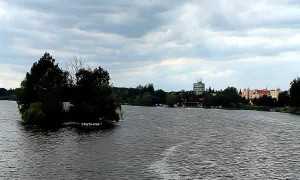
Photos from the area
Real photos taken near the monument


Zdroj a licence jsou uvedeny u každého snímku.
Tips from visitors
No tips yet. Be the first!
Log in and add your tip.
Sources and literature
Photos: Miloš Hlávka / CC BY-SA 3.0 — Wikimedia Commons. The author and licence also appear when you hover over the image.
Faktickým podkladem tohoto textu byl článek na Wikipedii, jehož autory jsou přispěvatelé Wikipedie. Článek je dostupný pod licencí CC BY-SA 4.0.
Location on the map




Příběhy a pověsti
Legendy, pověsti a příběhy spjaté s touto památkou
Fotografie návštěvníků
Zatím žádné fotografie. Buďte první, kdo přidá fotografii z návštěvy!
Log in a přidejte svou fotografii nebo hodnoťte.
Za ověřenou návštěvu v aplikaci získáte víc bodů — poznáme podle GPS, že jste na místě.
Reviews and comments