



Pekárna Cave
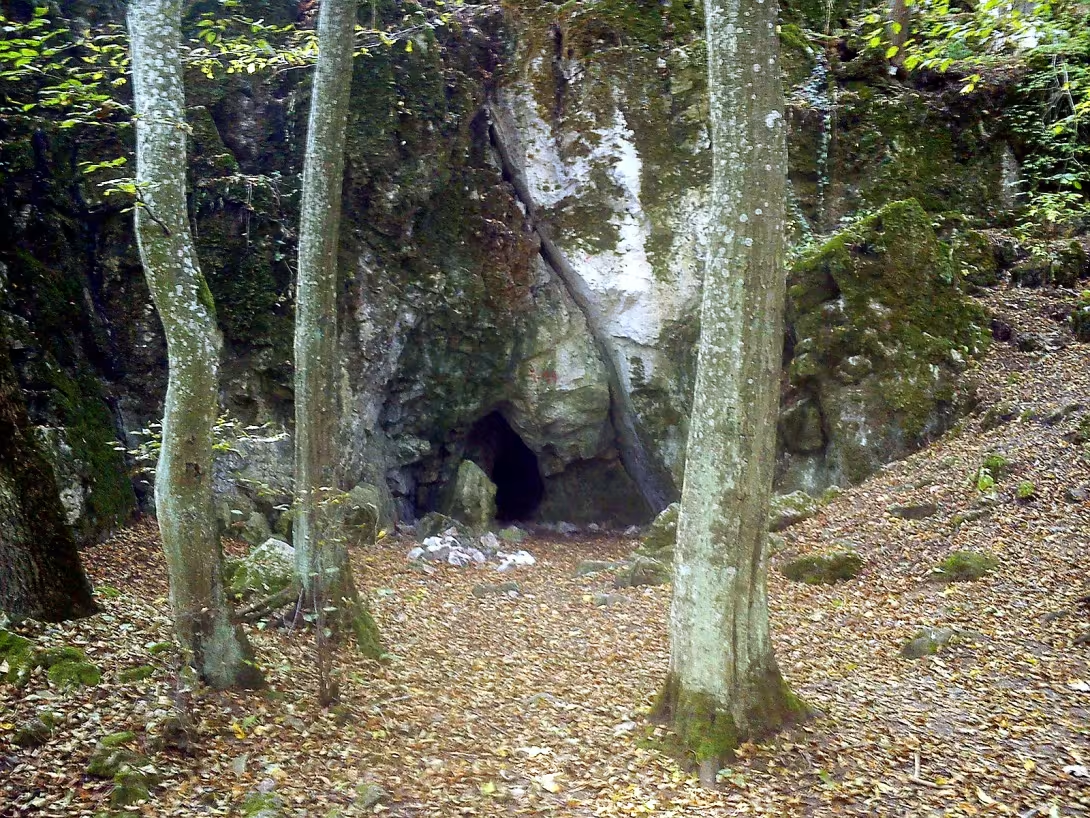
The Pekárna Cave is an important archaeological site in the southern part of the Moravian Karst, located in the valley of Říčka near Ochoz u Brno. This tunnel cave served as a refuge for prehistoric people. The findings of the magdalénien period, which include unique engravings on bones and parodies, were especially famous.
The locality, formerly known as Kostelík or Děravica, represents a fire-infidelity cave of water that has been flowing in the past since the Hostěnický forfeiture. The object consists of a single, 64-metre-long corridor, which is naturally lit by daylight almost throughout its length. The end of the hall closes the boulder cave under the chimney. Although there is a presumption that the corridor continues towards the Hostannice, attempts to penetrate the bead using the bays in 1947, 1952 and 1959 were not successful.
Archaeological research has shown the settlement of the site from paleolithic to neolithic, and the Bronze period to the period of the Hallatite. The most significant findings come from the period of magdalene, namely the first warmer fluctuation of the late glacial around 11,000 BC. At this time, Central Europe was at the end of the last ice age, and hunters specialized in reindeer, horses and hares. The fireplaces found and numerous tools made of stone, bones and antlers show intensive use of space.
Among the most important discoveries are engravings on the horse's ribs, such as the Battle of Bison from 1927 or the Paging Horse from 1963. The uniqueness of these objects is that it is the first preserved representation of the enclosed scene in ancient art, unlike the usual findings of unrelated objects. Other valuable artifacts are bear engravings on antlers or animal heads on bone objects.
The history of research began in 1880 with the work of Jan Knies, which was followed by Jindřich Wankel and Martin Kříž. The most extensive survey was conducted between 1925 and 1930 by Professor Karel Absolon. Later, between 1954 and 1961 and 1965, he examined the platform outside the Bohuslav Klíma cave, which was followed by Jiří Svoboda between 1986 and 1987. The findings of these expeditions are today stored in the Institute of Anthropos of the Moravian Museum and the Archaeological Institute in Brno.
The Pekárna Cave is protected as a cultural monument of the Czech Republic and is part of the nature reserve of the River Valley. In 1933 it was declared a natural monument, but as of 30 November 2025 it was excluded from the register of specially protected areas due to a lack of declaration documentation. The wider public is also known from literature, as the writer Eduard Štorch used the cave as a temporary shelter for hunting groups in his novel Mammoths.
This space represents an extraordinary proof of the prehistoric settlement and artistic sensations of our ancestors. The visit to Bakárny offers the opportunity to see the history of human presence in the region of Moravian Karst and to know the place that has fundamentally affected our understanding of paleolithic culture.
Historical milestones
- 1880
- Jan Knies' first archaeological research.
- 1927
- Found a unique engraving of Bison Battle.
- 1933
- Cave designated as a natural monument by the Ministry of Education and National Instruction.
- 2025
- Exclusion from the records of national natural monuments in the revision of the USDP.
Architectural development
The cave is a natural body, a firetower cave of water flowing from the Hostonic forfeiture. In 1947, 1952 and 1959, stals were embossed in the cave in an attempt to penetrate the blast but without success.
Historical events
1925-1930: Intensive research by Prof. Karl Absolon, 1927: Finding the engravings of the Battle of Bison, 1963: Finding the engravings of the grazing horse.
Points of interest
- The cave is a 64-metre long corridor, which is naturally lit with daylight almost throughout its length. - The locality was also known in the past under the name Kostelík or Díravica. - Unique engravings on the bones and parodies represent the first preserved representation of the enclosed scene in ancient art. - Attempts to break through the boulder at the end of the corridor in 1947, 1952 and 1959 were not successful. - The writer Eduard Štorch used the cave in his novel Mammoth Hunters as a temporary shelter for hunting groups.
Guide
Show guide text
This text was created by artificial intelligence and has not been editorially reviewed. It may contain inaccuracies.
Welcome to Pekárna Cave, a unique archaeological site in Mocrea-Horákov, which is part of the fascinating Moravian Karst. You stand before the entrance to a tunnel structure whose corridor stretches 64 metres and is illuminated by daylight, which gives a sense of mysterious prehistoric sanctuary. This cave was an important place for our ancient ancestors from the Magdalene period who resorted here to seek safety and create unique works of art.
Let's go into history. The first archaeological excavations took place here in 1880 when Jan Knies discovered them. His work laid the foundations for understanding the importance of this place. Later, in 1927, a unique engraving was discovered called "The Battle of Bison," which brought the cave to the international scene of archeology and art. In 1933 Pekárna was officially recognized as a natural monument, which meant its protection for future generations.
Look up at the passage that leads to a deep hiding place. Notice how natural lighting has left a trace of antiquity in this environment. Although the architects are unknown, their work is still visible in the structure of the cave and its natural design.
This place is connected to several key personalities. In addition to Jan Knies, Jindřich Wankel, Martin Kříž and other important experts such as Karel Absolon, Bohuslav Klíma and Jiří Svoboda were also engaged here. Their joint effort was to uncover the secrets of the past hidden in the depths of the cave.
One of the most interesting mysteries associated with Bakery is unique engravings on bones and parodies, which represent the first preserved depiction of enclosed scenes in prehistoric art. These works give us a valuable insight into the life and culture of our ancient ancestors.
When browsing the caves you may realize that the site was also known in the past under the names Kostelík or Děravica. This historical context adds another layer of interest and mystery to the site.
So let's move on to explore more of this fascinating place. Every step leads to new discoveries and knowledge of our shared history. We hope that this guide inspired you to explore and appreciate the rich past Pekárna Cave offers.
Thank you for your visit. We hope you will return to explore the other secrets the Moravian Karst hides. When we meet you again, we are ready to share more historical stories and mysteries.
Tips for visitors
The best time to visit is spring or autumn, when the cave has a pleasant climate and surrounding nature offers beautiful colors. Avoid weekends during the main season if you are looking for peace to observe the archaeological significance of the place.
To the cave you can walk from Ochoz village near Brno. The current connection by public transport to the village is checked in the traffic search engine.
We recommend fixed shoes suitable for the field and warmer clothing, because it is colder in the cave even in summer. Don't forget the flashlight for a better tour of the premises and plenty of drinking water, as there are no refreshments stalls near the cave.
The best light to capture the monumental entrance to the cave is in the morning when the sun enters. The statistics are an advantage for shooting details in the dark, but make sure you don't damage the terrain.
For families with children, the trip is ideal as an easy walk through nature. In the surroundings you can visit the picturesque Valley of the River or the natural interest of the Hostěnické forfeiture, which are easily accessible from the cave by walking tour.
Frequently asked questions
Can the monument be visited?
We have not verified whether this monument is accessible. Please ask the owner or operator, or the local municipal office.
Where is the monument?
Location: Mokrá-Horákov, Jihomoravský kraj. The map on this page shows the exact spot.
Why is the monument protected?
It is listed in the Central List of Cultural Monuments of the Czech Republic as a cultural monument (register no. 1000139953).
Businesses nearby
Do you run a restaurant, accommodation, shop, museum, rental, wellness or other visitor service near this monument? Show yourself directly to the people heading to it — this is how they will see you in the app and on the web:
Natáčelo se zde
- Princezna a půl království (2019) film
Zdroj: Wikidata (vlastnost „místo natáčení“) · Všechna filmová místa
Events nearby


Zdroj akcí: otevřená data měst a obcí ČR (Národní katalog otevřených dat) a kalendář akcí Národního památkového ústavu.
Nearby
River Valley, Ochoz village near Brno, Hostěnické failing.
Accommodation nearby
Trips and activities nearby
Guided tours, tickets and activities nearby from GetYourGuide
Affiliate link: if you buy from the partner, we may receive a commission. The price for you does not change.
Search tours and activities →Themed route
Thematic cruise route around the archaeological site Bakárny
1. Pekárna (archaeological site) * Type: * Archaeological site Worth a visit for his unique contribution to understanding life in prehistoric times. The Bakery site offers a view of ancient bakery techniques and everyday life habits.
2. Valley of the River * Type: * Natural transit area This valley is an ideal place for a short walk or picnic where you can enjoy a quiet environment and natural beauty. It's an excellent place to relax after visiting an archaeological site.
3. Municipality of Ochoz u Brno * Type: * Historical village Visit this picturesque village known for its historical development and architecture. It is a great example of traditional rural life with places that tell about the past of the region.
4. Host Fail * Type: * Geological landmark This is a fascinating place for those who are interested in geology and natural formation. The host's forfeiture offers a view of the underground world and its secrets.
5. Back to Bakarne After exploring the surrounding attractions, you will return to the archaeological site so that you can enjoy another look at this fascinating place and perhaps visit the exhibition or park around the site.
Seasonal recommendations
Spring brings awakening nature and fresh greenery surrounding the site. Soft spring light highlights the details of archaeological structures and creates an optimistic atmosphere. We recommend moisture-resistant shoes because the terrain can be muddy when snow melts. An ideal visit in the morning is when the air is the cleanest.
The summer season offers full sun and rich green landscape, creating a strong contrast with the colours of the sights. Expect more visitors in the main season, so it is advisable to come right at the opening to avoid heat and crowds. Remember light clothes, hat and plenty of fluids for comfortable passage through the premises.
Autumn is a period of golden leaves and foggy mornings that give the place a mysterious and peaceful atmosphere. The low sun hits memory at interesting angles, which is ideal for capturing details. Due to the variable weather, reach for layered clothes and plan to arrive until late afternoon when the light is softest.
In winter, silence reigns and the landscape is free of leaves, making the monument more visible from a distance. Freezing air and any snow cover create a minimalist and peaceful picture. It is necessary to choose warm and waterproof clothes. Due to the shorter day and limited opening time, we recommend a visit around noon to give you enough daylight.
Visualizations and artistic views


The visualisations are generated by artificial intelligence and serve as inspiration.
Photos from the area
Real photos taken near the monument


Zdroj a licence jsou uvedeny u každého snímku.
Tips from visitors
No tips yet. Be the first!
Log in and add your tip.
Sources and literature
Photos: Dezidor / CC BY 3.0 — Wikimedia Commons. The author and licence also appear when you hover over the image.
Faktickým podkladem tohoto textu byl článek na Wikipedii, jehož autory jsou přispěvatelé Wikipedie. Článek je dostupný pod licencí CC BY-SA 4.0.
Location on the map


Příběhy a pověsti
Legendy, pověsti a příběhy spjaté s touto památkou
Fotografie návštěvníků
Zatím žádné fotografie. Buďte první, kdo přidá fotografii z návštěvy!
Log in a přidejte svou fotografii nebo hodnoťte.
Za ověřenou návštěvu v aplikaci získáte víc bodů — poznáme podle GPS, že jste na místě.
Reviews and comments