



Piaristické gymnázium v Kroměříži School building
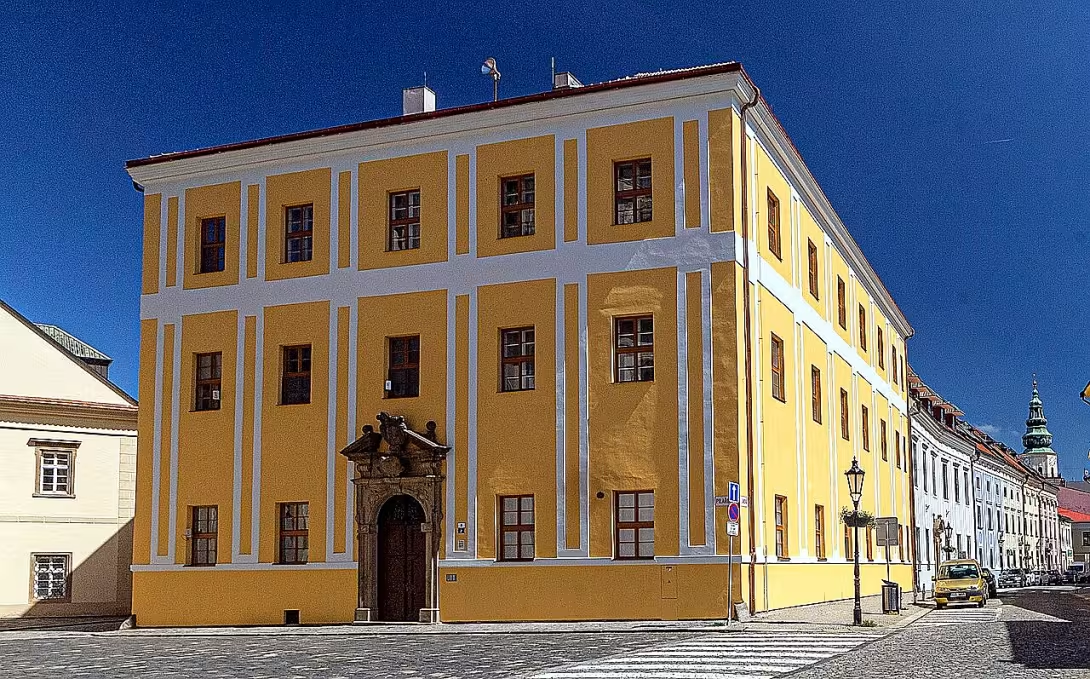
Piaristické gymnázium v Kroměříži was an important ecclesiastical educational institution founded in 1687 by the Bishop of Olomouc Karel II. z Lichtenštejna-Castelcornu. This Baroque complex includes the building of the college and the church of St. John the Baptist. For centuries he was a key centre of education in Moravia before the school was cancelled in 1919.
The school was established on 16 June 1687 in Kroměříži. It became the eighth piarist constitution in Czech countries. Its foundation falls into the period after the Thirty Years' War, when the Church's influence and the administration of the Habsburg monarchy were consolidated as part of the reCatholics and Baroque culture. The first faculty consisted of Václav Daniel Moreska, Bedřich Remigius Richter, Jan Kryštof Skerík and Karel Prokop Růžička, who came to town from Lipnik. The teaching followed the principles of the founder of the order Josef Kalasanski.
Originally, the Gymnasium was based in the premises of the extinct Johanite commendation. From 1737 to 1768, however, a representative Baroque area grew up, with rectors Karel Kornel Horné and Jeremiah Judný participating in the construction. The church of St. John the Baptist became part of the complex and the adjacent building of the college, in which the Conservatory P. J. Vejvanovský is now housed. In 1851 the building was extended to the second floor due to a growing number of pupils.
The administration of the Constitution was carried out by the Piarist Order until 1873, when the school was nationalized and converted into a state German gymnasium. This process, led by the provincial František Zinkem, has created a high financial intensity of operation, new school laws and a lack of qualified piarist teachers. Piarist college died in 1879. After the creation of Czechoslovakia in 1919, the German Gymnasium was abolished as superfluous.
There are a number of interesting things about school history. Almost from the beginning there was a boy's singing seminar. Teaching was also open to Jewish students who studied here in 1876. Although Germanization efforts were taking place in the 18th century, the school also took care of teaching Czech, for which it used the book of Jan Amos Komenský. The historians Gelasius Dobner and Jaroslav Schaller, or astronomer Florus Ignác Stasek, were important figures associated with this place.
Dnes areál v Kroměříži připomíná bohatou pedagogickou tradici a barokní architekturu. Návštěva lokality nabízí možnost prohlédnout si historické budovy v těsné blízkosti Arcibiskupského zámku a místních zahrad. Objekt představuje cenné svědectví o vývoji školství a intelektuálním životě v minulých staletích.
Then and now
Drag the slider to compare how the landmark may have looked when it was built with the view today.
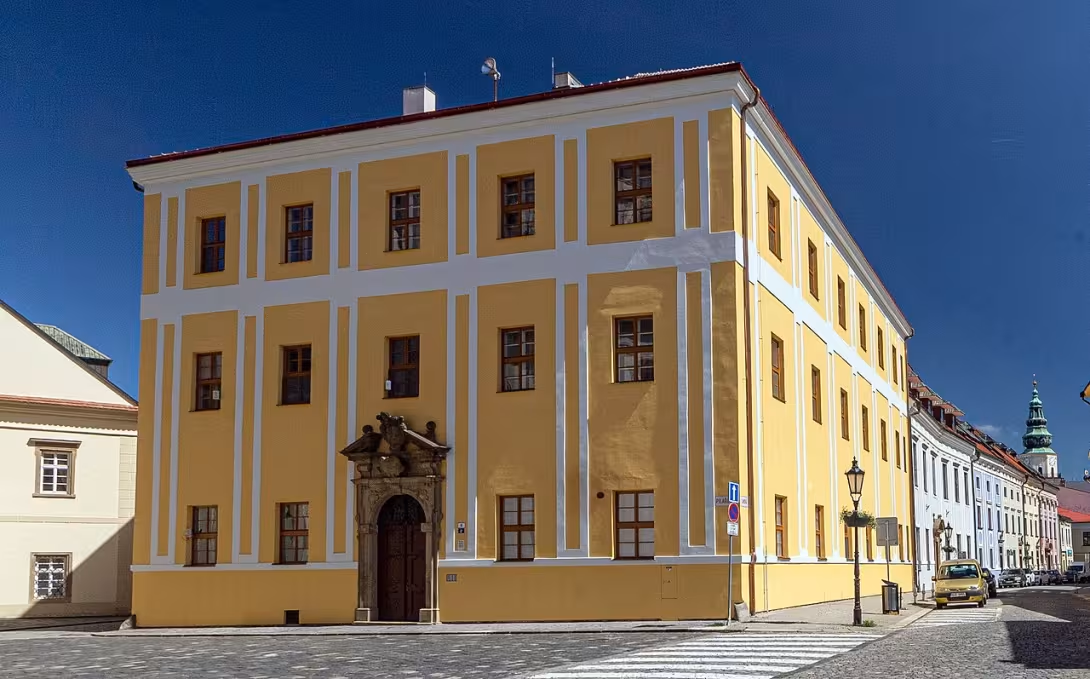
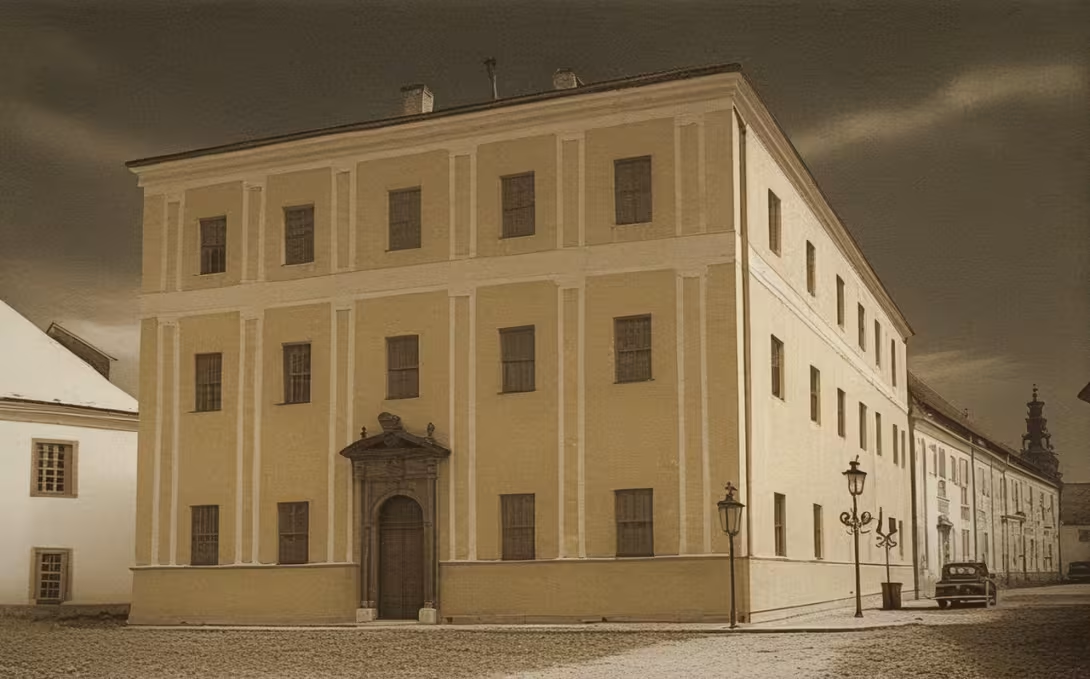
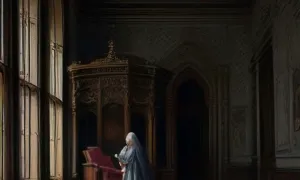
The historical appearance on the left is an AI-generated visualisation and serves as inspiration only.
Historical milestones
- 1687
- Establishment of a Piarist Gymnasium in Kroměříži.
- 1688
- The ceremonial laying of the foundation stone and the setting up of the boys' singing seminar.
- 1774
- Establishing a main school and a lower reality in school reforms.
- 1919
- The ultimate dissolution of high school.
Architectural development
The original teaching took place in the premises of the Johanite commendation. From 1737 to 1768, a representative Baroque complex was built, including a gymnasium and a college. In 1851, the building was expanded with a second floor extension due to a growing number of pupils.
Historical events
1687: Establishment of the Grammar School by Bishop Karl II of Liechtenstein-Castelcorn. 1737-1768: Construction of a new building complex. 1873: The nationalisation of the Gymnasium at the German State Gymnasium. 1919: Full school cancellation.
Owners
Piarist Order (1687-1873), State (from 1873)
Points of interest
- The school was founded in 1687 by the Bishop of Olomouc Karel II. z Lichtenštejna-Castelcornu and became the eighth constitution of this order in Czech countries. - Originally the Gymnasium was located in the premises of the extinct Johanite commenda before the Baroque complex was built between 1737 and 1768. - In 1851 the building was extended to the second floor due to a growing number of pupils. - Almost from the beginning there was a boys' singing seminar and teaching was open to Jewish students. - Although efforts were made to spread German language in the eighteenth century, the school also took care to teach Czech using the books of Jan Amos Komenský.
Guide
Show guide text
This text was created by artificial intelligence and has not been editorially reviewed. It may contain inaccuracies.
Welcome to Kroměříži, a city that tells its face stories of power, faith and the search for truth. Right now, you're standing in front of a place that has been the intellectual heart of this region for centuries. In front of you lies the Piarist Gymnasium, a building that is not just a set of walls and roofs, but a monument to the human desire for education. Stop for a moment, take a breath and feel the atmosphere of this place. In front of you you can see a large Baroque complex, which, with its size and dignity, reminds you of the role the school has played in the past. Notice how buildings surround space and how the spirit of the old days still persists. It is a place where religious ideas met with science and the minds of many generations of young people were formed.
Let us now return in time more than three hundred years back, to the year six hundred eighty-seven. It is this year that the cornerstone of the institution you stand with today was laid. It was founded by Bishop Charles of Olomouc, the second of Liechtenstein-Castelcorn. The bishop was not only a spiritual leader, but also a visionary who understood that the way to the development of society was through quality education. He wanted to bring to Kroměříže order of piarists, a group of priests who specialized in teaching and youth education. This school thus became the eighth constitution of this order in the Czech countries, which shows its importance and prestige at the time of its creation.
If you look at the current form of the campus, you might think the school was here from the very beginning. But the truth is different. In the first years of its existence, the Gymnasium was located in the premises of the extinct Johanite commendation. So it was a time of transition and finding the right place. Only later, in the years of seven thirty to twenty-seven sixty-eight, was this vast Baroque area that you see now. This complex includes not only the Piarist College itself, but also the Church of St. John the Baptist. Look at the facade of the buildings and feel the rhythm of their architecture. The Baroque style that dominates here was designed to create a sense of respect and grandeur, which exactly matched the ambitions of the educational institute that was supposed to be the beacon of enlightenment throughout Moravia.
Now pay attention to the people who defined this place. The Piarists were no ordinary teachers. Their spiritual father was Josef Kalasanský, a man who believed that education should not only be a privilege for the rich, but should also be available to the poor. It was this idea that drove the school's activities in Kroměříži. In addition to the founder of the Order, important personalities such as Václav Daniel Moreska or Bernard Bartlicius were present. Imagine these men walking through the same passageways that we are walking on today, running rumours in Latin or discussing philosophy and science. Their presence here left a trail that lasted a generation.
An interesting detail from the early years of the school is the year six hundred eighty-eight, when the foundation stone was ceremonially laid and a boy's singing seminar was founded. So imagine that the silence of this courtyard was once filled with the voices of young boys who trained here to sing and study music. Music and faith at that time were inseparable and together they formed the cornerstone of education. The school has thus become a place where not only rational activity has developed, but also aesthetic sense.
But as the times changed, so did the school. In the year seven hundred and seventy-four came great school reforms. These changes set up a main school and a lower reality. That was a major break. Education became more open to practical knowledge, reflecting the needs of the Enlightenment period. The school was no longer only about religion and classical languages, but it began to put more emphasis on the sciences that were useful for everyday life and the development of society. Thus, the Gymnasium remained modern and relevant for centuries, adapting to new currents in pedagogy.
You might find one interesting thing that shows how dynamically the school evolved. In a thousand and eight hundred and fifty-one, the building had to respond to the growing needs and number of pupils. This shows that piarist education was in Kroměříži sought after and valued in the nineteenth century. The school was not only a closed monastery, but a living organism that breathed the rhythm of the city and responded to its needs.
Unfortunately, every era has its end. After centuries of education services came the year of a thousand nine hundred nineteen, when the gymnasium was definitively abolished. It was the end of a big chapter in Kromeriz history. Although the school had disappeared in its original sense, its legacy remained carved into these walls and in people's memory. When you look at this baroque complex today, you don't just see old buildings, but you see a place where thousands of young people learned to think, critically evaluate and look for their place in the world.
Look around you again. Feel the silence that rules today, where there used to be loud discussions between students and the strict screams of professors. Notice the harmony between the church of St. John the Baptist and the piarist college. These two buildings form units that symbolize the combination of faith and reason, which was the basic pillar of piaristic pedagogy.
Now that you know the story of this place, I suggest you go around at a slow pace. Try to imagine what it was like to be a student in the eighteenth century, what books you read and what you dreamed of looking out of the windows of these buildings on the Kromerijska street. The Piarist Grammar School reminds us that education is the most valuable gift one generation can give to another.
Thank you for accompanying me on this short journey through history. I hope you felt the depth and meaning of this place. Now I invite you to explore the beauty of Kroměříž. Let yourself be guided by curiosity and discover other hidden treasures of this wonderful city. I wish you a pleasant journey and many new experiences. Goodbye.
Tips for visitors
For the tour of the exterior of the building I recommend the morning hours when the sun illuminates the facade and allows historical architectural details to be distinguished without disturbing shadows.
The best pictures can be taken from the opposite side of the street, where the whole monumental facade can be captured. Ideal is soft light during spring or autumn months, which adds to the historical image of plastic.
The Archbishop's castle, the Flower Garden, the Podzamecká Garden and the Church of St. John the Baptist are located within walking distance, which together form a comprehensive historical whole.
Walking around the building is easy and suitable for families with prams. Historical architecture can serve as an interesting impetus to the story of the history of education in our countries.
I recommend comfortable shoes for walking between this building and adjacent gardens, as well as a camera to capture details of Baroque architecture.
Frequently asked questions
Can the monument be visited?
The building is in use (offices, a school, shops and the like). The interior is generally accessible only during operating hours and tours are not usually offered; we have not verified the details. You can see the exterior from the street.
Where is the monument?
Location: Kroměříž. The map on this page shows the exact spot.
Why is the monument protected?
It is listed in the Central List of Cultural Monuments of the Czech Republic as a cultural monument (register no. 1000128003).
Businesses nearby
Do you run a restaurant, accommodation, shop, museum, rental, wellness or other visitor service near this monument? Show yourself directly to the people heading to it — this is how they will see you in the app and on the web:
Events nearby
Zdroj akcí: otevřená data měst a obcí ČR (Národní katalog otevřených dat) a kalendář akcí Národního památkového ústavu.
Nearby
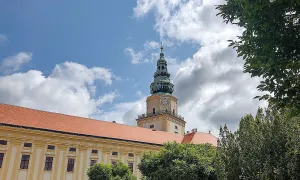
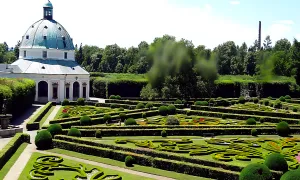
Arcibiskupský zámek v Kroměříži, Květná zahrada, Podzámecká zahrada, kostel sv. Jana Křtitele.
Accommodation nearby
Trips and activities nearby
Guided tours, tickets and activities nearby from GetYourGuide
Affiliate link: if you buy from the partner, we may receive a commission. The price for you does not change.
Search tours and activities →Themed route
1. Church of St. John the Baptist, type: temple. Significant spiritual space with rich history. 2. Piaristické gymnázium v Kroměříži, type: school and monument. The main destination of the journey, which shows the educational heritage of the city. 3. Archbishop's Castle in Kroměříži, type: lock. An impressive building with beautiful interiors. 4. Castle garden, type: park. A quiet walk near the castle. 5. Flower garden, type: garden. A unique Baroque space with amazing vegetation.
Seasonal recommendations
In the spring, the building shines along with the blooming green. The morning sun gently illuminates the facade, creating a fresh atmosphere. I recommend light spring clothes and arriving in the early hours when the air is the cleanest.
The summer season brings bright light and rich colors of surrounding nature. The shadow near the wonders offers relief from the heat. A light summer dress and a walk in the late afternoon are suitable to avoid the greatest heat.
In the autumn, the surroundings turn into golden tones, and morning fog adds mystery to the place. The light is softer and the shadows are more. It is advisable to wear a waterproof jacket and a warm sweater, the ideal time is a short time before sunset.
In winter, the construction works harder, especially if it is covered by snow. Short days and low sun highlight the details of architecture. Don't forget the warm coat, gloves and hat, and plan your trip in the morning to make sure daylight is enough.
Visualizations and artistic views


The visualisations are generated by artificial intelligence and serve as inspiration.
Photos from the area
Real photos taken near the monument


Zdroj a licence jsou uvedeny u každého snímku.
Tips from visitors
No tips yet. Be the first!
Log in and add your tip.
Sources and literature
Photos: VitVit / CC BY-SA 4.0 — Wikimedia Commons. The author and licence also appear when you hover over the image.
Faktickým podkladem tohoto textu byl článek na Wikipedii, jehož autory jsou přispěvatelé Wikipedie. Článek je dostupný pod licencí CC BY-SA 4.0.
Location on the map
Příběhy a pověsti
Legendy, pověsti a příběhy spjaté s touto památkou
Fotografie návštěvníků
Zatím žádné fotografie. Buďte první, kdo přidá fotografii z návštěvy!
Log in a přidejte svou fotografii nebo hodnoťte.
Za ověřenou návštěvu v aplikaci získáte víc bodů — poznáme podle GPS, že jste na místě.
Reviews and comments