



Plášťový most Bridge
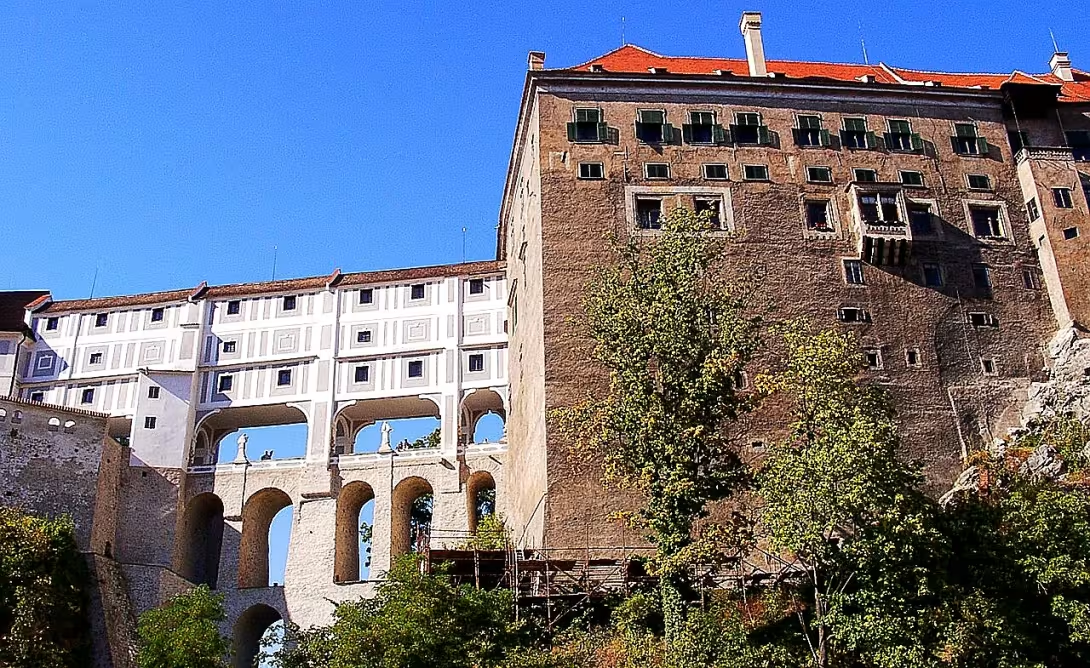
Plášťový most, also known as Mantelbrücke in German, is a remarkable Baroque bridge within Český Krumlov Castle. It connects the Upper Castle with the Baroque castle theater and V. Courtyard and garden. Constructed between 1686 and 1765, it stands out for its intricate design and historical significance as a vital link in the castle complex.
The origins of Plášťový most trace back to medieval times when a moat was crossed by a drawbridge with a falling bridge. The current structure emerged over nearly eight decades, reflecting evolving architectural styles and needs. Under Duke Josef I. Adam von Schwarzenberg (1722–1782), significant economic development occurred, including the Baroque reconstruction of the entire castle complex. His influence was pivotal in transforming Plášťový most into its present form, enhancing both its aesthetic appeal and functional capacity.
Architecturally, Plášťový most is a testament to Baroque ingenuity, featuring three tiers of arches supported by pillars. The bridge includes an open-roofed tier adorned with sculptural decorations, alongside three closed tiers that house two connecting corridors. These corridors facilitate movement between key areas such as the Masquerade Hall and the castle theater, extending even to the Minorite Monastery on Latránu. The stone balustrade is embellished with copies of Baroque sculptures depicting saints like St. Anthony of Padua, St. Felix Cantalice, St. Wenceslas, and St. John of Nepomuk, adding artistic richness.
Throughout its history, Plášťový most has been under the stewardship of influential figures such as Duke Josef I. Adam von Schwarzenberg. His tenure marked a period of economic prosperity and cultural flourishing in Český Krumlov, with the bridge playing a central role in connecting various parts of the castle complex. The original sculptures that once adorned the balustrade are now preserved in the castle's lapidary, offering visitors insight into the artistic heritage of the era.
Today, Plášťový most remains an integral part of Český Krumlov Castle, drawing visitors with its historical and architectural significance. Its well-preserved structure offers a glimpse into the Baroque period's grandeur, while its strategic location within the castle grounds makes it easily accessible to those exploring this UNESCO World Heritage site. The bridge serves as both a physical connector and a cultural link, inviting visitors to delve deeper into the rich history of Český Krumlov.
Plášťový most stands as a testament to the artistic and architectural achievements of its time, offering historical insight and aesthetic pleasure. Its enduring presence within Český Krumlov Castle makes it a must-visit for anyone interested in exploring Baroque architecture and Bohemia's cultural history.
Then and now
Drag the slider to compare how the landmark may have looked when it was built with the view today.
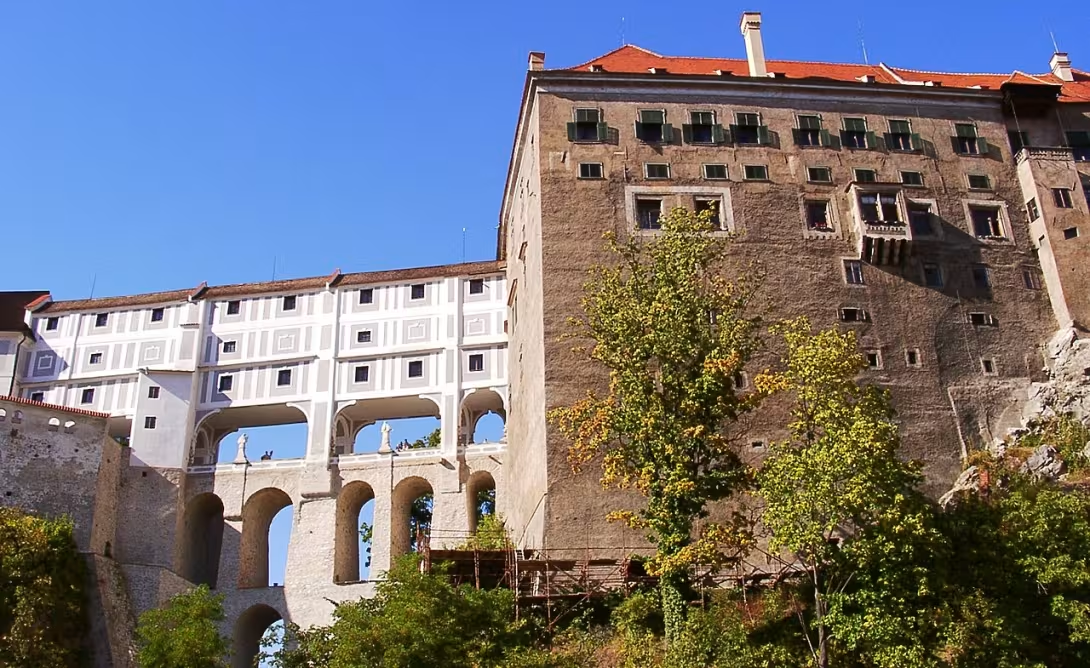

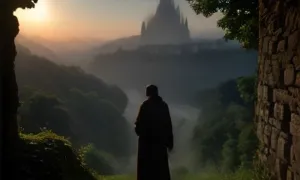
The historical appearance on the left is an AI-generated visualisation and serves as inspiration only.
Historical milestones
- 1686
- Construction began.
- 1707
- Continued construction phase.
- 1748
- Further development of the bridge.
- 1765
- Completion of the Baroque structure.
Architectural development
Originally crossing a medieval moat with a drawbridge, Plášťový most was constructed in stages from 1686 to 1765. The bridge underwent significant transformation under Duke Josef I. Adam von Schwarzenberg, who oversaw its Baroque redesign and the broader enhancement of Český Krumlov Castle.
Historical events
In medieval times, a moat here was crossed by a drawbridge with a falling bridge. The current structure of Plášťový most was built in stages between 1686 and 1765.
Under the rule of Krumlov's Duke Josef I. Adam von Schwarzenberg (1722–1782), significant economic development occurred, including the Baroque reconstruction of the entire castle and the construction of a Baroque theater.
Points of interest
- The Plášťový most was originally a medieval drawbridge with a falling bridge that crossed a moat, highlighting its evolution from a simple crossing to a complex Baroque structure.
- During the reconstruction under Duke Josef I. Adam von Schwarzenberg, the bridge's design incorporated three tiers of arches and sculptural decorations, showcasing the architectural innovation of the Baroque period.
- The original sculptures adorning the stone balustrade have been preserved in Český Krumlov Castle's lapidary, allowing visitors to explore the artistic heritage that once embellished the bridge.
- Plášťový most features two connecting corridors within its closed tiers, facilitating movement between significant areas like the Masquerade Hall and the castle theater, illustrating its functional importance in the castle complex.
- The bridge's design includes an open-roofed tier with sculptural decorations depicting saints such as St. Anthony of Padua and St. John of Nepomuk, adding a layer of religious and cultural significance to its architecture.
Guide
This guide is narrated by a synthetic voice generated by artificial intelligence.
Show guide text
This text was created by artificial intelligence and has not been editorially reviewed. It may contain inaccuracies.
Welcome to the enchanting Plášťový most, or as it's known in German, Mantelbrücke—a remarkable piece of history nestled within Český Krumlov Castle. As you stand here on this historic bridge, imagine yourself stepping back into time, connecting not just two parts of a castle but centuries of architectural evolution and grandeur.
The Plášťový most was born out of necessity and vision in 1686. Initially serving as a medieval drawbridge with a falling mechanism to cross the moat, it has transformed over the years into this stunning Baroque structure we see today. By 1707, construction continued, evolving through further development until its completion in 1765 under the guidance of Josef I. Adam ze Schwarzenbergu. This bridge was more than just a crossing; it was a statement of power and artistry, linking the Upper Castle with the Baroque castle theater and the V. Courtyard and garden.
As you look around, take notice of the three tiers of arches supported by sturdy pillars—an architectural marvel that speaks volumes about its creators' vision. The open-roofed tier above your head is adorned with intricate sculptural decorations, adding a layer of elegance to this already majestic structure. Below, the closed tiers house two connecting corridors, inviting you to explore further and imagine the countless stories these walls could tell.
Speaking of stories, let's delve into the lives intertwined with this bridge. Josef I. Adam ze Schwarzenbergu was not just an architect but a visionary who saw beyond the medieval drawbridge that once stood here. Under his direction, the Plášťový most underwent a transformation that would cement its place in history as a pivotal connection within Český Krumlov Castle.
Now, let your curiosity lead you to one of the bridge's intriguing mysteries: its evolution from a simple medieval crossing to this complex Baroque masterpiece. It's fascinating to think about how it once featured a falling bridge mechanism—a testament to the ingenuity and adaptability of those who came before us.
As we conclude our journey across the Plášťový most, I invite you to linger a moment longer, soaking in the atmosphere and perhaps pondering the countless footsteps that have crossed this bridge over the centuries. There's so much more to explore within Český Krumlov Castle, each corner holding its own secrets waiting to be discovered.
Thank you for joining me on this journey through time. May your exploration of Český Krumlov and its treasures continue with the same sense of wonder and discovery that brought us here today. Safe travels, and may history always inspire you.
Tips for visitors
The best time to visit Plášťový most is during the late spring or early fall when the weather is mild, and the crowds are smaller compared to peak summer months. This period offers pleasant temperatures for exploring both the castle grounds and surrounding gardens like Jelení Garden. Additionally, visiting in these seasons allows you to enjoy the natural beauty of the area without the discomfort of extreme heat or cold.
Public transport options include buses that connect to Český Krumlov from nearby towns, making it convenient for travelers without personal vehicles.
When visiting Plášťový most and the surrounding areas of Český Krumlov Castle, it's a good idea to bring comfortable walking shoes as you'll be exploring various terrains including cobblestone paths. A light jacket or sweater is also recommended due to variable weather conditions. Don't forget your camera for capturing stunning views, especially around Jelení Garden and the Baroque theater. Additionally, carrying water and snacks can enhance your visit, particularly if you plan on spending several hours exploring.
For photography enthusiasts, Plášťový most offers picturesque spots with its unique architectural style connecting key areas of the castle. The best light for capturing the essence of the bridge is during the golden hour—shortly after sunrise or before sunset—when the soft lighting enhances the historical features and surrounding gardens. Jelení Garden provides a beautiful backdrop, making it an ideal location for landscape shots.
Visitors can explore charming streets, visit local shops, and enjoy traditional Czech cuisine in one of the many restaurants or cafes. The area also offers opportunities to learn more about the region's history through various museums located within walking distance from the castle grounds.
Frequently asked questions
Can the monument be visited?
This is a structure in a public space that can usually be seen from outside free of charge. We have not verified that this particular one is freely accessible.
Where is the monument?
Location: Plešivec, Jihočeský kraj. The map on this page shows the exact spot.
Why is the monument protected?
It is listed in the Central List of Cultural Monuments of the Czech Republic as a national cultural monument. It is protected as part of a larger listed ensemble.
Businesses nearby
Do you run a restaurant, accommodation, shop, museum, rental, wellness or other visitor service near this monument? Show yourself directly to the people heading to it — this is how they will see you in the app and on the web:
Events nearby
Zdroj akcí: otevřená data měst a obcí ČR (Národní katalog otevřených dat) a kalendář akcí Národního památkového ústavu.
Nearby
Plášťový most is located within Český Krumlov Castle grounds, surrounded by historical structures such as the Baroque theater and various courtyards. The area includes natural features like Jelení Garden.
Accommodation nearby
Trips and activities nearby
Guided tours, tickets and activities nearby from GetYourGuide
Affiliate link: if you buy from the partner, we may receive a commission. The price for you does not change.
Search tours and activities →Themed route
Tematická Výletní Trasa: Český Krumlov Castle Grounds
1. Plášťový most (Most)
Proč stojí za návštěvu: Plášťový most je jedinečnou památkou, která spojuje historické a architektonické prvky Českého Krumlova. Jeho výstavba z 16. století představuje fascinující směs gotiky a renesance, což ho činí nezbytnou vizitkou pro milovníky historie a architektury.
2. Jelení Zahrada (Zahradní prostor)
Proč stojí za návštěvu: Jelení zahrada je místo plné klidu a krásy, kde můžete užít si přírodního prostředí v rámci historického areálu. Zahrada nabízí pohled na elegantní sochy jelena a jiných zvířat, což dodává atmosféru romantiky a klidu.
3. Barokní Divadlo (Historický objekt)
Proč stojí za návštěvu: Barokní divadlo je jednou z nejstarších divadelních budov v Evropě, které dodnes slouží jako scéna pro různé kulturní akce. Jeho historický interiér a architektonická krása jsou skutečným pokladem pro milovníky divadla a historie.
4. Různé Kouty (Historické nádvoří)
Proč stojí za návštěvu: Procházka po různých koutech Českého Krumlova nabídne pohled na rozmanité historické struktury a architektonické prvky, které tvoří jedinečnou atmosféru tohoto místa. Každý kout přináší nové dojmy a poznatky o bohaté minulosti obce.
Tato trasa vás provede skrze nejvýznamnější části Českého Krumlova, nabízející kombinaci historie, architektury a přírody.
Seasonal recommendations
Spring: Visiting the Plášťový most during spring offers a unique experience as nature awakens around Plešivec, with lush greenery and blooming wildflowers creating a picturesque backdrop for your exploration of this historic site. The gentle warmth of the season often brings clear skies, enhancing visibility across the landscape. While the air is fresh and inviting, it's advisable to bring layers, as temperatures can fluctuate between warm days and cooler evenings. Springtime sees fewer visitors compared to summer, allowing for a more tranquil experience, though weekends may still draw crowds.
Summer: Summer at Plášťový most is characterized by vibrant greenery and long daylight hours that extend your time to enjoy the site’s beauty. The lush surroundings are perfect for hiking or picnicking nearby, with the sun casting dramatic shadows across the historic structure. However, this peak season also means larger crowds, so arriving early in the morning can help avoid the busiest times. Comfortable walking shoes and light clothing are recommended due to the warmer weather, along with sunscreen and plenty of water to stay hydrated throughout your visit.
Autumn: Autumn brings a stunning display of colors as the leaves around Plešivec turn into fiery shades of red, orange, and gold, providing a breathtaking backdrop for Plášťový most. The cooler temperatures make it an ideal time for outdoor activities without the summer heat. While the site remains open during this season, some facilities might have reduced hours or be closed due to maintenance in preparation for winter. Layered clothing is advisable as mornings can be chilly, but days often remain pleasantly warm.
Winter: Winter transforms Plášťový most into a serene and mystical destination, with snow-covered landscapes adding an ethereal quality to its historic charm. While some paths might be less accessible or require caution due to ice, winter offers a quieter atmosphere for those looking to escape the hustle of peak tourist seasons. Visitors should dress warmly in layers and wear sturdy boots with good grip to navigate potentially slippery conditions safely.
Visualizations and artistic views


The visualisations are generated by artificial intelligence and serve as inspiration.
Photos from the area
Real photos taken near the monument


Zdroj a licence jsou uvedeny u každého snímku.
Tips from visitors
No tips yet. Be the first!
Log in and add your tip.
Sources and literature
Photos: Christoph Moder / CC BY-SA 3.0 — Wikimedia Commons. The author and licence also appear when you hover over the image.
Faktickým podkladem tohoto textu byl článek na Wikipedii, jehož autory jsou přispěvatelé Wikipedie. Článek je dostupný pod licencí CC BY-SA 4.0.
Location on the map



Příběhy a pověsti
Legendy, pověsti a příběhy spjaté s touto památkou
Fotografie návštěvníků
Zatím žádné fotografie. Buďte první, kdo přidá fotografii z návštěvy!
Log in a přidejte svou fotografii nebo hodnoťte.
Za ověřenou návštěvu v aplikaci získáte víc bodů — poznáme podle GPS, že jste na místě.
Reviews and comments