



Vila dr. Otto Schwarze Villa
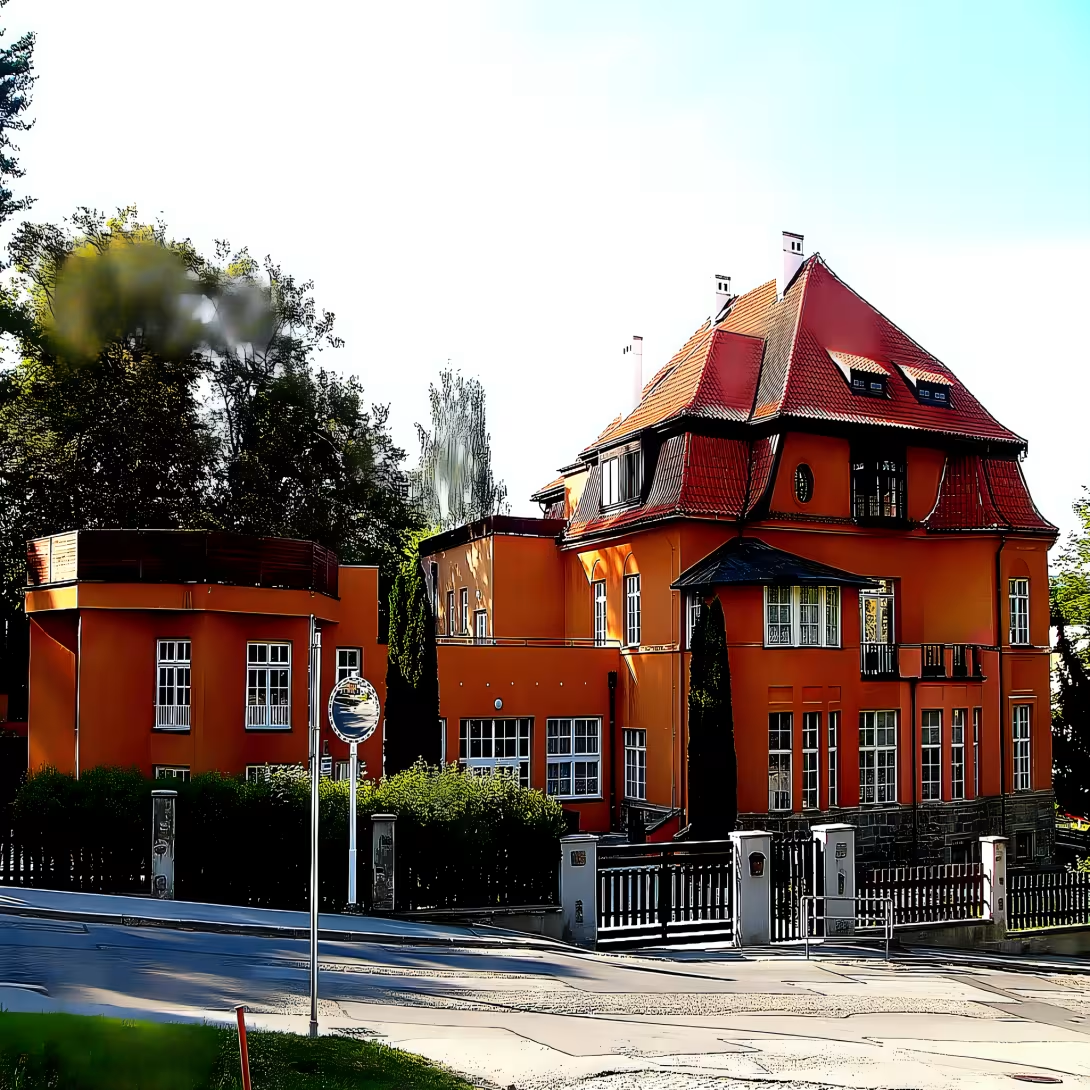
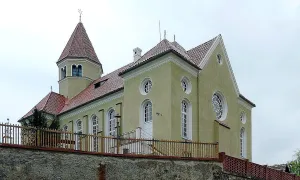
Vila dr. Otto Schwarze is a remarkable construction on the border of history and modernity, built in the years 1907-1908 in Český Krumlov on Plešivec. This representative seat of the director of Krumlov stationery shows the lifestyle of a higher middle class in the early 20th century. The project was developed by architect Viktor Kavka, who opened his studio in Vienna after studies. Successful realization of the villa subsequently brought him further orders in the region.
The building stands on a stone plinth, with a mansard roof and baroque polygonal pavilions on the corners. The interior is based on an English concept with a storey hall and a strict separation of accommodation and service spaces. The design included a garden with a mobility in the style of Vienna's modern.
The villa was intended for the family of director of stationery Dr. Otto Schwarze (1867-1927), which is buried at the Jewish cemetery in Český Krumlov. Mr and Mrs Otto and Mr Margarethe Schwarz have commissioned a project by architect Victor Kafka. The equipment included a winter garden connected to the surrounding greenery and a kitchen elevator for food directly to the dining room. After the completion of the villa Kavka also designed the New Romanesque Synagogue in Český Krumlov.
The first reconstruction was carried out in the years 1924-1925 according to the design of Viktor Kafka. A half-circle roof was added to the eastern facade with a terrace, a half-circle roof was formed above the north staircase and a kitchen with a pantry, a bathroom and a terrace on the floor were added in the western part.
Another reconstruction was designed in 1939 by Johann Melzner, a graduate of a lower industrial school. In 1940, housing space was created on the ground floor and on the first floor. Later, the building served as an office and since 1972 it has been adapted for the needs of the kindergarten. The extension to the western facade, designed by architect František Fical, significantly changed the original character of the building.
On 3 May 1958, the villa was declared a monument. Today it is in the property of Český Krumlov. Some of the original equipment was preserved in the interior: hall with fireplace, brass chandelier and restored wooden floor. Above the door to the men's room with built-in libraries and on the opposite wall there are lunette paintings of Viennese painter Theodor Bruckner, brother-in-law of the factory Emanuel Spira. There was an Art Nouveau cutlery and a wooden cassette ceiling. Other premises were adapted for the operation of the kindergarten.
Vila dr. Otto Schwarze represents an important proof of the lifestyle of the higher middle layer in the early 20th century. Its architecture combines baroque elements with modern Art Nouveau details and English internal layout. The construction is closely linked to the history of industrial development of the region and the Spirova family.
Historical milestones
- 1907
- The opening of the building of the villa on Plešivec.
- 1908
- The completion of the villa.
- 1927
- The death of the owner of Dr. Otto Schwarz's villa.
Architectural development
The villa was built on a stone plinth with a mansard roof and baroque polygonal pavilions on the corners. The interior is based on an English concept with a storey hall and a strict separation of accommodation and service spaces. The project also included a garden with a mobility in the style of Vienna's modern.
Historical events
1907-1908: Construction of a villa for the family of the director of paper mills. 1927: The death of Dr. Otto Schwarze, who is buried in the Jewish cemetery in Český Krumlov.
Owners
Dr. Otto Schwarze's family, Ignaz Spiro und Söhne's headquarters.
Points of interest
- The construction was created between 1907 and 1908 as a representative residence for the director of the paper mill and his family. Its architecture combines history with modern and contains baroque elements. - The internal arrangement is based on a concept that comes from an island country to the west of us, and includes a storey hall and separate living and service spaces. - The original equipment included a kitchenette for food, which led directly to the dining room, and a winter garden connected to the surrounding greenery. - In the interior she preserved the hall with fireplace, brass chandelier and restored wooden floor. Above the door to the men's room there are lunette paintings of the Vienna painter. - Since 1972, the building has been adapted for the needs of the kindergarten, which has led to a significant change in the original character of the building due to the addition to the western facade.
Guide
Show guide text
This text was created by artificial intelligence and has not been editorially reviewed. It may contain inaccuracies.
Welcome to Plešivec, where you are now in front of the unique monument of Czech architecture - the villa of Dr. Otto Schwarze. This historic object hits you with its elegant structure and atmosphere of the past, which appears to be caught in every stone. Look up at the facade, whose design combines historical elements with modern taste. Notice how architecture transforms this settlement into a visual symphony of past and present.
The foundation of this villa dates back to 1907-1908, when it was built on the intention of the director of the Krumlov stationery plant Dr. Otto Schwarze. Architect Viktor Kavka designed this project, which represents a link between history and modern. When walking around the building, notice how the baroque elements are slightly projected into Art Nouveau design - a unique blend that characterises this period.
Now pay attention to details: the architecture of the villa is full of peculiarities. Look at the facade and enjoy the elegant lines that resemble the style of the island country west of us. The interior of the villa is designed with a storey hall, which was an unusual and modern solution at the time.
This place also has personal stories associated with key characters. Otto Schwarz, owner of the villa, together with his wife Margaret and other family members, has spent many beautiful years here. Ignác Spiro, another personality associated with this place, contributed to its history.
The interesting thing is that the villa was completed in 1908 and served as a representative residence for the Schwarze family. Although their journey in life ended here with the death of Otto Schwarz in 1927, the spirit of the past still persists.
Let's move on and look at other aspects of this monument. Notice how this architecture captures the lifestyle of the higher middle layer of the early 20th century.
Allow me to invite you to explore this fascinating place again. If you are interested, you can look at the surrounding areas and discover more about the history of the Tin Man. Thank you for your visit to Dr. Otto Schwarze's villa - remember it as a unique piece of Czech heritage.
Tips for visitors
For visiting the villa I recommend the morning hours during the working week, where you avoid the greatest burden of tourists heading to the city centre. In addition, the morning light will highlight the architectural details of the facade designed by Viktor Kavka.
You can easily walk to the villa from the historic heart of the city. Check the current traffic connections in online search engines.
For photography I recommend choosing a wide-angle lens that captures the representative character of the villa in the context of the surrounding building. The best pictures are taken from the opposite side of the street, where the overall composition of the building stands out.
In the vicinity of the villa you can visit the historical centre of Český Krumlov, walk to the river Vltava or explore the area of former paper shops, which resembles the industrial past of the place. For a quieter walk I recommend a visit to the Jewish cemetery.
When visiting with children I recommend to join a tour with a walk to the river Vltava, where there is enough room for movement. Due to the historical nature of the building, make sure that children follow the rules of movement in the monument protected areas.
Frequently asked questions
Can the monument be visited?
This is a residential or farm building, not a museum with opening hours. Please view it from public space and respect the owners' privacy. We have no information about access to the interior.
Where is the monument?
Location: Plešivec, Jihočeský kraj. The map on this page shows the exact spot.
Why is the monument protected?
It is listed in the Central List of Cultural Monuments of the Czech Republic as a cultural monument (register no. 1000164367).
Businesses nearby
Do you run a restaurant, accommodation, shop, museum, rental, wellness or other visitor service near this monument? Show yourself directly to the people heading to it — this is how they will see you in the app and on the web:
Events nearby
Zdroj akcí: otevřená data měst a obcí ČR (Národní katalog otevřených dat) a kalendář akcí Národního památkového ústavu.
Nearby
Historické centrum Českého Krumlova, židovský hřbitov, řeka Vltava, areál bývalých papíren.
Accommodation nearby
Trips and activities nearby
Guided tours, tickets and activities nearby from GetYourGuide
Affiliate link: if you buy from the partner, we may receive a commission. The price for you does not change.
Search tours and activities →Themed route
Thematic cruise route from the Pledge
1.Vila dr. Otto Schwarze (villa) This elegant villa is our main destination. It is located in the village Plešivec and serves as a reminder of the rich history of the region. Visit her for her architectural interest and views of the surrounding region.
2. Historical Centre Český Krumlov (city) After visiting the villa take a look at the historical centre of Český Krumlov, which is about 15 km from Plešivka. This place offers a view of the past with its old streets and architecture. It's the perfect place for those who like history and time travel.
3. Jewish cemetery (cemetery) Near Český Krumlov is a Jewish cemetery, which is an important monument to understanding the history and culture of local Jewish inhabitants. It is a place of peace and reflection, suitable for those who want to explore the region's cultural heritage further.
4. River Vltava (River) Visiting the Vltava River is essential for anyone who visits this area. This river offers beautiful views and opportunities for relaxation at the water level. It's an ideal place for a picnic or just for a moment of rest.
5. Area of former paper shops (historical monument) Welcome to the site of former paper shops is particularly interesting for those interested in industrial history. This site shows the region's past importance in paper production and its impact on the local economy.
This route offers a combination of cultural, historical and natural experiences that are ideal for every traveler.
Seasonal recommendations
Spring: At this time of year the atmosphere around the Villa Dr. Otto Schwarze oddly reviving when flowering shrubs and trees fly out into a vivid color. Sun rays penetrate through the fog, which often appears at the top of the Tin Man, creating a magical effect. When visiting, it is advisable to come at noon when the sun illuminates the memory most beautiful and the crowds usually do not get too much. Clothes should be medium - short gloves and a warm sweater because the wounds can be cold.
Summer: During the summer months Vila dr. Otto Schwarze is surrounded by dense greenery, which provides a natural sun shade. The atmosphere is full of heat and light, which gives travelers a feeling of complete disconnection. The best time to visit is in the morning or later in the evening to avoid strong sunlight and crowds. Light clothing with ties and UV protection glasses is recommended.
Autumn: When leaves fall, Vila dr. Otto Schwarze takes melancholy charm natural changes. The colors of the forest turn into different shades of yellow, orange and red, giving the panorama a unique beauty. The atmosphere is calm and quiet, making the visit ideal for relaxation. When visiting notice that it can be cold on Wednesday, so warm clothes are suitable. Days get shorter, so come soon.
Winter: In winter Vila dr. Otto Schwarze is covered with snow or light dust of glaciers, which gives the monument a mysterious and slightly romantic atmosphere. Sun rays light up snow and create brightness, which is a special experience. Hot clothing with leather gloves and hat is essential for a comfortable visit, while protection against the wind is also crucial.
Visualizations and artistic views


The visualisations are generated by artificial intelligence and serve as inspiration.
Photos from the area
Real photos taken near the monument


Zdroj a licence jsou uvedeny u každého snímku.
Tips from visitors
No tips yet. Be the first!
Log in and add your tip.
Sources and literature
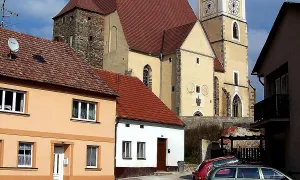
Photos: Gliwi / CC BY-SA 4.0, rozlišení zvýšeno umělou inteligencí — Wikimedia Commons. The author and licence also appear when you hover over the image.
Faktickým podkladem tohoto textu byl článek na Wikipedii, jehož autory jsou přispěvatelé Wikipedie. Článek je dostupný pod licencí CC BY-SA 4.0.
Location on the map

Příběhy a pověsti
Legendy, pověsti a příběhy spjaté s touto památkou
Fotografie návštěvníků
Zatím žádné fotografie. Buďte první, kdo přidá fotografii z návštěvy!
Log in a přidejte svou fotografii nebo hodnoťte.
Za ověřenou návštěvu v aplikaci získáte víc bodů — poznáme podle GPS, že jste na místě.
Reviews and comments