



Podevrážský mlýn Water mill
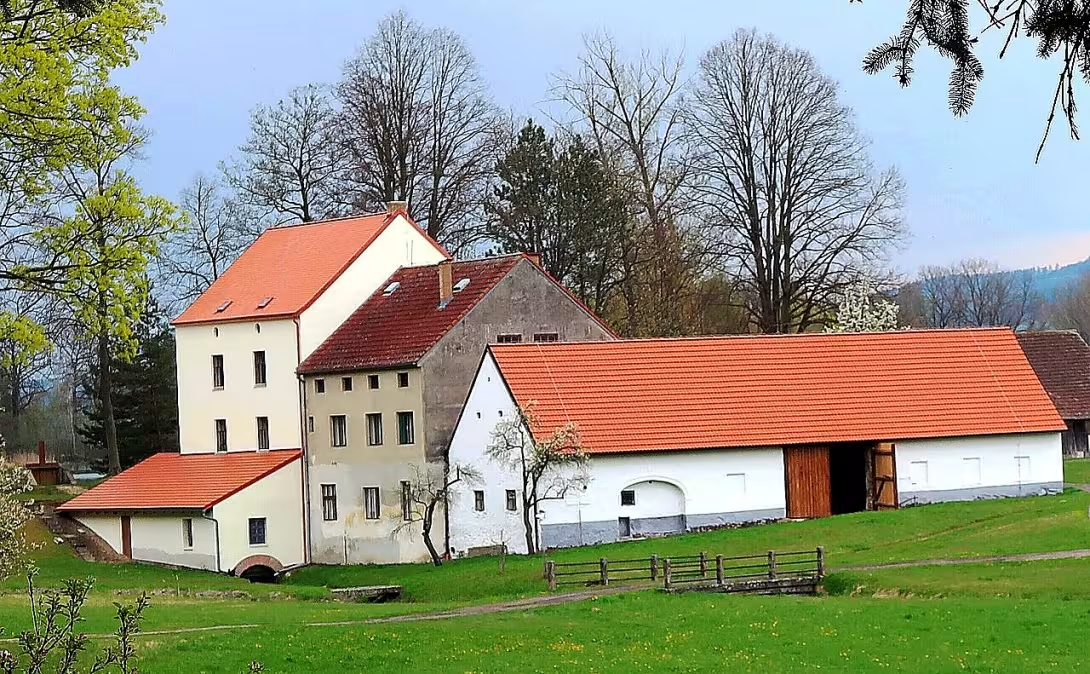
Podvrážská mlýn in Čakovci u Čakova in the district of České Budějovice is a historical water mill situated on the Dehtářská stream near Podkražský pond. The building is protected as a real-estate cultural monument of the Czech Republic and represents an important evidence of technical development of the mill industry from the 17th century to modernization in the 20th century.
There are few reports of the oldest history of the construction; The first written reference dates back to the 17th century. At the time of the 30-year war, mills were a key part of rural infrastructure and provided processing of agricultural crops for local residents.
The architectural area consists of a self-standing wall multi-storey mill and residential building. The original form of the building was significantly modernized during the 20th century. There is a turbine house at the four-storey mill. At the level of the second above-ground floor, there is still an opening with a preserved curtain for the gutter which was used to handle the bag. The water to the drive led by a short drive from the pond and flowed from the turbine house under the cover of the brick.
The important milestone in the history of the building was March 20, 1923, when the mill burned down. The construction of a new building was followed, completed in 1927, when the operation was restored. During this period there was a major technical change when the original water wheels were replaced by a turbine. After World War II, there was further modernization of the interior, installation of new machines and reconstruction of the residential house in 1948. Not long after, the mill was nationalized, but it remained active.
Technical attractions include the preserved boiler Francis turbine from the Union a.s. manufacturer, České Budějovice, which is a proof of the level of the engineering industry at the time. The mill is now a valuable witness to changes in rural economy and technical equipment over the centuries. Visiting this place offers the opportunity to look into the history of the miller craft and to see the preserved elements that are now rare.
Historical milestones
- 1923
- The mill burned down.
- 1927
- The construction of the new mill is finished and the operation is restored.
- 1948
- Rebuilding of the residential house and installation of new machines.
Architectural development
The original mill from the 17th century was significantly modernized during the 20th century. After the fire in 1923, a new brick building was built and the water wheels were replaced by a turbine. In 1948 there was a modification of the residential house and installation of new machines.
Historical events
In 1923 the mill burned down, then it was rebuilt in 1924-1927. After World War II, the interior was modernized and the residential building was rebuilt in 1948. Subsequently, the mill was nationalized, but it remained in operation.
Points of interest
- The building is protected as a real cultural monument of the Czech Republic and represents a proof of technical development of the mill industry since the 17th century. - In the second above-ground floor of the mill there is a storage opening with a preserved curtain for the trough which was used for handling the bag. - On 20 March 1923 the mill burned down, after which a new brick building was built until 1927 and the original water wheels were replaced by a turbine. - Technical attractions include the preserved boiler Francis turbine from the Union manufacturer from České Budějovice. - The water to drive led by a short drive from the pond and flowed from the turbine house under the cover of the brick.
Guide
Show guide text
This text was created by artificial intelligence and has not been editorially reviewed. It may contain inaccuracies.
Welcome to the Podvražský mill. You have just arrived at a place where history meets the quiet rhythm of water and the calm of the countryside. You are standing in a picturesque environment near Čakova, right next to the Tar creek, which flows in close proximity to Podkražský pond. If you look around now, you'll see a set of buildings that make up this historical whole. The dominance here is a self-standing walled mill that adjacent to the residential house. Please feel the atmosphere of this place, where the echoes of the past mingle with the shading of water and the calm of nature. This view of the mill can immediately kidnap you until life in this area was quite different and when the mill was the heart of the local economy.
Let us now look together deeper into history, which here is very rich and fascinating. The Podvrazi mill is not just an ordinary building, it's a witness for centuries. Its roots go back to the seventeenth century, which means this place has served people for several hundred years. However, the history of this place was not always about the calm and smooth flow of water. We must remember that the life of the miller was often accompanied by unexpected twists and tragedies. One of the most challenging moments for the whole area was on 20 March 1923. This is the day the mill burned down. Imagine the weight of loss at that time, when one of the most important buildings in the area ceased to exist in flames. However, history teaches us that something new can emerge from the ashes. The determination of local people and the need to restore operation led to the construction of a new mill already in 1927. It was this reconstruction that allowed the miller craft to develop again in this location and that life in Čakovci could return to its old tracks.
Now pay attention to the architecture itself and the details that are right in front of your eyes. Although the mill changed over the years, its essence remained. Look at the walled mill, which is built to withstand the strain of time and work. It is important to remember that this object is not only a historical monument, but also evidence of technical progress. Over the years the mill went through a series of modifications that corresponded to the time. For example, there was an important modernisation of propulsion in the 1920s, which was a major technological leap at that time. If you look up to the second floor of the mill, you can see something really special. Notice the removal hole. It's a detail that shows you right in your eyes how it used to work here. There is still a curtain for the gutter at this opening. This element was absolutely crucial for the everyday handling of heavy bags of grain. Imagine the miller moving the raw material and the finished product through this system, making this narrow space the center of constant movement and work.
When looking at a residential house that forms the second part of the whole, you can realize how closely the work was linked to everyday life. Although history has not told us the names of the particular miller families that lived here, we can imagine them through their work and care for this space. The life of the miller was not just about grinding grain, it was about living in the rhythm of water and machinery. Another important stage in the life of this place was 1948. This year, a significant rebuilding of the residential building took place and new machines were installed. This shows how the mill tried to adapt to the changing world and the new technical possibilities that came with every decade. Each change, from renewal to reconstruction, was part of a wider story of human efforts to maintain tradition and ensure livelihood.
Now I want to draw your attention to one interesting thing that makes this place a real treasure. The Podvražský mill is not just an ordinary old building, it is a real cultural monument of the Czech Republic. This means that it is a rare evidence of technical development of the mill industry, which we can watch from the seventeenth century to the modern era. It's like a living book telling us how machines changed, how the power of water changed and how the work of man changed. The preserved hole with the gutter curtain is like a small bridge between you and the people who worked here decades or hundreds of years ago. It is a detail that has endured fire, reconstruction and change in political systems, and thanks to it we can now understand the practical aspect of life.
Remember, this object represents the link between the natural force of the Tar River and human ingenuity. This whole complex, made up of a mill and a residential house, is a symbol of resistance and constant restoration. Even though the world was changing around, the mill was still here, sometimes in the fire it was losing, but it was always rising up again to perform its function.
I hope that this brief insight into the history of the Podvražský mill has attracted you and helped you better understand the importance of this place. Now, however, I will not keep you any longer. We cordially invite you to explore the area. Take a walk along the Tar River, enjoy the peace at Podvražský pond and feel the beauty of this historic landscape. Thank you for your visit and we wish you a pleasant rest of the day in this beautiful location.
Tips for visitors
The ideal time for visiting is late spring or early autumn, when the surrounding nature at Podvražský pond offers the most beautiful colour scenery and a peaceful atmosphere for observing historical architecture of the mill.
To the memory you can easily get your own car directly to the village Čakov. Public transport can be used according to current connections in the national search engine.
For a visit, pack fixed shoes suitable for field movement around the creek. The best place for photographers is the bank of Podvražský pond, where the silhouette of the mill stands out in the reflection of the water level, ideally in the light of the morning.
The surroundings of the mill are suitable for easy walking with children in nature. Children can observe the water flow of the tar stream, but we recommend increased caution near the pond and the mill jet.
In the immediate vicinity of the mill you can explore the picturesque shores of the Podkražský pond and monitor the flow of the tar stream, which form a calm and historically valuable natural scenery of the whole location.
Frequently asked questions
Can the monument be visited?
This is a technical monument. Some are open as exhibitions, others are out of use or on private land. We have not verified whether this one is accessible.
What are the opening hours and admission?
We have not verified the opening hours or admission. Current information is published by the operator.
Where is the monument?
Location: Čakov, Jihočeský kraj. The map on this page shows the exact spot.
Why is the monument protected?
It is listed in the Central List of Cultural Monuments of the Czech Republic as a cultural monument (register no. 1000139492).
Businesses nearby
Do you run a restaurant, accommodation, shop, museum, rental, wellness or other visitor service near this monument? Show yourself directly to the people heading to it — this is how they will see you in the app and on the web:
Events nearby
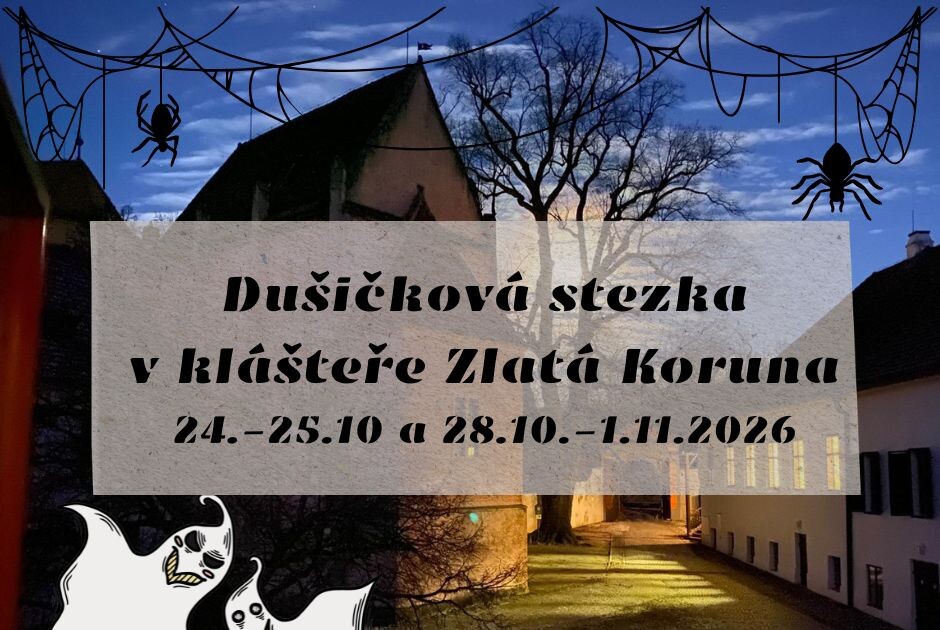
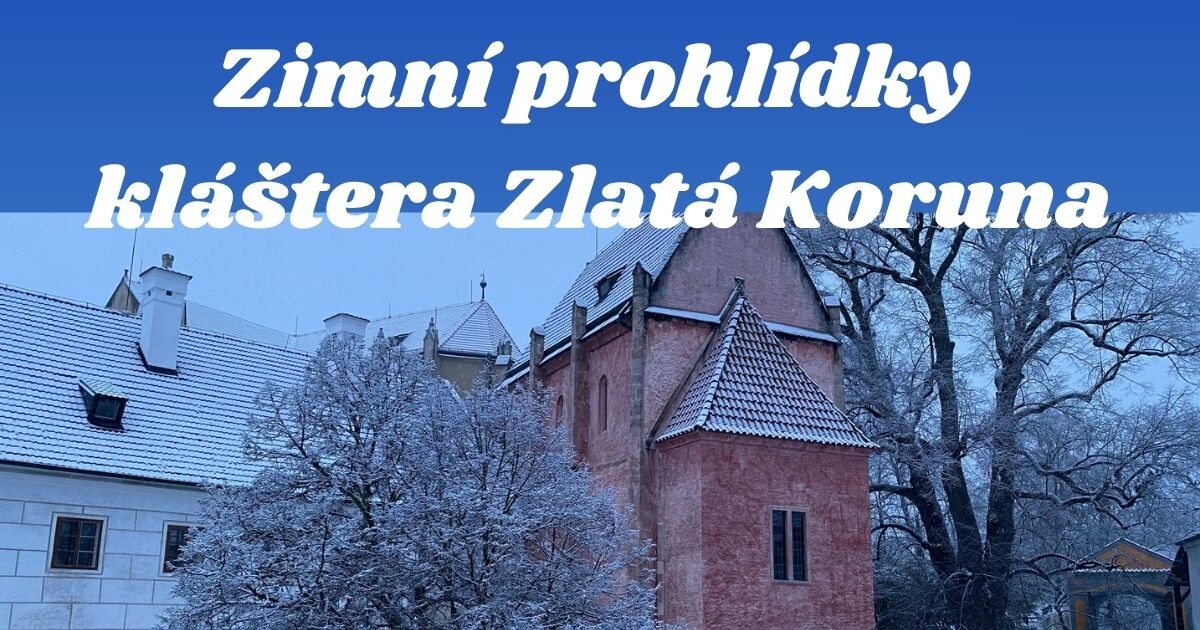

Zdroj akcí: otevřená data měst a obcí ČR (Národní katalog otevřených dat) a kalendář akcí Národního památkového ústavu.
Nearby
The mill is located near the Podvražský pond and the Třetářská creek in the village Čakov.
Accommodation nearby
Trips and activities nearby
Guided tours, tickets and activities nearby from GetYourGuide
Affiliate link: if you buy from the partner, we may receive a commission. The price for you does not change.
Search tours and activities →Themed route
1. tar Flood , water flow. Walk along this spring offers a peaceful atmosphere in nature. 2. Podvrážské pond , water surface. At this pond you can enjoy a view of the calm surface. 3. Podevrážský mlýn, mill. The main destination of the trip, which represents an interesting historical object.
Seasonal recommendations
Spring: In the spring season Podevrážský mlýn appears in the most beautiful light, when the sun lights up green meadows and flowering bushes. The atmosphere is full of vitality and new beginnings, making the visit unforgettable. Visitors are advised to come in the early spring season when the crowds are still mild and the opportunity to see the memory without interference is higher. It is advisable to wear clothes according to temperature, because the weather may be medium with more sudden transitions between sunny and rainy time.
Summer: In the summer months, Podevrážský mlýn is surrounded by live greenery, which is supplemented by the smell of flowering fields. Sunshine days and warm dinners bring ideal conditions for long tours. In the main summer season, however, it is recommended to visit the memory in the early afternoon to avoid the biggest crowds. Don't forget the sunflower and the drinking boxes because warm weather can be challenging.
Autumn: Autumn brings a melancholy beauty to the Podpovrážské mill colored leaves and calm atmosphere. This period is ideal for those who look for peaceful moments in all times less difficult weather than in summer. Visitors are advised to come at the end of the day when the temperature is more pleasant and light provides romantic lighting of the sights. Clothes should be suitable for mild cold weather with the possibility of sudden rain.
Winter: The winter season represents Podevrážský mlýn in its calm, when the surrounding area is covered with snow and the atmosphere is full of silence. Visitors are recommended to visit the memory in advent time, when it is possible to enjoy winter views without large crowds. Hot clothes and protective shoes are necessary because the weather can be cold with more iconic conditions.
Visualizations and artistic views


The visualisations are generated by artificial intelligence and serve as inspiration.
Photos from the area
Real photos taken near the monument

Zdroj a licence jsou uvedeny u každého snímku.
Tips from visitors
No tips yet. Be the first!
Log in and add your tip.
Sources and literature
Photos: Podvrážský mlýn / CC BY-SA 4.0 — Wikimedia Commons. The author and licence also appear when you hover over the image.
Faktickým podkladem tohoto textu byl článek na Wikipedii, jehož autory jsou přispěvatelé Wikipedie. Článek je dostupný pod licencí CC BY-SA 4.0.
Location on the map





Příběhy a pověsti
Legendy, pověsti a příběhy spjaté s touto památkou
Fotografie návštěvníků
Zatím žádné fotografie. Buďte první, kdo přidá fotografii z návštěvy!
Log in a přidejte svou fotografii nebo hodnoťte.
Za ověřenou návštěvu v aplikaci získáte víc bodů — poznáme podle GPS, že jste na místě.
Reviews and comments