



Pomník Jakuba Jana Ryby Monument
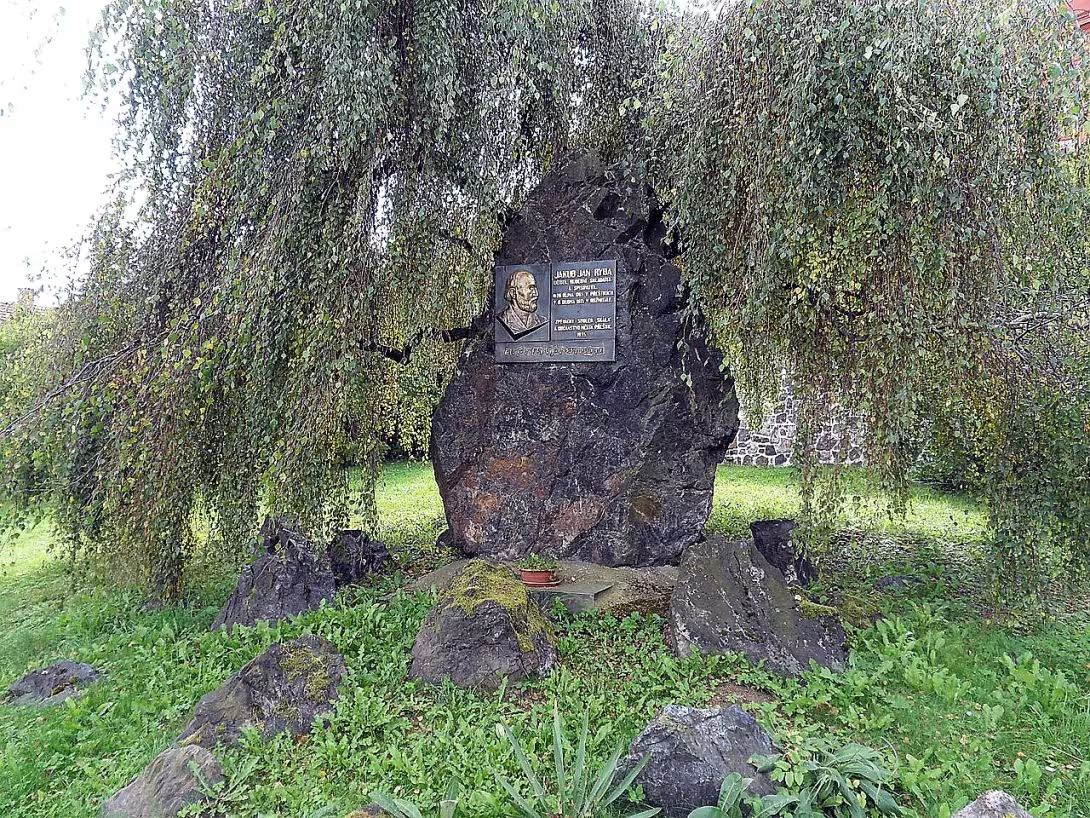
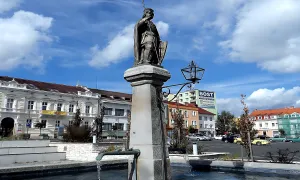
Pomník Jakuba Jana Ryby from 1935 stands in Třebízská street in the village Přeštice in the district of Plzeň-south. He is dedicated to this native, music composer and educator Jakub Jan Ryb. Due to its value, it is included in the Central List of Cultural Monuments of the Czech Republic.
The monument was founded in 1935 during the period of interwar optimism and the flowering of national culture. The citizens of Přeštice and the Skála Singing Association contributed to its construction. The main impetus for implementation was given by the Rojmital writer Rudolf Richard Hofmeister.
It is an artisanal boulder located on a small alpine. A copper relief plate is placed in the stone, the author of which is Prague sculptor Štěpán Kořán. The left half of the board contains a portrait of James Jan Fish with a beard that looks to the right. The right side is dedicated to the inscription and the lower edge is decorated with a note entry beginning of his most famous work, Czech Christmas Mass.
The location itself is important. The memorial stands in the park under the Church of the Assumption of the Virgin Mary in the exact place where the old school used to be. This is where the composer spent the first five years of his life.
The building serves as a specific reminder of musical genius from Přeštice and is accessible to all visitors of the village. The combination of portrait and notation makes it a clear symbol of the author's musical heritage.
Visiting the monument offers the possibility to combine a walk to the local church with a reminder of the important personality of Czech music. It is a place where the history of pedagogy and art meets a specific point in the area of the village.
Then and now
Drag the slider to compare how the landmark may have looked when it was built with the view today.
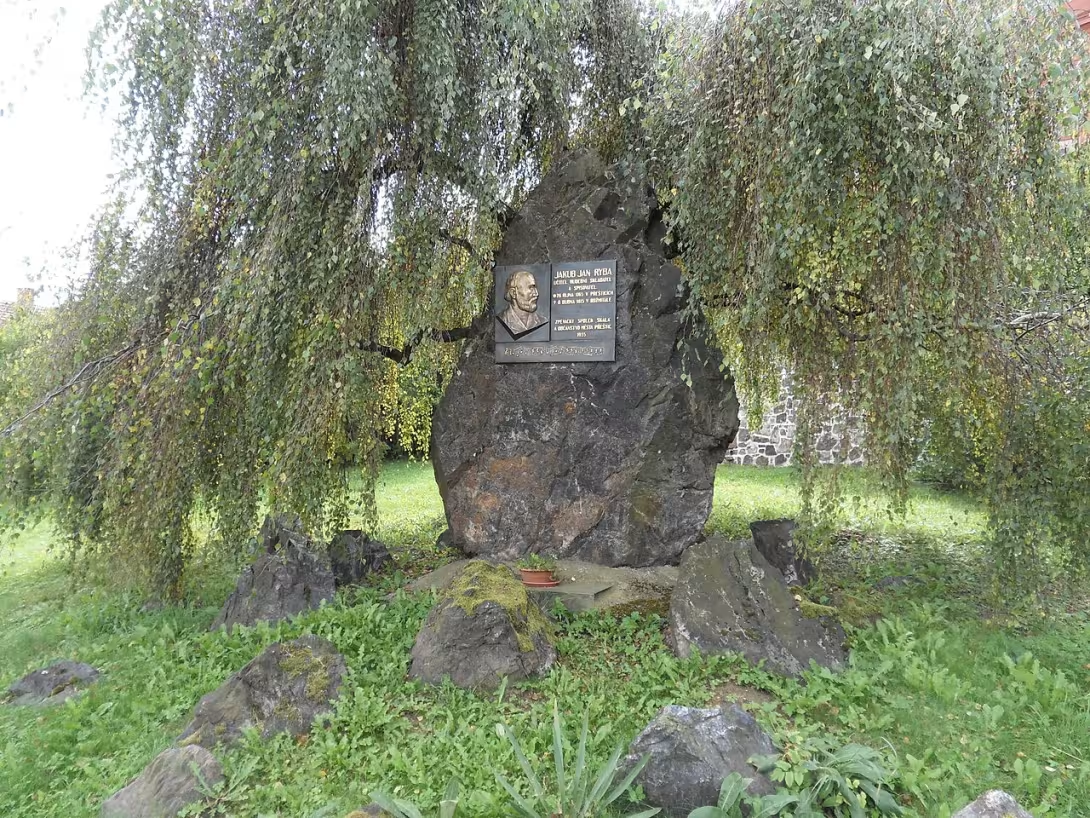
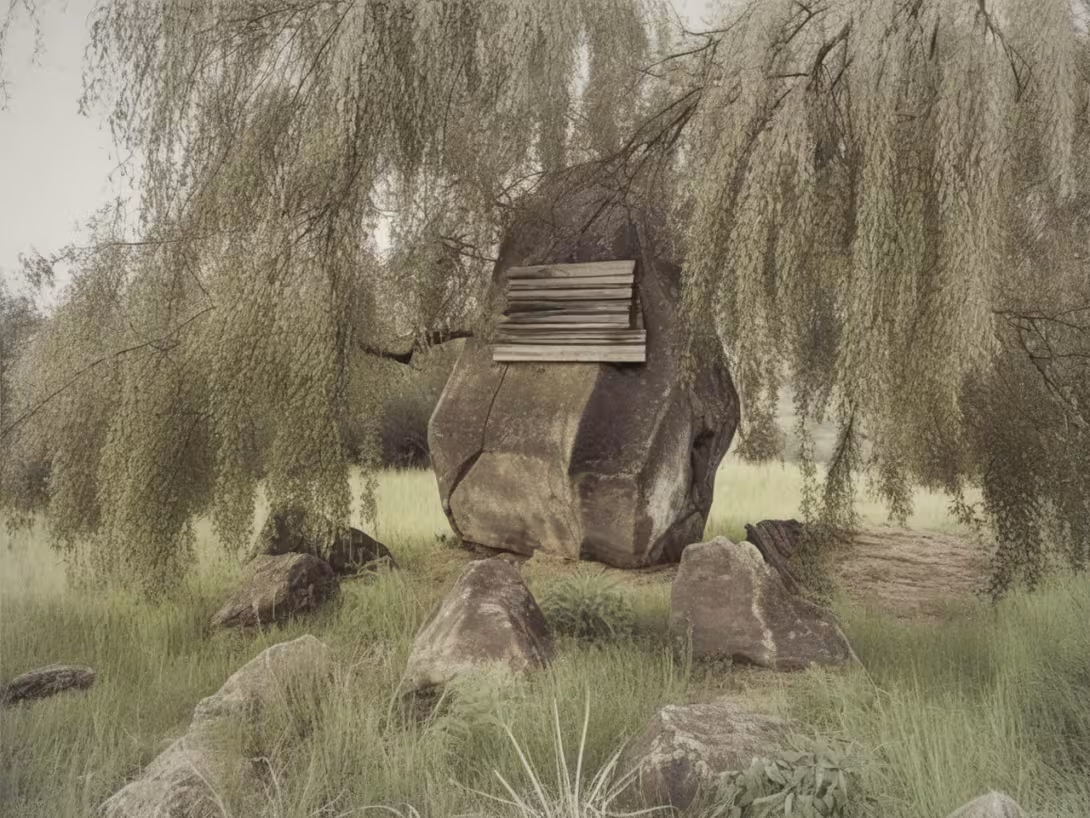
The historical appearance on the left is an AI-generated visualisation and serves as inspiration only.
Historical milestones
- around 1765
- Jakub Jan Ryba spent the first five years of his life in the place of the future memorial
- 1935
- Building a memorial in Třebízská Street in the village Přeštice
Architectural development
The memorial was built in 1935. It consists of a bulimic boulder placed on a small alpine, with a copper embossed plate.
Points of interest
The 1935 memorial is dedicated to the native, composer and educator James Jan Ryb. - The citizens of Přeštice and the Skála Singing Association contributed to its construction. - It consists of a bullion boulder with a copper plate created by the sculptor Štěpán Kořán. - The bottom edge of the plate is decorated with a note writing of the beginning of the work of Czech Christmas Mass. - He's standing at the place where the old school used to be, where the composer spent the first five years of his life.
Guide
Show guide text
This text was created by artificial intelligence and has not been editorially reviewed. It may contain inaccuracies.
Welcome to Přeštice. Right now you're standing in a quiet park on Třebíz Street, and before you is a monument dedicated to one of the most important sons of this city. The first impression that is likely to accompany you here is a combination of nature and memory. In front of you you can see a massive boulder from a bullion, with a copper plate inserted in it. It is a place that radiates peace, but also carries deep cultural significance. This space is not random, because it is here, in the place where you are standing today, that once stood the old school, which gives the whole place a special atmosphere related to learning and developing the human spirit.
Let us now stop at how this monument was created and why it is so important for the local people. The year of the thousand and nine hundred and thirty-five was the moment when the community decided to pay tribute to its native, music composer and educator Jakub Jan Ryb. It was not the work of one man or office, but a common token of respect. The citizens of Přeštice themselves contributed to its construction and the Skála Singing Society played a major role in this. It is fascinating to realize that in the time between world wars, people felt the need to anchor their identity in the personality of a musician who was famous far beyond the borders of his hometown. This monument is not only a piece of stone and metal, but a symbol of the belonging and pride of local people on their cultural roots.
Now pay attention to the design of the monument itself and the details that you can see right in front of you. Note the contrast between the rough surface of the bulimic boulder and the smooth surface of the copper plate. This plate is the work of sculptor Stephen Korán, who was able to combine the image and sound in one visual form. Take a close look at the embossed portrait of James John Fish. The sculptor captured the face of a man who devoted his life to the music and education of others. It's an image that encourages us to think about what kind of clue one person leaves in history.
However, if you move your view down to the bottom edge of the copper plate, you will see something very special. Notice the notation. It's not random characters, it's the beginning of the most famous work Jakub Jan Ryba created. It is an extraordinary detail because the moment you look at it, you can hear in your mind music that has become part of Czech music heritage. This element links the visual art of sculpture to the immaculate beauty of music. It's like the composer keeps talking to us through these notes that are carved into metal for eternity.
When we think about the personalities associated with this place, the focus is obviously Jakub Jan Ryba. Imagine that around the year one thousand seven hundred and sixty-five, at the time the old school stood here, this future famous composer spent his first five years of his life. It is strange to think that a little boy who probably walked here for the first time and recognized the world later became a character whose name will be listed in the Central List of Cultural Monuments of the Czech Republic. His name is associated with other personalities in the history of music, such as Rudolf Richard Hofmeister, who helped spread his work and ensure that it is not forgotten. It is thanks to this connection of musicians and educators that Fish could influence generations of people with its creation.
Perhaps now you'll find one interesting thing that makes this monument special. Most monuments display the figure in full size or in dynamic motion. Here, however, the path of modesty and symbolism is chosen. The boulder of the bulizer represents the stability and strength of the earth, while copper and notes represent spirit and creativity. It's a reminder that even though a man comes from a small town, his talent and his work can turn into something universal. The fact that many inhabitants and singers contributed to the construction shows that music was perceived as a common value in Přeštice, which connects people across social layers.
When you look at this monument today, see it as a bridge between the past and the present. You are standing in a place where the life of a man began, who with his music expressed deep feelings and faith. This little park on Třebíz Street is such a silent witness to history, which teaches us that education and art are the most valuable gifts that we can leave to future generations.
Now that you have become acquainted with the story of James John Fish and his monument, I suggest you stay in this calm for a while and let your thoughts float with tones that in spirit evokes note writing on a copper board. Then we invite you to explore the beautiful corners of Přeštice, where many other stories and historical clues await you. Thank you for spending this brief moment with us at this important monument. We wish you a pleasant continued journey and many new discoveries in our city. Goodbye.
Tips for visitors
The best time to visit is morning or late afternoon time when the light is softer and better stands out the structure of the bulizník stone. For photography we recommend angles that include the surrounding green of the park, which creates a pleasant contrast with the monument.
You can reach the place by car or public transport; Check the current connection and stop options in the Internet search engine.
Families with children can use a visit to tell about music and education because the monument reminds of important composers and teachers.
In the immediate vicinity is the Church of the Assumption of the Virgin Mary, which is an ideal complement to the journey behind this monument.
Frequently asked questions
Can the monument be visited?
This is a structure in a public space that can usually be seen from outside free of charge. We have not verified that this particular one is freely accessible.
Where is the monument?
Location: Přeštice. The map on this page shows the exact spot.
Why is the monument protected?
It is listed in the Central List of Cultural Monuments of the Czech Republic as a cultural monument (register no. 1000125068).
Businesses nearby
Do you run a restaurant, accommodation, shop, museum, rental, wellness or other visitor service near this monument? Show yourself directly to the people heading to it — this is how they will see you in the app and on the web:
Events nearby

Zdroj akcí: otevřená data měst a obcí ČR (Národní katalog otevřených dat) a kalendář akcí Národního památkového ústavu.
Nearby
V bezprostřední blízkosti se nachází kostel Nanebevzetí Panny Marie.
Accommodation nearby
Trips and activities nearby
Guided tours, tickets and activities nearby from GetYourGuide
Affiliate link: if you buy from the partner, we may receive a commission. The price for you does not change.
Search tours and activities →Themed route
Here is a proposal for a short thematic walk:
1. Church of the Assumption of the Virgin Mary (sanctuary) - A magnificent temple that dominates the image of the village and offers a beautiful space for reflection. 2. Pomník Jakuba Jana Ryby (memorial) - The main destination of the journey dedicated to an important musician, located close to the church.
Seasonal recommendations
In spring, the surroundings of the monument are awakened into colours and the flowering green creates fresh sets for visiting. We recommend arriving in the morning when the light is fine and the air is clean. Due to the variable weather, it is advisable to choose layered clothes and comfortable footwear suitable for outdoor use.
Summer brings bright sun and rich colors that highlight the details of the statue. It is best to visit the place in the early morning or late evening to avoid heat and strong glare.
The autumn dominates the atmosphere of peace and golden shades of leaves in the surroundings. Low sun hits the monument at an interesting angle, which is ideal for photography. In this period, it is advisable to carry a lighter jacket or coat to protect you from the colder wind.
Zimą is a monument in silence and often in white snow, which gives him a great character. Walk to the building requires warm and waterproof clothes and quality winter shoes. It is ideal to visit the Advent time when the surrounding area gets a more cosy touch.
Visualizations and artistic views


The visualisations are generated by artificial intelligence and serve as inspiration.
Photos from the area
Real photos taken near the monument


Zdroj a licence jsou uvedeny u každého snímku.
Tips from visitors
No tips yet. Be the first!
Log in and add your tip.
Sources and literature
Photos: Jik jik / CC BY-SA 3.0 — Wikimedia Commons. The author and licence also appear when you hover over the image.
Faktickým podkladem tohoto textu byl článek na Wikipedii, jehož autory jsou přispěvatelé Wikipedie. Článek je dostupný pod licencí CC BY-SA 4.0.
Location on the map

Příběhy a pověsti
Legendy, pověsti a příběhy spjaté s touto památkou

Fotografie návštěvníků
Zatím žádné fotografie. Buďte první, kdo přidá fotografii z návštěvy!
Log in a přidejte svou fotografii nebo hodnoťte.
Za ověřenou návštěvu v aplikaci získáte víc bodů — poznáme podle GPS, že jste na místě.
Reviews and comments