






Pomník Maxmiliány Alsterlové z Astfeldu Memorial
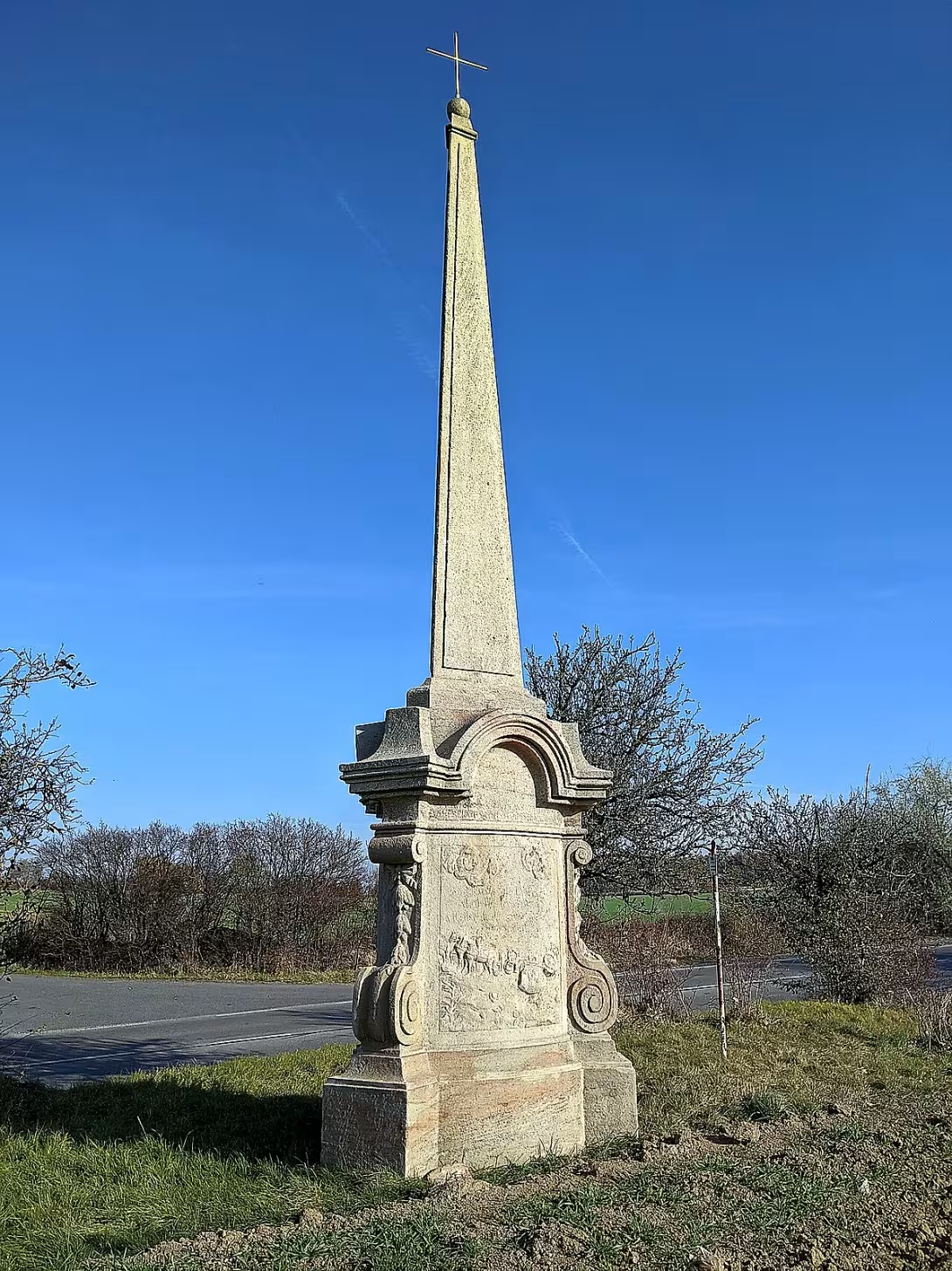
The Pomník Maxmiliány Alsterlové z Astfeldu, a Baroque sandstone obelisk, stands on the road northwest of Horní Jirčany towards Jesenice. Erected in 1707, it commemorates a fatal carriage accident from 1706 and is likely the oldest monument in the Czech Republic dedicated to a traffic accident victim. It is officially protected as a cultural monument.
The monument was commissioned by Maxmiliána Alsterlová z Astfeldu's husband, son, and son-in-law in 1707. The tragedy occurred on December 22, 1706, when the countess died after her carriage overturned between Novými Jirčany and Jesenice. The donors included her husband, František Mikuláš Alsterle z Astfeldu; her son, Maxmilián František; and her son-in-law, Jan Josef Löw z Erlsfeldu.
This Baroque monument takes the form of a triangular sandstone pyramid approximately seven meters high, topped with a stone ball and a metal cross. It is constructed from coarse-grained arkose sandstone quarried in the Kladensko region. The obelisk features a triangular base with segmentally convex sides, decorated with volutes at the corners and a cornice with a semicircular curve in the center.
The plinth features carved skulls and crossbones, symbolizing the Baroque theme of memento mori. Originally fully polychromed, the inscriptions were carved without paint to create contrast. Three coats of arms were originally attached to the base, representing the husband, son, and son-in-law, though these have since been lost.
The sides of the base contain specific inscriptions. One side mentions Maximilianus Alsterl ab Astfeldt and calls for prayers for the deceased. The second side records the identity of Maxmiliána Alsterlová z Astfeldu and the date of her death. The third side features a relief depicting the accident, showing an overturned carriage, a frightened horse with a driver, and a figure lying under the vehicle.
Historical accounts and legends offer different versions of the event. One story suggests the countess was traveling from Vienna to Prague and, after being delayed by troops near Benešov, urged her driver to speed up. Another version claims she was traveling in the opposite direction, from Prague to South Bohemia, to spend Christmas at her husband's family estate.
The monument's surface shows significant weathering due to the nature of the sandstone. In 2015, the municipality of Jesenice commissioned a restoration by Václav Snížek, which was completed and handed over on October 15, 2015.
This site serves as a rare early example of a traffic memorial and a testament to Baroque funerary art. It is a significant point of interest for those exploring the history of the region between Horní Jirčany and Jesenice.
Historical milestones
- 1706
- Death of Maxmiliána Alsterlová z Astfeldu in a carriage accident.
- 1707
- Erection of the monument by the deceased's husband, son, and son-in-law.
- 1840
- Repair of the obelisk funded by the Archbishop of Prague, Alois Josef Schrenk.
Architectural development
The monument is a Baroque obelisk made of coarse-grained arkose sandstone from the Kladensko region. It features a triangular base decorated with volutes and originally held three coats of arms, which have since been lost. The structure was originally polychromed and includes a relief depicting the accident and inscriptions on its sides.
Historical events
1706: Fatal carriage accident resulting in the death of Maxmiliána Alsterlová z Astfeldu. 1707: Construction of the commemorative monument. 1840: Restoration of the obelisk funded by Archbishop Alois Josef Schrenk.
Points of interest
– The Pomník Maxmiliány Alsterlové z Astfeldu is a Baroque sandstone obelisk that stands on the road northwest of Horní Jirčany towards Jesenice.
– It commemorates a fatal carriage accident from 1706 and is likely the oldest monument in the Czech Republic dedicated to a traffic accident victim.
– The monument was erected in 1707 by Maxmiliána Alsterlová z Astfeldu's husband, son, and son-in-law.
– The tragedy occurred on December 22, 1706, when the countess died after her carriage overturned between Novými Jirčany and Jesenice.
Guide
Show guide text
This text was created by artificial intelligence and has not been editorially reviewed. It may contain inaccuracies.
Welcome! As you stand before this historic monument, I invite you to take a moment to appreciate its beauty and significance. Before you lies the Pomník Maxmiliány Alsterlové z Astfeldu, a stunning Baroque sandstone obelisk located northwest of Horní Jirčany towards Jesenice.
As you gaze upon the monument, notice its triangular pyramid shape, approximately seven meters high, topped with a stone ball and a metal cross. This striking structure was erected in 1707 to commemorate a tragic carriage accident that took the life of Maxmiliána Alsterlová z Astfeldu in 1706.
The story behind this monument is one of love, loss, and remembrance. Maxmiliána's husband, son, and son-in-law came together to create this lasting tribute to their beloved family member. And it's not just the monument itself that holds significance - its history is also intertwined with that of the Archbishop of Prague, Alois Josef Schrenk, who funded a repair of the obelisk in 1840.
As you take in the details of this remarkable monument, I encourage you to explore the fascinating stories and personalities connected to this place. From the tragic carriage accident that inspired its creation to the lives of those who built it, there's much to discover here.
So, let your imagination run wild as you ponder the mysteries hidden within these ancient stones. And when you're ready, take a moment to step back and appreciate the beauty of this historic monument in all its glory.
Thank you for joining me on this journey through time. I hope you've enjoyed exploring the Pomník Maxmiliány Alsterlové z Astfeldu as much as I have. Until next time, farewell!
Tips for visitors
The best time to visit the Pomník Maxmiliány Alsterlové z Astfeldu is during the daylight hours, particularly during the golden hour, to best appreciate the texture and details of the Baroque sandstone. The monument is located along the road between Horní Jirčany and Jesenice, making it accessible by car or public transport; please verify current transit connections through a search engine before your trip.
When preparing for your visit, we recommend wearing sturdy walking shoes suitable for roadside terrain and bringing water, as there are no specific facilities or shelters directly at the monument. Since it is an outdoor historical site, checking the weather forecast in advance is advised.
For photography, the best spots are positioned to capture the 1707 obelisk against the natural landscape. The soft light of early morning or late afternoon is ideal for highlighting the historical character of the sandstone.
Families with children may find this to be a brief and interesting educational stop to discuss local history. After viewing the monument, you can continue your journey toward the nearby areas of Jesenice or Horní Jirčany.
Businesses nearby
Do you run a restaurant, accommodation, shop, museum, rental, wellness or other visitor service near this monument? Show yourself directly to the people heading to it — this is how they will see you in the app and on the web:
Events nearby
Zdroj akcí: otevřená data měst a obcí ČR (Národní katalog otevřených dat) a kalendář akcí Národního památkového ústavu.
Nearby
Located along the road between Horní Jirčany and Jesenice.
Accommodation nearby
Trips and activities nearby
Guided tours, tickets and activities nearby from GetYourGuide
Affiliate link: if you buy from the partner, we may receive a commission. The price for you does not change.
Search tours and activities →Themed route
Theme Tour Route
Stop 1: Maxmiliány Alsterlové z Astfeldu Monument Type: Memorial Why visit: This monument is dedicated to the life and legacy of Maxmilián Alsterle, a notable figure in Czech history. The monument offers a glimpse into the past and provides a unique perspective on the region's cultural heritage.
Stop 2: Horní Jirčany Type: Village Why visit: This charming village is situated along the road between Jesenice and Horní Jirčany, offering a glimpse into rural Czech life. Visitors can explore the village's quaint streets, historic buildings, and picturesque surroundings.
Stop 3: Jesenice Type: Town Why visit: Jesenice is a charming town with its own unique character. Visitors can stroll through the town's historic center, admire the architecture, and enjoy the local atmosphere.
This route provides a unique blend of history, culture, and rural charm, offering visitors a glimpse into the region's rich heritage.
Seasonal recommendations
Spring
As you visit the Maxmiliány Alsterlové z Astfeldu Monument in Jesenice during spring, you'll be struck by the vibrant greenery and blooming flowers surrounding the monument. The atmosphere is lively and refreshing, with the scent of blossoms filling the air.
Practical tips: Be prepared for larger crowds during peak spring weekends, and dress comfortably in layers as the weather can be unpredictable. Aim to visit early in the morning or late in the afternoon to avoid the midday rush.
Summer
Summer brings warmth and long days to Jesenice, making it an ideal time to visit the monument. The lush greenery is in full bloom, and the atmosphere is lively with picnickers and families enjoying the outdoors.
Practical tips: Arrive early to beat the crowds, and consider bringing a picnic lunch to enjoy on site. Wear comfortable shoes and clothing suitable for warm weather, as you'll likely be spending time exploring the surrounding area.
Autumn
As autumn arrives in Jesenice, the monument takes on a picturesque quality with the changing foliage creating a kaleidoscope of colors. The air is crisp and cool, carrying the scent of ripe fruit and wood smoke.
Practical tips: Take advantage of the cooler weather by visiting during the morning or late afternoon to avoid the peak tourist hours. Dress in layers for the unpredictable autumn weather, and consider bringing a warm beverage to enjoy on site.
Winter
Winters in Jesenice are quiet and serene, with the monument standing out against a backdrop of snow-covered trees and frozen lakes. The atmosphere is peaceful and contemplative, perfect for a winter's day visit.
Practical tips: Be prepared for shorter opening hours during the winter months, and dress warmly to enjoy the crisp winter air. Consider visiting early in the morning or late in the afternoon to avoid the cold midday sun.
Visualizations and artistic views

The visualisations are generated by artificial intelligence and serve as inspiration.
Photos from the area
Real photos taken near the monument


Zdroj a licence jsou uvedeny u každého snímku.
Tips from visitors
No tips yet. Be the first!
Log in and add your tip.
Sources and literature
Fotografie: MartinVeselka / CC BY-SA 4.0 — Wikimedia Commons. The author and licence also appear when you hover over the image.
Faktickým podkladem tohoto textu byl článek na Wikipedii, jehož autory jsou přispěvatelé Wikipedie. Článek je dostupný pod licencí CC BY-SA 4.0.
Location on the map

Příběhy a pověsti
Legendy, pověsti a příběhy spjaté s touto památkou

Fotografie návštěvníků
Zatím žádné fotografie. Buďte první, kdo přidá fotografii z návštěvy!
Přihlaste se a přidejte svou fotografii nebo hodnoťte.
Za ověřenou návštěvu v aplikaci získáte víc bodů — poznáme podle GPS, že jste na místě.
Reviews and comments